Airline carry-on rules have changed in 2025, and stricter enforcement is now the norm. Here’s what you need to know to avoid fees, delays, or surprises at the gate:
- U.S. Airlines: Most allow carry-ons up to 22 x 14 x 9 inches (45 linear inches), with no weight limits for major carriers. Budget airlines like Spirit and Frontier enforce weight caps of 40 lbs and 35 lbs, respectively.
- Personal Items: Sizes vary by airline. United allows 17 x 10 x 9 inches, while others like American and Delta offer slightly larger limits.
- International Flights: Rules differ significantly, with many airlines imposing both size and weight restrictions. Metric measurements are common, so double-check before flying.
- New Enforcement Tools: Automated bag-measuring stations and stricter gate checks are now common at airports.
Pro Tip: Always measure your bag (including wheels and handles) and weigh it if flying with budget carriers. Use a portable luggage scale to stay within limits. Checking your airline’s policies before booking can save you time and money.
| Airline | Carry-On Size (inches) | Weight Limit | Personal Item Size (inches) |
|---|---|---|---|
| American Airlines | 22 x 14 x 9 | No limit | 18 x 14 x 8 |
| Delta Air Lines | 22 x 14 x 9 | No limit | 18 x 14 x 8 |
| United Airlines | 22 x 14 x 9 | No limit | 17 x 10 x 9 |
| Southwest Airlines | 24 x 16 x 10 | No limit | 18.5 x 8.5 x 13.5 |
| JetBlue Airways | 22 x 14 x 9 | No limit | 17 x 13 x 8 |
| Alaska Airlines | 22 x 14 x 9 | No limit | 18 x 14 x 8 |
| Spirit Airlines | 22 x 18 x 10 | 40 lbs | 18 x 14 x 8 |
| Frontier Airlines | 24 x 16 x 10 | 35 lbs | 18 x 14 x 8 |
Airline Carry-On Rules for 2025: Don’t Get Caught – Your Carry-On Might Be REJECTED | Global Flow
US Airline Carry-On Size and Weight Rules
When it comes to carry-on luggage, most US airlines have similar size guidelines, but the details can differ. Knowing these differences can save you from surprise fees or delays at the gate.
For most airlines, the standard carry-on size is around 22 x 14 x 9 inches, but exact dimensions vary. Some airlines are stricter about enforcing these rules, especially since 2025, while others might be a bit more relaxed.
Weight limits are another factor to consider. Many traditional airlines don’t set a weight limit for carry-ons, but budget carriers often do. For instance, Spirit Airlines caps the weight at 40 pounds, while Frontier Airlines limits it to 35 pounds.
There are also rules for personal items. Most airlines allow a smaller bag that fits under the seat in front of you, but the size requirements differ. United Airlines, for example, has narrower personal item dimensions compared to others. Keep reading for tips on how to measure your bag to meet these requirements.
US Airlines Comparison Table
| Airline | Carry-On Size (inches) | Weight Limit | Personal Item Size (inches) |
|---|---|---|---|
| American Airlines | 22 x 14 x 9 | No limit | 18 x 14 x 8 |
| Delta Air Lines | 22 x 14 x 9 | No limit | 18 x 14 x 8 |
| United Airlines | 22 x 14 x 9 | No limit | 17 x 10 x 9 |
| Southwest Airlines | 24 x 16 x 10 | No limit | 18.5 x 8.5 x 13.5 |
| JetBlue Airways | 22 x 14 x 9 | No limit | 17 x 13 x 8 |
| Alaska Airlines | 22 x 14 x 9 | No limit | 18 x 14 x 8 |
| Spirit Airlines | 22 x 18 x 10 | 40 lbs | 18 x 14 x 8 |
| Frontier Airlines | 24 x 16 x 10 | 35 lbs | 18 x 14 x 8 |
Southwest Airlines offers some of the most generous carry-on dimensions, making it a great choice for travelers who need more packing space. On the other hand, budget airlines like Spirit and Frontier enforce stricter weight limits, aligning with their fee-based business models. If you exceed these limits, you’ll likely face additional charges.
How to Calculate Linear Inches
Measuring your bag correctly is essential to avoid issues at the airport. Airlines often use linear inches to standardize size restrictions, and the good news is the calculation is simple.
The formula is: Length + Width + Height = Linear Inches
For example, a bag measuring 22 x 14 x 9 inches equals 45 linear inches (22 + 14 + 9 = 45). Most US airlines allow carry-ons up to 45 linear inches, though some budget carriers may accept slightly larger sizes.
Here are a few tips for accurate measurements:
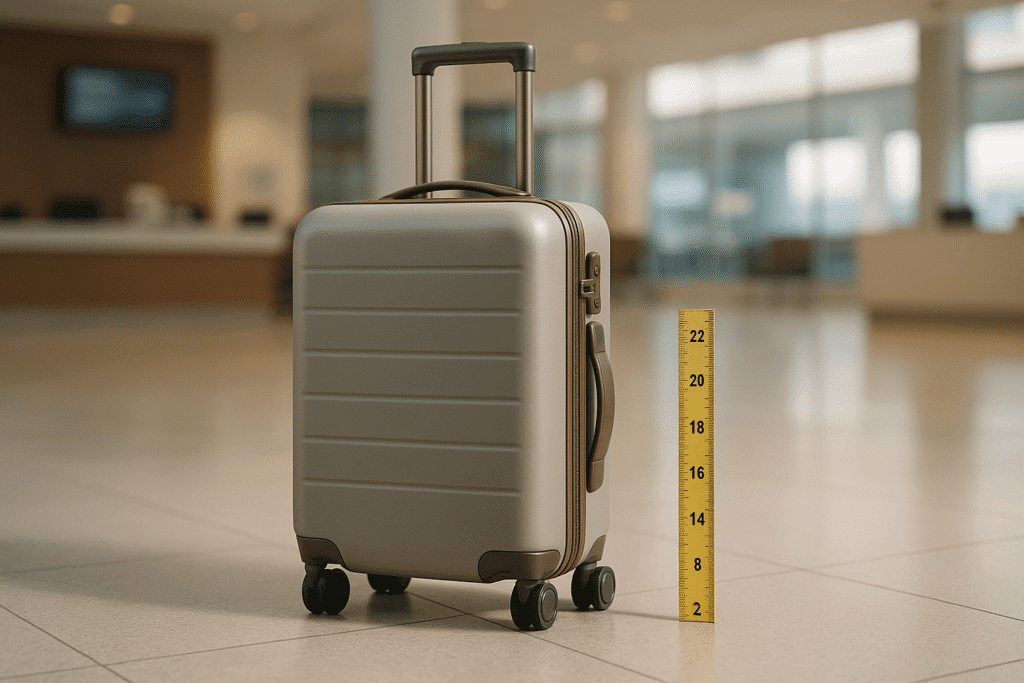
- Measure at the longest points: Include extended pockets, wheels, and handles, as airlines measure bags at their maximum dimensions. For example, a bag listed as 22 inches long might actually measure 24 inches when accounting for 2-inch wheels.
- Soft-sided luggage: Be mindful that these can expand when packed, making them tricky to measure.
- Hard-shell cases: These are more predictable, but don’t forget to account for protruding features like corner guards or wheel housings.
Taking the time to measure your bag properly can save you from headaches and unexpected fees at the airport.
International Airline Carry-On Rules
When flying internationally, you’ll find that carry-on regulations can vary quite a bit from the U.S. standards. While U.S. airlines tend to focus on size restrictions, many international carriers are stricter, often imposing limits on both the size and weight of your carry-on. In some regions, these rules are enforced more consistently, so it’s important to be prepared.
International airlines also tend to have more specific rules for personal items, which might not be as flexible as what you’re used to on U.S. flights.
US vs. International Policy Differences
One big difference lies in how weight is handled. U.S. airlines typically emphasize the dimensions of your carry-on, but many international carriers include weight restrictions in their policies. Another distinction is in measurement systems – some airlines use metric units, while others stick with imperial. And while U.S. liquid restrictions follow TSA guidelines, certain international airlines may apply additional or slightly different rules.
International Airlines Comparison
To avoid last-minute surprises at the airport, it’s always a good idea to double-check carry-on guidelines specific to the airline and country you’re traveling with. A little preparation can save you a lot of hassle at the gate.
2025 Policy Changes and Enforcement Updates
Airlines are rolling out new carry-on policies for 2025, aiming to make boarding more efficient and enhance in-cabin safety. Many carriers have introduced stricter size and weight limits for carry-on items, while several airports now use gate-side measurement systems to ensure compliance. These updates mark a shift toward stricter enforcement.
Airlines and Airports with Tighter Oversight
In light of these changes, some airlines and airports have stepped up their enforcement efforts. Automated measurement stations are now in place at boarding gates in several airports, and certain carriers have begun closely monitoring carry-ons during the boarding process. These measures are designed to better manage cabin baggage, especially during busy travel periods.
The Reason Behind the Policy Changes
The push for updated policies stems from practical and safety concerns. With more passengers flying, airlines are tightening carry-on rules to maximize overhead bin space, reduce boarding delays, and ensure safer flights. These refinements are part of a broader strategy to keep operations running smoothly and improve turnaround times.
How to Prepare for Updated Carry-On Rules
As airlines adjust their carry-on policies throughout 2025, it’s important to pack with precision. These steps, combined with the enforcement measures mentioned earlier, can help make your travel experience smoother. By understanding measurement guidelines and seeking expert advice when needed, you can avoid unnecessary hassles.
How to Measure and Weigh Your Carry-On
Getting the dimensions of your carry-on right is key to meeting updated airline requirements. Keep in mind that each airline may have unique standards beyond the usual size limits.
When measuring your bag, make sure to include handles, wheels, and any external pockets. Use a measuring tape to check the height, width, and depth of your bag at its widest points. Even small details, like protruding parts, can make a difference.
As for weight, many airlines set a limit of around 40 pounds, though not all carriers enforce a specific limit. To avoid surprises, use a portable luggage scale to weigh your bag at home before heading to the airport.
After confirming your bag’s size and weight, double-check the airline’s baggage policies to ensure everything is in order.
Why Check Policies Before Booking
Each airline has its own baggage rules, and these can vary widely. Reviewing the baggage guidelines before booking your flight can save you from unexpected fees or restrictions later on.
How Flight Booking 247 Can Help

Flight Booking 247 offers personalized support to help you navigate the latest carry-on policies. Their travel specialists stay updated on baggage rules and can explain specific allowances for your itinerary. This is especially helpful for international trips, where rules often vary between airlines. Whether you’re booking a straightforward flight or a multi-stop journey, their expertise can make packing for your trip much easier.
Conclusion
With stricter enforcement and updated thresholds set to roll out in 2025, travelers need to be prepared to navigate these changes effectively. Understanding these policies goes beyond just avoiding extra fees – it’s about ensuring a hassle-free experience from check-in to boarding.
One key difference to note is how domestic and international standards vary. For instance, U.S. airlines typically stick to the 22 x 14 x 9-inch carry-on size limit, while many international carriers have adopted more restrictive dimensions. Weight limits, once loosely monitored, are now becoming a standard checkpoint at airports, with the common 40-pound limit being actively enforced.
What makes 2025 particularly tricky is the inconsistent enforcement across airports and airlines. A bag that clears one checkpoint could face issues at the next, making preparation even more important. Investing in tools like portable luggage scales and measuring devices has become a must for frequent travelers.
For a smoother travel experience, expert advice can make all the difference. Services like Flight Booking 247’s 24/7 travel concierge offer real-time updates on baggage rules and tailored guidance for complex itineraries. Their specialists are well-versed in the nuances of airline policies and can help you stay ahead of the ever-changing carry-on regulations. As airlines continue to fine-tune their rules throughout 2025, staying informed and seeking professional guidance can mean the difference between a stressful trip and a smooth journey.
FAQs
What are the updated carry-on size and weight rules for 2025, and how can I make sure my bag complies?
When preparing for travel under the updated carry-on size and weight rules for 2025, it’s crucial to review your airline’s specific policies, as they can vary. Generally, most U.S. airlines permit carry-on bags up to 22 x 14 x 9 inches (including handles and wheels) with a weight limit of about 35 pounds, though some carriers may enforce stricter or more relaxed rules.
To make sure your bag complies, use a tape measure to check its dimensions and a luggage scale to confirm its weight after packing. Always verify your airline’s most recent guidelines, as policies can change, and keep an eye out for additional restrictions, especially for international flights. Planning ahead can save you from unexpected hiccups at the airport and help your trip start off smoothly.
What are the main differences between U.S. and international carry-on luggage policies, and how can I prepare?
In 2025, carry-on size policies for U.S. and international airlines are largely aligned, though there are some differences. Most U.S. airlines permit carry-ons up to 22 x 14 x 9 inches (56 x 36 x 23 cm). International airlines, however, often have slightly smaller limits, typically around 21.5 x 15.5 x 9 inches or a total of 46 linear inches. Additionally, international carriers are more likely to enforce weight restrictions, so it’s essential to check if your airline imposes a specific carry-on weight limit.
To avoid unexpected issues, it’s a good idea to confirm your airline’s size and weight rules for carry-ons before you travel. This can save you from delays, extra charges, or the inconvenience of having to check your bag at the last moment.
Why are airlines enforcing stricter carry-on size and weight rules in 2025, and what does this mean for travelers?
In 2025, airlines have introduced stricter rules for carry-on luggage size and weight to enhance safety, cut down on delays, and streamline the boarding process. Most carriers now stick to a maximum size of 22 x 14 x 9 inches and a weight limit of 35 pounds. These adjustments are designed to reduce overhead bin overcrowding and make boarding more efficient.
For travelers, this means packing smarter is more important than ever. Staying within these limits can save you from unexpected fees or the inconvenience of checking your bag at the gate. A little planning goes a long way toward ensuring a smooth and stress-free trip.