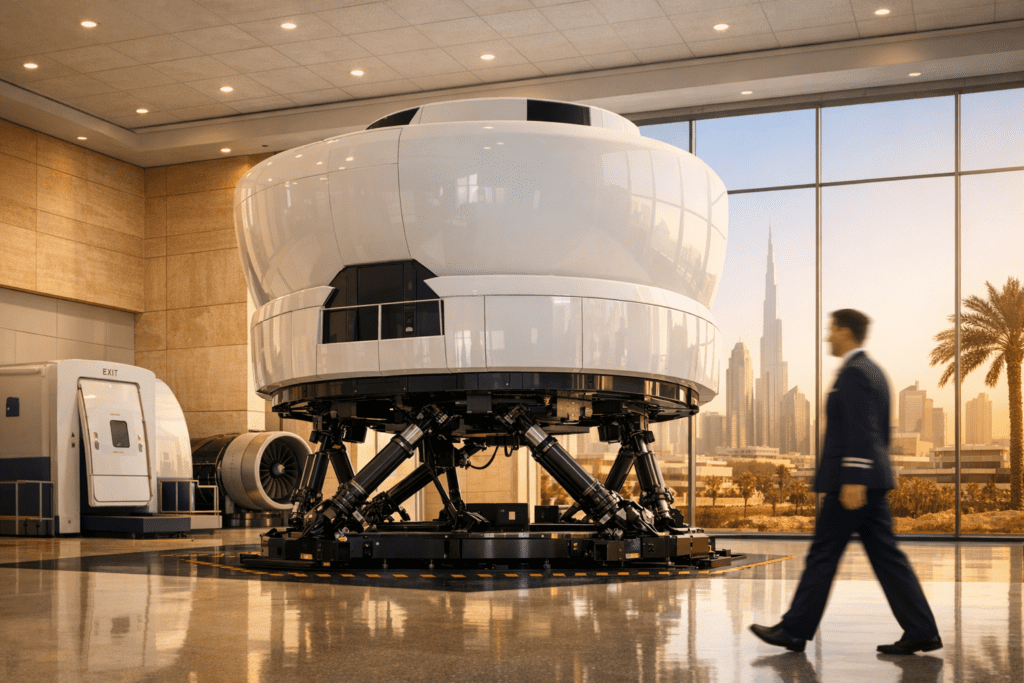
The Middle East is a growing hub for aviation training, offering a variety of programs for pilots, cabin crew, and maintenance professionals. These academies are designed to meet international standards like EASA and ICAO, with advanced simulators, modern fleets, and rigorous curriculums. Key highlights include:
- Pilot Training: Programs range from entry-level courses like Private Pilot Licenses (PPL) to advanced Airline Transport Pilot Licenses (ATPL). Some academies, like Emirates Flight Training Academy, offer integrated 104-week ATPL courses.
- Cabin Crew and Maintenance Training: Institutions like JATS and MEATC provide specialized training for cabin crew and technical staff, ensuring compliance with regulatory requirements.
- Advanced Infrastructure: Facilities often include private airports, air traffic control towers, and full-flight simulators for realistic training.
- Diverse Options: From rotary-wing training at Horizon Academy to Airbus-specific programs in Tunisia, there’s something for every aspiring aviation professional.
Training costs can range from $50,000 to $150,000, with some programs offering financing or sponsorships. Graduates often secure roles with regional airlines like Emirates or MEA, earning competitive salaries. These academies not only prepare students for aviation careers but also contribute to global aviation safety and standards.
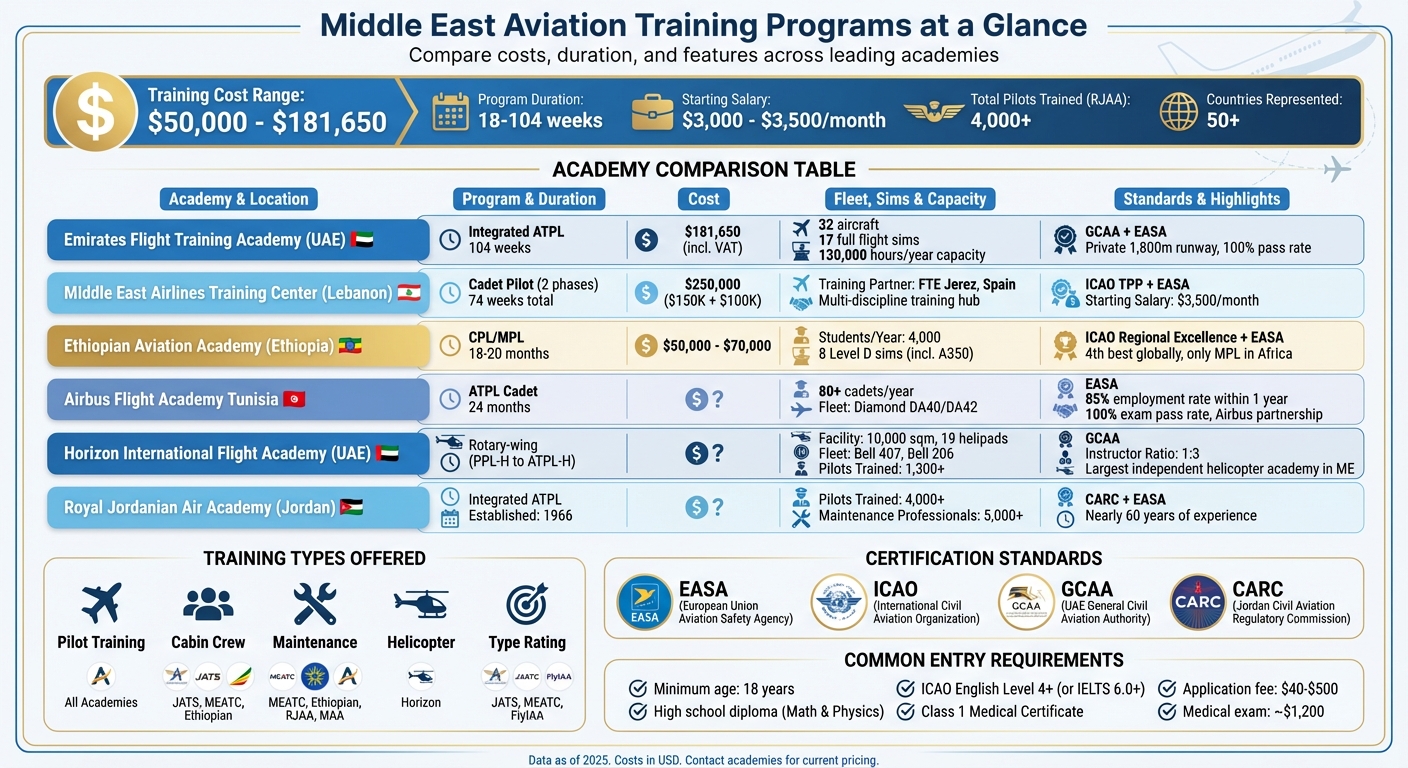
Middle East Aviation Training Programs Comparison: Costs, Duration, and Key Features
1. Horizon International Flight Academy
Pilot Training Programs
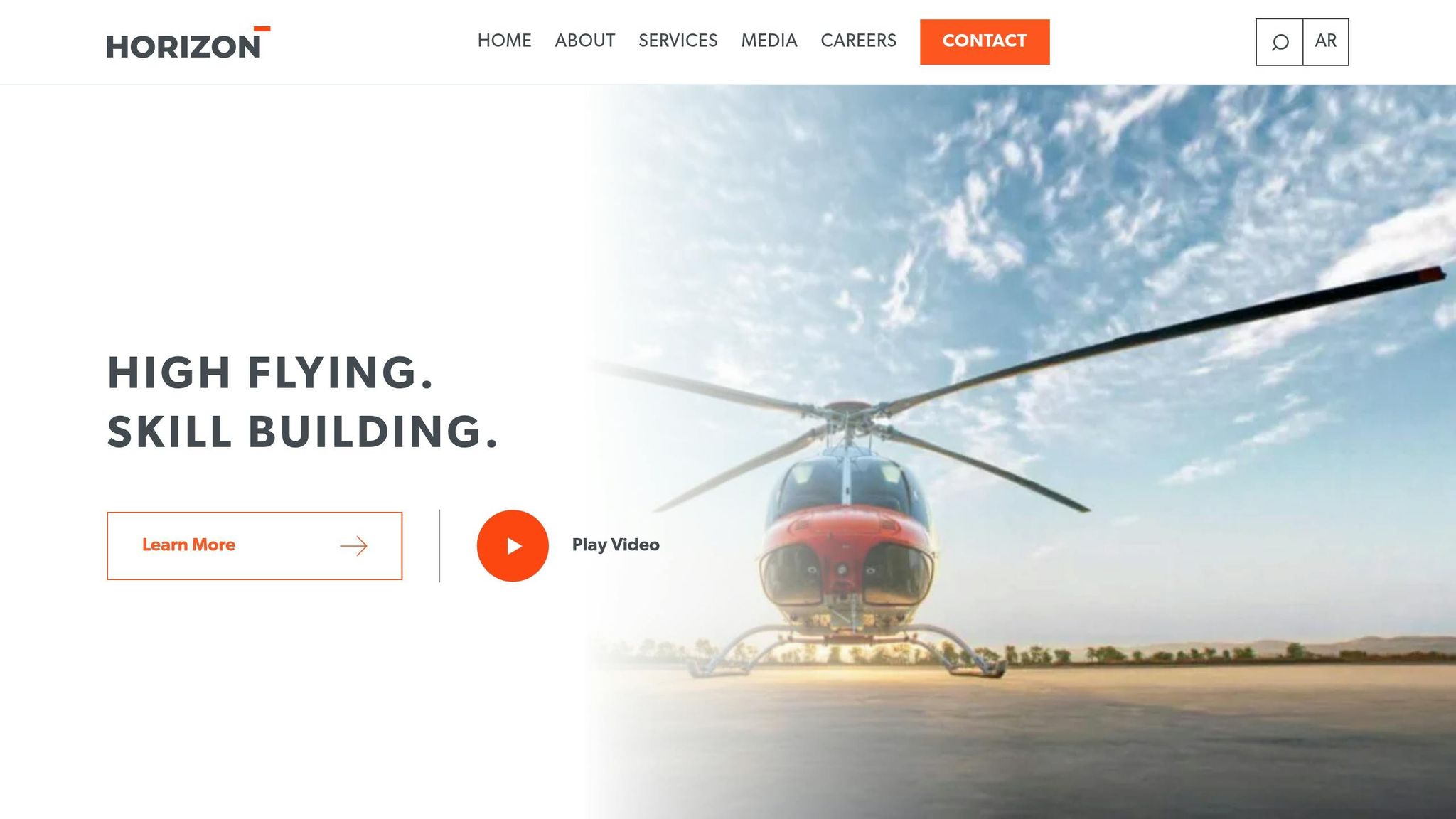
Horizon International Flight Academy is recognized as the Middle East’s largest independent helicopter flight training academy. Since 2014, it has focused exclusively on rotary-wing training, having phased out its fixed-wing division [3, 6]. The academy provides a variety of helicopter pilot licenses, including:
- Private Pilot License (PPL-H): Designed for personal flight operations.
- Commercial Pilot License (CPL-H): A comprehensive program that takes students from zero flight hours to obtaining full GCAA licensure.
- Air Transport Pilot License (ATPL-H): Tailored for multi-pilot, multi-engine commercial operations.
Horizon also offers advanced training courses like the Instrument Rating (IR/IRH) for flying under instrument conditions and the Night Vision Goggles (NVG) course for improved night-time operations. Another highlight is the Qualified Military Pilot Bridge Course (QMP), which helps military pilots convert their credentials into GCAA CPL(H) or CPLIR(H) licenses. Since opening its doors in 2003, Horizon has trained more than 1,300 pilots from the UAE, GCC nations, and beyond.
Simulator and Fleet Availability
Horizon operates from a 10,000-square-meter facility equipped with 19 helipads and an impressive fleet that includes Bell 407 and Bell 206 helicopters. In 2016, the academy introduced a Bell 407 FNPT II simulator, which replicates maneuvers like translational lift, ground effect, and auto-rotation with precision [4, 5].
“The desert terrain has the additional benefit of presenting many opportunities for limited power scenarios, mountain flying, and desert training conditions.” – Horizon Academy
The UAE’s diverse geography adds another layer of depth to the training, exposing pilots to a variety of challenging flight conditions throughout the year. This unique environment enhances the academy’s commitment to delivering well-rounded training [4, 5].
International Certifications and Standards
Horizon ensures that its training programs align with the UAE General Civil Aviation Authority (GCAA) standards, which are recognized internationally. The academy maintains a low instructor-to-student ratio of 1:3 to provide personalized guidance. Additionally, it operates an accredited English Language Proficiency testing center to help pilots meet GCAA requirements.
In November 2023, Horizon received the Aviation Safety Marathon Challenge award from the GCAA for its Psychoactive Substances Management Programme, further underscoring its dedication to safety and excellence.
sbb-itb-e205081
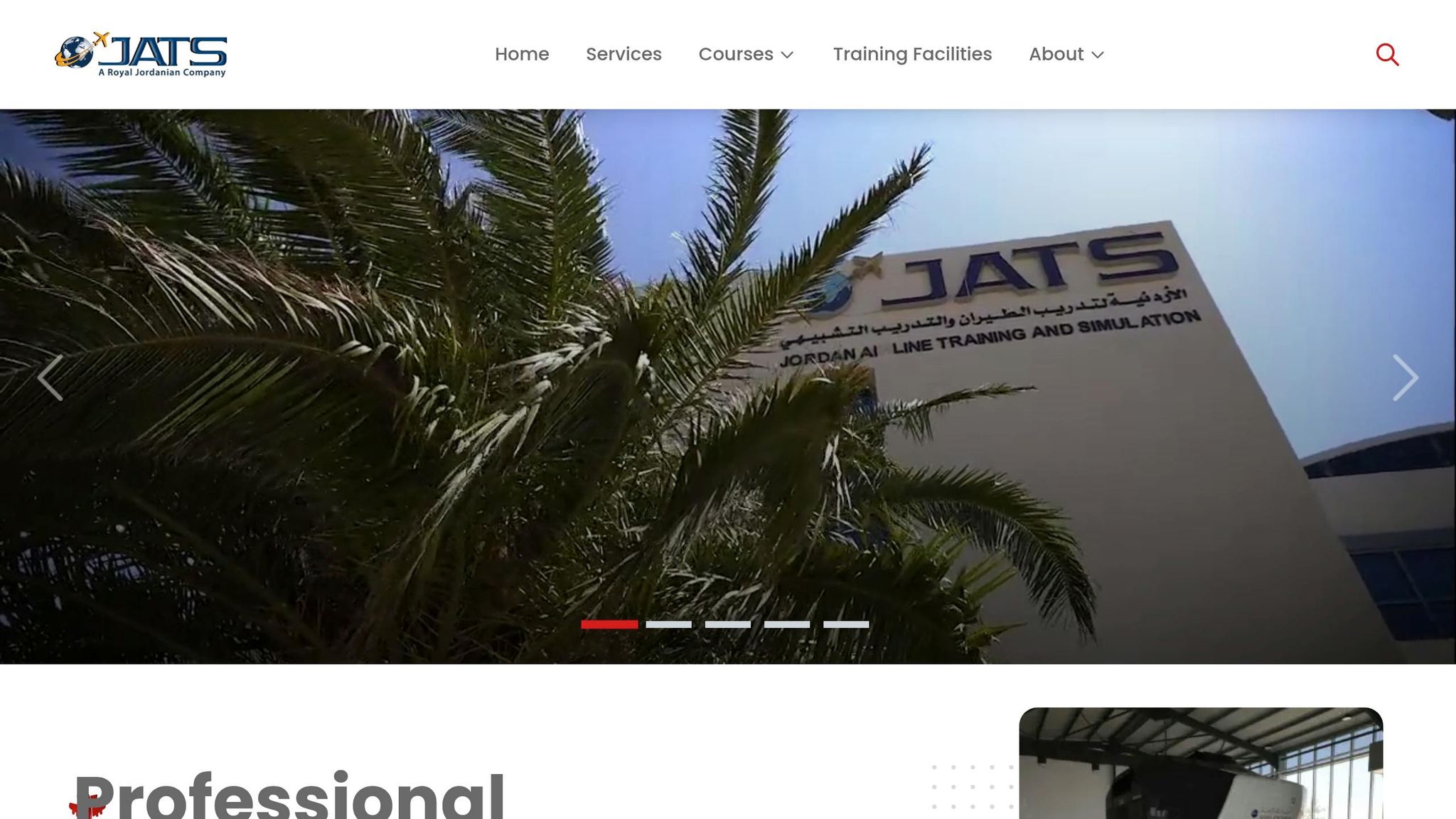
2. Jordan Airline Training and Simulation (JATS)
Pilot Training Programs
Jordan Airline Training and Simulation (JATS) specializes in Type Rating programs tailored for commercial pilots. These programs cover major aircraft families, including the Airbus A320 and A330/A340 series, as well as Boeing models such as the B737, B757/B767, B777, and B787. By focusing on aircraft-specific certifications, JATS ensures pilots are fully equipped to operate commercial flights with the highest level of professionalism.
Cabin Crew Training
JATS offers a comprehensive range of cabin crew courses designed to support crew members at every stage of their careers.
- The Cabin Crew Initial Safety Training, compliant with CARC regulation 1.1005, provides essential certification for those just starting out.
- For experienced crew, the Senior Cabin Crew Member (SCCM) program hones leadership skills, preparing participants to manage teams effectively during both routine flights and emergency situations.
- Conversion & Differences Training equips certified crew members to transition seamlessly to new aircraft types.
- Annual recurrent training ensures that all crew maintain their skills and meet airworthiness standards.
Simulator and Fleet Availability
JATS integrates advanced simulators into its training programs, creating realistic flight conditions for hands-on practice. These simulators allow crew members to rehearse both standard and emergency scenarios, such as firefighting and water landings, in a safe and controlled environment.
International Certifications and Standards
All training programs at JATS operate under the oversight of the Jordanian Civil Aviation Regulatory Commission (CARC) and adhere to international aviation safety standards. To meet the specific needs of its clients, JATS customizes training modules to include airline-specific operating manuals and Standard Operating Procedures (SOPs). This approach ensures compliance with both regulatory requirements and the unique protocols of individual airlines, making JATS a trusted partner for international carriers.
Flying My First Jet as an Airline Cadet – Emirates Flight Training Academy
3. Middle East Airlines Training Center
Middle East Airlines (MEA) has established a training center that reflects the region’s dedication to aviation excellence. This facility focuses on nurturing skilled aviation professionals, offering specialized programs tailored to Lebanese nationals.
Pilot Training Programs
The Cadet Pilot Training Program at the Middle East Airlines Training Center (MEATC) is designed to prepare Lebanese nationals for roles as First Officers within MEA’s fleet. The program is structured into two phases and requires a significant financial commitment: US$150,000 for 66 weeks of foundational training and US$100,000 for an 8-week Type Rating course.
Cadets typically begin their flight training at Flight Training Europe (FTEJerez) in Spain, working toward European EASA licenses. These include qualifications like the Airline Transport Pilot Licence (ATPL), Commercial Pilot License (CPL), Instrument Rating (IR), Multi-Engine (ME), Multi-Crew Cooperation (MCC), and Jet Orientation Course (JOC).
“The airline pilot’s profession requires the safety awareness and the demonstration of high standards of mental and physical skills e.g. problem solving, coping with pressure and change in addition to certain personality traits such as discipline, high moral values and integrity.” – Middle East Airlines
After completing the program, newly qualified First Officers earn a starting monthly salary of approximately US$3,500. Applicants are required to pay a non-refundable US$500 examination fee and an additional US$1,200 for a medical profile examination.
In addition to pilot training, MEATC also focuses on enhancing the expertise of cabin crew and technical staff.
Cabin Crew and Maintenance Training
The training center offers programs for cabin crew and maintenance personnel, ensuring they meet both local and international aviation standards. The cabin crew training program prioritizes safety, security, and service excellence, qualifying participants for licenses issued by the Lebanese Civil Aviation Authority and other international organizations. For technical staff, the center provides maintenance training to ensure engineers comply with regulatory requirements for aircraft maintenance. These programs are not limited to MEA employees but also cater to crew members from other airlines across the MENA region.
International Certifications and Standards
MEATC operates in strict compliance with global aviation standards. It is a member of the ICAO TRAINAIR PLUS Programme (TPP) and adheres to European Union Aviation Safety Agency (EASA) regulations, ensuring that graduates receive certifications recognized worldwide. Located at Rafic Hariri International Airport in Beirut, the facility is equipped with advanced digital infrastructure that meets PCI security standards.
“We strive to inspire and empower individuals in the aviation industry through comprehensive training programs in line with local and international regulations.” – Middle East Airlines Training Center
4. Airbus Flight Academy at The Aviator Institute
In November 2025, The Aviator Institute (TAI) in Tunisia became the first partner of the Airbus Flight Academy in Africa and the Middle East. This partnership brings over five decades of Airbus pilot training expertise to the region, addressing the anticipated need for 89,000 new pilots over the next 20 years across these areas. It’s a major step towards aligning regional pilot training with Airbus’s global standards.
Pilot Training Programs
The academy offers the Airbus Pilot Cadet Training Program, a comprehensive Airline Transport Pilot License (ATPL) course designed to prepare cadets for airline operations in about 24 months. The program is broken into four key phases: core training, theoretical studies, basic flight operations, and multi-crew cooperation. This structured approach ensures cadets earn their ATPL within two years.
The curriculum integrates Competency-Based Training and Assessment (CBTA), which focuses on both technical skills and the behavioral qualities that modern airlines seek.
“Our Airbus cadets seamlessly transition through every training phase, impressing recruiters with their rapid adaptability.”
- Captain Stéphan Labrucherie, Head of Flight Training worldwide, Airbus
The Tunisia-based academy plans to train over 80 cadets annually, with the first group starting in March 2026. To apply, candidates must be at least 18 years old, have a high school diploma, an ICAO Level 3 English certificate, and a Medical Class 1 certificate. The application process begins with a $40 online assessment, while tuition fees are shared directly by The Aviator Institute.
Simulator and Fleet Availability
Training takes place at Monastir International Airport, where cadets work with modern Diamond DA40/DA42 aircraft and advanced simulators, including Mechtronix and Alsim ALX FNPT II models. This setup provides students with a well-rounded experience in essential flight procedures. The location also offers the advantage of uncongested airspace, just 120 nautical miles from European airspace.
Since its founding in 2010, The Aviator Institute has built a solid reputation, training over 200 pilots and logging more than 30,000 flight hours.
International Certifications and Standards
The program adheres to EASA (European Union Aviation Safety Agency) standards, ensuring compliance with globally recognized aviation requirements. Impressively, the academy boasts a 100% exam pass rate. Graduates receive a “frozen” ATPL and the “Airbus cadet code” certificate, which streamlines their transition into Type Rating courses and their first airline roles. Within one year of graduation, over 85% of cadets secure employment.
Tuition includes several perks, such as an iPad, a logbook, a uniform, access to e-ATPL learning platforms, and all necessary flight and simulator hours.
“Becoming Airbus Flight Academy network’s partner is a recognition of the quality and maturity of our training model. This collaboration accelerates our ambition to position Tunisia as a regional aviation hub and to offer young talents a direct pathway to the cockpit, aligned with the highest training standards.”
- Anis Faidi, CEO of The Aviator Institute
5. Emirates Flight Training Academy
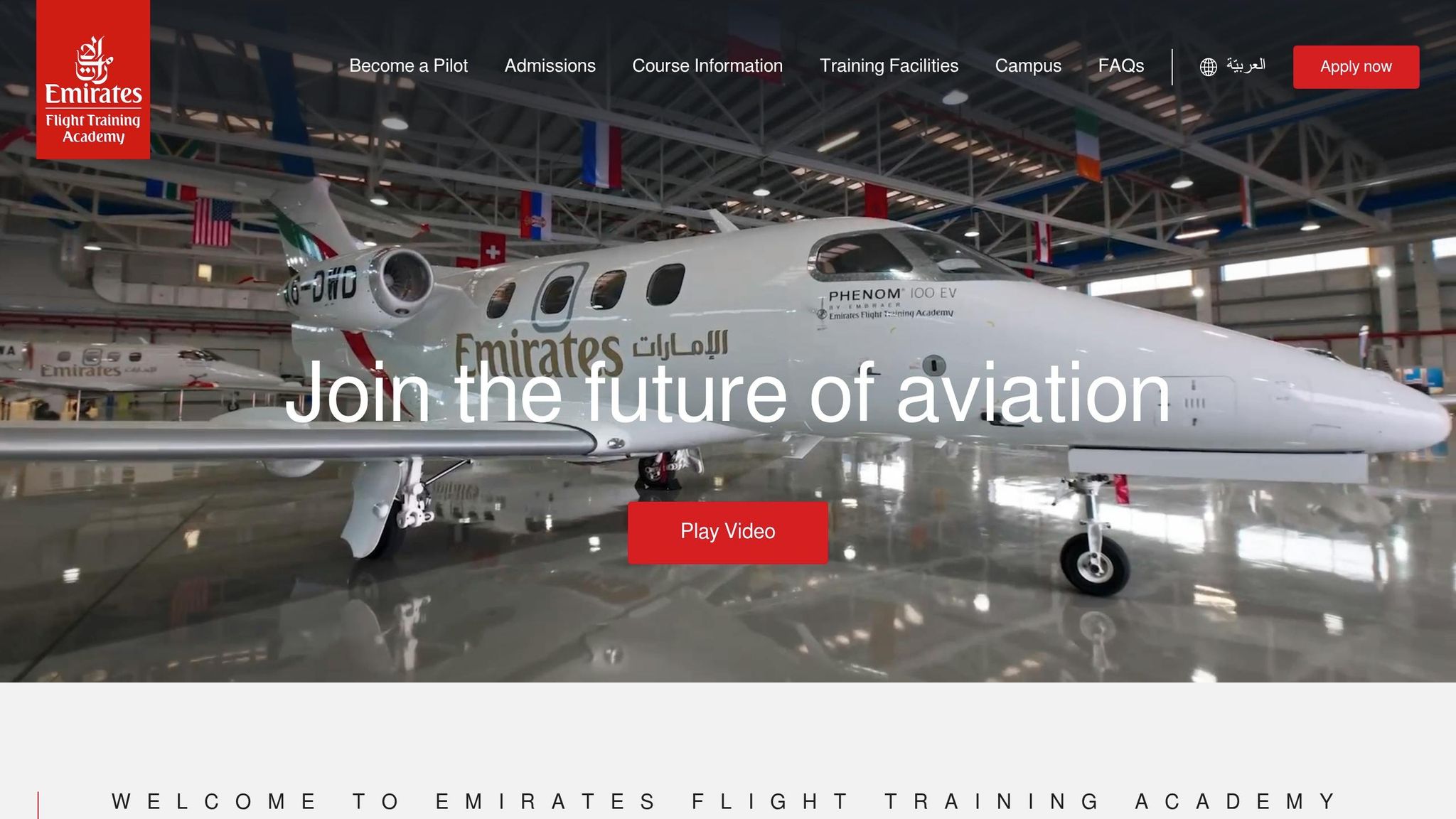
The Emirates Flight Training Academy (EFTA) stands as a prime example of scale and modern aviation training in the Middle East. Established in 2017 with a $135 million investment, EFTA operates from a sprawling 12.5-million-square-foot campus in Dubai. Its facilities include a private 1,800-meter runway and an independent Air Traffic Control Tower capable of managing over 400 flights daily. Since its launch, the academy has graduated more than 270 cadets, with over 120 of them now serving as First Officers on Emirates A380 and Boeing 777 aircraft. This advanced training environment offers a rigorous and immersive experience for aspiring pilots.
Pilot Training Programs
EFTA’s flagship program, the integrated ATPL course, spans 104 weeks and is designed to prepare students for airline roles. Developed in partnership with Boeing, the program includes over 1,100 hours of ground instruction in 36 interactive classrooms equipped with dual 86-inch touchscreens. Cadets also complete more than 270 hours of flight training across four aircraft types. Training begins with single-engine piston aircraft (Cirrus SR22 G6), progresses to multi-engine piston operations (Diamond DA42NG), and concludes with very light jet training on the Embraer Phenom 100EV. To further enhance safety skills, cadets undergo Upset Prevention and Recovery Training (UPRT) using the aerobatic Gamebird GB1, which can perform maneuvers up to ±10g.
For UAE Nationals, the National Cadet Pilot Programme (NCPP) offers fully sponsored training, providing a direct pathway to Emirates upon graduation and type rating. The total cost for the program is $181,650 (including 5% VAT), which covers training, accommodation, meals, uniforms, and materials.
“I loved flying the multi jet engine Phenom 100. It’s like moving from a V6 car to a V12 Car. Everything is quick.”
- Moosa Al Ketbi, Emirates Flight Training Academy Graduate
Simulator and Fleet Availability
EFTA supports its training programs with a modern fleet of 32 aircraft, including 20 Cirrus SR22 G6 single-engine trainers, 5 Diamond DA42NG multi-engine planes, 5 Embraer Phenom 100EV jets, and 2 Gamebird GB1 aerobatic aircraft. Additionally, six full-motion flight simulators are available for instrument training, emergency procedures, and Multi-Crew Cooperation exercises. The academy’s on-site maintenance hangar, large enough to fit three Olympic-sized swimming pools, is equipped with workshops for avionics, composites, and sheet metal, as well as a dedicated paint shop to ensure the fleet remains operational.
International Certifications and Standards
EFTA adheres to both UAE GCAA and EASA regulatory standards, and starting in 2025, it will offer dual licensing to align with requirements for Middle Eastern and European carriers. The academy boasts a 100% pass rate on authority exams, with graduates earning a frozen ATPL and a direct route to Emirates. Applicants must meet specific criteria, including being at least 18 years old, holding a high school diploma with Math and Physics, and achieving an IELTS score of 6.0 or higher.
“Emirates Flight Training Academy’s graduation ceremony symbolises the setting of a stronger foundation for global aviation and a promise that its future rests in the hands of committed, capable, resilient leaders.”
- His Highness Sheikh Ahmed bin Saeed Al Maktoum, Chairman and Chief Executive, Emirates Airline & Group
6. Royal Jordanian Air Academy
The Royal Jordanian Air Academy (RJAA), established in 1966, stands as a major pillar in the Middle East’s aviation education landscape. Operating out of Amman Civil Airport in Jordan, RJAA brings nearly six decades of experience to the table. With a legacy of training over 4,000 pilots and more than 5,000 maintenance professionals, the academy has earned its reputation as a leader in aviation training, attracting students from over 50 countries worldwide.
Pilot Training Programs
RJAA offers an Integrated Airline Transport Pilot License (ATPL) program that blends classroom theory with hands-on flight training. This program is tailored to meet international job market demands, equipping students with the skills and knowledge to pursue airline careers globally. Additionally, the academy provides a specialized Flight Dispatcher Course for those aiming to excel in flight operations management.
“My enrollment at the Royal Jordanian Air Academy was a turning point in my life. The learning environment is very special, combining advanced practical training with curricula aligned with international standards.”
- Lujain Ahmad Al-Zureikat, Commercial Pilot ATPL Student
Maintenance Training
As an officially approved Aircraft Maintenance Training Organization (MTO), RJAA offers professional technical training, including B1.1 certification pathways. State-of-the-art labs and workshops ensure that students gain hands-on experience, preparing them to step confidently into maintenance roles upon graduation.
International Certifications and Standards
RJAA’s curriculum adheres to the rigorous standards of both the Jordan Civil Aviation Regulatory Commission (CARC) and the European Aviation Safety Agency (EASA). These certifications reflect the academy’s dedication to global aviation safety and quality. With access to modern training simulators, a diverse fleet of aircraft, and well-equipped laboratories, RJAA ensures its students receive top-tier training aligned with international benchmarks.
7. Ethiopian Aviation Academy Pilot Training School

Since its founding in 1964, the Ethiopian Aviation Academy has trained professionals from more than 52 countries. Recognized as the 4th best globally by Aviation Voice, it operates from its main campus in Addis Ababa and a newer facility in Hawassa, launched in February 2023. Together, these campuses train approximately 4,000 students every year.
Pilot Training Programs
The academy offers two main pilot training pathways:
- Commercial Pilot License (CPL) Program: This 18–20 month program includes 920 hours of theoretical instruction, covering subjects like General and Aviation English. Costs range between $50,000 and $70,000 USD.
- Multi-Crew Pilot License (MPL) Program: Also spanning 18–20 months, this competency-based program is the only MPL program available in Africa.
“The development of this training facility has made Ethiopian Airlines self-sufficient in meeting its requirements for pilots.” – Ethiopian Aviation Academy
These programs offer essential training, preparing students for further specialized courses in crew operations and maintenance.
Cabin Crew and Maintenance Training
The academy’s offerings extend beyond pilot training. Its ECAA-approved programs include Basic Cabin Crew, Joint Recurrent, and Requalification training. These courses also cover specific aircraft models like the B787, A350, and Q400. With more than 57 years of cabin crew training experience, the academy ensures high standards in its curriculum.
The maintenance training division is equally robust. As an EASA-approved Maintenance Training Organization, it provides accredited courses in Airframe and Powerplant, Avionics, and Structure.
Simulator and Fleet Availability
The academy boasts 8 Level D Full Flight Simulators at its main campus, including Africa’s first Airbus A350 simulator. Other simulators cover aircraft such as the Q400, B737MAX, B737NG, B757, B767, B777, and B787. For hands-on primary training, students use Diamond DA40NG single-engine trainers and Cessna 172 aircraft.
International Certifications and Standards
The Ethiopian Aviation Academy holds several prestigious certifications. It is designated as an ICAO Regional Training Center of Excellence, an EASA-approved Maintenance Training Organization, and an IATA Authorized Training Center and Accredited Training School. Its training programs comply with Ethiopian Civil Aviation Authority regulations and align with EASA and JAA-FCL standards for global relevance.
The curriculum incorporates modern safety practices, including Upset Prevention and Recovery Training (UPRT), Threat and Error Management (TEM), and Crew Resource Management (CRM). These elements reflect the academy’s commitment to maintaining international aviation standards.
8. Intercontinental Aviation Academy
Intercontinental Aviation Academy (FlyIAA) continues the tradition of excellence established by regional academies, with training bases in Cyprus, the UAE, and Greece. Specializing exclusively in pilot training, FlyIAA designs its programs to align with EASA and ICAO standards. With a diverse team of aviation professionals from over 20 countries, the academy prepares students for certifications recognized across the globe. Here’s a closer look at their training pathways and cutting-edge facilities.
Pilot Training Programs
FlyIAA provides two primary training options: the Integrated Program, which is a fast-track, full-time route, and the Modular Program, designed for those who need a more flexible schedule. Both options cover essential aviation theory, hands-on flight training, Upset Prevention and Recovery Training, and Multi-Crew Cooperation.
The Modular Program includes a Structured Hours Building phase, enabling trainees to log the necessary hours for CPL and IR certifications. Additionally, students can opt for Type Rating training, which takes about two months and includes ground school and simulator sessions tailored to specific aircraft models.
“Whichever route you choose, you’ll emerge as a qualified, competent, and globally competitive pilot, ready to enter the cockpit with confidence.” – Intercontinental Aviation Academy
Simulator and Fleet Availability
As part of its Vision 2030 initiative, FlyIAA is upgrading its training fleet to a unified, modern standard. In early 2026, the academy expanded its fleet in Larnaca, Cyprus, with new Diamond DA40 aircraft, with more additions expected later that year. Training combines single-engine and multi-engine aircraft with simulator sessions, allowing students to practice complex maneuvers and emergency scenarios in a controlled environment. These advancements reflect FlyIAA’s commitment to producing highly skilled pilots ready to meet global demands.
International Certifications and Standards
FlyIAA ensures its training programs meet global certification standards, allowing graduates to hold licenses recognized by airlines worldwide. By adhering to EASA and ICAO regulations, the academy guarantees its students access to international career opportunities. The next global intake for FlyIAA begins on May 25, 2026.
9. Mid-East Aviation Academy
Mid-East Aviation Academy (MAA), a private flight school established in 2000, operates out of Amman Civil Airport in Jordan. It provides training that aligns with EASA standards, focusing on two main areas: pilot training and maintenance engineering. Like many institutions in the region, MAA plays a key role in advancing aviation training in the Middle East.
Pilot Training Programs
The “Become A Pilot” program offers an ATPL (Airline Transport Pilot License) course that meets both EASA and IATA standards. With experienced instructors, this program equips trainees for careers in both regional and international aviation.
Maintenance Training
The “Become Engineer” program offers a Bachelor’s degree in aircraft maintenance. Graduates are prepared for roles across various sectors of the global aviation industry. MAA focuses exclusively on developing expertise in piloting and aircraft maintenance engineering.
Training Program Comparison
The Middle East offers a variety of training programs, each with its own focus, technology, and areas of expertise. Here’s a closer look at two standout programs in the region:
The Emirates Flight Training Academy is equipped with 17 full flight simulators, allowing for a massive capacity of 130,000 training hours annually. They use in-house Pilot Support Stations to enhance pre-simulator preparation and incorporate advanced tools like 3D printing, which saves around AED 1 million (approximately $270,000) each year.
On the other hand, the Middle East Airlines Training Center takes a broader approach. Their training spans various areas, including pilots, cabin crew, technical aircraft maintenance, ground operations, security, safety, management, and even sales and reservations. This program combines ab-initio training through partnerships with schools like Flight Training Europe and handles Type Rating and route training internally using a hybrid approach.
“Sets new firsts and serves as best‑in‑class in aviation training, shaping our programmes and preparation for our future fleet.” – His Highness Sheikh Ahmed bin Saeed Al Maktoum
Certification Standards and Requirements
Both programs adhere to strict international standards. Emirates Flight Training Academy operates under the General Civil Aviation Authority (GCAA) and aligns with EASA (European Union Aviation Safety Agency) standards, focusing on Commercial Pilot License (CPL) training. Their curriculum includes over 196 hours of simulator and aircraft flight time. Meanwhile, Middle East Airlines Training Center follows ICAO (International Civil Aviation Organization) and EASA frameworks, offering certifications such as ATPL, CPL, Instrument Rating, Multi Engine, Multi Crew Cooperation Course, and Jet Orientation Course. The program is also part of the ICAO TRAINAIR PLUS Programme and issues licenses through the Lebanese Civil Aviation Authority.
Candidate Requirements
Most programs require pilot candidates to hold a Class 1 Medical Certificate and achieve an ICAO English Proficiency Level 4 or higher. Physical requirements can differ; for instance, Middle East Airlines Training Center mandates a minimum height of 5 feet 7 inches (170 cm) for males and 5 feet 6 inches (168 cm) for females. Additionally, candidates should budget for a non-refundable application fee of $500 and medical examination costs of about $1,200.
Conclusion
The Middle East has emerged as a prominent hub for aviation training, offering programs approved by ICAO and EASA. Institutions like the Emirates Flight Training Academy, with its 104-week ATPL course, and the Middle East Airlines Training Center, which adopts a multi-discipline approach, provide structured pathways from zero flying experience to careers with commercial airlines. These programs are supported by cutting-edge infrastructure, including dedicated airports, air traffic control towers, and advanced simulators, creating training environments that closely replicate real-world conditions.
Beyond pilot training, professionals can pursue various career paths in aviation, such as cabin crew operations, maintenance, and safety management. Many training programs also include direct recruitment opportunities, granting graduates exclusive application privileges with major carriers. This seamless transition from training to employment is a key advantage of the region’s aviation ecosystem.
However, the journey requires a significant financial commitment, with training costs ranging from $100,000 to $150,000. Some airlines alleviate this burden by offering financing options, where repayment is deducted from future salaries. Entry-level First Officers in the Middle East typically earn between $3,000 and $3,500 per month, often under contracts lasting up to 10 years. The selection process is rigorous, involving psychometric tests, medical evaluations, and meeting the ICAO Level 4 English proficiency standard.
These training centers not only produce highly skilled aviation professionals but also contribute to global aviation safety by maintaining consistent training standards and leveraging advanced technology. This approach reflects the Middle East’s commitment to aligning its programs with the demands of modern commercial aviation. Whether you’re starting from scratch or seeking to advance in your aviation career, the region’s training programs provide world-class preparation for the challenges of today’s aviation industry.
FAQs
Which Middle East academy fits pilots vs cabin crew vs maintenance?
For pilots, the Royal Jordanian Air Academy provides thorough training programs tailored to their needs. Cabin crew members can take advantage of specialized courses offered by EgyptAir Training. For those pursuing careers as aircraft maintenance technicians, the Royal Jordanian Air Academy also delivers targeted programs. Additionally, institutions like Air Arabia and Etihad Aviation Training offer a variety of courses designed for aviation professionals across different roles.
Do these programs lead to EASA/ICAO-recognized licenses?
Many airline training programs in the Middle East, including those offered by Middle East Airlines Training Center and Emirates Flight Training Academy, prepare aviation professionals for licenses recognized by international bodies like ICAO. These programs adhere to EASA/ICAO standards and comply with the regulations of regional aviation authorities, such as the Lebanese Civil Aviation Authority.
What should I budget for total training costs and fees?
Training costs for airline-specific programs in the Middle East can differ significantly. Programs that cover everything from flight hours and simulator training to licensing can cost anywhere from a few thousand dollars to well over $100,000. The exact price depends on the training institution and the program’s scope, with notable providers including ICAO, Emirates Flight Training Academy, and flydubai.