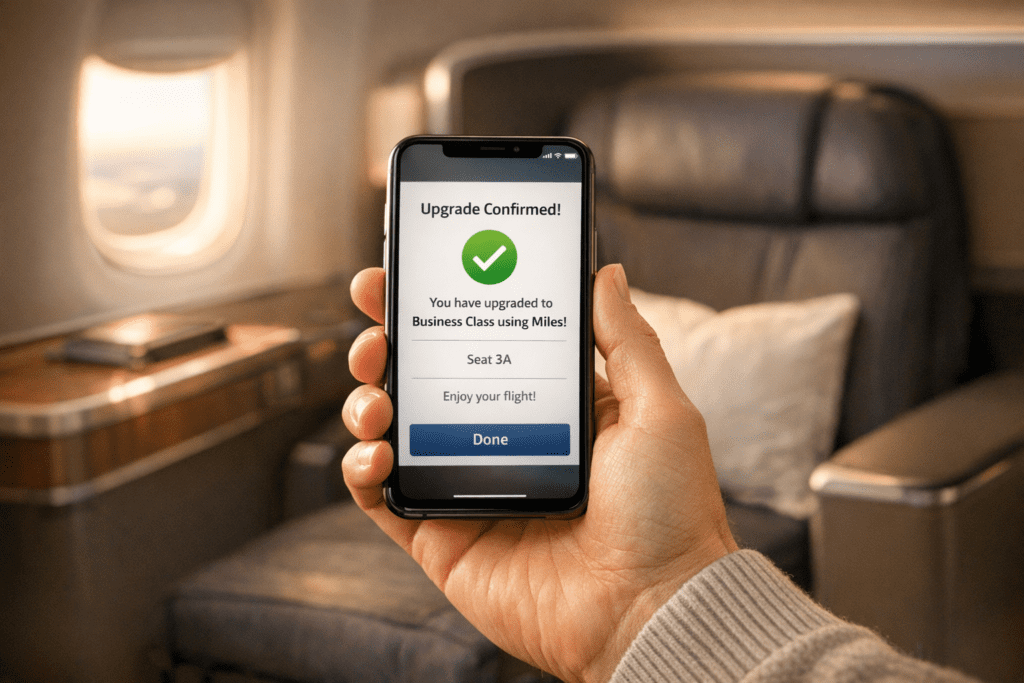
Flying premium doesn’t have to mean paying premium. With miles, you can upgrade your economy ticket to business or first class for a fraction of the cost. Here’s how it works:
- Save Money: Upgrades with miles often cost less than booking premium seats outright. For example, a United flight from Los Angeles to Sydney in August 2025 cost $4,338 in cash, but using miles and fees brought it down to $2,139 – a $2,199 savings.
- Flexible Options: Airlines like United, Delta, and American offer upgrades for as little as 7,500 miles domestically or 25,000 miles plus a co-pay on long-haul flights.
- No Elite Status Needed: Anyone with enough miles can request an upgrade, though elite members enjoy higher priority.
To maximize your miles:
- Check upgrade availability before booking using tools like United’s “Expert Mode” or American’s upgrade alerts.
- Avoid ineligible fares like Basic Economy.
- Request upgrades early and monitor availability closer to departure, especially 7–14 days out.
This guide covers everything from eligibility rules to step-by-step instructions for major airlines, plus tips for partner and international upgrades. By planning smartly, you can turn your miles into a premium travel experience without overspending.
Best Ways to Fly Business & First Class to Asia (Using Miles)
sbb-itb-e205081
Upgrade Eligibility and Requirements
Before jumping into an upgrade request, it’s essential to understand which tickets qualify and whether extra fees might apply. Airlines have specific rules for fare classes, meaning not every ticket can be upgraded with miles – even if you have plenty saved. Below, we’ll dive into fare rules, elite perks, and potential fees.
Ticket Types and Fare Class Rules
Most major U.S. airlines allow mileage upgrades on standard revenue tickets – those purchased with cash. However, eligibility depends heavily on the fare class tied to your ticket. For instance, United permits upgrades on many standard fare classes (both full-fare and discounted), while American Airlines offers upgrades on select fares.
Some tickets, though, are off-limits. Basic Economy fares and heavily discounted promotional tickets are excluded from mileage upgrades on American, Delta, and United. Similarly, award tickets can’t be upgraded on American or United, though Delta does allow upgrades on tickets booked with miles.
Here’s a tip: if you’re flying United, enable “Expert Mode” in your profile settings. This tool lets you check upgrade inventory (like PZ or PN classes) before booking, so you can pick a fare eligible for an upgrade.
How Frequent Flyer Status Affects Upgrades
Having elite status can do more than just bump you up the waitlist – it can also save you money. For example, United waives cash co-pays for certain elite members, while non-elite passengers might pay $300–$550 for upgrades on long-haul routes.
When upgrade space isn’t immediately available, airlines typically place you on a waitlist. Your position on that list depends heavily on your frequent flyer status. Delta, for instance, prioritizes Diamond and Platinum Medallion members up to 120 hours before departure, while Silver members get cleared at 24 hours. United uses a similar system, giving top priority to Global Services members and PlusPoints requests over standard MileagePlus upgrades.
“If you’re using a mileage upgrade and it doesn’t clear before departure, you’ll likely fall below all the elite flyers on the upgrade waitlist at the airport.” – Andrew Kunesh, Contributor
Traveling with an elite member? Link your reservations. On Delta, for example, a companion can benefit from the higher-tier Medallion status of the primary traveler, which means their upgrade request will clear at the same priority level.
Understanding these rules can help you maximize your miles and increase your chances of scoring that premium seat.
Co-pays and Extra Fees
Even with elite perks, many upgrades still involve a cash co-pay. These co-pays often apply to discounted tickets and vary depending on the route and fare class. For example, United charges $0 for upgrading full-fare tickets to Europe, but discounted fares might require a co-pay of $550 plus 20,000 miles for a business class upgrade.
American Airlines has historically required a $350 co-pay plus 25,000 miles to upgrade discount economy tickets to business class on long-haul flights. Meanwhile, Delta’s “Upgrade with Miles” program values SkyMiles at roughly 1 cent per mile toward the cash price of an upgrade.
“Many upgrades require both miles and a cash copay, with the amount and process differing by airline and route.” – Andrew Kunesh, Contributor, The Points Guy
If your upgrade doesn’t clear, don’t worry – both your miles and the cash co-pay are usually refunded automatically within 7–10 days. A notable exception is United’s partner airline upgrades (like Star Alliance Upgrade Awards), which typically skip the cash co-pay but limit eligibility to higher fare classes like Y, B, C, and D.
How to Request an Upgrade with Miles
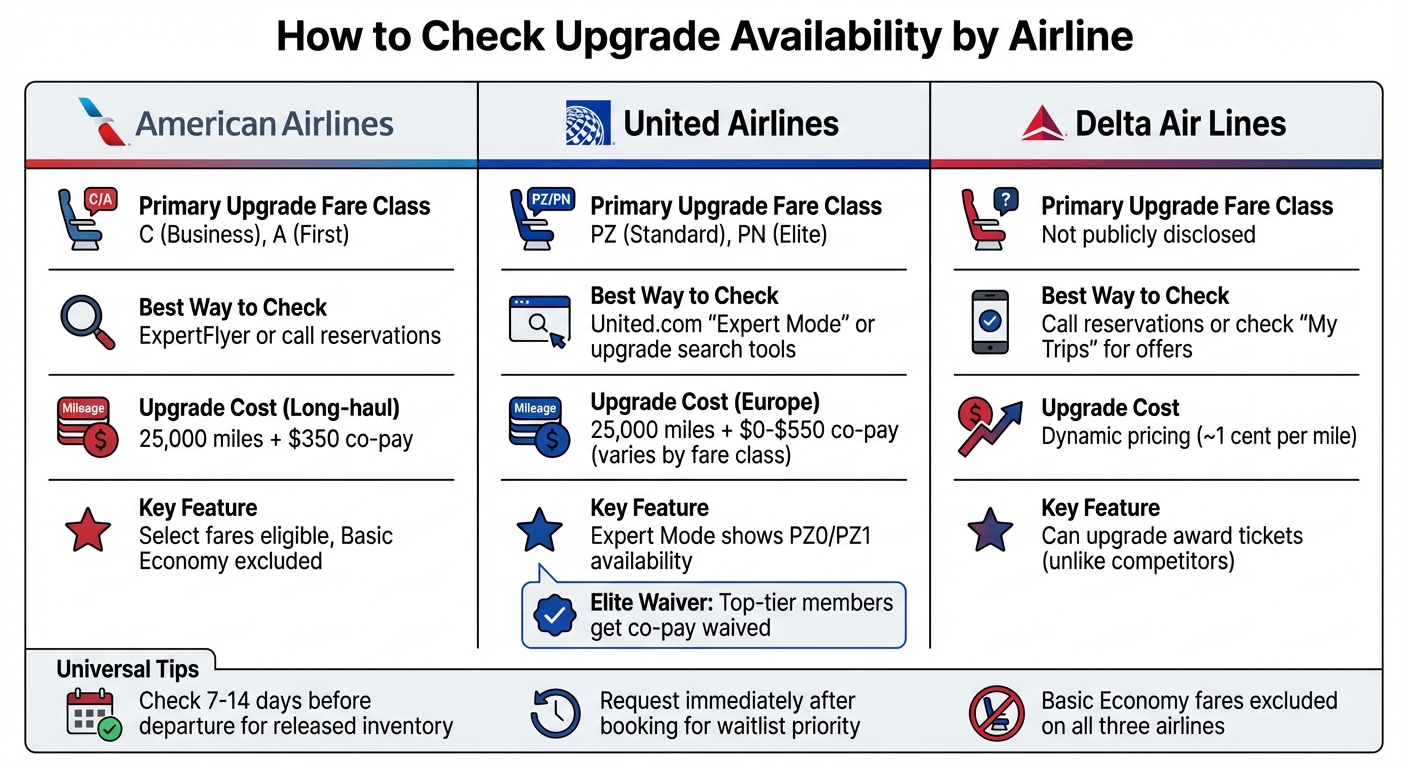
Airline Mileage Upgrade Comparison: United vs Delta vs American Airlines
Once you’ve confirmed your ticket is eligible and reviewed any associated fees, it’s time to request your upgrade. While the exact process varies by airline, the general steps are the same: check for available upgrade space, submit your request, and pay attention to timing. Only tickets that meet eligibility criteria and have available upgrade space (as discussed earlier) will qualify. Here’s how the process works for the three major U.S. airlines.
Checking for Available Upgrade Space
Before making your request, confirm that upgrade space is available. Just because premium seats are empty doesn’t mean they’re open for mileage upgrades – airlines manage upgrade inventory separately from standard seat availability.
Each airline uses specific fare class codes to determine upgrade eligibility. For instance, United Airlines uses “PZ” for most mileage upgrade awards and “PN” for instant upgrades reserved for top-tier members like Premier 1K and Global Services. Delta Air Lines doesn’t make its mileage upgrade inventory public, so you’ll need to call a reservations agent to check availability for international upgrades.
If you’re flying United, enabling “Expert Mode” in your MileagePlus account can help you see detailed availability for fare classes like PZ0 or PZ1 while searching for flights. You can also use the “Upgrades, certificates, and promotion codes” filter on United’s website to see if an upgrade is confirmable or waitlisted. For American Airlines, tools like ExpertFlyer allow you to search for upgrade inventory and set alerts for newly available seats. For Delta, the “My Trips” section on their app or website shows dynamic “Upgrade with Miles” offers, which typically value miles at around 1 cent each.
| Airline | Primary Upgrade Fare Class | Best Way to Check Availability |
|---|---|---|
| American Airlines | C (Business), A (First) | ExpertFlyer or call reservations |
| United Airlines | PZ (Standard), PN (Elite) | United.com “Expert Mode” or upgrade search tools |
| Delta Air Lines | Not publicly disclosed | Call reservations or check “My Trips” for offers |
Once you’ve confirmed space, move on to the next step: submitting your upgrade request.
Upgrade Request Process for United Airlines, Delta Air Lines, and American Airlines
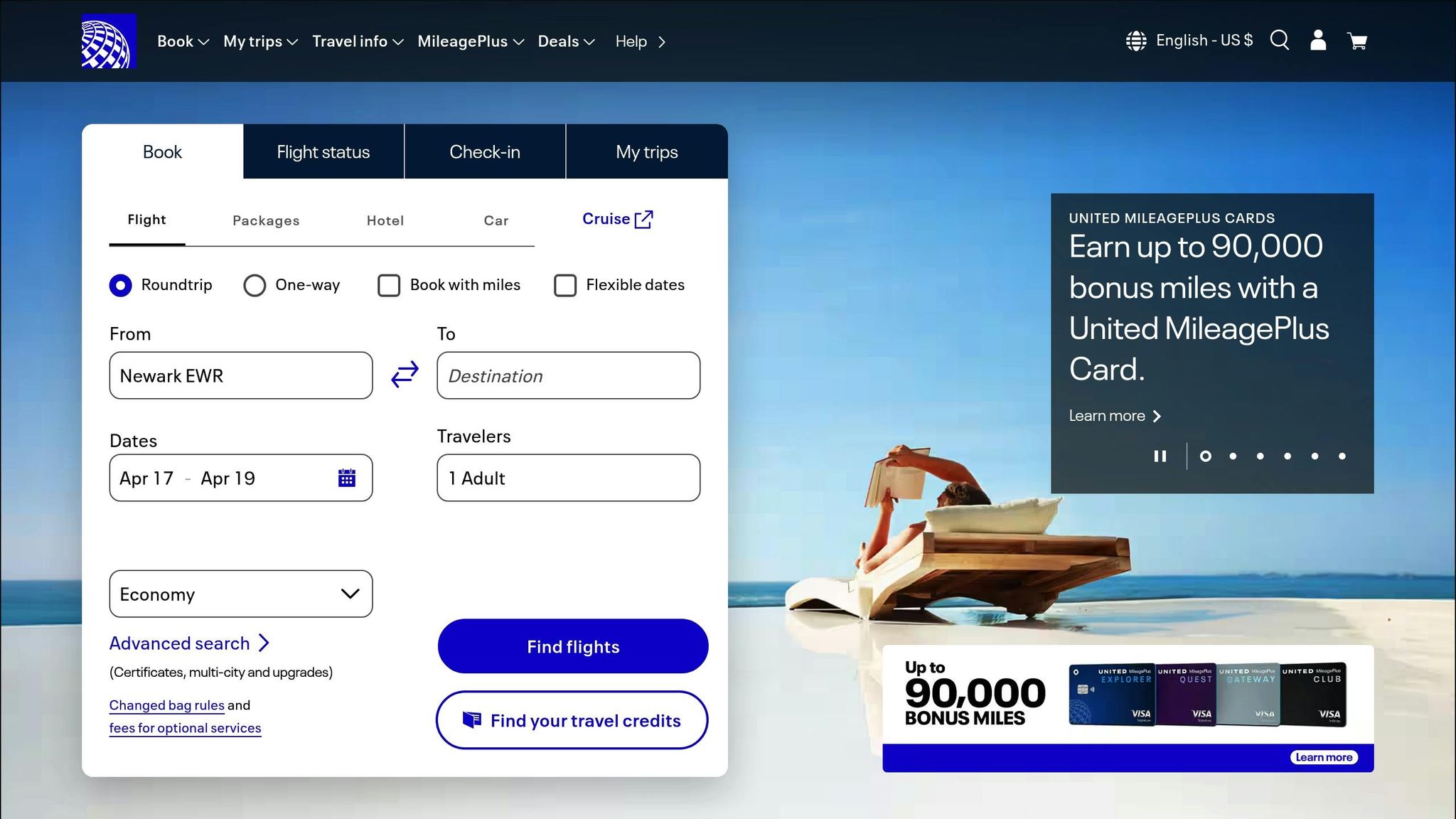
After booking your ticket, requesting an upgrade is fairly straightforward.
For United Airlines, log in to your MileagePlus account, go to “My Trips”, and request the upgrade if space is available. If no space is open, you can join the waitlist. United won’t deduct miles or co-pays until your upgrade clears.
American Airlines has a similar process. Visit “My Trips” on their website or app, select your reservation, and look for the upgrade option. If space is available, you can confirm the upgrade immediately for 25,000 miles plus a $350 co-pay on long-haul flights. If not, you’ll be added to the waitlist, with priority determined by your elite status and the time of your request.
Delta offers two options. For dynamic “Upgrade with Miles” offers, check the “My Trips” section after booking. These are priced dynamically and value miles at over 1 cent each. For traditional international Mileage Upgrade Awards, call Delta reservations to check availability and submit your request.
“If you have the miles and see the upgrade space, lock it in while it’s still available.” – Andrew Kunesh, Contributor, The Points Guy
Once your request is in, knowing when to follow up can make all the difference.
Best Times to Request Upgrades
Timing plays a big role in securing an upgrade. The best approach is to check for confirmable upgrade space before you even book your ticket. If upgrade inventory is available at the time of booking, you can confirm your premium seat right away and skip the waitlist.
Booking two to three months in advance often improves your chances of finding upgrade space. Airlines also tend to release unsold premium cabin seats for mileage upgrades about seven to fourteen days before departure, so it’s worth checking during that window.
Mid-week flights – especially on Tuesdays and Wednesdays – usually have better upgrade availability compared to peak times like Monday mornings or Friday afternoons. If you’re waitlisted, arriving at the airport early can also help. Check the gate monitors for your position on the upgrade list and speak to the gate agent before boarding begins – they’re typically too busy to assist during boarding.
“The boarding process is the busiest part of their day. Attempting to talk to an agent about an upgrade in the middle of boarding… isn’t likely to succeed.” – Julian Kheel, Founder and CEO, Points Path
Finally, if you’re waitlisted, the time you submit your request acts as a tie-breaker among passengers with the same elite status. Submitting your request as early as possible can give you an edge if you’re not in the top elite tier.
How to Improve Your Upgrade Success Rate
How Airlines Manage Upgrade Inventory
Airlines handle upgrade inventory separately from regular seat availability. That means even if premium seats are empty, they might not be offered for mileage upgrades because airlines reserve them for cash-paying customers. This is why checking early and timing your requests strategically can make a big difference in securing an upgrade.
Elite status plays a huge role in determining who gets priority for upgrades. Take United Airlines as an example – they follow an 8-step process to rank upgrade requests: Global Services members come first, followed by PlusPoints or MileagePlus award users, then Premier tiers (1K, Platinum, Gold, Silver), fare class, premium cardholders, corporate participants, those who spend over $25,000 annually, and finally, the time the request was made.
The route you’re flying can also affect your chances. On high-demand business routes like San Francisco to Newark, competition from elite flyers is tougher. But leisure routes, like flights to Hawaii, often have fewer elite-status passengers, which could improve your odds.
Your ticket’s fare class is another factor. Full-fare tickets are prioritized over discounted ones. For instance, on three-cabin planes, passengers in Premium Plus (fare classes O, A, R) are more likely to snag a business class upgrade compared to those in standard economy. Checking upgrade availability before booking can save you from ending up on a long waitlist.
Smart Strategies for Miles and Timing
Once you understand how airlines manage upgrades, you can use these strategies to boost your chances. Tools like United’s “Expert Mode” let you search for specific upgrade fare buckets – look for codes like “PZ” for standard mileage upgrades or “PN” for instant upgrades for top-tier members. If these codes show up, you can lock in your upgrade right away instead of waiting.
Timing is also key. Airlines often release unsold premium seats for mileage upgrades 7 to 14 days before departure. Set a reminder to check 24 hours before your flight, as some upgrades clear automatically at check-in. Flights during mid-week or weekends, when business travel is lighter, can also improve your odds. For example, a Tuesday afternoon flight might have more upgrade availability than a Monday morning flight packed with corporate travelers.
“If you see multiple flights on the same route, choose the flight showing PZ/PN inventory… That alone boosts your chances dramatically.” – TravelDiari
Avoid Basic Economy tickets, as they’re almost always ineligible for upgrades with miles or status across major U.S. airlines. Also, think about whether an upgrade is worth the cost. A good deal typically means getting at least 1.5 cents per mile in value after factoring in any cash co-pays. For instance, upgrading a discounted economy ticket to business class on American Airlines for a long-haul flight usually costs 25,000 miles plus a $350 co-pay.
If managing all these details feels overwhelming, professional travel services can help simplify the process.
Getting Help from Travel Services
Juggling upgrade inventory and timing can get tricky, especially if you’re dealing with multiple airlines or international routes. That’s where services like Flight Booking 247 (https://flightbooking247.com) come in handy. They offer 24/7 concierge support to find flights with the best upgrade opportunities. Their real-time assistance helps you check upgrade availability, compare fare classes, and figure out the best time to submit your request.
If you’re stuck on a waitlist, their concierge can guide you to flights with confirmed upgrade availability. This kind of personalized help is especially useful during the critical 7–14 day window when airlines release extra upgrade inventory or when a seat suddenly becomes available, and you need to act fast.
Upgrades on Partner Airlines and International Flights
Partner Airline Upgrade Rules
Upgrading on partner airlines works differently from upgrading with your home carrier. Star Alliance provides the broadest network, enabling you to use miles from one member airline (like United) to upgrade on nearly all partners. In contrast, SkyTeam and Oneworld have more limited agreements, which often vary by individual airline.
A critical factor in partner upgrades is fare class eligibility. While discounted tickets might work for upgrades on your home airline, partner airline upgrades usually require full-fare tickets.
“Typically only the most expensive paid fares are eligible for upgrades using miles. So that $200 basic economy deal to Europe can’t be upgraded” – Benji Stawski, Travel Expert
Additionally, partner airline upgrades generally allow only a one-cabin move. You can upgrade from Economy to Business or from Business to First, but you can’t skip straight from Economy to First on planes with three cabin classes.
“The first and most important thing about Star Alliance Upgrades is that you can only upgrade one class from economy to business, or business to first” – Gilbert Ott, Founder, God Save the Points
Timing is crucial for partner upgrades. Unlike domestic upgrades that might clear at the gate, partner airline upgrades often need to be finalized at least 24 hours before departure. For example, United allows Star Alliance upgrade requests up to 331 days before departure for most partners, while ANA extends this window to 365 days. Another advantage: Star Alliance partner upgrades generally don’t require cash co-pays, unlike many home airline upgrades.
Make sure your ticket is both marketed and operated by the same airline. Codeshare flights – like a United-marketed flight operated by Lufthansa – are usually ineligible for mileage upgrades.
Now, let’s dive into the additional rules and costs tied to international flight upgrades.
International Flight Upgrade Rules
When upgrading international flights, you’ll encounter more complex rules and varying mileage costs. As with partner upgrades, your fare class determines eligibility. For instance, United MileagePlus upgrades on Star Alliance partners depend on specific fare codes. Air Canada accepts Economy fare codes Y, B, and O, while Lufthansa includes Y, B, G, E, M, and U.
Mileage costs also depend on the destination. For example, upgrading from Economy to Business on United flights to Europe requires 25,000 miles, while flights to Australia or New Zealand need 35,000 miles. Upgrading from Business to First ranges from 40,000 miles for Europe to 60,000 miles for Australia and New Zealand.
Keep in mind that award seat availability doesn’t guarantee upgrade availability. Airlines release separate “upgrade award” inventory, so even if you can book a seat with miles, it doesn’t mean an upgrade is possible. A helpful tip: if a “Saver” level award seat is available on a partner flight, there’s a good chance a mileage upgrade is also available for that seat.
Delta SkyMiles members often need to call a reservations specialist to arrange partner upgrades on airlines like Air France, KLM, or Virgin Atlantic, as these upgrades can’t always be booked online. American Airlines, on the other hand, limits partner upgrades to British Airways and Iberia, with costs ranging from 12,500 to 70,000 miles per leg.
Lastly, some aircraft are completely excluded from partner upgrades. For instance, Singapore Airlines frequently restricts mileage upgrades on its A350, A380, and 777-300ER aircraft. Always check for specific aircraft restrictions before booking your ticket to avoid surprises.
Conclusion
Tips for a Smooth Upgrade Process
To make the most of your upgrade opportunities, careful planning is essential. As mentioned earlier, basic economy and heavily discounted tickets are typically not eligible for mileage upgrades. Before purchasing, use advanced search tools to identify flights with available upgrade space.
Request your upgrade as soon as you book your flight. Timing matters because your request date acts as a tie-breaker when fare class and status are the same. Keep an eye on your reservation during the 7-to-14-day window before departure, as this is when airlines often release unsold premium seats.
“The good news is that mileage upgrades can almost always clear in advance of departure if there’s upgrade inventory, so there’s no incentive to wait until closer to the flight.” – Andrew Kunesh, Contributor, The Points Guy
To evaluate whether an upgrade is worth it, use this formula:
[(Premium seat cash price – cash co-pay) / miles required] x 100
If the result is above 1.5 cents per mile, it’s generally a good deal. Keep in mind that co-pays can vary significantly, ranging from $75 to $550 depending on the route and airline.
For more complex upgrades – like those involving international flights or partner airlines that don’t show online – contact the airline’s reservations team directly. Sometimes, these upgrades require manual processing. If you need extra help navigating these steps or finding flights that align with your upgrade goals, Flight Booking 247 offers 24/7 concierge support to guide you through securing your premium cabin experience. You can visit them at https://flightbooking247.com.
FAQs
How many miles do I need to upgrade to business or first?
The number of miles needed to upgrade to business or first class depends on factors like the airline, the route, and seat availability. Airlines such as American Airlines and United offer upgrades through their loyalty programs, but the exact mileage required varies based on your specific flight details. To get precise information, refer to your airline’s loyalty program or award charts. Typically, upgrades involve using miles to move up one cabin level – like going from economy to business or from business to first class.
Why are some fares (like Basic Economy) not upgrade-eligible?
Certain ticket types, like Basic Economy, are excluded from upgrades due to their deeply discounted nature and specific restrictions. These fares are intentionally structured to remain non-upgradable, keeping the lowest fare class bound to its original conditions. This means you can’t use miles or other methods to move to premium cabins when flying on these tickets.
What happens to my miles and co-pay if my upgrade doesn’t clear?
If your upgrade request doesn’t go through, the miles used are generally credited back to your account. However, any co-pays or extra fees you paid for the upgrade are often non-refundable. Since upgrade availability can shift frequently, it’s a good idea to check your airline’s specific policies. Keep in mind, most airlines don’t automatically refund co-pays for upgrades that don’t succeed.