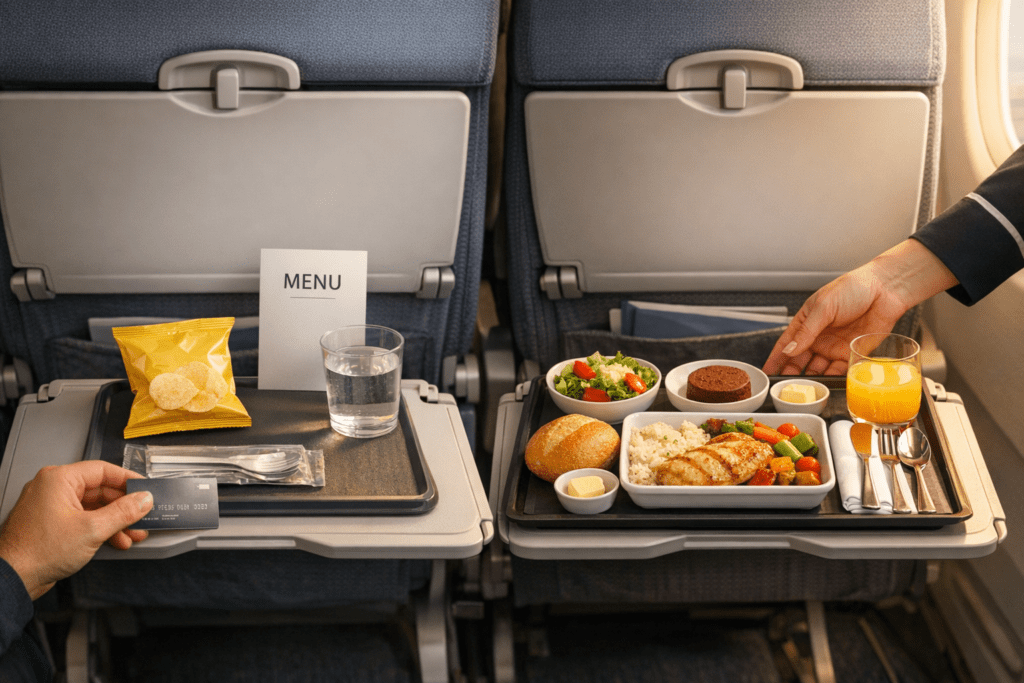
Flying budget or full-service? Here’s the deal: budget airlines save you money by charging for food and drinks, while full-service airlines include meals and snacks in the ticket price. Your decision depends on priorities – cost savings or convenience.
Key Differences:
- Budget Airlines: No free snacks or drinks. Food is pre-packaged and must be purchased (e.g., $4.49 for soda on Spirit). Meals are optional add-ons and typically cost $7–$14.
- Full-Service Airlines: Complimentary snacks, drinks, and meals – especially on long flights. Economy passengers get full meals on international routes, while premium cabins offer elevated dining experiences.
Quick Comparison:
| Feature | Budget Airlines (e.g., Spirit, Frontier) | Full-Service Airlines (e.g., Delta, United) |
|---|---|---|
| Free Water/Soda | No, charges apply | Yes |
| Complimentary Snacks | No | Yes |
| Hot Meals | For purchase ($7–$14) | Included on long flights |
| Alcoholic Drinks | For purchase ($8–$12) | Free on international flights |
| Special Meals | Rarely available | Pre-order options for dietary needs |
Bottom Line: Budget airlines work for short, no-frills trips if you’re okay with buying food. Full-service airlines are better for longer flights or if you value included meals. Choose based on your travel needs and budget.
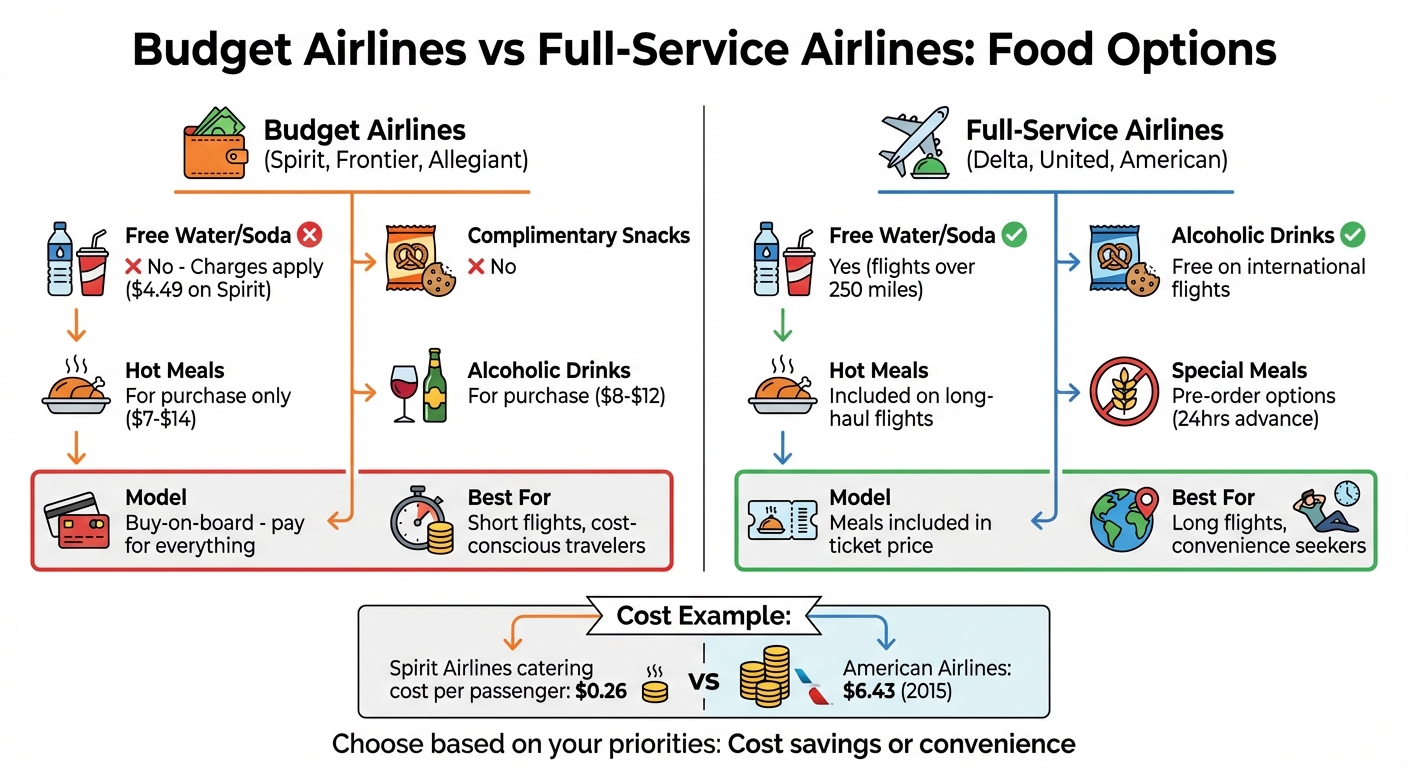
Budget vs Full-Service Airlines Food Options Comparison
Food Options on Budget Airlines
The Buy-On-Board Model
Budget airlines stick to a buy-on-board (BOB) model, meaning passengers pay separately for every snack, meal, or drink they want during the flight. Unlike full-service carriers that include meals in the ticket price, this system allows travelers to decide what they want to purchase, keeping ticket prices lower.
As Frontier Airlines explains:
This is part of how we keep fares low – by letting you choose only what you want, we’re able to offer more affordable pricing.
To make a purchase, you’ll need a valid credit or debit card. Airlines like Spirit and Frontier accept only card payments or mobile options such as Apple Pay and Google Pay. Since these airlines don’t have onboard kitchens, all food options are pre-packaged and shelf-stable. Complimentary items are not part of the deal.
No Free Meals or Snacks
In line with the buy-on-board model, budget airlines enforce a strict no-free-food policy. Complimentary items, including water, are not standard. Spirit Airlines charges for every beverage, with soft drinks priced at $4.49 and hot beverages at $3.99. Frontier, on the other hand, offers water for free – but only if you specifically request it.
This policy applies regardless of flight length. The rationale is straightforward: skipping free food reduces costs for stocking, labor, and service. It also lowers the aircraft’s weight, which helps improve fuel efficiency. Essentially, passengers who choose not to eat or drink avoid subsidizing those who do.
Examples of Popular Budget Airlines
Spirit Airlines offers snacks like Pringles and Oreos priced between $3.00 and $4.99, while snack boxes and cheese trays range from $8.00 to $9.00. Alcoholic beverages cost between $9.99 and $11.99. On a 2.5-hour Spirit flight from Boston to Atlanta in 2025, one passenger spent $25.00 on a Mai Tai, cheese tray, and café snack box. Interestingly, the crew didn’t disclose the total cost before charging their card.
Frontier Airlines prices cold drinks like soda and juice at $4.29, individual snacks at $4.99, and specialty snack packs between $6.99 and $9.99. One standout option is their “Griz’s Snack Pack” for $9.99, which includes hazelnut wafers, smoked gouda spread, sourdough flatbread, gummies, and roasted almonds. Frontier also offers unlimited hot beverage refills for a flat fee of $3.99.
Allegiant Air leans toward more premium options. Their Tapas snack pack costs $10.99, and they serve unique cocktails like Aperol Spritz and Negroni – uncommon choices for budget airlines. Snack boxes range from $7.99 to $13.99, which is higher than Spirit or Frontier. These selections highlight the balance between cost and convenience that budget travelers often face.
sbb-itb-e205081
Food Options on Full-Service Airlines
Free Meals and Snacks
Flying with full-service airlines often comes with the perk of complimentary food and drinks, tailored to the flight’s duration. On shorter routes, passengers can expect simple snacks like Biscoff cookies, pretzels, almonds, or savory mixes. For longer flights, the service steps up to full meals, which is a clear departure from the “buy-on-board” approach typical of budget airlines.
When it comes to long-haul international flights, the food offerings become more substantial. Economy passengers are usually served a multi-course meal, often including an appetizer, a hot entrée (like poultry or vegetarian pasta), bread, and dessert. To top it off, complimentary alcoholic beverages are commonly available on these routes.
For those flying in premium cabins, the dining experience is even more refined. On domestic routes over 900 miles, United and Delta often serve hot meals in First Class, whereas economy passengers on the same flights usually receive snacks. Hawaiian Airlines is a standout in this regard, offering complimentary hot meals to economy passengers on most North American routes – a rare treat among U.S. carriers.
These standard services also accommodate a range of dietary preferences, ensuring passengers with specific needs are catered to.
Special Meal Options
Full-service airlines go beyond basic offerings to address diverse dietary requirements. For instance, Delta Air Lines provides 11 different special meal options on international flights. These include vegetarian, vegan, gluten-free, kosher, halal, diabetic-friendly, low-sodium, and low-calorie meals.
To ensure availability, airlines typically require passengers to request special meals at least 24 hours before departure. Premium cabin passengers enjoy even more flexibility, with some airlines allowing meal selection via their apps. For example, Delta One guests can pre-select their meals using the Fly Delta app as early as seven days before their flight, up to 24 hours before departure. Pre-ordering ensures dietary needs are met and minimizes the risk of missing out on preferred choices during meal service.
These tailored options highlight the efforts airlines make to enhance the passenger experience.
Examples of Full-Service Airlines
Here’s a closer look at how some full-service airlines approach in-flight dining, showcasing their unique offerings and attention to detail:
- Delta Air Lines: Known for its diverse international meal options, Delta serves dishes like Impossible meatballs, Thai chicken soup, and gnocchi. Collaborations with chefs like Curtis Stone have elevated their dining experience, and 76% of surveyed Delta economy passengers found the portion sizes satisfying.
- United Airlines: On flights lasting 12 hours or more, United provides a complimentary mid-flight snack and a second meal before landing. Economy passengers can expect options like vegetarian pasta or chicken and rice on international routes.
- Hawaiian Airlines: Bringing a taste of the islands onboard, Hawaiian Airlines offers dishes inspired by regional flavors, such as miso-glazed cod and Hawaiian-style short ribs, crafted by Chef Wade Ueoka. Complimentary beer and wine are also part of the service.
- American Airlines: Menu items like sea bass, vegetable terrine, and harvest grain bowls are available on select routes. In First Class, passengers on flights over 2,200 miles can choose their dessert instead of receiving a pre-selected option. Service is available on flights departing between 5:00 a.m. and 8:00 p.m..
These examples underscore the variety and quality that full-service airlines bring to their in-flight dining experiences, catering to both standard and specialized preferences.
Budget vs Full-Service Airlines Comparison
Food Options Comparison Table
The differences between budget and full-service airlines are especially noticeable when you compare what’s included in the ticket price versus what you’ll need to pay for onboard. Here’s a side-by-side look:
| Feature | Budget Airlines (Spirit, Frontier, Allegiant) | Full-Service Airlines (Delta, United, American) |
|---|---|---|
| Complimentary Water/Soda | No – charges apply (e.g., $4.49 on Spirit) | Yes – free on flights over 250 miles |
| Complimentary Snacks | No – except on certain premium fares | Yes – pretzels, cookies, and similar snacks on most flights |
| Hot Meals | Limited snack boxes for purchase ($7.49–$13.99) | Free on long-haul flights; $9–$16 for purchase on domestic routes |
| Alcoholic Beverages | For purchase only ($8–$10.60 average) | Free on international and premium cabins; $7–$11 in economy |
| Special Meal Options | Rarely available | Pre-order available on flights with meal service |
Cost Savings vs Convenience
Now that we’ve covered the details, let’s weigh the savings against the convenience.
It really comes down to your priorities: saving money or enjoying extra perks. Budget airlines keep fares low by charging separately for services that full-service airlines include. For instance, in 2015, Spirit Airlines spent just $0.26 per passenger on catering, compared to American Airlines’ $6.43. While this leads to lower upfront ticket prices, the savings can quickly shrink if you decide to buy food or drinks onboard.
Take Spirit Airlines as an example: spending $10–$15 for a soda and snack box could cancel out your initial fare savings. On the other hand, Southwest Airlines – which is often grouped with budget carriers – includes complimentary snacks and drinks, making it a standout exception. Full-service airlines bundle these costs into the ticket price, giving you a clearer sense of the total cost upfront.
“Budget airlines operate on the assumption that travelers want to pay only for what they use. That keeps airfares low, but it can mean $6 for that bag of chips or those few swallows of soft drink.” – Mark Kahler, Budget Travel Expert
If you’re someone who values onboard service without having to keep track of extra charges, full-service airlines might feel like a better deal – especially on longer flights where complimentary meals are included. Ultimately, the decision comes down to what matters more for your trip: saving money upfront or having amenities included in the price.
How Flight Length Affects Food Options
Short-Haul Flights
The duration of your flight plays a big role in determining the kind of food you’ll be offered onboard. For short-haul flights, the difference between budget and full-service airlines is especially noticeable.
Budget carriers like Spirit, Ryanair, and easyJet stick to a strict buy-on-board policy, regardless of how long the flight is. Complimentary items, including water, are not provided. For example, Ryanair charges around €6.50 (£5.50) for a sandwich, while easyJet offers meal deals starting at £8.50. Their menus are limited to pre-packaged snacks, sandwiches, and beverages.
On the other hand, full-service airlines offer a bit more, even on short domestic flights. Major U.S. carriers like American Airlines and Delta provide complimentary snacks and non-alcoholic drinks on flights over 250 miles. Expect small items like pretzels or Biscoff cookies, along with free coffee, tea, soda, and water. However, hot meals in economy are rare for short-haul flights and are typically reserved for first-class passengers or available as a paid option.
For longer trips, both budget and full-service airlines adapt their menus to better accommodate extended travel.
Long-Haul Flights
When it comes to long-haul flights, the food offerings improve significantly. Full-service airlines usually include complimentary hot meals on international and transcontinental routes. For instance, Delta, United, and American Airlines provide at least one multi-course hot meal in economy class on long-haul flights. These meals often include a salad, a choice of hot entrée (like chicken or vegetarian pasta), bread, and dessert. Additionally, complimentary beer, wine, and sometimes spirits are available throughout the flight.
Budget airlines, while sticking to their pay-as-you-go model, often expand their menus for longer flights. Norwegian and Jet2, for example, allow passengers to pre-order hot meals for flights longer than 2 hours and 15 minutes, with prices ranging from £10 to £15. These meals typically need to be pre-ordered 24 to 48 hours in advance since they aren’t always available for purchase during the flight. Similarly, TUI Airways, which charges for everything on short flights, includes a full meal and drinks on its long-haul routes.
“Most domestic economy passengers don’t get a full meal included in the price of their ticket.” – Zach Wichter, Travel Reporter, USA TODAY
If you’re flying a budget airline on a long route, it’s worth checking if pre-ordering a meal is an option. These meals can sell out or may not be available for purchase onboard. For full-service airlines, you can generally expect a complimentary meal on international or transcontinental flights.
Choosing the Right Airline for Your Dining Preferences
Main Points to Keep in Mind
When it comes to dining options, the difference between budget airlines and full-service carriers is all about what you’re paying for upfront. Budget airlines often strip down the experience to keep ticket prices low, charging extra for nearly everything – including water. On the other hand, full-service airlines typically include snacks, non-alcoholic drinks, and even full meals in the ticket price, especially on longer flights.
It’s important to consider all the added costs before booking. Travel expert Emma Houston from Escape Monthly puts it perfectly:
Always read the fine print when booking with a budget airline. That $50 flight might end up costing you $200 once you’ve added a carry-on bag, selected a seat, and remembered that humans require sustenance on five-hour flights.
Ultimately, your choice should reflect what matters most to you: saving money, convenience, or having meals provided. Weighing these factors can make your booking process much smoother.
Simplify Your Next Flight Decision
Whether you’re looking for complimentary in-flight meals on an international trip or the freedom to pack your own snacks, finding the right airline doesn’t have to be complicated. Flight Booking 247 (https://flightbooking247.com) is available around the clock to help you compare options and book a flight tailored to your preferences.
I Tried Cheap vs Expensive Airplane Food
FAQs
Can I bring my own food and drinks on a budget airline?
Yes, you can bring your own food and drinks when flying with a budget airline. Since most budget airlines don’t include complimentary snacks or beverages in their ticket prices, bringing your own can save you money. If you forget, you’ll likely need to buy food or drinks onboard.
When do full-service airlines serve free meals in economy?
Full-service airlines often include free meals in economy class for long-haul international flights and certain longer domestic routes – typically those exceeding 1,190 miles. On the other hand, shorter domestic flights, particularly those under 900 miles, usually skip free meal service. Keep in mind, the exact offerings can vary depending on the airline and the route.
How can I avoid surprise onboard food and drink charges?
To steer clear of unexpected charges for food and drinks, it’s a good idea to check your airline’s policies ahead of time. Many budget airlines charge separately for meals and beverages, while full-service carriers usually include them in the ticket price. Take a moment to review the airline’s website or reach out to their customer service to confirm what’s covered. If meals aren’t included, consider pre-ordering food online or packing your own snacks (if permitted) to save money and sidestep surprise expenses.