
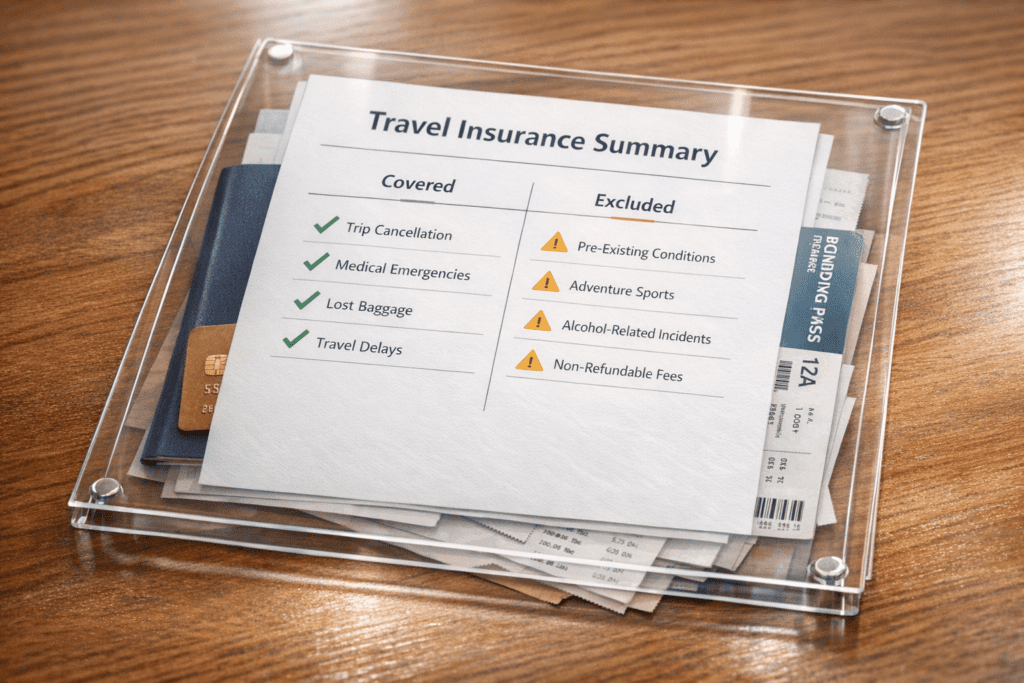
Credit card travel insurance provides automatic coverage when you use an eligible card to book travel. It can help reimburse costs for trip cancellations, delays, or baggage issues caused by covered events like illness, severe weather, or carrier problems. While these benefits are included with many credit cards, especially premium ones, they come with limits and exclusions. Here’s what you need to know:
- Coverage Types: Trip cancellation/interruption, trip delay, baggage delay, rental car protection, and sometimes medical emergencies.
- Limits: Coverage often caps at $10,000 per trip, with delays reimbursed after 6–12 hours. Baggage delay compensation is typically $100/day for up to 5 days.
- Exclusions: Pre-existing conditions, high-risk activities, and routine medical care abroad are not covered. Coverage applies only to licensed carriers (e.g., airlines, buses).
- Eligibility: You must pay for travel with the eligible card, and the account must be active and in good standing.
While credit card travel insurance is a useful safety net, it’s not all-encompassing. For trips abroad, adventure travel, or high-value bookings, consider standalone travel insurance for added protection.
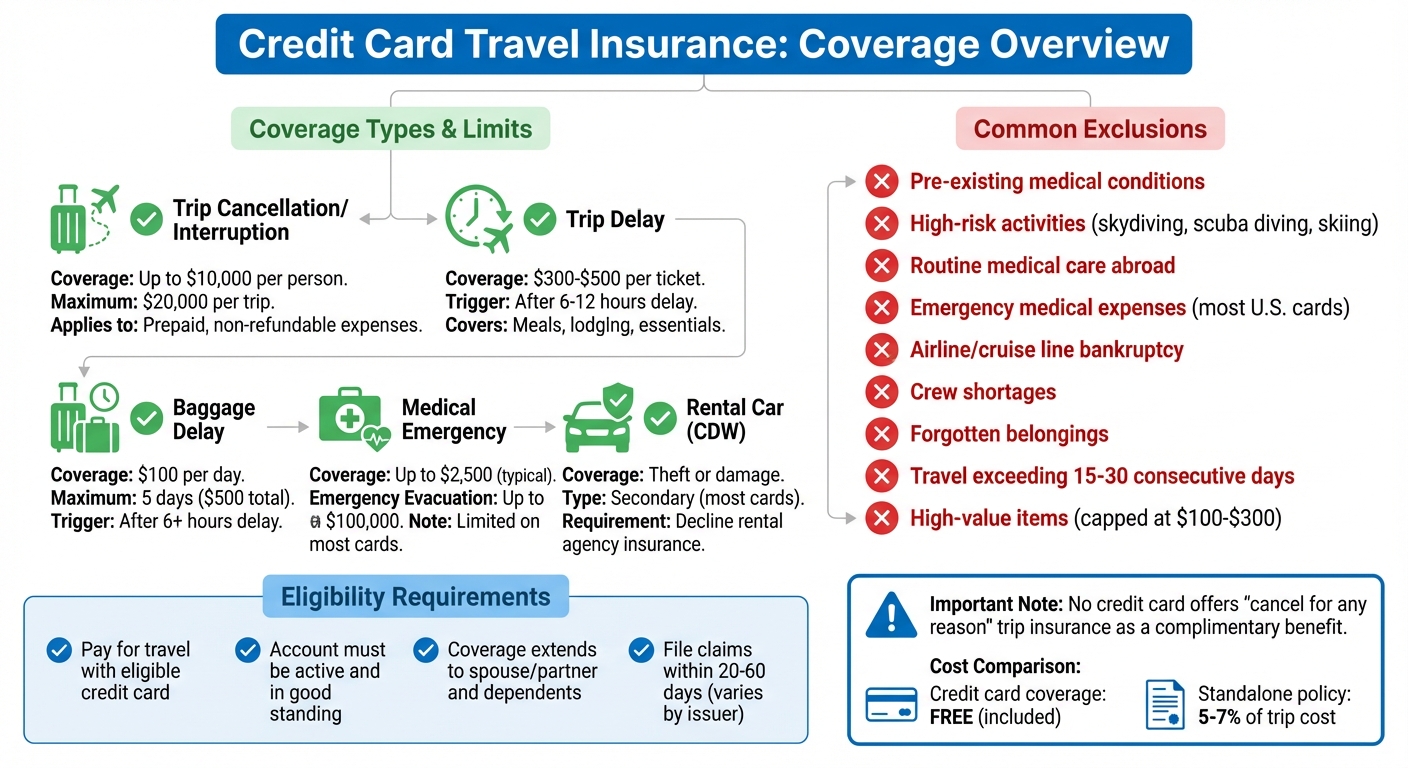
Credit Card Travel Insurance Coverage Types, Limits, and Exclusions Comparison
Credit Card Travel Insurance Explained [PLUS How To File Claims & Get PAID]
sbb-itb-e205081
Types of Coverage Available
When it comes to protecting your travel plans, premium credit cards often offer a range of benefits to help manage unexpected issues. While the specifics vary by card, many provide a set of protections for common travel problems.
Trip Cancellation and Interruption Coverage
This type of coverage reimburses prepaid, non-refundable expenses – like airfare, hotels, and tours – if you need to cancel or cut your trip short due to a covered event. These events might include personal illness or injury, the death of an immediate family member, severe weather, jury duty, or strikes by organized carriers. For instance, the Chase Sapphire Reserve and Sapphire Preferred cards cover up to $10,000 per person and $20,000 per trip, while certain American Express Platinum cards offer up to $10,000 per trip and a $20,000 cap over 12 consecutive months.
To take advantage of this benefit, you must pay for all or part of your trip using the eligible credit card or its rewards points. Keep in mind that this coverage is usually secondary, meaning you’ll need to seek reimbursement from the travel provider or other insurance first. Additionally, exclusions typically apply, such as pre-existing medical conditions, injuries from extreme sports, or cancellations for reasons not explicitly covered.
These protections don’t stop at cancellations – they also help with delays and baggage problems.
Baggage and Trip Delay Protection
For travel delays or baggage issues, these benefits can ease the inconvenience. Trip delay protection reimburses costs like meals, lodging, toiletries, and medication if your carrier is delayed for a specific period or requires an overnight stay. For example, the Chase Sapphire Preferred and Reserve cards provide up to $500 per ticket for delays lasting 12 hours or more.
Baggage delay protection covers essential items, offering up to $100 per day for up to five days if your luggage is delayed, misrouted, or misplaced by a carrier for at least six hours. Airlines themselves are legally required to compensate passengers for lost luggage – up to $3,800 per person on domestic flights and around $1,700 for international flights.
Rental Car and Medical Emergency Coverage
Beyond delays and cancellations, many cards also protect against rental car issues and medical emergencies while traveling. Most travel cards include a Collision Damage Waiver (CDW), which covers theft or damage to rental vehicles. To use this benefit, you’ll need to decline the rental agency’s insurance. While most cards provide secondary coverage, some premium cards offer primary coverage, which can save you from filing a claim with your personal auto insurance.
Medical emergency coverage is another valuable feature on some premium cards. This benefit can reimburse medical and dental expenses if you fall ill or get injured while traveling. It may also include emergency evacuation services, which cover the cost of transporting you to the nearest suitable medical facility. For example, the Chase Sapphire Reserve offers up to $100,000 for emergency evacuation, while other cards typically cap medical coverage at around $2,500.
How to Qualify for Coverage
Getting credit card travel insurance is pretty straightforward, but there are some key steps to follow to ensure you’re covered. Most credit cards with travel insurance automatically activate the protection when you use the card for travel-related purchases.
Eligibility Requirements
To qualify, you’ll need to pay for your travel expenses with your eligible credit card. The exact rules depend on the card issuer. For example, Chase may only require you to charge part of the trip cost to your card, while American Express might insist on charging the full round-trip amount.
Your account must also be active and in good standing both during your trip and when you file a claim. Coverage usually extends to more than just you – it often includes your spouse or domestic partner and dependent children (typically unmarried and under 19, or under 26 if they’re full-time students). For rental car collision coverage, you’ll need to pay the full rental cost with your card and decline the rental company’s damage waiver.
Keep in mind that transferring credit card points to a travel partner before booking can void your insurance benefits. Once you meet the eligibility criteria, activating coverage is simple.
Steps to Activate Your Coverage
To activate your coverage, just use your eligible credit card to pay for travel expenses – there’s no extra sign-up required. Coverage will apply based on the terms outlined in your card’s Guide to Benefits.
If you’re booking award travel with points or miles, you can still activate coverage by using your card to pay for any related taxes and fees. Before you travel, it’s a good idea to call the number on your card to request your Guide to Benefits, as coverage terms can vary by issuer. Also, save all your travel receipts – you’ll need them if you ever need to file a claim.
What’s Not Covered
Credit card travel insurance can be a helpful safety net, but it’s far from comprehensive. Knowing what’s excluded is key to deciding if you need extra protection.
Common Exclusions
One major shortfall: most U.S. credit cards don’t cover emergency medical expenses abroad. That includes treatments, hospital stays, surgeries, or even emergency airlifts. If you need an air ambulance from a remote location or a cruise ship, you might be looking at bills between $40,000 and $150,000.
Pre-existing medical conditions? Also not covered. And if you’re into high-adrenaline activities like skydiving, scuba diving, skiing, or jet-skiing, don’t expect your credit card to step in.
Other gaps include situations like airline crew shortages, the financial collapse of airlines or cruise lines, or failing to secure the proper visas. Forget your belongings on a plane or train? That’s typically on you. Plus, reimbursement for high-value items like electronics, jewelry, or watches is often capped at just $100 to $300.
“No credit card offers ‘cancel for any reason’ trip insurance as a complimentary benefit.” – Katie Genter, Lead Writer, The Points Guy
Travel protections also apply only when you’re using licensed carriers like airlines, buses, trains, or cruise ships. Rental car coverage has its own limits, often excluding specific countries, liability, personal injuries, or certain vehicle types.
These exclusions highlight why it’s so important to read the fine print before you travel.
Coverage Limits and Maximum Payouts
Even when coverage is included, the amounts might not be enough. For example, trip cancellation and interruption coverage usually ranges from $1,500 to $10,000 per trip. High-end cards like Chase Sapphire Reserve or Amex Platinum tend to max out around $10,000.
For trip delays, reimbursement is typically between $300 and $500 for essential expenses, but only after a delay of 6 to 12 hours. Baggage delays? Expect about $100 per day, capped at 5 days.
Most travel protections also have time limits. Coverage often ends after 15 to 30 consecutive days of travel, and travelers over 65 may see reduced benefits – or lose them entirely.
If you’re planning a cruise, heading to a country with high medical costs, or embarking on adventure travel, it’s smart to look into a separate policy to cover these gaps. Knowing these limits can help you avoid surprises when filing a claim.
How to File a Claim
If your trip hits a snag, knowing how to file a claim is crucial for getting reimbursed. Most claims are processed by third-party administrators like Allianz or eClaimsLine, not directly by your card issuer. You’ll need to cover expenses upfront and then submit a reimbursement request with proper documentation. Always keep your travel receipts and any related paperwork from your trip.
Claim Filing Process
To get started, reach out to the benefits administrator listed on the back of your credit card or in your “Guide to Benefits.” Deadlines for filing vary by issuer – for example, Chase and Capital One require you to file within 20 days of the incident, while American Express and Citibank give you 60 days. Missing these deadlines is one of the most common reasons claims are denied.
The documents you’ll need depend on the type of claim. For trip cancellations, you’ll need items like medical certificates, death certificates, or police reports, along with trip invoices and proof of payment. Trip delays require reports from the carrier detailing the delay, plus receipts for meals and lodging. For baggage issues, be sure to get an “Irregularity Report” from the airline. If theft is involved, file a police report within 24 hours.
| Claim Type | Essential Documentation Required |
|---|---|
| Trip Cancellation | Medical certificate, death certificate, or police report; trip invoice; proof of payment; refund/credit statements. |
| Trip Delay | Common carrier delay report; receipts for meals and lodging. |
| Baggage Loss/Delay | Airline irregularity report; police report (for theft); receipts for replaced essentials. |
| Medical Expense | Treatment records; itemized bills; receipts; EOB from primary health insurance. |
| Rental Car | Rental agreement; repair estimate; photos of damage; police/accident report. |
You can submit your claim digitally through your card’s mobile app or via websites like eclaimsline.com. Attach all required documents, including photos of receipts and other paperwork, to ensure a smooth process. It’s a good idea to upload backup copies of these documents during your trip to avoid losing anything important. Acting quickly and submitting all necessary paperwork can help speed up claim processing.
How to Get Your Claim Approved
Once you’ve filed, timing and thoroughness are everything. On average, claims take about two weeks to process, though some specialized providers, like Faye, handle claims within 48 hours of receiving complete documentation. Submit your claim as soon as possible after an incident – delays can lead to denials.
“It’s better to submit too much documentation than too little. Upload anything you think might be relevant and can help back up your claim.” – Allianz Partners
If your card offers secondary coverage, start by filing with your primary insurance and include the Explanation of Benefits (EOB) for any uncovered costs. For medical emergencies abroad, try to contact the benefits administrator before seeking treatment to get pre-approval. Keep every receipt, even for small items like toiletries purchased during a baggage delay. If your claim is denied due to missing documentation, you can often appeal by providing additional evidence, such as photos, witness statements, or detailed medical records.
Conclusion
Credit card travel insurance can be a lifesaver when unexpected disruptions threaten to derail your plans – provided you use an eligible card to pay for your trip. However, keep in mind that coverage isn’t automatic. You’ll need to charge your travel expenses to the specific card offering these benefits, and reimbursement only applies for specific situations like severe weather, accidental injuries, or jury duty.
Premium cards, such as the Chase Sapphire Reserve, offer impressive coverage limits – up to $10,000 per person and $20,000 per trip. For comparison, standalone travel insurance policies typically cost 5%–7% of your trip’s total expense. While credit card protections are often enough for domestic travel and minor delays, they fall short in some key areas. For instance, they rarely cover routine medical care abroad, exclude high-risk activities, and won’t help if your airline goes out of business.
Using Your Credit Card Travel Insurance
To make the most of your card’s travel insurance benefits, keep these tips in mind:
- Stay informed: Issuers can update or remove coverage without much notice, so double-check your card’s current benefits before every trip.
- Document disruptions: If your plans are interrupted, request official documentation right away. For example, ask the airline for a delay letter explaining the reason, and save all receipts for essentials like meals or toiletries.
- Rental car tips: When renting a car, bring your card issuer’s coverage letter to confidently decline the rental agency’s collision damage waiver.
For trips abroad or those exceeding $10,000, consider adding a standalone policy that includes medical evacuation and “Cancel For Any Reason” options. Regardless of the situation, detailed records and timely claim submissions are key to getting reimbursed.
Need help with your travel plans? Flight Booking 247 offers round-the-clock assistance for booking, modifying, or canceling flights.
FAQs
Is my credit card travel insurance primary or secondary?
Credit card travel insurance is often secondary coverage. This means you’ll usually need to file a claim with your primary insurance provider first. After your primary insurer processes the claim, your credit card’s insurance may step in to cover any eligible remaining costs. Be sure to review your card’s terms to understand the specifics of the coverage it offers.
Does paying with points still activate travel insurance?
When using points to pay for travel, keep in mind that travel insurance typically won’t kick in unless those points are redeemed directly through a credit card offering this benefit. Coverage varies based on the card’s specific policy, so it’s essential to check your card’s terms to ensure you’re eligible.
When should I buy separate travel insurance instead?
If your trip involves substantial expenses, requires specialized coverage not included in your credit card’s benefits, or you simply want additional protection, it might be worth looking into separate travel insurance. This option can offer extra security and reassurance, especially for costly or unique travel plans.