

If you’re looking to save money on flights, timing is everything. Here’s what you need to know:
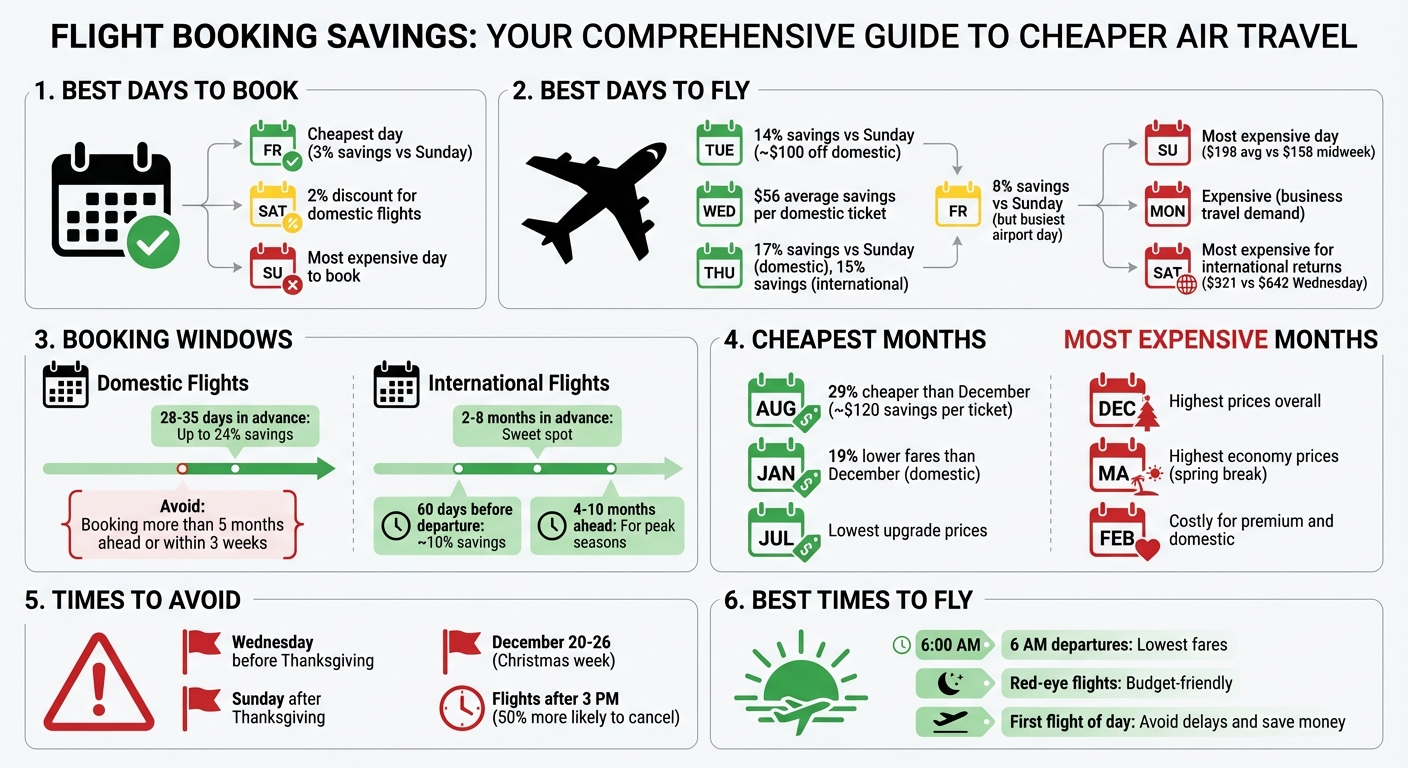
- Best Day to Book: Fridays are now the cheapest day to book, saving you about 3% compared to Sundays, which are the most expensive.
- Best Day to Fly: Flying on a Tuesday or Wednesday can save you up to 14% compared to Sundays. Fridays also offer savings of around 8%.
- When to Book: For domestic flights, book 28–35 days in advance to save up to 24%. For international flights, aim for 60 days ahead or 2–8 months before peak seasons.
- Cheapest Months: August is the most affordable month, with fares 29% cheaper than December. January also offers low prices for domestic travel.
Avoid Sundays and Mondays for costly fares, and steer clear of peak travel periods like late December or the days surrounding Thanksgiving. Flying midweek or early in the morning can also help you cut costs. Use price alerts to track deals and book during the “Goldilocks window” for the best rates.
Best Days and Times to Book Flights: Complete Savings Guide
When to Book a Flight for the Best Price (it’s not Tuesday)
sbb-itb-e205081
Best Days to Book and Fly: What the Data Shows
If you’re planning to travel in 2026, here’s some good news: Fridays are now the go-to day for saving money on both booking and flying. According to recent data, Friday has taken over Sunday as the cheapest day for these activities, signaling a notable shift from previous years. This change ties closely to adjustments in corporate travel habits. With business travelers heading home earlier in the week, Fridays now offer more availability and lower prices for leisure travelers.
Friday: Cheapest Day to Book
Booking your flight on a Friday can save you about 3% compared to Sunday, which is now the priciest day to book. While Saturday bookings for U.S. domestic flights offer a 2% discount, Friday consistently delivers the best overall savings.
“Business travelers head home earlier in the week these days, so leisure travelers now benefit from selecting smarter travel days, like Friday for the best prices or Tuesday for fewer crowds.” – Melanie Fish, Head of Expedia Group Brands Public Relations
But booking isn’t the only factor to consider – your actual travel day also plays a big role in cutting costs.
Friday: Cheapest Day to Fly
The day you fly can have an even bigger impact on your wallet than when you book. Flying on a Friday can reduce ticket costs by up to 8% compared to Sunday, making it a dependable choice for budget-conscious travelers. However, keep in mind that Friday is also the busiest day at airports, so you may encounter larger crowds.
For those looking for even steeper discounts, domestic flights departing on a Tuesday average 14% less than Sunday flights. These findings, drawn from the Expedia 2026 Air Hacks Report, which analyzed data from December 2024 through November 2025, highlight clear patterns for saving on airfare.
Midweek Flight Savings: Tuesday, Wednesday, and Thursday
While Friday is often highlighted as a top day for booking and flying, midweek travel – specifically Tuesday, Wednesday, and Thursday – offers a reliable way to save money by steering clear of peak travel times. These midweek departures take advantage of lower demand, translating into meaningful savings. Let’s dive into why these days are so budget-friendly, starting with Tuesday and then looking into Wednesday and Thursday.
Tuesday: Lowest Average Flight Prices
When it comes to finding the cheapest flights, Tuesday stands out as the best day to travel. Thanks to reduced demand, flying on a Tuesday can save you around 14% compared to Sunday fares – that’s approximately $100 off domestic tickets. This price drop is a direct result of basic supply and demand: fewer travelers mean airlines lower their prices to fill seats.
Hopper’s data backs this up, showing that midweek travelers, especially those flying on Wednesday, save an average of $56 per domestic ticket throughout the year. During high-demand times like spring break or summer, those savings can exceed $60, and during the holidays, you might even save over $100 per ticket.
Wednesday and Thursday: Other Low-Cost Options
If Tuesday doesn’t fit your schedule, Wednesday and Thursday are excellent alternatives for budget-conscious travelers. These days are particularly advantageous for international flights. For instance, flying to Europe on a Wednesday instead of a Friday can cut your ticket cost by 10%. During the summer travel season, choosing a Tuesday or Wednesday departure for Europe could save you as much as $435 compared to weekend flights.
Thursday also proves to be a smart choice, especially for international routes. Leaving on a Thursday can save you 15% compared to Sunday departures for international flights. Even for domestic trips, Thursday departures offer average savings of about 17%, regardless of your destination or ticket class. Overall, midweek flights (Tuesday through Thursday) tend to cost 12–13% less than those on weekends.
“If you can be flexible and book either a Tuesday or Wednesday … you’re gonna save significantly off your trip.” – Lindsay Schwimer, Consumer Travel Expert, Hopper
Days and Times to Avoid for Higher Prices
Some days and times consistently lead to higher ticket prices. By understanding when these price surges occur, you can make smarter travel decisions and save money.
Sunday and Monday: The Costliest Days to Fly
Sunday is a notoriously expensive day to travel, largely because of leisure travelers heading home after weekend trips. Hayley Berg, Lead Economist at Hopper, explains:
“Sunday is often the most expensive day to fly… It’s typically a busy day in airports as people fly home from weekends away”.
On average, domestic one-way flights on Sundays cost $198, significantly higher than the $158 average for Tuesdays and Wednesdays.
Monday mornings and Friday afternoons also tend to be pricey, driven by business travel. According to The Editors at SmarterTravel:
“Business travelers drive Monday morning and Friday afternoon demand, which is why those flights cost more”.
For international flights, Saturday is the most expensive return day, with fares averaging $921 compared to $642 on Wednesdays. Small changes in your travel schedule can make a big difference. For instance, flying domestically on Saturday instead of Sunday can save you 17%. Similarly, opting for a Thursday departure instead of Sunday can cut costs by an average of 17%, regardless of the fare class.
Peak Travel Periods to Steer Clear Of
Beyond specific days, certain times of the year also see steep price increases. For example, the Wednesday before and Sunday after Thanksgiving are some of the busiest and most expensive travel days. Similarly, the week of December 20–26 tends to have the highest fares for Christmas travel. Interestingly, flying on Thanksgiving Day or Christmas Day itself is much cheaper than traveling on the surrounding days.
The time of day also impacts ticket prices. Flights leaving after 3 p.m. not only cost more but are also 50% more likely to be canceled compared to earlier flights. On the other hand, early morning departures around 6 a.m. and red-eye flights often have the lowest fares. Lindsay Schwimer, Consumer Travel Expert at Hopper, recommends:
“We always recommend booking the first flight of the day, not only to avoid delays and cancellations but also in terms of price”.
Special events like Rio Carnival, Oktoberfest, and Lunar New Year can cause fares to double or even triple. July also sees a 65% increase in flight volume compared to February, making it one of the busiest – and most expensive – months for travel. Meanwhile, August offers a reprieve, with domestic airfare savings averaging 12% compared to February.
When to Book for the Lowest Prices
Timing is everything when it comes to snagging affordable airfare. Booking within the ideal “Goldilocks window” can help you avoid pricey last-minute surcharges and secure better deals.
Domestic Flights: 28–35 Days in Advance
For domestic trips, booking 28–35 days before your travel date can save you up to 24% compared to last-minute fares. Surprisingly, booking too early – more than five months ahead – can also be costly since airlines often haven’t released their discounted seats yet. On the flip side, waiting until the final three weeks could mean paying double as airlines hike prices when seats are scarce.
“Airfare has remained relatively stable, with average U.S. economy ticket prices recently trending 2% lower than previous years.” – Chuck Thackston, Managing Director of Data Science and Research at ARC
Domestic flights offer some flexibility, but international travel requires a longer lead time to lock in the best prices.
International Flights: About 60 Days Before Departure
For international journeys, aim to book around 60 days before departure for approximately 10% savings. The broader sweet spot for international fares falls between 2 to 8 months in advance. If you’re planning to travel during peak seasons like summer or winter holidays, consider extending your search to 4 to 10 months ahead. Since international routes have fewer daily flights and cover longer distances, prices tend to be less flexible.
“The magic window to book the cheapest international flights is 18 to 29 days out.” – Jeff Wilser, Expedia
To secure the best deals, start tracking fares 4 to 5 months before your trip and aim to book around the 60-day mark. Waiting too long – especially within three weeks of your travel date – can lead to steep price increases. With this strategy, you’ll be in a strong position to find the lowest fares for your next adventure.
How Flight Prices Change by Month and Season
Flight prices fluctuate throughout the year, and understanding these patterns can help you find better deals. While many assume summer always means sky-high fares, the reality is more nuanced. Monthly and seasonal trends add another layer to the timing strategies for booking flights.
Cheapest Months to Fly
If you’re looking to save, August is your best bet. Flights during this month are, on average, 29% cheaper than December, translating to a savings of about $120 per ticket. August also boasts one of the lowest cancellation rates, sitting at just 1.2%.
“August is the most affordable month to travel, with flights 29% cheaper on average than December, saving travelers roughly $120 per ticket.” – Melanie Fish, Head of Expedia Group Brands Public Relations
For domestic trips, January takes the lead as the most budget-friendly month, with fares 19% lower than December. August is another standout month, offering domestic flights 12% cheaper than February and international flights up to 7% cheaper than March. If you’re eyeing premium seating, July is when you’ll find the lowest upgrade prices.
Most Expensive Months to Fly
On the flip side, some months are notoriously expensive. December tops the list due to holiday demand. For economy travelers, March often brings the highest prices, driven by spring break crowds. Meanwhile, February tends to be costly for both premium seating and domestic routes.
If you’re planning to travel during these peak periods, start tracking prices well in advance. For December flights, begin your search in August and aim to book by mid-October to avoid steep last-minute price hikes.
Summary: How to Book Cheaper Flights
When it comes to booking flights, timing is everything. For domestic trips, aim to book 28–35 days ahead – this can save you as much as 24% on ticket prices. For international travel, start your search 2–8 months in advance, with the sweet spot often being around 60 days before departure.
These timelines pair well with choosing the right day to book and fly. Data suggests that Friday is the best day to book flights. As for travel days, Tuesday and Wednesday consistently offer the lowest fares, averaging around $158 midweek, compared to a pricier $198 on Sundays.
If you’re flexible with travel months, August tends to be the cheapest, while February and March see the highest fares. For holiday travel, plan ahead: book Thanksgiving flights about 35 days out and Christmas flights around 51 days in advance to avoid inflated last-minute prices.
To stay ahead of price changes, set price alerts 3–4 months before your trip. These alerts can help you monitor fares and snag a deal when prices drop. Also, take advantage of the 24-hour rule: most U.S. airlines allow you to cancel bookings within 24 hours for a full refund, giving you the chance to rebook if a better deal comes along.
For added convenience, Flight Booking 247 offers round-the-clock travel concierge support to help you navigate these strategies and lock in the best fares. Check out Flight Booking 247 or call anytime for real-time assistance and flight deals. With these tips and tools, booking cheaper flights becomes a lot less stressful.
FAQs
Do flight prices drop on Fridays?
Recent research indicates that booking or flying on Fridays can lead to noticeable savings on airfare. Domestic flights are typically around 14% cheaper on Fridays, while international flights see an average savings of 8% compared to Sundays, which are usually the priciest day for both booking and traveling. If you’re looking to cut costs on your next trip, consider planning around this trend.
Is it better to book early or wait for a deal?
Booking your flights 1–3 months ahead of your travel date is often the smartest way to snag lower fares. Research indicates that this window tends to offer better savings compared to holding out for last-minute deals. By planning and purchasing during this timeframe, you’re more likely to lock in the best prices for your trip.
How can I use price alerts to time my booking?
You can keep an eye on flight prices and snag the best deals by setting up price alerts. Platforms like Google Travel allow you to enable these alerts, sending you email notifications whenever fares drop. Combine this with flexible travel dates, and you’ll have a better chance of spotting the lowest prices available. This way, you’ll stay informed about discounts and can book flights when the rates are most appealing.