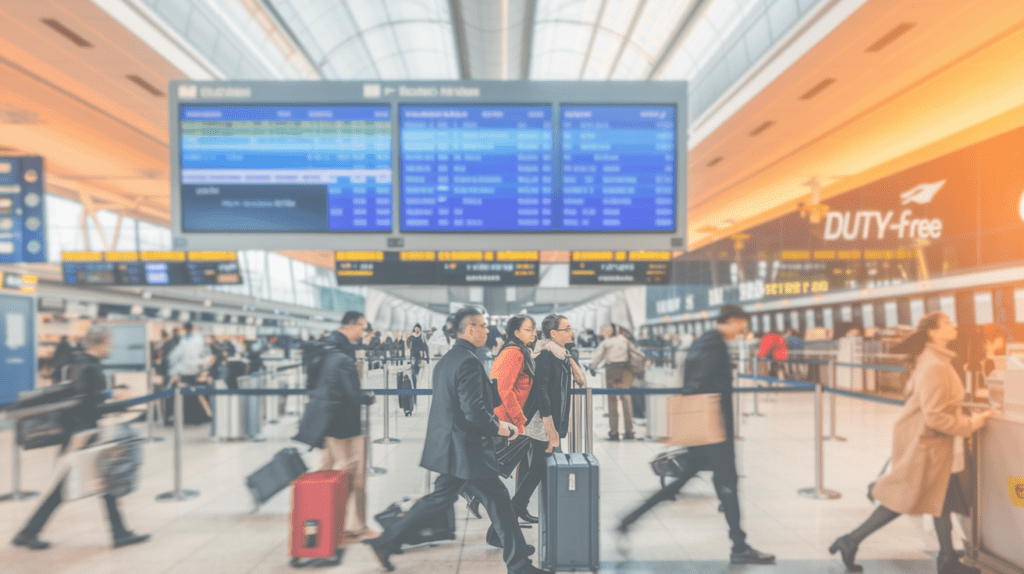
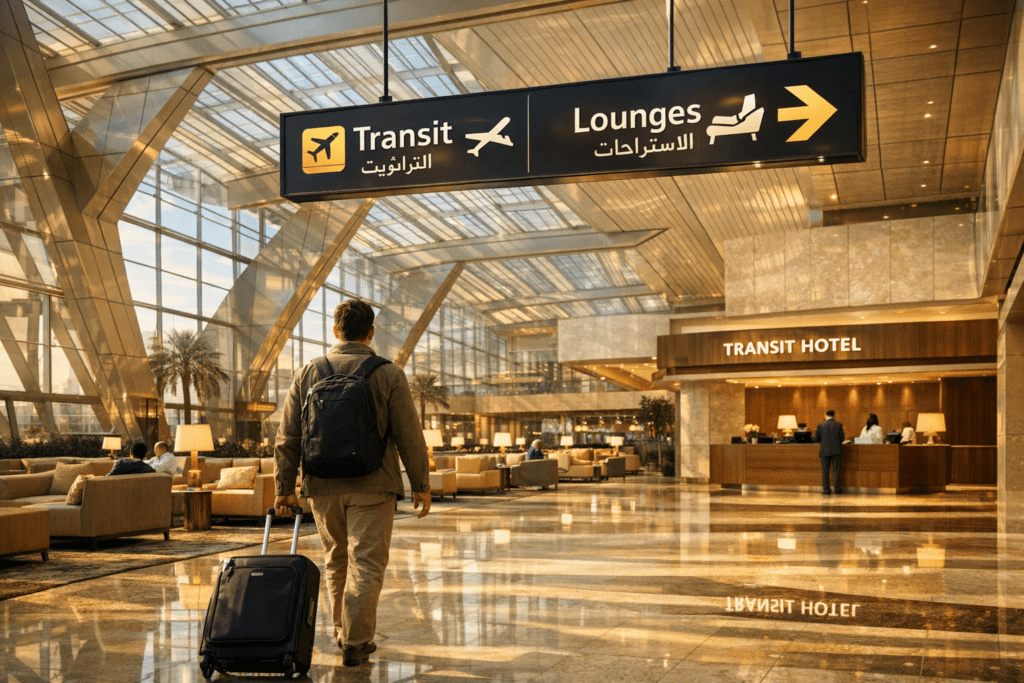
Middle Eastern airports are among the most traveler-friendly hubs globally, offering efficient transit, visa flexibility, and world-class amenities. Key highlights include:
- Top Airports: Dubai (DXB), Doha (DOH), Abu Dhabi (AUH), and Jeddah (JED) lead in passenger traffic and transit services.
- Visa Policies: UAE offers free 48-hour transit visas and affordable 96-hour options. Qatar and Saudi Arabia provide visa-on-arrival or transit visas for eligible travelers.
- Connectivity: Airlines like Emirates, Qatar Airways, and Etihad ensure excellent global connections.
- Amenities: Premium lounges, transit hotels, sleep pods, dining options, and shopping make layovers comfortable.
- Layover Activities: Explore nearby landmarks like the Burj Khalifa, Sheikh Zayed Grand Mosque, or Jeddah’s Al-Balad during longer stops.
These airports prioritize convenience with smart navigation tools, efficient transfer systems, and services like baggage transfer for separate-ticket travelers. Whether you’re on a short layover or an extended stop, these hubs are designed to make your journey smoother.
6 HOURS in Dubai International Airport! ✈️ 🧳 (ULTIMATE Layover)
sbb-itb-e205081
Visa and Transit Policies
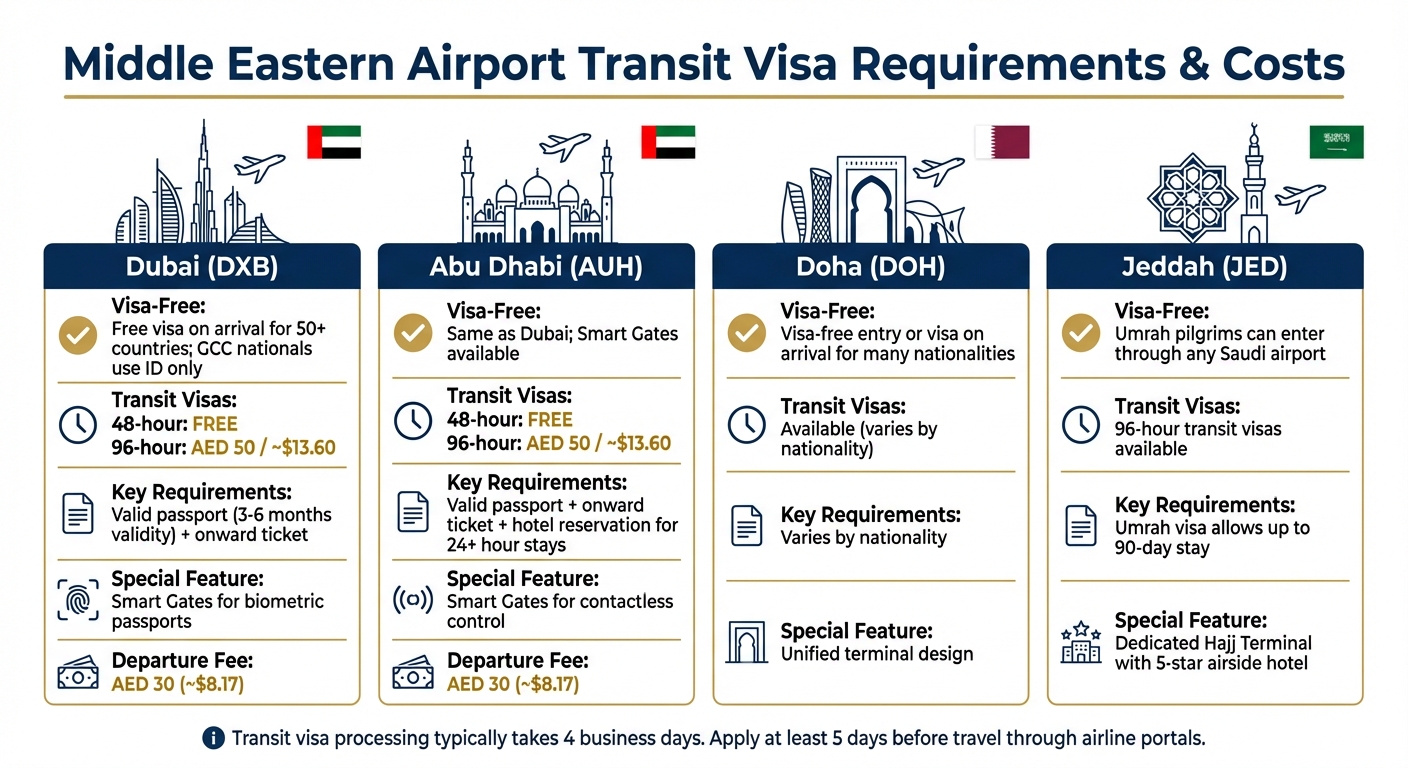
Middle Eastern Airport Transit Visa Requirements and Costs Comparison
Knowing visa requirements ahead of time can make your travel experience much smoother. These rules vary depending on your nationality, destination, and the type of transit involved.
Transit Visa Rules by Country
At UAE airports like Dubai and Abu Dhabi, citizens from over 50 countries can enjoy a free visa on arrival. GCC nationals, on the other hand, can simply use their national ID card or passport for entry. If your nationality doesn’t qualify for the visa-on-arrival option, you’ll need to apply for a transit visa through a UAE-based airline’s portal. This process typically takes about four business days, so it’s best to apply at least five days before your trip.
The UAE offers two types of transit visas. The 48-hour visa is free, while the 96-hour visa costs AED 50 (roughly $13.60). Both require a valid passport and proof of an onward ticket to a third destination. Neither visa can be extended. Additionally, all passengers leaving UAE airports must pay a departure fee of AED 30 (approximately $8.17).
In Qatar, Hamad International Airport in Doha offers visa-free entry or visa-on-arrival options for many nationalities, with conditions varying depending on your passport. In Saudi Arabia, King Abdulaziz International Airport in Jeddah provides 96-hour transit visas for eligible travelers, catering to both international and religious visitors.
Policies for Hajj and Umrah Travelers
For those traveling to Saudi Arabia for Umrah, the rules are relatively flexible. According to the Ministry of Hajj and Umrah:
The pilgrim can enter and leave via any international or regional airport in the country.
Travelers on an Umrah visa can stay in Saudi Arabia for up to 90 days, moving freely between Makkah, Madinah, and other cities. King Abdulaziz International Airport features a dedicated Hajj Terminal equipped with health services, agent support, and transport facilities. Terminal 1 also includes a five-star airside hotel with 120 rooms for transit passengers, as well as a Tourist Visa Arrival Lounge capable of processing over 300 passengers per hour in seven languages. Pilgrims need to register on approved platforms like the Eatmarna or Nusuk app to obtain the necessary permits for Umrah.
If your journey involves a transit stop in the UAE before heading to Saudi Arabia and you aren’t eligible for a visa on arrival, make sure to arrange your UAE transit visa in advance through your airline. Keep in mind, these visas cannot be extended.
Visa-Free Transit Durations by Airport
Visa-free access and transit visa policies differ based on your nationality and travel plans. Here’s a quick comparison of major airports:
| Airport | Visa-Free Options | Transit Visas | Key Requirements |
|---|---|---|---|
| Dubai (DXB) | Free visa on arrival for over 50 countries; GCC nationals can use ID only | 48-hour (free) or 96-hour (AED 50 / ~$13.60) | Valid passport (3–6 months) and onward ticket |
| Abu Dhabi (AUH) | Same as Dubai; Smart Gates for biometric passports | 48-hour (free) or 96-hour (AED 50 / ~$13.60) | Hotel reservation required for stays over 24 hours |
| Doha (DOH) | Visa-free entry or visa on arrival for many nationalities | Transit visas available | Varies by nationality |
| Jeddah (JED) | Umrah pilgrims can enter through any Saudi airport | 96-hour transit visas available | Umrah visa allows up to a 90-day stay |
Dubai and Abu Dhabi airports also feature Smart Gates for contactless passport control. These gates allow registered travelers to pass through quickly without needing to scan their documents. First-time users are automatically registered at passport control upon arrival. However, families with children under 1.2 meters (about 4 feet) tall and passengers requiring special assistance cannot use the Smart Gates.
A key tip: If you’re transiting on separate tickets and don’t have a valid visa, you’ll need to use Marhaba Services for baggage transfer (fees apply). However, if you have a valid visa, you can retrieve and re-check your bags directly.
Up next, we’ll explore terminal layouts and transfer procedures to help make your transit experience even smoother.
Terminal Navigation and Transfers
With visa details sorted, knowing how to navigate terminals can make a transit experience much smoother.
Terminal Layouts and Transfer Procedures
Dubai International (DXB) has three terminals, each with unique transfer systems. Terminal 3, home to Concourses A, B, and C, is the primary hub for Emirates and flydubai. Terminal 1, with Concourse D, accommodates over 50 international airlines, while Terminal 2 focuses on regional flights via the F Gates. Transferring between concourses can take up to 30 minutes, whether by airport train, shuttle bus, or walking.
An automated train links Terminal 1 to Concourse D and Terminal 3 to Concourse A. Shuttle buses to Terminal 2 depart from Area A6 in Concourse A, Desk K in Concourse B, and Desk E in Concourse C. Terminal 1 also boasts 48 elevators, 55 escalators, and 30 moving walkways to ease navigation.
Hamad International (DOH) in Doha offers a unified terminal with five concourses (A, B, C, D, and E), making transfers straightforward. After deplaning, follow the “Transfers” signs to reach transfer halls located across Concourses A through D. Walking times vary from just 1 minute between nearby gates to up to 14 minutes from Transfer Hall A to the farthest gates in Concourses D or E. Boarding gates close 20 minutes before departure.
For those traveling on separate tickets without a visa at DXB, Marhaba Services can handle baggage transfers for a fee – $90 for the first person and $20 for each additional traveler. However, the connection time must be at least three hours.
Transit Traveler Facilities in Terminals
Both DXB and DOH have transfer desks ready to assist with boarding passes, flight changes, and directions. At DXB, the Emirates App’s “Wayfinder” feature offers step-by-step directions to gates, lounges, and dining spots within Terminal 3. Free airport buggies are stationed throughout Concourses A, B, and C for added convenience. For First Class passengers with tight connections under 90 minutes, the Premium Connections Service provides a luxury Mercedes Viano transfer between concourses. Passengers should aim to be at their gate 60 minutes before departure for Economy and Premium Economy, or 45 minutes for First and Business Class.
At DOH, all transfer passengers must go through carry-on screening, with dedicated lanes for First and Business Class travelers. Special assistance passengers and unaccompanied minors are greeted directly at the aircraft or aerobridge, while Al Maha services offer priority processing for those who need extra help during transfers.
Next, we’ll dive into ground transportation options and layover activities to ensure a seamless transit journey.
Lounges, Rest Areas, and Transit Hotels
Long layovers don’t have to be a hassle, especially with options like premium lounges, cozy sleep pods, and convenient transit hotels. Middle Eastern airports are particularly known for their amenities, turning even extended waits into an opportunity to relax or recharge. Here’s a closer look at lounge options, transit hotels, and tips for making the most of your time.
Airport Lounges and Their Amenities
Dubai International Airport (DXB) offers 24/7 access to 24 lounges, catering to the airport’s non-stop international traffic. If you’re flying first class, the Emirates First Class Lounge in Terminal 3 is a standout, featuring the Timeless Spa, gourmet dining options, and even direct boarding from the lounge. For economy travelers looking to upgrade their experience, the Emirates Business Class Lounge is available for a 4-hour pass starting at $175. This lounge includes perks like a Moët & Chandon champagne bar and shower facilities.
Travelers on a budget can opt for the marhaba Lounge in Terminal 2, where a 4-hour pass costs Dhs185 (about $50). Families might prefer the Plaza Premium Lounge, which offers family suites with wooden play areas starting at $49 for 3 hours. For something different, check out Game Space in Concourse B, which features 40 gaming stations equipped with 50-inch screens. Priority Pass members even get one complimentary hour.
If you’re looking to stay active or unwind, the G-Force Health Club in Terminal 3 has you covered. You can access a gym session for AED 45 (around $12) or indulge in a relaxation pool and jacuzzi package for AED 85 (about $23). Free showers are also available in Terminal 3 near Gates B13–B19 and C18–C22 [19, 27].
Transit Hotels and Day-Use Rooms
For passengers needing a longer rest, the Dubai International Hotel is a convenient option located airside in Terminal 3. This means you can stay without going through immigration. Rooms are available in blocks of 3, 6, 12, or 24 hours. However, if you need to extend your stay beyond 24 hours, immigration approval is required.
“Transit visa is not required to stay at the hotel as we are located within the Departures area in Terminal 3, Dubai International Airport”.
For shorter naps, Sleep ‘n Fly offers igloo-style pods in Terminals 1 and 3. The Concourse B facility is the largest of its kind globally, and pods start at $32 for a 2-hour period. Advance booking is recommended since these pods are often in high demand [18, 19]. Similar airside accommodations are available at Doha’s Oryx Airport Hotel in the South Node and Abu Dhabi’s AUHotel in Terminal A, with stays ranging from 3 to 12 hours.
Keep in mind that your checked luggage stays with the airline during transit hotel stays, so pack your essentials in your carry-on. If your flight arrives at Terminals 1 or 2 in Dubai, complimentary shuttles are available to connect you to the Terminal 3 transit hotel, provided you have a valid booking.
Making Long Layovers Comfortable
Even without booking a lounge or hotel, there are ways to make your layover more enjoyable. In Dubai’s Terminal 3, free recliner chairs are available in dedicated Rest Zones near Gates A1, B7–8, and B14–23, though these spots tend to fill up quickly. For a quieter atmosphere, the family quiet room offers lounge chairs in a more secluded setting.
Since terminals are often kept cool, packing a sweater or travel blanket can make all the difference. A good pair of earplugs and an eye mask can also help if you’re trying to rest in a busy, brightly lit terminal. For a peaceful escape, the Zen Gardens between Gates B7–B27 in Terminal 3 provide a serene setting with fish ponds and lush greenery – all free of charge.
If privacy is your top priority, SnoozeCube pods offer a quiet retreat for AED 75 per hour, with a 2-hour minimum. However, availability is limited, so early booking is a must. For travelers needing to stash their belongings, luggage storage is available for AED 40–50 (about $11–13) for 12 hours. Meanwhile, the Be Relax spa offers a 40-minute “From Head to Toe” package for around $100, perfect for unwinding before your next flight.
Ground Transportation and Layover Activities
Transportation Options from Airports
Getting around during a layover is straightforward with plenty of options available. For instance, in Dubai (DXB), the Metro is a convenient choice, directly accessible from Terminals 1 and 3 with just a 3–5 minute walk from arrivals. Fares range from $1.10 to $4.60, making it an affordable option, while taxis start at $6.80 and typically cost between $15 and $30 for trips to downtown Dubai. Ride-hailing apps like Uber and Careem offer similar pricing to taxis.
In Jeddah (JED), official airport taxis charge between $27 and $48 for rides to central areas. Alternatively, Uber and Careem provide rides starting at $16 and going up to $32. For budget-conscious travelers, SAPTCO buses are available, though they take longer to reach the city.
Over in Abu Dhabi (AUH), taxis are the go-to option. A one-way trip to popular spots such as the Grand Canal or Sheikh Zayed Grand Mosque costs around $12–$20. Keep in mind that taxis in Abu Dhabi require payment in UAE Dirhams, so it’s a good idea to withdraw cash from an airport ATM before heading out.
With these transportation choices, exploring nearby attractions during a layover becomes both easy and practical.
Nearby Attractions for Layover Visits
If you have a layover lasting 4–6 hours, stepping out of the airport can be a rewarding experience. In Abu Dhabi, the iconic Sheikh Zayed Grand Mosque is just 10–20 minutes away and offers a breathtaking view of Islamic architecture. Women can borrow free abayas on-site if needed for modest attire. Another unique option is the Abu Dhabi Falcon Hospital, located only 6 kilometers from the airport, which offers guided tours when booked in advance.
Travel writer Jaime Morrison Curtis highlights how Abu Dhabi’s attractions, all within a 20-minute radius, can transform a layover into an enriching mini-trip.
For those with longer layovers in Dubai, there’s plenty to explore. With an 8–9 hour stop, you could visit the Burj Khalifa and Dubai Mall, both just 20–30 minutes away by Metro or taxi. Entry to the Burj Khalifa’s “At the Top” observation deck is around $98, while the Dubai Frame, located 15 minutes away by taxi, costs approximately $13.60 to visit. In Jeddah, Al-Balad (Old Town) is about 30 minutes from the airport and offers a captivating glimpse into historic architecture and local culture.
These accessible attractions, paired with reliable transportation, make Middle Eastern layover hubs an appealing option for travelers.
Transportation Costs and Routes Comparison
Here’s a quick breakdown of transportation costs and travel times to help you plan:
| Airport | Option | Estimated Cost (USD) | Travel Time to City/Site | Best For |
|---|---|---|---|---|
| JED | Official Taxi | $27–$48 | 25–40 mins | Families with luggage |
| JED | Uber/Careem | $16–$32 | 25–40 mins | Solo travelers/Tech-savvy |
| JED | SAPTCO Bus | Low cost | 45–60 mins | Budget travelers |
| AUH | Taxi | $12–$20 | 10–20 mins | Quick layover visits |
| DXB | Dubai Metro | $1.10–$4.60 | 25–35 mins | Avoiding traffic |
| DXB | Taxi | $15–$30 | 15–25 mins | Direct hotel transfers |
If your layover in Abu Dhabi exceeds 4 hours and you plan to leave the airport, note that you’ll need a transit visa. In Dubai, you can generally exit the airport in 25–40 minutes, but plan to return at least 1.5 hours before your flight if you’re not checking bags. For convenience, Dubai also offers short-term luggage storage in Terminals 1 and 3, priced at $11–$13 for up to 12 hours.
With these options, navigating transportation and exploring nearby attractions during a layover can be seamless, making your transit time both productive and enjoyable.
Shopping, Dining, and Entertainment
Middle Eastern airports go beyond efficient layouts and cozy lounges, offering an array of shopping, dining, and entertainment options that make transit more enjoyable.
Duty-Free Shopping and Souvenirs
Middle Eastern airports boast some of the largest duty-free shopping experiences in the world. Dubai International (DXB), for instance, features over 300 retail outlets across its three terminals, offering more than 40,000 products through Dubai Duty Free. Abu Dhabi International (AUH) is another standout, with Terminal A serving as its main shopping hub, managed by DFS. Both airports keep their stores open 24/7, ensuring travelers can shop at any time.
The selection includes everything from luxury fragrances and mid-range watches to the latest tech gadgets. For those seeking regional souvenirs, options include premium dates, Arabic coffee sets, traditional spices, and perfumes from well-known brands like Amouage and Creed. Abu Dhabi also spices things up with its monthly “Big-Ticket” raffle, where prizes can reach AED 5 million or include luxury cars.
If you’re flying with Emirates, you can snag a 10% discount by pre-ordering items through EmiratesRED online, as long as you place your order at least 40 hours before departure. Keep in mind that duty-free liquids over 100 ml are allowed on connecting flights only if they’re sealed in a Security Tamper Evident Bag with the receipt clearly visible. But shopping is just the beginning – there’s plenty to savor in the dining department too.
Restaurant and Food Court Options
Middle Eastern airports excel when it comes to dining, offering a mix of local flavors and international dishes. For example, the Turkish Airlines Business Lounge serves authentic Turkish classics like gözleme, manti, and mezze.
Dubai International (DXB) takes dining variety to another level with “The Daily DXB” in Concourse B. This food court features five stalls offering everything from Hong Kong-style dishes to Italian and American cuisine. Families passing through Hamad International Airport (DOH) in Doha can enjoy kid-friendly dining spots like Giraffe World Kitchen and the Oreo Cafe. Beyond food, entertainment options add another layer of excitement for travelers.
Entertainment Options for Transit Travelers
For those with long layovers, Hamad International Airport (DOH) offers unique attractions like art installations, including the iconic “Lamp Bear” sculpture, and even an on-site swimming pool. One of its standout features is “The Orchard”, a massive 6,000 square meter (about 64,600 ft²) indoor tropical garden surrounded by fine dining and coffee spots.
Cultural touches are woven into airports across the region. Abu Dhabi International’s Terminal A incorporates elements of Emirati heritage, while King Khalid International Airport (RUH) in Riyadh and Prince Mohammad bin Abdulaziz International Airport (MED) in Medina showcase Saudi and Islamic architectural designs. King Abdulaziz International Airport (JED) in Jeddah caters to religious travelers with local crafts and prayer rooms. For easy navigation, Dubai International’s Terminal 3 offers the “Wayfinder” feature via the Emirates App, providing turn-by-turn directions to lounges, restaurants, and other amenities.
Final Tips for Transit Travelers
Summary of Transit Tips
Navigating Middle Eastern airports can be a breeze if you know the basics. Look for signs labeled “Transfers” or “Transfer Halls” to skip immigration lines. Keep in mind that all transit passengers must go through hand-baggage screening, and boarding gates typically close 20 minutes before departure.
Before traveling, double-check visa and transit policies to avoid surprises. Download your airline’s app for added convenience – apps like Emirates’ include features like “Wayfinder” for step-by-step navigation, which can save you time during transfers. For longer layovers, consider pre-booking transit tours or hotel rooms, and pack essentials like earplugs, an eye mask, and a sweater to stay comfortable.
At Hamad International Airport, walking times between gates range from just one minute to as much as 14 minutes, depending on your concourse. If you’re flying on separate tickets and don’t have a visa, you can use specialized baggage transfer services to simplify the process. These tips can help make your transit experience smoother, even in complex travel situations.
How Flight Booking 247 Can Help

Flight Booking 247 is designed to take the stress out of transit. Their 24/7 concierge service is available to assist with booking, changing, or canceling flights. Whether it’s navigating terminal signs or understanding visa requirements, their real-time support ensures a seamless experience.
The service connects you with live operators who can help you find last-minute flight deals and manage your layover schedule. This can be especially useful in sprawling terminals like Dubai’s Terminal 3, which covers over 1.7 million square feet. Need to adjust your itinerary for a transit tour in Doha or rebook a flight due to a missed connection? Their round-the-clock assistance has you covered.
For help with your Middle Eastern transit plans, visit Flight Booking 247 or call their helpline for immediate support.
FAQs
What are the best things to do during a layover at Middle Eastern airports?
Middle Eastern airports such as Dubai (DXB), Abu Dhabi (AUH), and Doha (DOH) are celebrated for their exceptional amenities, often turning layovers into enjoyable experiences. At DXB, you can unwind in premium lounges available to all passengers, browse the expansive duty-free stores, or indulge in spa treatments. For those looking to pass the time differently, gaming stations and sleep pods are also available. AUH offers similar perks, including a transit hotel and quiet rest areas for relaxation. Over at DOH, travelers can enjoy family-friendly zones, complimentary Wi-Fi, and a wide range of dining options.
If your layover lasts three hours or more, you might want to step outside the airport to explore nearby attractions. In Dubai, the metro can whisk you to Downtown in about 25 minutes, where you can marvel at the Burj Khalifa or explore the Dubai Mall. Abu Dhabi provides short-term transit visas, making it possible to visit iconic sites like the Sheikh Zayed Grand Mosque or the Louvre Abu Dhabi. To keep your journey hassle-free, Flight Booking 247 offers round-the-clock support, ensuring you can easily adjust or rebook your flights during your layover.
What’s the best way to manage terminal transfers at Dubai and Doha airports?
Navigating transfers at Dubai International Airport (DXB) and Hamad International Airport (DOH) can be straightforward with a little preparation.
At Dubai International Airport (DXB), most Emirates flights operate out of Terminal 3. If your connection is with Emirates, simply follow the Connections signs to your next gate – your baggage will be automatically transferred, so no need to worry about collecting it. For connections involving different airlines or terminals, head to a transfer desk for assistance with your boarding pass or luggage. Terminal 1 connects to the D-gates via an automated train, while Terminal 3’s concourses (A, B, and C) are linked by short walks or a quick train or bus ride. First-Class passengers can also take advantage of complimentary buggies for added convenience.
At Hamad International Airport (DOH), the entire airport functions as a single terminal, making transfers especially easy. After arriving, proceed to the Transfer Hall in concourses A-D if you need help with boarding passes, flight changes, or baggage. On-site signs and interactive maps will guide you to your gate. If you have a long layover and plan to leave the airport, check with the transfer desk to see if you’ll need a transit visa.
Both airports are designed to make connections smooth and efficient, with most transfers taking less than 30 minutes. Keep an eye on flight information screens, and use helpful services like buggies or trains to ensure a hassle-free experience.
What are the transit visa options for travelers in the UAE and Qatar?
For travelers with layovers, both the UAE and Qatar provide straightforward visa options tailored to your nationality and the duration of your stopover.
UAE: If you’re a U.S. citizen or hold a passport from many other eligible countries, you can get a free visa-on-arrival valid for up to 30 days. For those who don’t qualify, there are transit visa options: a 48-hour visa at no cost or a 96-hour visa for about $13.60. These visas need to be arranged ahead of time through your airline or an authorized travel agency. The entire process is handled online, and the visa is single-entry and cannot be extended.
Qatar: U.S. citizens and numerous other nationalities can enter Qatar visa-free. For layovers under 48 hours, no extra fees are required. If your stopover exceeds this time, you can apply for a short-term transit visa, which can be extended up to four days for a fee of around $13.60.
Both countries are committed to making transit travel hassle-free. For help with flight bookings, visa checks, or application submissions, Flight Booking 247 offers a 24/7 concierge service to simplify the process.