Jet lag can disrupt your sleep, focus, and mood when traveling across time zones. The good news? You can minimize its effects by preparing ahead of time. Here’s how:
- Start Early: Adjust your sleep and meal schedule 4–5 days before departure to match your destination’s time.
- Light Exposure: Use morning light for eastward travel or evening light for westward trips to reset your internal clock.
- Stay Hydrated: Increase water intake and avoid caffeine and alcohol to reduce fatigue and dehydration.
- Pack Smart: Include essentials like an eye mask, neck pillow, and hydration items to stay comfortable during the flight.
- Use Tech: Apps like Timeshifter can guide you on when to sleep, seek light, and avoid caffeine.
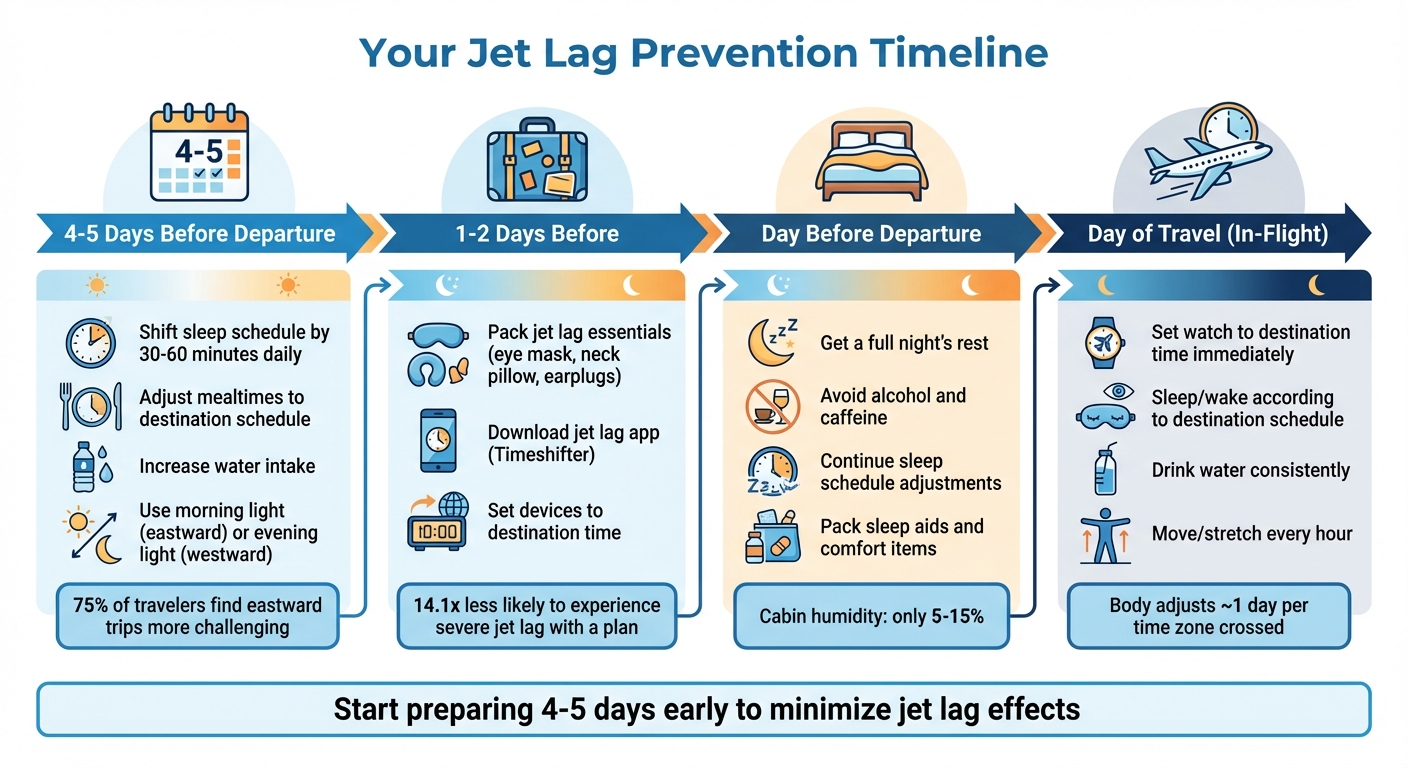
4-Step Timeline for Managing Jet Lag Before Travel
7 Tips to Outsmart Jet Lag on Your Next Trip
4-5 Days Before Departure: Start Adjusting Your Routine
Preparing for jet lag starts well before you board your flight. About 4–5 days before departure, begin adjusting your internal clock. This gradual shift gives your body enough time to adapt to the new time zone, making the transition smoother.
“You’re wise to think about preventing jet lag before you leave home, rather than trying to deal with it once you’ve arrived at your destination”
- Dr. M. Rizwan Sohail, Mayo Clinic‘s Travel Medicine division.
One of the first steps is aligning your sleep schedule with your destination’s time zone.
Shift Your Sleep Schedule Gradually
Ease into your new schedule by adjusting your bedtime and wake-up time by 30–60 minutes each day. If you’re traveling east, move your sleep schedule earlier by an hour daily. For westward travel, shift it later by the same increment .
This gradual adjustment mirrors how your body naturally adapts to time changes: about 1.5 hours per day when heading west, but only one hour per day for eastward travel. It’s no surprise that roughly 75% of travelers find eastward trips more challenging. Consistency is crucial – stick to your adjusted schedule every day during this preparation period.
Match Your Mealtimes to the New Time Zone
Start aligning your meals with your destination’s schedule. For eastward flights, eat 30–60 minutes earlier each day. For westward trips, push your meals later by the same amount .
| Travel Direction | Mealtime Adjustment | Light Exposure Strategy |
|---|---|---|
| Eastward | Eat 30–60 minutes earlier | Seek morning light; avoid evening light |
| Westward | Eat 30–60 minutes later | Seek evening light; avoid morning light |
Light exposure also plays a critical role in resetting your internal clock. Morning light helps if you’re traveling east, while evening light is better for westward trips.
Stay Hydrated and Keep Moving
Hydration and exercise are just as important as sleep and meals when it comes to combating jet lag. Dehydration can amplify symptoms like headaches, fatigue, and brain fog. Start increasing your water intake several days before your flight and cut back on alcohol and caffeine, as both can dehydrate you and disrupt your sleep .
“Caffeine and alcohol promote dehydration, which worsens the symptoms of jet lag. They can also disturb sleep”
Stick to your regular exercise routine, but avoid intense workouts late in the evening, as they can interfere with falling asleep. Morning or afternoon sessions are better options – they’ll help keep you energized during the day and make it easier to relax at night .
1-2 Days Before Departure: Pack and Plan
As your body adjusts to a new routine, it’s time to focus on the final steps of preparation. With your sleep schedule already shifting, use this time to organize your packing and confirm all travel details. Double-check your flight information and keep an eye out for updates on platforms like Flight Booking 247.
Pack Your Jet Lag Essentials
Airplane cabins are notoriously dry, with low humidity levels that can leave your skin and lips parched. Combat this by packing a small kit of essentials to stay hydrated and comfortable during the flight.
Here’s what to include:
- Sleep aids: An eye mask, wax earplugs, and a travel neck pillow to help you rest.
- Comfort items: Compression socks, warm socks, and loose clothing for a cozier journey.
- Hydration helpers: A reusable water bottle, moisturizer, lip balm, and face mist.
- Extras: Antibacterial wipes, lavender essential oil for relaxation, and chewy candies to ease ear pressure during takeoff and landing.
Having these items on hand can make a world of difference when it comes to arriving refreshed.
Use a Jet Lag App
Let technology do the heavy lifting when it comes to time zone adjustments. Apps like Timeshifter take the guesswork out of planning your sleep and light exposure shifts. These tools are designed to guide your internal clock reset by offering personalized advice on when to seek light, avoid caffeine, and more.
“Timeshifter is an app that acts like a friendly coach to help you shift your time zone before your departure date so that you can arrive bright-eyed and ready to explore”.
What’s great about Timeshifter is its precision – it often asks for your flight number to tailor its plan to your exact itinerary. The app offers a free first plan, while additional plans cost $9.99 per trip or $24.99 for unlimited annual use. Download it early and stick to its recommendations for light exposure and caffeine management.
Adjust Your Mindset to Destination Time
Preparing mentally is just as important as physical adjustments. Start syncing your thoughts with your destination’s schedule. A simple trick? Set your phone, watch, or other devices to the destination time as soon as you board the plane. This small step can guide your in-flight activities and help you ease into the new time zone.
Research shows that travelers who follow a personalized circadian adjustment plan are 14.1 times less likely to experience severe jet lag, with 96.4% reporting smooth time zone transitions. These mental cues can set the stage for a more seamless travel experience.
sbb-itb-e205081
Day Before Departure: Final Steps
The day before your flight is all about making those last preparations count. By now, you’ve been gradually shifting your sleep schedule, so stick to the plan. Avoid staying up late or cramming in last-minute tasks – protecting your sleep is key to starting your journey on the right foot. These final touches will help ensure you’re physically and mentally ready for the trip.
Get a Good Night’s Sleep
A solid night of rest is non-negotiable. Dr. M. Rizwan Sohail from the Mayo Clinic’s Travel Medicine department explains:
“Make sure you’re well-rested before you go, because starting a trip with too little sleep will make jet lag worse”.
Stick to the sleep adjustments you’ve been making all week. Heading east? Hit the bed earlier. Flying west? Stay up a little later.
Skip alcohol and caffeine – they can mess with your sleep and leave you dehydrated. Airplane cabins already have incredibly low humidity levels (just 5% to 15%), so staying hydrated is critical. Opt for water and light meals packed with fruits and veggies instead.
Pack Sleep Aids and Comfort Items
Make sure your carry-on is stocked with everything you need for a comfortable flight. Here’s a quick checklist:
- Neck pillow
- Noise-canceling headphones or earplugs
- Eye mask
- Large scarf, travel wrap, or shawl (perfect as an in-flight blanket)
- Compression socks (to help with circulation and reduce swelling)
Don’t forget personal care items like lip balm, moisturizer, and facial cleansing wipes to combat the dry cabin air. Bring an empty reusable water bottle to fill up after security. If you use melatonin, test it at home first to avoid any surprises mid-flight.
Use Light Therapy and Stay Hydrated
Light exposure can work wonders in resetting your body clock. Depending on your travel direction, plan your light exposure accordingly:
- Flying east? Seek out bright morning light as soon as you wake up.
- Flying west? Focus on getting afternoon and evening light.
Dr. Alon Avidan, Director of the UCLA Sleep Disorders Center, points out:
“Light exposure is the single strongest factor regulating circadian rhythms”.
Hydration is just as important. Keep sipping water throughout the day to stay ahead of dehydration. As a mental trick, set your phone, watch, and other devices to your destination’s time zone before bed. This small step can help you start adjusting mentally and ease the transition when you arrive.
Day of Travel: In-Flight Tips
Once you’re on the plane, the way you spend your time can have a big impact on how quickly you adjust to your destination’s time zone. These simple in-flight strategies can make the transition smoother.
Set Your Watch to Destination Time
Right after boarding, update all your devices – watch, phone, tablet, laptop – to match your destination’s time zone. Dr. M. Rizwan Sohail from Mayo Clinic’s Travel Medicine department emphasizes this habit:
“Switch to your destination schedule as soon as you leave home. Set your clocks to that new time when you get on the plane, and use it to guide your activities.”
This small mental adjustment helps you start syncing with your new schedule right away. Remember, your body typically needs about one day to adjust for every hour of time zone change.
Sleep and Wake According to Destination Time
Tailor your in-flight sleep to align with the nighttime hours of your destination. If it’s night where you’re heading, try to sleep using aids like a neck pillow, eye mask, or even 3–5 mg of melatonin taken about 30 minutes before you rest. On the other hand, if it’s daytime at your destination, stay awake and keep yourself engaged.
Dr. Charles A. Czeisler, Director of the Division of Sleep Medicine at Harvard Medical School, explains:
“Jet lag is due to a misalignment between the external environment and the internal clock in the brain that drives our daily performance, alertness, and ability to sleep.”
Adjusting your sleep schedule in-flight sets the stage for a smoother transition upon arrival.
Stay Hydrated and Keep Moving
Hydration and movement are just as crucial as sleep. Airplane cabins have incredibly low humidity levels – only about 5%–15%. This dry air can dehydrate you quickly, leading to symptoms like brain fog and fatigue. To counter this, drink water consistently throughout the flight and consider adding electrolytes (like sodium, potassium, and magnesium) for extra hydration. Avoid alcohol and caffeine, as they can dehydrate you further and mess with your sleep cycle.
Dr. Rabia Malik, an aesthetic doctor, highlights:
“Hydration isn’t just about water intake. Aeroplane environments are dehydrating at a cellular level.”
Movement is equally essential. Aim to stretch or walk around the cabin every hour. Laura Wilson, a physiotherapist, suggests simple exercises like calf raises (15–20 reps every 30–45 minutes) to help regulate blood sugar levels and prevent jet lag symptoms. These movements also reduce swelling and stiffness by activating the calf muscle pump, which supports circulation.
To feel your best when you land, make hydration and regular movement part of your in-flight routine. Sip water frequently, include electrolytes if needed, and keep your body active to fend off fatigue and discomfort.
Summary of Key Tips
Start tackling jet lag before you even step on the plane by gradually adjusting your schedule. About 3–5 days before your trip, begin shifting your sleep and meal times to align with your destination’s time zone. This simple step can help recalibrate your internal clock.
As you finalize your travel plans, keep these words from Dr. M. Rizwan Sohail of Mayo Clinic’s Travel Medicine department in mind:
“You’re wise to think about preventing jet lag before you leave home, rather than trying to deal with it once you’ve arrived at your destination”.
Don’t forget to pack your jet lag essentials, like your pre-prepared kit, and consider using apps like Timeshifter to fine-tune your sleep and light exposure strategy.
While in the air, focus on smart in-flight practices. Light exposure plays a major role in resetting your body clock. If you’re traveling east, seek out bright morning light. Heading west? Aim for evening light instead. Keep in mind that your body typically adjusts at a pace of one day per 1–2 time zones. Also, stay hydrated and avoid overindulging in alcohol or caffeine during the flight. These small adjustments can make a big difference in how quickly you adapt to your new time zone.
FAQs
How can light exposure help me adjust to a new time zone and reduce jet lag?
Light exposure plays a key role in resetting your internal clock when you travel across time zones. Morning light signals your brain that it’s time to be awake, which can help you adjust to an earlier schedule – perfect for eastward travel. On the other hand, exposure to light in the evening delays your sleep-wake cycle, making it easier to stay up later after westward flights.
Here’s why it works: light directly influences your brain’s master clock, which governs melatonin production and other hormones tied to sleep. To make the most of this, spend 30 to 60 minutes in bright light (about 10,000 lux) at the right time – morning light for eastward travel and evening light for westward trips. Be cautious about light exposure at the wrong times, as it can throw off your adjustment. By timing light exposure carefully, you can sync your body to the local schedule and ease jet lag symptoms.
How can a jet lag app like Timeshifter help with adjusting to new time zones?
Jet lag apps, such as Timeshifter, aim to ease the challenge of adjusting to new time zones by offering personalized guidance. These tools take into account details like your flight schedule, sleep habits, and destination to craft a customized plan. This plan often includes recommendations for light exposure, caffeine consumption, and when to sleep.
By sticking to these tailored suggestions, you can minimize the effects of jet lag and sync with your destination’s time zone faster, ensuring a more comfortable and enjoyable travel experience.
Why is staying hydrated important for reducing jet lag?
Staying hydrated is a key factor in reducing the effects of jet lag. Dehydration can amplify fatigue and make it even tougher for your body to adapt to a new time zone. By drinking plenty of water before, during, and after your flight, you can maintain your energy levels and support your body’s ability to adjust.
It’s also wise to steer clear of too much caffeine or alcohol. Both can dehydrate you and interfere with your sleep cycle, making it harder to bounce back from the time shift. A simple habit like choosing water over coffee or wine can make a big difference in how you feel after traveling.