
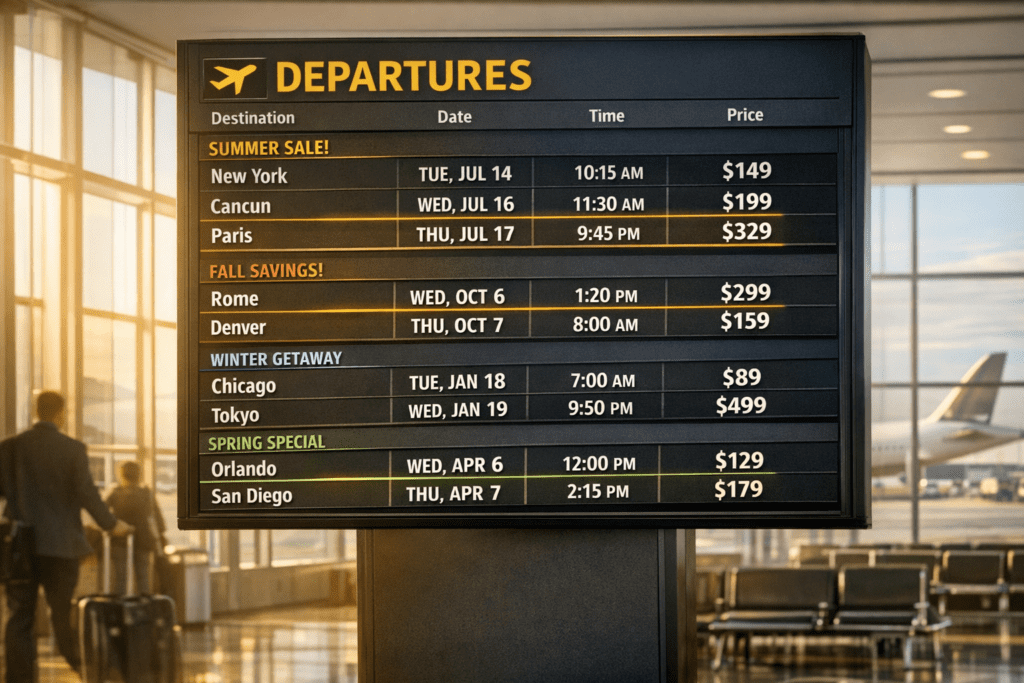
Want cheaper flights? Timing is everything. Here’s what you need to know:
- Domestic Flights: Book 1–3 months ahead. Prices are typically lowest 38 days before departure. Avoid booking within 21 days to dodge last-minute price hikes.
- International Flights: Plan 2–8 months in advance, with the best deals 3–5 months out. Sundays are ideal for booking, offering up to 17% savings.
- Seasonal Trends:
- Winter: January and February have post-holiday discounts, with prices dropping up to 30%.
- Spring: Late April to May sees international fares dip by 15–25%.
- Summer: Peak travel season. Start tracking prices 3–4 months early and book 1–2 months ahead.
- Fall: September and October bring savings of up to 32% after summer’s rush.
Pro Tip: Fly midweek (Tuesdays and Wednesdays) for the best savings – up to $102 cheaper than weekends. Use tools like Google Flights or Skyscanner to monitor prices and stay flexible with dates for better deals.
Timing your booking and departure days wisely can help you save hundreds on airfare.
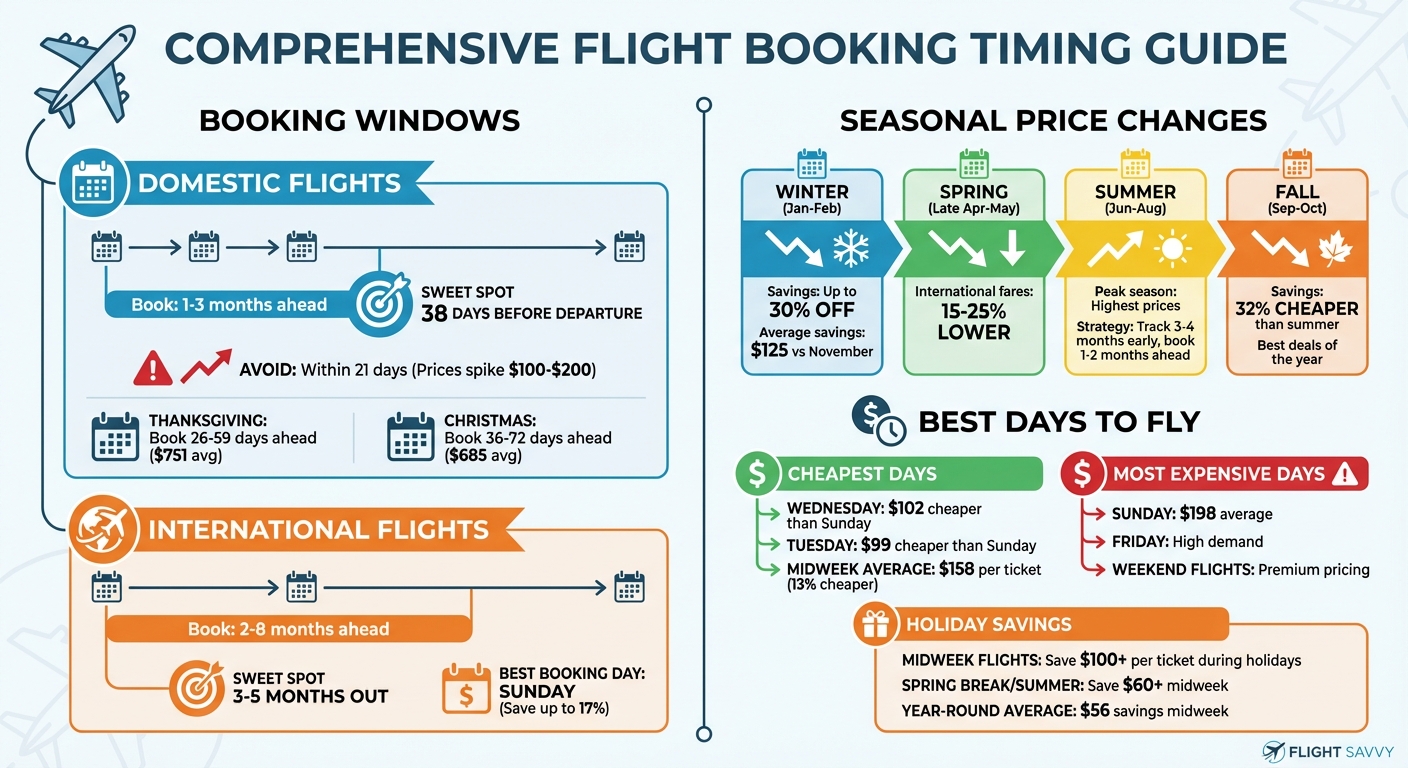
Best Times to Book Flights: Domestic vs International Booking Windows and Seasonal Savings
When to Book a Flight for the Best Price (it’s not Tuesday)
How Flight Prices Change by Season
Airlines adjust ticket prices based on seasonal demand, and knowing these trends can help you save big on your next trip. The difference between peak and off-peak seasons can be staggering – fares often jump by more than 50% during busy travel periods compared to quieter months.
Here’s a closer look at how flight prices shift throughout the year.
Winter Travel: Post-Holiday Discounts
If you’re looking for bargains, January and February are your best bet. Once the holiday travel rush ends, ticket prices can drop by as much as 30%. For instance, flying in January instead of November could save you an average of $125. These months are perfect for travelers who are flexible with their destinations and don’t mind cooler weather.
Spring Shoulder Season: Cheaper International Flights
From late April through May, international fares often drop by 15–25%. This period offers a sweet spot for travelers – pleasant weather and fewer crowds, all while keeping costs down. It’s an excellent time to explore destinations abroad without breaking the bank.
Summer Peak Travel: Plan Ahead
June through August is the busiest (and priciest) time to fly. With schools out and vacation season in full swing, demand skyrockets, making affordable tickets harder to find. If summer travel is on your agenda, start tracking prices 3–4 months in advance and aim to book 1–2 months before your trip. Waiting until the last minute during this season will likely mean paying top dollar.
Fall Deals: Big Savings After Summer
As summer winds down and schools reopen, September and October bring some of the year’s best flight deals. Airfare during this time can be 32% cheaper on average compared to summer. Opting for midweek departures during these months can stretch your savings even further. Whether you’re planning a domestic getaway or an international trip, fall is a fantastic time to travel on a budget.
Next, discover the best times to book your flights for maximum savings.
When to Book Flights for the Best Prices
Timing matters when it comes to snagging the best airfare deals. Booking too early or waiting until the last minute often results in higher prices. Instead, aim for the “Goldilocks Window”, when fares tend to be at their lowest.
Domestic Flights: Book 1–3 Months Ahead
For domestic flights, the sweet spot is typically 1 to 3 months before your departure date. Prices hit their lowest point around 38 days before takeoff, according to research. After that, last-minute fares can spike by $100–$200.
“The 38-day mark before your trip presents the lowest prices… it’s a highly concentrated window where airlines strategically adjust their pricing.”
– Chris Bayer, Editor, ZDNET
If you wait until less than 21 days before departure, expect to pay significantly more – those last-minute hikes can add hundreds to your ticket price. Planning to travel during the holidays? Here’s what you need to know:
- Thanksgiving flights: Book 26–59 days in advance.
- Christmas flights: Book 36–72 days ahead.
Failing to plan for holiday travel can lead to steep price increases. For reference, the average domestic round-trip fares for Thanksgiving and Christmas in 2025 are projected to be roughly $751 and $685, respectively.
International Flights: Book 2–8 Months Ahead
Planning an international trip? You’ll need to think further ahead than you would for domestic travel. The best deals are usually found 2 to 8 months before departure, with the ideal window being 3–5 months out. This extended timeline gives you more chances to catch price drops.
Another tip: Book on a Sunday to save up to 17% compared to booking on a Monday or Friday. Small adjustments in timing can make a big difference when it comes to international airfare.
sbb-itb-e205081
Which Days of the Week Offer Cheaper Flights
The day you choose to fly can have a much bigger impact on ticket prices than the day you book. While booking day price changes are minimal – usually under $1 – the cost difference between departure days can soar past $100.
Tuesdays and Wednesdays: The Best Days to Save
If you’re looking to save money, Wednesday is the cheapest day to fly, offering travelers an average savings of $102 compared to the most expensive day, Sunday. Flying on Tuesday isn’t far behind, with average savings of $99 compared to Sunday.
The numbers back this up. Flights on Tuesday and Wednesday are consistently 13% cheaper than other days, with one-way fares averaging $158, compared to $198 on Sundays.
“Flying midweek can save you nearly $100 off your ticket… If you can be flexible and book either a Tuesday or Wednesday … you’re gonna save significantly off your trip.”
– Lindsay Schwimer, Consumer Travel Expert, Hopper
These savings become even more noticeable during popular travel seasons. For example, domestic travelers flying midweek save an average of $56 per ticket throughout the year. But during high-demand periods like spring break or summer vacations, those savings can climb to over $60. Around the holidays, midweek flights can save you $100 or more per ticket.
Why Weekend Flights Are More Expensive
Weekend flights, on the other hand, come with a higher price tag. The reason? Demand. Fridays and Sundays are prime travel days for leisure travelers heading out for weekend trips, which drives up prices. Business travelers also contribute to the spike, as many prefer to travel on Mondays and Fridays, avoiding midweek flights.
Tuesday, however, is the quietest travel day of the week, with fewer passengers compared to busier days. Airlines adjust their pricing based on demand, using advanced algorithms. When midweek flights have more empty seats, prices drop to attract travelers. But when weekend demand surges, ticket prices rise accordingly.
Tools for Finding Flight Deals
Snagging the best flight deals doesn’t have to mean endless searching. Thanks to artificial intelligence and real-time data, tools now monitor millions of flights and alert you when prices drop. For instance, AirHint uses machine learning to predict the best booking times with over 80% accuracy. Some advanced systems even claim accuracy rates as high as 95%. These tools don’t just track flights – they also focus on timing strategies that can help you save.
With price tracking and alert features, you’ll receive notifications via email or app when fares for your chosen routes decrease. To maximize your chances of nabbing a good deal, start monitoring international flights 3–6 months before departure and domestic flights 1–3 months ahead. These automated tools work hand in hand with personalized assistance to create a well-rounded booking approach.
Get Help from Flight Booking 247

Prefer a personal touch over automated tools? Flight Booking 247 connects you with a live travel concierge to find the best flight deals in real time. Available 24/7, this service helps with booking, changing, or canceling both domestic and international flights. No need to spend hours on hold or deal with automated systems – a real person will assist you in comparing prices, exploring flexible travel dates, and securing the best fares tailored to your trip.
Search with Flexible Dates
Flexible date search tools can uncover cheaper flights by showing price variations over a broader time frame. Platforms like Google Flights and Skyscanner feature tools such as “Date Grids” and “Price Graphs”, which highlight price trends for an entire month. This makes it easy to identify the least expensive days to fly. If you’re open to different destinations, try Skyscanner’s “Everywhere” option or Google Flights’ “Explore” feature to find the most budget-friendly locations departing from your home airport. These tools can reveal fares that are up to 20% lower on certain dates.
Conclusion
Timing plays a crucial role in snagging the best flight deals. To save big, keep an eye on fares during the ideal booking windows and aim for midweek departures whenever possible.
Here’s the key takeaway: steer clear of last-minute bookings. Airlines often hike prices dramatically if you book within 21 days of departure. Planning ahead and staying flexible with your travel dates can make a huge difference in finding the lowest fares.
Feeling overwhelmed by tracking prices? Flight Booking 247 is here to help. With 24/7 access to a live travel concierge, they’ll handle the research for you. For real-time assistance and personalized support, reach out to Flight Booking 247.
FAQs
How can I use flexible date tools to find the best seasonal flight deals?
Using flexible date tools can make a big difference in snagging the lowest seasonal flight prices. When searching for flights, try selecting options like “+/- 3 days” or “Whole month.” These features give you a calendar or grid view of fares, making it easy to spot the cheapest travel dates at a glance.
Once you’ve identified a great deal, set up price alerts to monitor fare changes. This way, you can book at the perfect time when prices drop. After settling on your flight, Flight Booking 247 is available around the clock to help you book, modify, or cancel tickets effortlessly. Just make sure to enter dates in MM/DD/YYYY format, and note that prices will appear in USD.
Why is Sunday the best day to book flights?
Booking your flights on a Sunday could save you some serious cash – fares are often up to 13% cheaper compared to booking on a Friday. This applies across the board, whether you’re flying domestically or internationally, and it works for both economy and business class tickets.
By simply planning to book on a Sunday, you can stretch your travel budget further. It’s an easy way to snag a better deal and make your next trip more affordable!
Why are flights cheaper on weekdays compared to weekends?
Flights scheduled during the week, particularly on Tuesdays and Wednesdays, often come with lower price tags. This happens because fewer travelers choose these days, prompting airlines to drop fares to fill those empty seats. In fact, booking midweek could save you as much as 20% on airfare.
Another bonus? Airports are usually less busy on these quieter days, which means shorter lines and a more relaxed travel experience. By planning your trip around midweek departures, you can not only save money but also avoid the usual airport chaos.