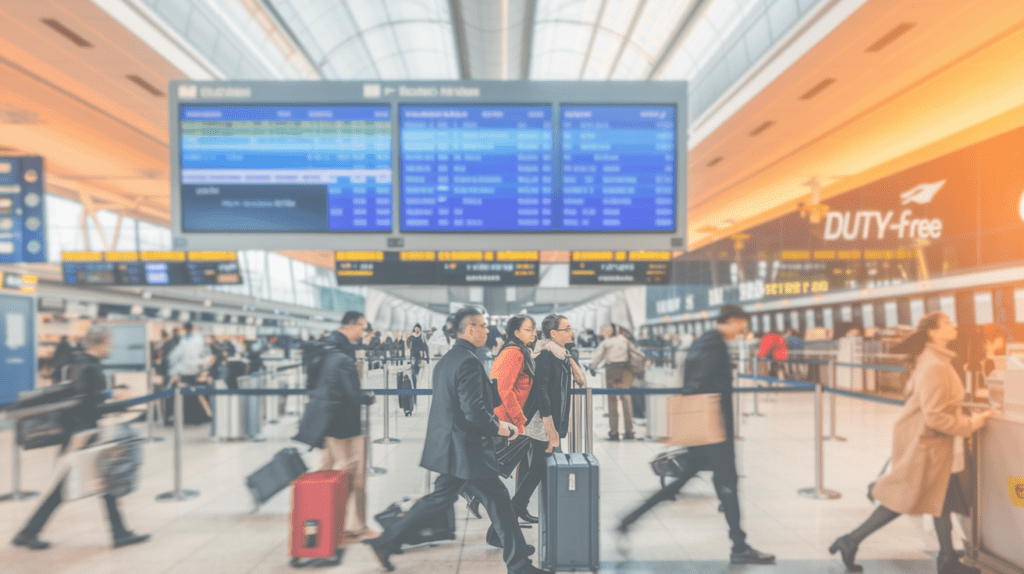
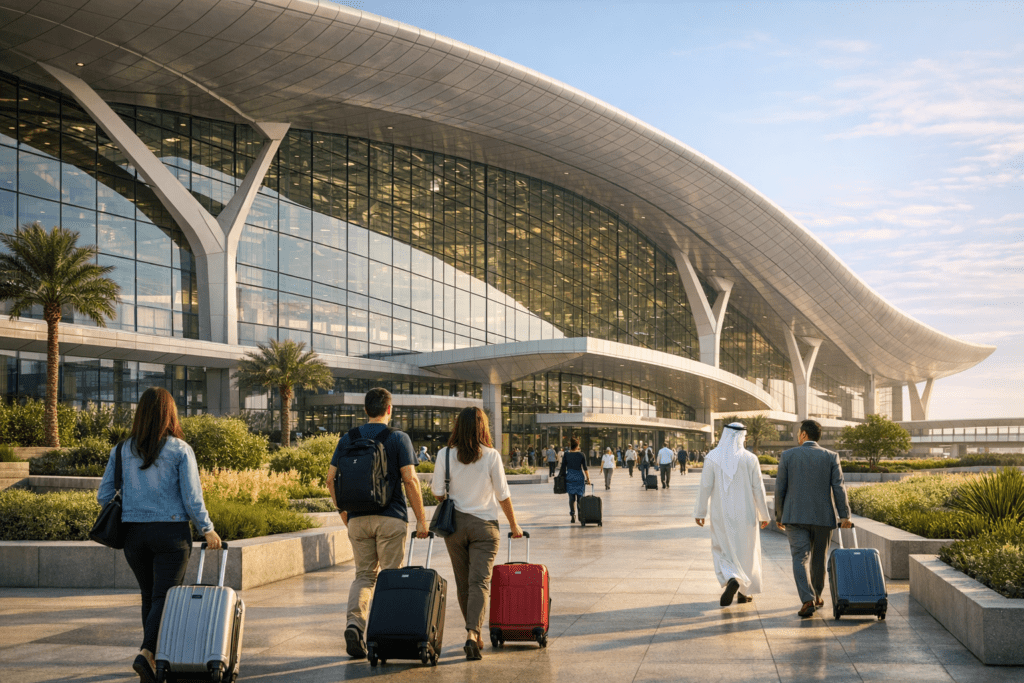
Kuwait International Airport is transforming with a $5.8 billion investment, including a $4.3 billion Terminal 2 project. This upgrade addresses long-standing issues like overcrowding, delays, and outdated facilities, aiming to boost annual capacity to 25 million passengers initially and up to 50 million in the future. Key improvements include:
- New Terminal 2: 700,000 m² facility with 120 check-in desks, 36 boarding gates, and advanced baggage systems.
- Runway and Control Tower Upgrades: A 4.58-km runway and a 70-meter air traffic control tower enhance flight operations and reduce delays.
- Sustainability Features: 81,000 solar panels and passive cooling systems cut energy use by 40%.
- Enhanced Amenities: Better dining, shopping, and premium services improve the overall experience.
These changes promise smoother travel, fewer delays, and a more comfortable journey, with Terminal 2 expected to be fully operational by late 2026 or early 2027.
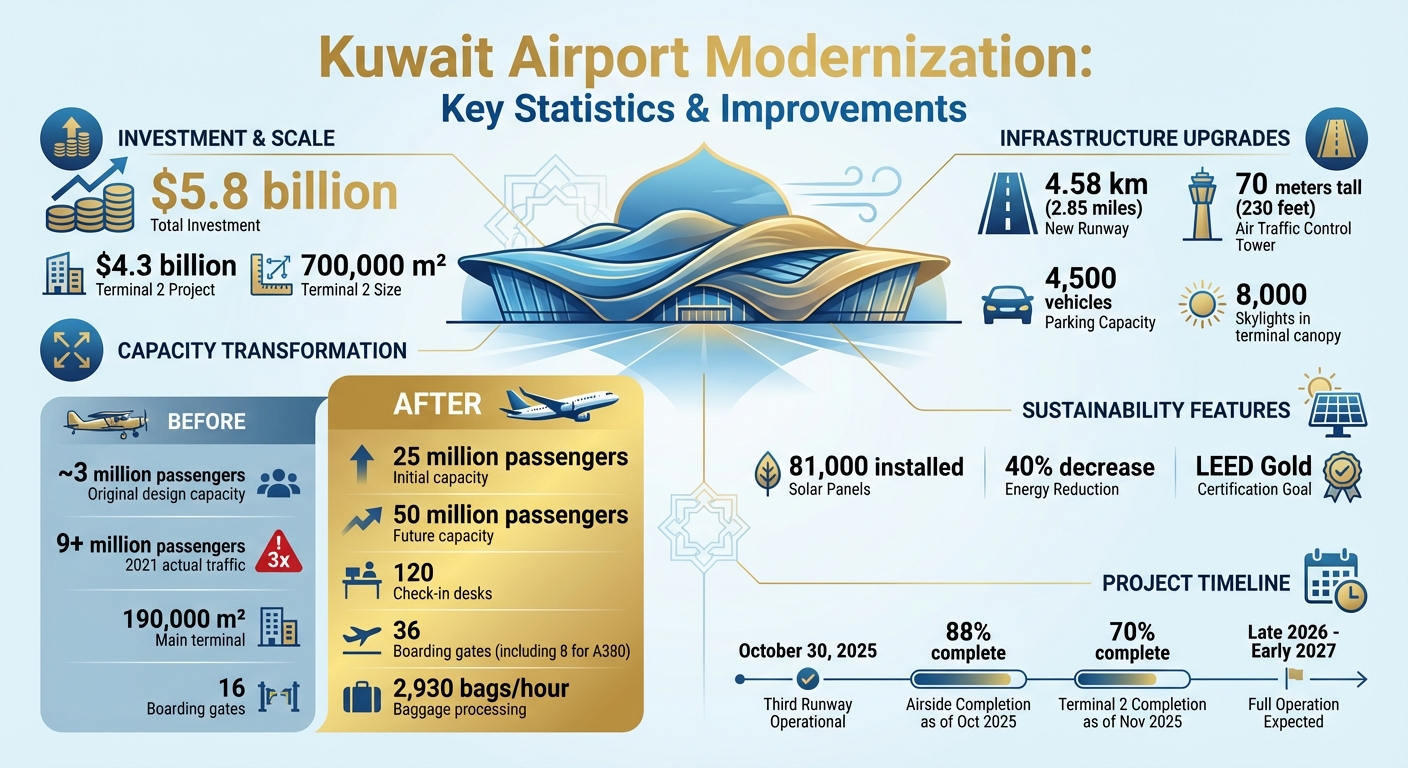
Kuwait Airport Modernization: Key Facts and Figures
Inside Kuwait’s $4.3 Billion Futuristic Airport That’s Redefining Air Travel
Problems Travelers Faced Before the Upgrade
Modernizing Kuwait International Airport was long overdue, as several persistent issues had made traveling through the facility increasingly challenging.
Congestion and Overcrowding
Overcrowding was one of the airport’s most pressing problems. By 2004, the airport had already hit its maximum design capacity, yet operations continued to grow. By 2021, it was handling three times the number of passengers it was originally built for.
“The airport has reached its maximum capacity since 2004 and nowadays it is working by over its maximum capacity by triple.” – ScienceDirect
In 2012 alone, over 9 million passengers passed through the airport. The main terminal, spread across 190,000 m² (about 2 million ft²), had just 16 boarding gates to accommodate this massive flow of travelers. Before temporary upgrades in 2018, the situation was even worse: departing passengers had to navigate through only five security inspection machines and 10 passport control counters. On top of that, the check-in process was mostly manual, as there was no automated self-service technology .
The problem escalated during peak travel times, such as Ramadan, Umrah pilgrimages, and summer vacations, when bottlenecks became especially severe . This overwhelming demand not only caused chaos in the terminal but also led to frequent delays.
Frequent Flight Delays
Outdated infrastructure was another major issue. The airport’s 1986-era control tower and aging runways struggled to handle the increasing volume of flights. Airlines frequently reported delays caused by overcrowded facilities and inefficient systems. These limitations hindered the expansion of national carriers and created unpredictable schedules for travelers. Beyond the operational delays, passengers also had to contend with a lack of modern conveniences.
Limited Amenities and Services
The terminal, originally built in the 1970s, fell far short of modern expectations. Seating in transit areas was limited, air conditioning systems were outdated, and prayer areas were insufficient. Dining and shopping options were minimal, especially compared to the offerings at other major international airports. The overall design reflected the needs of a much smaller and less connected world, making it ill-suited for today’s global travelers.
How the Modernization Project Solves These Problems
Kuwait’s $4.3 billion modernization project tackles long-standing challenges by expanding airport capacity, upgrading flight operations, and improving traveler amenities. These efforts address issues like congestion, delays, and limited services that previously frustrated passengers.
Terminal 2: Expanding Capacity and Enhancing Passenger Flow
At the heart of this transformation is Terminal 2, designed by Foster + Partners with a trefoil layout – a three-pointed star shape with symmetrical wings. This design minimizes walking distances between the central hub and gates, making it easier for passengers to navigate.
Initially, Terminal 2 will handle 25 million passengers annually, with the potential to scale up to 50 million in the future. The terminal features 120 check-in desks and an advanced baggage system designed to reduce wait times.
The passenger experience is further elevated by a canopy roof with 8,000 skylights, which bring in natural light while reducing heat gain. Energy efficiency is a key focus, with passive cooling systems and daylight controls cutting energy use by about 40%. The terminal also aims for LEED Gold certification, aided by solar panels installed on the roof. To address parking shortages, a multi-story parking facility has been built, accommodating 4,500 vehicles.
In addition to terminal improvements, the modernization includes upgrades to airside infrastructure, ensuring smoother flight operations.
New Runways and Air Traffic Control Tower
Airside upgrades play a crucial role in reducing delays. A 4.58-kilometer (2.85-mile) third runway became operational on October 30, 2025, complementing the reconstructed east runway. These enhancements enable the airport to handle a higher number of flights efficiently.
A new 70-meter-tall (230-foot) air traffic control tower offers 360-degree radar coverage for all three runways. Built with base-isolator foundations to withstand seismic activity, the tower incorporates advanced surface-movement and instrument-landing systems, streamlining takeoffs and landings. As of late October 2025, the airside modernization was 88% complete.
“The third runway and the new control tower represent a qualitative leap in Kuwait’s air-transport system. They will greatly contribute to the safety and security of landing and take-off traffic and strengthen our position as a regional hub.” – Saad Al-Otaibi, Deputy Director General, Directorate General of Civil Aviation
General Aviation Building and Improved Amenities
The project also includes a dedicated General Aviation Building for private flights. Terminal 2 meets IATA Service Level A standards, ensuring a high level of passenger comfort. The first phase of the terminal includes 36 boarding gates, with 30 contact stands and eight gates designed specifically for Airbus A380 aircraft.
Security has been upgraded with advanced screening technology, including Smiths Detection HI-SCAN units and CT X-ray systems, which speed up baggage checks without compromising safety. Ground transportation will also see improvements, with plans for a new metro line connecting the airport to Kuwait City’s center. As of November 2025, Terminal 2 was about 70% complete, with full completion expected in 2026.
sbb-itb-e205081
What These Changes Mean for Travelers
The transformation of Kuwait Airport marks a new era for travelers, offering a smoother, faster, and more enjoyable experience. With upgraded facilities and advanced systems, the airport now operates more efficiently, ensuring passengers face fewer delays and a more seamless journey.
Better Passenger Flow and Less Congestion
The introduction of Terminal 2 has been a game-changer, addressing the overcrowding issues of the past. Designed to handle 25 million passengers annually – with the potential to expand to 50 million – the terminal ensures the airport can manage peak periods without a hitch.
State-of-the-art features like automated kiosks, e-gates, and digital wayfinding systems help eliminate common bottlenecks. For those who opt into the facial recognition system, identity verification becomes a breeze, taking just seconds at biometric kiosks and gates. Add to that upgraded baggage handling systems and faster immigration processes, and travelers spend less time waiting and more time enjoying their journey.
Fewer Delays and More Reliable Flights
The airport’s shift to a three-runway operation, expected to be fully functional by 2027, significantly boosts its capacity to manage flights efficiently. Cutting-edge technology like the Advanced Surface Movement Guidance and Control System (A-SMGCS) provides controllers with a detailed view of aircraft and ground vehicles, ensuring smooth operations even during peak times or in challenging weather.
“As Kuwait Airport grows to include a third runway, A-SMGCS will be pivotal in managing the increased traffic flow and ensuring that ground operations remain safe and well-coordinated, particularly during poor visibility conditions.” – Daan Eijgendaal, Project Director, Deerns
Enhanced Instrument Landing Systems now offer precise guidance during low-visibility conditions, helping to reduce weather-related delays. These technological upgrades not only improve takeoffs and landings but also contribute to an overall better experience for passengers within the terminal.
More Dining, Shopping, and Premium Services
Beyond efficiency and reliability, the airport’s expanded amenities elevate the travel experience. New partnerships with international airlines have introduced direct routes to major global destinations and increased flight frequencies, giving travelers more options and better connections. Whether you’re looking for dining, shopping, or premium services, the enhanced facilities provide greater comfort and convenience, making Kuwait Airport a destination in itself.
How Flight Booking 247 Helps You Navigate Kuwait Airport

Kuwait Airport is undergoing a massive $5.8 billion transformation, making expert travel assistance more important than ever. With multiple terminals in operation and ongoing upgrades expected to continue through 2027, navigating flight options can be tricky. That’s where Flight Booking 247 steps in, offering round-the-clock concierge support to help you book, change, or cancel flights as the airport evolves.
This service has proven especially helpful during recent airline disruptions. For instance, British Airways halted direct flights in March 2025, while Lufthansa and KLM have also exited the market. Passenger numbers at the airport dropped to 7.4 million in the first half of 2025 – a 3% decline compared to the previous year – making it the only Gulf airport to see a downturn. In contrast, hubs like Abu Dhabi saw a 13% rise. A travel concierge can guide you through these challenges, helping you find the best routes and manage last-minute changes.
The airport’s multi-terminal setup adds another layer of complexity. Terminal 2, still under development, is set to become a major regional hub. Meanwhile, Terminal 5 has introduced efficiencies like Jazeera Airways’ “check-in to gate in 10 minutes” service, with early check-in available up to 36 hours before departure. Flight Booking 247 offers real-time assistance, helping you identify your airline’s terminal and take advantage of features like self-service kiosks and biometric screening.
Staying updated on customs regulations is just as important. As of 2025, passengers must declare cash, gold, or luxury items exceeding 3,000 Kuwaiti Dinars (roughly $9,820 USD). A travel concierge can provide quick clarity on required documentation, visa services, and arrival procedures.
From weather delays caused by sandstorms to navigating the new third runway, Flight Booking 247 connects you with experts who understand the airport’s ongoing modernization. They ensure you have the support you need to adapt to changes and make your journey as smooth as possible. These solutions reflect Kuwait Airport’s dedication to enhancing the travel experience.
Conclusion: A Better Travel Experience at Kuwait Airport
Kuwait International Airport’s massive $5.8 billion modernization project is transforming travel through one of the busiest hubs in the region. The newly constructed Terminal 2, designed to handle increased passenger volume, directly addresses the overcrowding issues that previously burdened the older facilities. Alongside this, the addition of a 4.58‑km (2.85‑mile) runway and a towering 70‑meter (230‑foot) air traffic control tower, set to be operational by October 2025, promises smoother operations and fewer delays. These updates not only resolve past challenges but also establish a higher standard of service.
Travelers are already noticing significant improvements in comfort and efficiency. The terminal now boasts 120 check‑in desks, a cutting-edge baggage system capable of processing 2,930 bags per hour, and biometric checks that complete passenger processing in mere seconds. The building’s LEED Gold-certified design, featuring innovative cooling water elements and 8,000 skylights, enhances the overall travel experience while cutting energy use by 40%.
To make the most of these advancements, stay informed about terminal assignments, customs procedures, and biometric registration. For real-time updates and essential travel guidance, Flight Booking 247 is a reliable resource – whether you’re dealing with last-minute itinerary changes or navigating new customs declaration rules for items exceeding KWD 3,000 (around $9,820 USD).
FAQs
How will Kuwait Airport’s new Terminal 2 enhance my travel experience?
Kuwait International Airport’s new Terminal 2 is built to address some of the most frustrating aspects of travel – overcrowding, delays, and limited facilities. Initially designed to handle about 13 million passengers each year, the terminal is set to ease congestion significantly. Future expansions aim to accommodate up to 50 million travelers annually. Adding to the efficiency, a state-of-the-art baggage system can process nearly 3,000 bags per hour, and upgraded immigration technology ensures quicker passport checks.
Travelers can look forward to a range of enhanced amenities. Spacious lounges provide ample room to relax, while a variety of dining and shopping options cater to diverse tastes. A sophisticated air-conditioning system ensures the terminal remains cool and comfortable, even during Kuwait’s intense summer heat. The design thoughtfully combines elements of traditional Kuwaiti architecture with modern luxury, offering a warm yet stylish travel experience. Meanwhile, improvements to runways and airfield systems enhance on-time performance, ensuring a smoother journey from takeoff to landing.
To make travel even more convenient, Flight Booking 247 offers round-the-clock support for booking, modifying, or canceling flights, helping to make your trip as stress-free as possible.
What sustainability features are included in the Kuwait Airport modernization project?
The Kuwait Airport modernization project is packed with features aimed at reducing energy use and conserving water, all while prioritizing passenger comfort. The standout addition, Terminal 2, boasts a concrete-shell roof equipped with passive cooling and daylight-control systems, which together slash energy consumption by about 40%. To top it off, solar panels on the roof generate renewable energy right on-site. Impressively, this terminal is set to achieve LEED Gold certification – an industry first for airport terminals globally.
Water conservation takes center stage as well. The airport uses underground reservoirs, drought-tolerant landscaping, and water-efficient vegetation to significantly cut down on irrigation demands. Cooling water cascades in the baggage area offer an energy-smart alternative to traditional air conditioning by utilizing evaporative cooling methods. Plus, over 8,000 skylights flood the terminal with natural light, reducing the dependency on artificial lighting. The advanced façade design further boosts thermal efficiency, making the terminal more energy-efficient. These forward-thinking upgrades position Kuwait Airport as a trailblazer in eco-friendly aviation infrastructure.
How will the new runways and control tower help reduce flight delays at Kuwait Airport?
The extended 4.58-kilometer runway boosts capacity and enables faster taxiing, while the state-of-the-art 70-meter control tower enhances air traffic management and streamlines aircraft sequencing. Together, these improvements help ease congestion and cut down on delays, creating a smoother travel experience for passengers.