
Budget airlines in Oceania offer affordable travel options but come with significant challenges. From hidden fees and frequent delays to poor customer service and baggage issues, these carriers often prioritize cost-cutting over passenger convenience. Here’s a quick breakdown of the key issues and tips to navigate them:
- Hidden Fees: Low base fares can quickly increase with add-ons like baggage, seat selection, and meals. Always review the final cost before booking.
- Delays & Cancellations: 30% of passengers experience disruptions due to tight schedules, small fleets, and regional challenges like weather and limited routes.
- Customer Service Gaps: Long wait times, outsourced support, and poor communication often leave travelers frustrated during disruptions.
- Limited Comfort: Cramped seating, minimal amenities, and extra charges for basics make longer flights uncomfortable.
- Baggage Problems: 10% of passengers report lost or mishandled luggage, with limited compensation policies.
Quick Tips:
- Plan Ahead: Book early, compare total costs, and prepay for baggage to avoid surprises.
- Stay Flexible: Allow extra time between connections and consider travel insurance for delays or cancellations.
- Pack Smart: Use carry-on for essentials and track checked bags with devices like AirTags.
- Use Airline Apps: Get real-time updates on delays, cancellations, and gate changes.
- Seek Support: Services like Flight Booking 247 can assist with rebooking and resolving issues 24/7.
By preparing and staying informed, you can reduce stress and enjoy smoother budget travel in Oceania.
Australia’s newest airline goes under leaving passengers stranded | 7 News Australia
Hidden Fees and Misleading Pricing
Budget airlines in Oceania often attract travelers with enticingly low base fares, but those prices can be deceiving. For instance, a $49 ticket from Sydney to Melbourne can easily balloon to over $150 once you factor in extras like checked baggage ($30–$60), seat selection ($10–$25), and meals ($8–$15). In Australia, 16% of budget airline passengers have reported encountering unexpected fees, turning what seemed like a great deal into a much pricier trip.
Airlines such as Jetstar and Scoot strip nearly all services from their base fares, charging separately for nearly every add-on. These extras can include checked baggage ($30–$60), seat selection ($10–$25), meals ($8–$15), printing a boarding pass at the airport ($20–$30), and flight changes ($50 or more). This pricing model, often called “drip pricing”, makes it tough to accurately compare the true costs between airlines.
Understanding the Full Fare Breakdown
Before hitting that “book now” button, make sure to go all the way to the final pricing page. This is where you’ll see a detailed breakdown of costs, including baggage fees, seat assignments, booking fees, and payment surcharges. Keep in mind that buying checked baggage at the airport can be far more expensive than pre-purchasing it online – sometimes even surpassing the original ticket price on short regional flights.
When comparing fares, focus on the total trip cost, not just the flashy base fare. Think about what you’ll actually need for your trip: a checked bag for each traveler, seat selection if you’re flying with family, and meals for longer flights. Sometimes, a legacy carrier’s “basic economy” fare might look pricier upfront but could save you money overall with better baggage allowances and more reliable customer support during disruptions.
If you’re feeling overwhelmed by fee structures, it’s worth reaching out for help to make sense of the numbers.
Getting Help with Pricing Transparency
Understanding all these extra fees is key to booking smarter. Services like Flight Booking 247 offer round-the-clock phone support, connecting you with travel concierges who can break down the full fare for you in real time. They’ll explain which extras are included in different fare types, compare total costs across airlines, and flag any hidden charges before you finalize your booking. This kind of personalized assistance helps U.S. travelers avoid unpleasant surprises and ensures you’re looking at the complete cost – not just the tempting teaser price.
Frequent Flight Delays and Cancellations
Delays and cancellations rank as the top frustration for budget airline passengers in Oceania. Roughly 30% of travelers using low-cost carriers report facing these disruptions. The region’s unique challenges – vast distances between cities, limited airport capacity (Sydney, for instance, caps movements at 80 per hour), and severe weather conditions like tropical storms and high winds – make such issues even more common. These logistical hurdles create a perfect storm for delays, setting the stage for practical solutions outlined below.
Budget airlines often operate on razor-thin schedules with small fleets, leaving little room for setbacks. A single mechanical problem or a crew shortage can create a domino effect, disrupting flights throughout the day. On routes that run just once or twice a week, a cancellation could mean waiting days for the next available flight. Worse yet, if an airline ceases operations altogether, passengers may find themselves stranded and forced to buy last-minute tickets on other carriers – often at a much higher cost.
These disruptions can ripple into even bigger problems. Missed connections booked on separate tickets typically aren’t covered by budget airlines, leaving passengers to rebook at their own expense. Plans tied to tight schedules – like cruises, tours, or special events – can fall apart entirely, with non-refundable deposits often lost.
Preparing for Delays
To stay ahead of potential delays, start by downloading your airline’s mobile app and enabling push notifications. These apps provide real-time updates on gate changes, delays, and cancellations. You can also use third-party flight trackers to monitor your inbound aircraft’s location, giving you an early warning if things are running behind. Checking your flight status several hours before heading to the airport can save you time and allow you to adjust transportation or contact customer service before lines grow long.
Plan your itinerary with flexibility in mind. Avoid booking same-day self-connections on budget airlines, and if you’re heading to a cruise or major event, aim to arrive at least a day early. Flexible tickets or travel insurance that covers delays and missed connections can be a lifesaver, especially during storm seasons in northern Australia and the Pacific. And don’t forget to pack essentials – medications, a change of clothes, and other necessities – in your carry-on, just in case your checked luggage gets delayed during rescheduled flights. If delays turn into outright cancellations, these steps will make it easier to find alternative travel options.
Rebooking During Disruptions
Once a delay or cancellation happens, acting quickly is key. Rebooking seats on budget airlines can be a race against time, especially on routes with limited service. As soon as a cancellation is announced, join the airport rebooking line and check the airline’s app for available alternatives – seats on thinly served routes in Oceania can disappear fast. Save documentation like screenshots of flight boards and receipts to support insurance claims or refunds later.
If your airline has limited rebooking options due to its small network, you may need to purchase a ticket on another carrier and request reimbursement afterward. Services like Flight Booking 247 can simplify this process. Their 24/7 travel concierges work by phone to search multiple airlines, helping you secure the fastest or most affordable replacement flight in U.S. dollars. This can be particularly helpful when cancellations occur during odd hours, as airline call centers may be overwhelmed or closed due to time zone differences.
Customer Service and Communication Challenges
Oceania’s budget airlines often fall short in customer service. Passengers frequently deal with long wait times on call centers, limited support hours, and sluggish responses through email or social media. Many airlines rely on outsourced overseas support teams, which can lead to language barriers and agents with limited authority to resolve issues. During mass delays, weather disruptions, or other widespread incidents, communication systems are often overwhelmed, leaving travelers in the dark about rebooking options, compensation, or vouchers.
These problems are especially frustrating during travel disruptions. Imagine your flight gets canceled, and the next available flight is days away. By the time you reach an agent, your chance to secure an alternative seat may already be gone. With over 85% of Australian domestic routes dominated by just three airline groups, limited competition means fewer options. Poor communication also makes it harder to understand your rights under airline policies, leaving many travelers to foot unexpected bills for meals, hotels, or new tickets – costs that airlines might have covered with quicker intervention. To navigate these challenges, keeping detailed records is key.
Documenting and Escalating Issues
Start documenting issues as soon as they arise. Save boarding passes, booking confirmations, and screenshots showing flight status, check-in times, or gate displays. These details help establish a timeline if you need to dispute when a delay or cancellation was announced. When you contact customer service, jot down the date, time, the representative’s name or ID, and any promises made. Follow up with an email summarizing the conversation to create a written record. Keep receipts for extra expenses like meals, hotels, or alternative transportation – these are essential for reimbursement claims or travel insurance.
Use multiple channels to get quicker responses. For straightforward tasks like changing flights or adding baggage, try the airline’s mobile app or “manage booking” section – especially when phone lines are tied up. If self-service tools don’t work, call the airline and escalate the issue by submitting a written complaint through their web form or email to establish an audit trail. Social media direct messages can also be effective, as specialized support teams often monitor these platforms and may respond faster, particularly if you have clear documentation.
Using Concierge Services for Support
When traditional customer service channels fail, concierge services can be a lifesaver. Flight Booking 247, for example, provides 24/7 phone access to a travel concierge who can assist with booking, changing, or canceling flights on budget airlines in Oceania. This service is especially helpful for U.S. travelers dealing with time zone differences when navigating flights in Australia, New Zealand, or the Pacific. Instead of waiting for local business hours, you can get immediate assistance.
During disruptions, a concierge can search real-time flight inventory across multiple airlines to find practical alternatives that might not show up on the airline’s app. For example, if a regional flight in Australia is canceled and the next direct option isn’t available for two days, they can quickly explore creative connections through other cities or even mix-and-match airlines. If you’re stuck dealing with conflicting information from outsourced call centers about fees, vouchers, or policy eligibility, a concierge can clarify the rules, suggest the best course of action, and help you craft effective escalation requests. They break down fare rules and fees in simple terms and guide you on how to document issues properly for reimbursement later on.
sbb-itb-e205081
Limited Onboard Experience and Amenities
Onboard comfort is a common concern when flying with Oceania’s budget airlines, alongside pricing and delays.
These carriers focus on providing basic transportation, with extras like checked baggage, seat selection, meals, and priority boarding offered for additional fees. To keep ticket prices low, they often cram more seats into the cabin, reducing legroom and seat width. For flights lasting 3–7 hours, this tight seating can lead to discomfort, especially for taller passengers or those with joint pain. If you’re used to the economy cabins on U.S. domestic flights, you’ll likely notice the difference – Oceania’s budget airlines feel much more cramped.
Food and drink are typically sold onboard, with options priced in local currencies like AUD or NZD. However, choices can be limited, and popular items may sell out on busy flights. Entertainment options are also minimal; most airlines skip seatback screens and instead offer streaming via an app, which requires you to use your own device. If you’re planning a longer or overnight flight, it’s smart to download content ahead of time.
In a 2024 survey, 59% of Australian budget airline passengers reported issues during their travels, with 10% specifically mentioning poor service. Seat pitch on these airlines is usually around 29 inches – noticeably tighter than the 31–32 inches offered by full-service carriers.
Packing for Comfort
To make your flight more bearable, consider bringing your own comfort essentials. Pack a neck pillow, lightweight blanket, eye mask, and earplugs to help you rest despite the cramped conditions. A refillable water bottle is a must – fill it up after passing through security – and throwing in a few snacks can be a lifesaver if onboard options fall short. For entertainment, load your phone or tablet with offline movies, shows, or e-books before boarding, and bring a power bank (check airline rules) along with wired headphones, as many budget airlines don’t provide them. Travel-size hygiene items like hand sanitizer, disinfecting wipes, a toothbrush, and lip balm can also help you feel refreshed in the dry cabin air.
Choosing Seats Wisely
While a well-packed comfort kit helps, your seat choice can make a big difference too.
Budget airlines often assign seats randomly with their lowest fares, but paying a small fee – typically between $20 and $50 USD – for advance seat selection can significantly improve your experience. Before booking, check the seat map. Aisle seats or exit-row seats usually offer more legroom. Solo travelers might prefer a front-row aisle seat for quicker boarding and deplaning, while couples can aim for a window-and-aisle pair in a three-seat row, hoping the middle seat stays empty on less crowded flights. If you haven’t pre-selected a seat, checking in as early as possible may give you better options.
Booking through services like Flight Booking 247 can also simplify the process. With 24/7 phone access to a travel concierge, you can review seat maps, clarify fare details, and confirm fees in U.S. dollars, helping you strike the right balance between cost and comfort before finalizing your booking.
Baggage Handling and Loss Issues
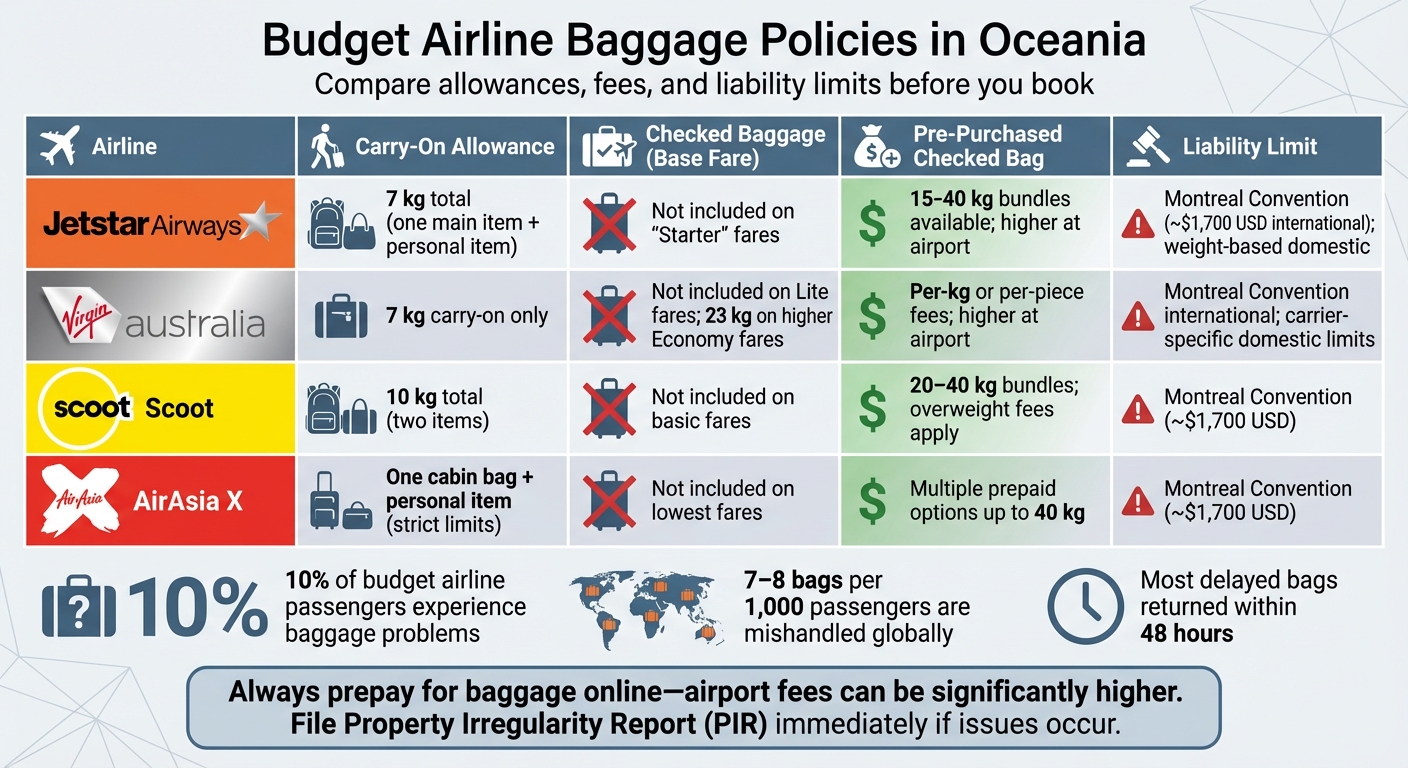
Budget Airline Baggage Policy Comparison for Oceania Travelers
On top of fees and delays, mishandled baggage is another headache that can throw off your travel plans. Around 10% of budget airline passengers in Australia experience baggage problems. Delayed or damaged luggage is especially common on busy routes like Sydney–Melbourne, particularly during peak travel seasons. With quick turnarounds and limited staff, the chances of mishandling skyrocket. The collapse of Bonza in 2024 left unresolved baggage claims in its wake, showing how operational struggles at budget carriers can make these issues even worse.
Experts from UNSW Sydney point out that budget airlines often face challenges scaling their operations. Small fleets and tight budgets mean less investment in baggage tracking systems and fewer ground staff. This is particularly noticeable on crowded east coast routes, where delays and losses are more frequent compared to larger airlines. Globally, about 7–8 bags per 1,000 passengers are mishandled, with most delayed bags being returned within 48 hours. Still, having your bag go missing – especially far from home – can seriously disrupt your plans. Below are practical steps to help you avoid and address these problems.
Avoiding Baggage Problems
The best way to avoid baggage issues is to plan ahead. Stick to weight limits: 7 kg (15 lbs) for carry-on and 20–23 kg (44–50 lbs) for checked luggage. Weigh your bags at home to avoid last-minute repacking or extra fees. Use durable hard-shell luggage and attach waterproof tags with your contact information. It’s also a good idea to place a second ID card inside your bag in case the external tag gets lost.
Pack your valuables, medications, travel documents, electronics, and at least one change of clothes in your carry-on. To track your checked luggage, consider using a device like an Apple AirTag or Tile tracker. Take photos of your packed bag – both inside and out – to document its condition and contents in case you need to file a claim. Arriving early, especially on busy routes, gives you enough time for check-in and tag verification. Also, familiarize yourself with airline-specific baggage policies to make informed choices.
Comparing Airline Baggage Policies
Baggage rules and fees differ across Oceania’s budget airlines, so comparing them before booking can save you from unpleasant surprises:
| Airline | Carry-On Allowance | Checked Baggage (Base Fare) | Pre-Purchased Checked Bag | Liability Limit |
|---|---|---|---|---|
| Jetstar Airways | 7 kg total (one main item + personal item) | Not included on “Starter” fares | 15–40 kg bundles available; higher at airport | Montreal Convention (~$1,700 USD international); weight-based domestic |
| Virgin Australia | 7 kg carry-on only | Not included on Lite fares; 23 kg on higher Economy fares | Per-kg or per-piece fees; higher at airport | Montreal Convention international; carrier-specific domestic limits |
| Scoot | 10 kg total (two items) | Not included on basic fares | 20–40 kg bundles; overweight fees apply | Montreal Convention (~$1,700 USD) |
| AirAsia X | One cabin bag + personal item (strict limits) | Not included on lowest fares | Multiple prepaid options up to 40 kg | Montreal Convention (~$1,700 USD) |
Each airline has specific procedures for lost or damaged baggage. For example, Jetstar and Virgin Australia require you to file a Property Irregularity Report (PIR) at the airport immediately and submit written claims within strict deadlines – usually 7 days for damage and 21 days for delays under Montreal Convention rules. Scoot and AirAsia X follow similar protocols for international flights. For domestic trips, Australian and New Zealand consumer laws apply, but compensation is often limited and based on weight rather than actual loss.
Resolving Baggage Problems
If your luggage is lost or damaged, head straight to the airline’s baggage service desk to file a PIR. Keep the reference number, along with your boarding pass, bag tags, and receipts for any emergency purchases you make while waiting for your bag. Airlines may reimburse these costs, but only up to their capped limits. Be sure to meet the airline’s deadlines – missing the 7- or 21-day window could mean losing your right to compensation.
If the airline’s response is unsatisfactory, escalate the issue through their complaints process and request a written decision. You can also reach out to national consumer or aviation complaint bodies in Australia or New Zealand. Having travel insurance with baggage coverage can help cover losses beyond the airline’s limits.
When baggage issues throw off your plans, Flight Booking 247 provides 24/7 phone support. Their travel concierge can assist with rebooking flights, finding deals, and coordinating with airlines to resolve problems. This service can save you time and reduce out-of-pocket expenses, easing the stress of disrupted travel.
Tips for Smooth Budget Travel in Oceania
Traveling on a budget in Oceania can be a breeze with a little preparation and smart decision-making. The secret lies in planning ahead, staying informed, and being ready to handle unexpected hiccups along the way.
Early Booking and Research
Booking your tickets 2–4 months in advance is a game-changer. Why? Because ticket prices often rise 20–30% as the departure date gets closer. Planning early not only helps you snag lower fares but also gives you more flight options and time to spot hidden fees.
But booking early is just the beginning. Dig deeper by comparing baggage policies for different airlines. For example, Jetstar enforces a strict 7 kg (15 lbs) carry-on limit – overpacking could lead to hefty fees if you’re not prepared. Weigh your bags at home and consider prepaying for baggage during checkout to dodge higher fees at the airport. Also, check recent reviews on sites like TripAdvisor to get a sense of delay rates and service quality for your chosen airline. Opt for carriers with daily flights rather than weekly ones, as the latter are more prone to disruptions. For lower fares, aim to fly on Tuesdays, Wednesdays, or Thursdays instead of weekends.
Even with meticulous planning, things don’t always go as expected.
Using Real-Time Travel Assistance
When plans hit a snag, having 24/7 travel support can be a lifesaver. Services like Flight Booking 247 offer round-the-clock access to a travel concierge who can find last-minute deals, rebook flights during delays, and handle cancellations without the headache of waiting on hold. As Flight Booking 247 describes it:
“It’s like having a personal assistant at your convenience that can find you the best deals.”
This kind of support ensures you’re not left scrambling when surprises happen.
Securing Comprehensive Travel Insurance
Finally, protect your trip with solid travel insurance. Look for policies that cover delays (over six hours), full fare cancellations, and up to $1,000 for lost baggage. This is especially important when flying with budget airlines, which are more prone to disruptions. For U.S. travelers, choosing insurance that handles claims in USD makes the process smoother. Avoid relying on airline-provided insurance, as it often lacks coverage for operational issues. Purchasing a separate policy after booking ensures broader protection and peace of mind.
FAQs
How can I avoid surprise fees when booking budget flights in Oceania?
If you’re flying with budget airlines in Oceania, it’s crucial to double-check the airline’s terms and conditions before you book. Pay close attention to details like baggage allowances, fees for seat selection, and other extras that might not be part of the base fare. These small charges can add up quickly if you’re not prepared.
Using a trusted travel service, such as Flight Booking 247, can also help you avoid hidden fees. Their team offers personalized support to ensure you’re informed about all potential costs upfront, making the booking process easier and helping you sidestep any unpleasant surprises.
What should I do if my flight is delayed or canceled?
If your flight gets delayed or canceled, your first move should be to reach out to Flight Booking 247’s 24/7 helpline at +1-866-787-0513. Their team is available to assist with rebooking, cancellations, or processing refunds promptly.
To speed things up, have your flight details handy – like your booking reference and flight number. Also, keep an eye on airline notifications for updates or specific instructions about your flight.
What are some tips for staying comfortable on long budget flights in Oceania?
Flying long distances on budget airlines in Oceania can be a challenge, but a few thoughtful preparations can make the journey much more comfortable. Pack essentials like a neck pillow, noise-canceling headphones, and an eye mask to help you rest easier. Opt for loose, comfortable clothing and make it a priority to stay hydrated during the flight.
Whenever possible, stretch your legs or take short walks up and down the aisle to keep your circulation flowing. If you can, choose a seat with extra legroom when booking – this small upgrade can make a big difference on longer flights, helping you feel more at ease when you land.