
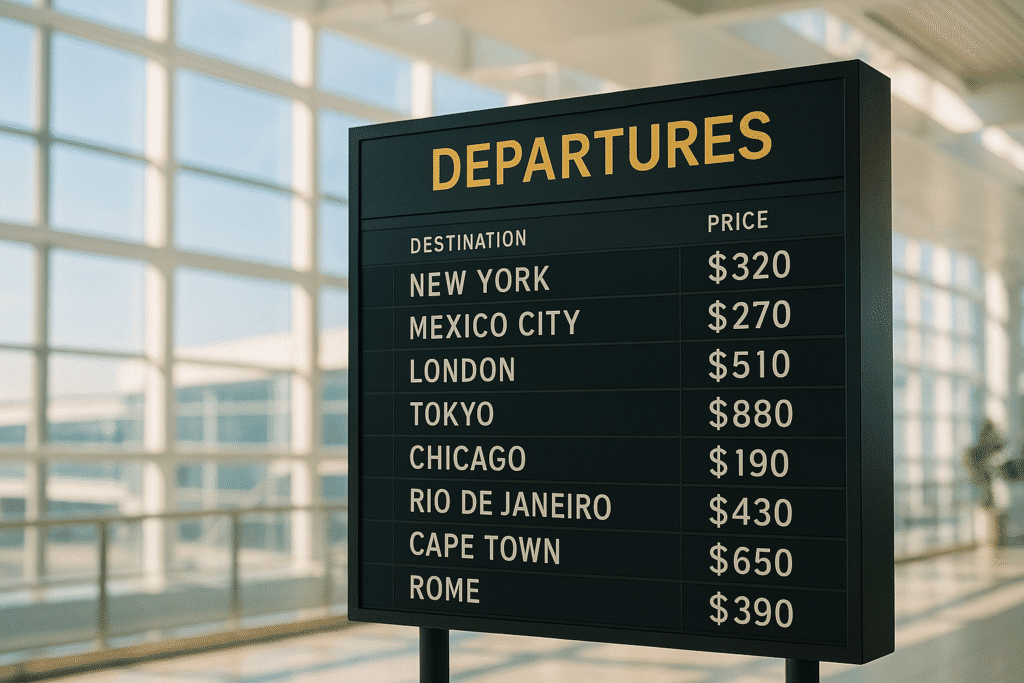
Ever wonder why flights cost more in some places and less in others? It’s all about competition, operating costs, taxes, and demand. Larger airports with more airlines tend to have lower fares, while smaller airports face higher prices due to limited options. Seasonal demand and local fees also play a huge role.
Key takeaways:
- Bigger airports = lower prices due to competition.
- Smaller airports = higher costs because of fewer airlines.
- Seasonal demand spikes prices during holidays or peak travel times.
- Taxes and fees vary by airport, impacting ticket prices.
Want to save? Book during off-peak times, fly budget airlines, and consider using booking services to track deals.
Is flying getting more expensive? It depends on where you are going
Factors That Affect Regional Flight Prices
Flight prices aren’t the same everywhere, and that’s no accident. Airlines consider various factors when setting fares, including competition between airports, operating costs, taxes, and demand. Here’s how these elements influence regional price differences.
Airport Size and Competition
Bigger airports usually mean more airlines, which leads to tougher competition and lower ticket prices. Major hubs often have a wide range of flight options and frequent deals, thanks to the intense rivalry between carriers. On the flip side, smaller regional airports don’t see as much competition. Fewer airline options give carriers more control over pricing, which can push fares higher. Additionally, hub airports often act as key connection points, offering more frequent flights and, sometimes, better pricing.
Local Operating Costs and Airport Fees
The cost of running flights varies depending on the airport, and airlines often pass these expenses on to passengers. For example, busier airports tend to have higher fees for landing, gate rentals, and ground services. In large metropolitan areas, higher wages for airport staff can also drive up costs. Meanwhile, remote airports may face unique logistical challenges, adding to the overall price tag.
Taxes and Government Fees
Taxes and fees imposed by governments and airports directly impact ticket prices. For instance, the Passenger Facility Charge – used to fund airport improvements – can differ between airports, with larger hubs often charging more. Domestic flights include federal excise taxes and per-segment fees, while international routes come with additional charges. Airports may also tack on local taxes or special fees, further influencing the final cost.
Demand, Competition, and Seasonality
Demand is another big player in pricing. Popular tourist destinations see higher fares during peak travel seasons, while business-heavy routes often maintain higher prices year-round. During off-peak times, however, you might snag a cheaper ticket. The presence of budget airlines can also shake things up – low-cost carriers often force competitors to lower their prices to stay in the game.
Regional Price Comparisons in the U.S.
Airfare prices across the U.S. tell a story of local market dynamics, shaped by factors like competition, airport fees, and demand. Let’s break down how these elements influence ticket costs in different regions.
State-by-State Fare Comparisons
Flight prices can look very different depending on where you’re flying from or to. In the Southern states, major hubs often offer lower fares because of high traveler volumes and a variety of airlines competing for business. On the other hand, some northeastern cities tend to have steeper ticket prices, largely due to limited competition.
Out West, the picture is more mixed. Cities like Los Angeles and San Francisco generally enjoy lower prices thanks to fierce competition among airlines. But smaller markets in less populated areas often face higher costs due to fewer flight options. However, well-connected hubs in the region can help keep fares reasonable, even when serving popular destinations.
The Northeast Corridor, known for its dense air traffic and strong demand from business travelers, often sees higher ticket prices. Airports like Newark, LaGuardia, and Boston Logan are notorious for elevated costs, driven by high airport fees and limited capacity. In contrast, the Southeast tends to offer more budget-friendly options. Hubs like Atlanta and Florida’s busy airports benefit from intense competition and a steady stream of tourism-driven travel. The Midwest falls somewhere in the middle – large hubs like Chicago offer competitive rates, but smaller cities often face higher prices due to limited flight availability.
Price Trend Data
These regional differences also affect how fares fluctuate throughout the year. Prices typically drop during off-peak travel periods but spike around holidays or major local events. In the Northeast, booking early can help travelers save, while in parts of the South and West, competitive fares are sometimes available even with less advance notice.
Solutions for Finding Affordable Flights
Understanding why ticket prices vary by region is only half the battle. The real trick lies in knowing how to navigate these differences to score better deals. Here are some tried-and-true strategies to help you save money, no matter where you’re flying to or from.
Book During Off-Peak Times
Timing is everything when it comes to airfare. Traveling during less popular times – like early mornings, late evenings, or mid-week – can lead to significant savings. For example, flights on Tuesdays, Wednesdays, or Thursdays are often cheaper than weekend trips.
Planning your trips during shoulder seasons can also make a big difference. Heading to Florida? Flying just before or after the peak tourist months can cut costs dramatically. Similarly, domestic flights booked for travel between mid-January and early March often offer some of the year’s best rates.
For the best deals on domestic flights, aim to book 1–3 months in advance. While last-minute bargains can sometimes pop up, especially on less popular routes, planning ahead generally gives you more options at better prices. And don’t forget to explore alternative carriers – they can often offer competitive fares.
Take Advantage of Low-Cost Carriers
Low-cost carriers are a great way to trim travel expenses. These airlines focus on point-to-point routes instead of complicated hub systems, making their operations more efficient. They also use secondary airports with lower fees and keep costs down by offering tickets directly through their websites.
However, while their base fares might seem like a steal, keep an eye on the extras. Fees for things like carry-on luggage, seat selection, and other add-ons can quickly add up. If you’re flying with a budget airline, pack light and factor in any additional charges, including transportation to and from secondary airports.
Use Personalized Booking Services
Personalized booking services can be a game-changer for navigating regional price differences. Companies like Flight Booking 247 offer round-the-clock assistance for booking, changing, or canceling flights. Their travel concierges are skilled at tracking regional pricing trends and can help you lock in the best deals in real time.
One major perk of these services is their ability to monitor fares as they fluctuate due to demand, competition, and inventory. Instead of spending hours combing through rates yourself, a concierge uses live data to identify price drops and alert you to great deals on your desired routes. This expertise can save you both time and money while ensuring you don’t miss out on opportunities to snag lower fares.
Conclusion and Key Takeaways
Flight prices differ by region because of factors like airport competition, operating fees, taxes, and seasonal demand. These elements combine to create the price variations travelers often see across different markets.
Market demand plays a major role in these differences. For instance, vacation hotspots like Florida and California experience sharp fare increases during peak travel seasons, while business-heavy routes usually maintain steady pricing throughout the year. Recognizing these trends can help you book smarter.
Travelers can save money by booking during off-peak times, choosing budget airlines, or using specialized booking services. Off-peak travel alone can lead to significant savings on popular routes. Meanwhile, low-cost carriers provide competitive base fares, though you’ll need to budget for extras like baggage fees.
Personalized booking services, such as Flight Booking 247, take the guesswork out of finding deals. By monitoring real-time fare trends, they can alert you to price drops you might otherwise miss. With 24/7 support, they handle the complexities of regional price differences, leaving you free to focus on planning your trip.
Understanding why a flight from Denver might cost more than one from Atlanta empowers you to make better travel choices. By knowing when to book, which airports to consider, and how to plan your trip, you can save time and money while reducing the stress of travel planning.
FAQs
How can I find affordable flights from smaller regional airports with fewer airline options?
Finding budget-friendly flights from smaller regional airports can feel tricky, but there are ways to make it easier on your wallet. One key tip? Stay flexible with your travel dates and times. Flying on weekdays or during off-peak hours often comes with lower price tags. Booking early is another smart move, though keeping an eye out for last-minute deals can also pay off.
Make sure to compare prices across different airlines and booking platforms to snag the best rates. Setting up fare alerts can help you catch price drops without constantly checking. If you’re open to it, look into flights from nearby larger airports. A short drive could lead to significant savings – sometimes even hundreds of dollars.
For extra help, Flight Booking 247 offers round-the-clock support to book, change, or cancel flights. Their travel concierge service ensures you find options that are both convenient and budget-friendly, tailored specifically to your needs.
How can I reduce taxes and fees when booking flights?
When booking flights, there are a few smart strategies to help you keep taxes and fees in check. Start by opting for airlines or frequent flyer programs known for lower surcharges. Another trick? Book your flights from airports that are known to have cheaper fees or taxes – this can make a surprising difference.
Traveling light can also save you money. Packing only a carry-on helps you avoid those pesky baggage fees. And don’t forget to check in online – this simple step can help you dodge extra charges at the airport. If you’re part of a loyalty program, take advantage of perks like waived fees to stretch your travel budget even further. With a bit of research and planning, you can trim down those extra costs and make your trip more affordable.
How does seasonal demand affect flight prices, and when should I book to get the best deals?
Seasonal trends have a huge impact on flight prices. Airfares usually drop during quieter travel periods, like January and February, but take a sharp climb during peak times such as summer months (June through August) or around major holidays. When demand surges during these busy seasons, ticket prices follow suit.
To snag the best deals, timing is everything. For domestic flights, aim to book 1 to 3 months in advance, while international trips often require planning 2 to 8 months ahead, particularly if you’re traveling during high-demand periods. Another tip? Look for flights midweek – Tuesdays and Wednesdays often offer lower fares as airlines tend to roll out discounts early in the week. By planning ahead and keeping your travel dates flexible, you can significantly cut down on airfare costs.