The Middle East is transforming its airports to handle a surge in global travel demand. Key projects include massive terminal expansions, advanced passenger facilities, and improved logistics. Here’s what’s happening:
- Dubai’s Al Maktoum International Airport: Upgrading terminals with eco-friendly designs and advanced systems to meet growing passenger and cargo needs.
- Riyadh’s King Salman International Airport: A $30 billion project aiming to serve 120 million passengers by 2030, with six runways and advanced logistics.
- Kuwait International Airport: Expanding to speed up passenger processing and enhance connectivity.
- Sharjah International Airport: Increasing capacity from 8 to 20 million passengers with a $653 million investment, tripling terminal size.
- Abha’s New Airport: Growing capacity tenfold, blending modern design with local heritage, and targeting 13 million passengers by 2028.
These projects aim to modernize facilities, improve efficiency, and better connect Asia, Europe, and Africa.
Quick Comparison
| Airport | Investment | Passenger Capacity Goal | Completion Timeline | Key Features |
|---|---|---|---|---|
| Al Maktoum (Dubai, UAE) | Not disclosed | Not disclosed | Phased | Eco-friendly designs, advanced systems, transit improvements |
| King Salman (Riyadh, Saudi) | $30 billion | 120M by 2030, 185M by 2050 | 2030 | Six runways, logistics hub, natural elements in design |
| Kuwait International (Kuwait) | Not disclosed | Not disclosed | Not disclosed | Faster processing, enhanced security, better ground transport |
| Sharjah (UAE) | $653 million | 20M (25M potential) | End of 2027 | Tripled terminal size, streamlined passenger flow, modern baggage system |
| New Abha (Saudi Arabia) | Not disclosed | 13M by 2028 | 2028 | Tenfold capacity increase, heritage-inspired design, public-private partnership |
These upgrades promise smoother travel and expanded options for both business and leisure passengers.
Sharjah Airport opens East Expansion project
1. Al Maktoum International Airport (Dubai, UAE)
Al Maktoum International Airport in Dubai is undergoing a major expansion to enhance both passenger and cargo operations. The project includes upgrading its terminals with cutting-edge facilities, integrating advanced processing systems, and incorporating eco-friendly designs. Improved transit connections are also being introduced to ensure smoother operations and cater to the growing regional demand. Emirates Airlines is positioned to be a key player in the airport’s expanded activities, further solidifying its importance within the Middle East aviation network.
2. King Salman International Airport (Riyadh, Saudi Arabia)
King Salman International Airport is a bold $30 billion initiative designed to expand and modernize the existing King Khalid International Airport. This ambitious project aims to redefine aviation capacity and efficiency in the region.
By 2030, the airport is expected to handle 120 million passengers annually, with that number climbing to 185 million by 2050. Aircraft movements are projected to soar from 211,000 to over one million per year.
Spanning 57 square kilometers, the development includes 12 square kilometers allocated for retail and office spaces. The number of runways will also increase significantly, from two to six, to accommodate the growing demand.
The design, led by Foster Architects, introduces a groundbreaking concept. Luke Fox describes the vision as a “continuous hall ring road” that incorporates natural elements, soft lighting, and state-of-the-art technology:
“Our design concept for the airport is to transform the traditional terminal model into a continuous hall ring road, which will be served through multiple entry points. By integrating natural elements, soft lighting, and cutting-edge technical facilities, we aim to create an airport environment that seamlessly blends urban life with the sensory experience of travelers.”
In addition to serving as a passenger hub, the airport is being developed as a major cargo center, targeting an impressive 3.5 million tonnes of cargo annually by 2050. Mammen Tharakan highlights the focus on improving connectivity between passenger terminals and cargo operations to enhance efficiency and elevate Saudi Arabia’s logistics standing:
“The connectivity from passenger terminals to cargo areas is also being prioritized to reflect the importance of belly cargo in our operations and to improve the kingdom’s logistic performance index to be among the top 10 globally.”
These developments position King Salman International Airport as a cornerstone of Saudi Arabia’s broader aviation goals, paving the way for a new era in travel and logistics.
3. Kuwait International Airport (Kuwait)
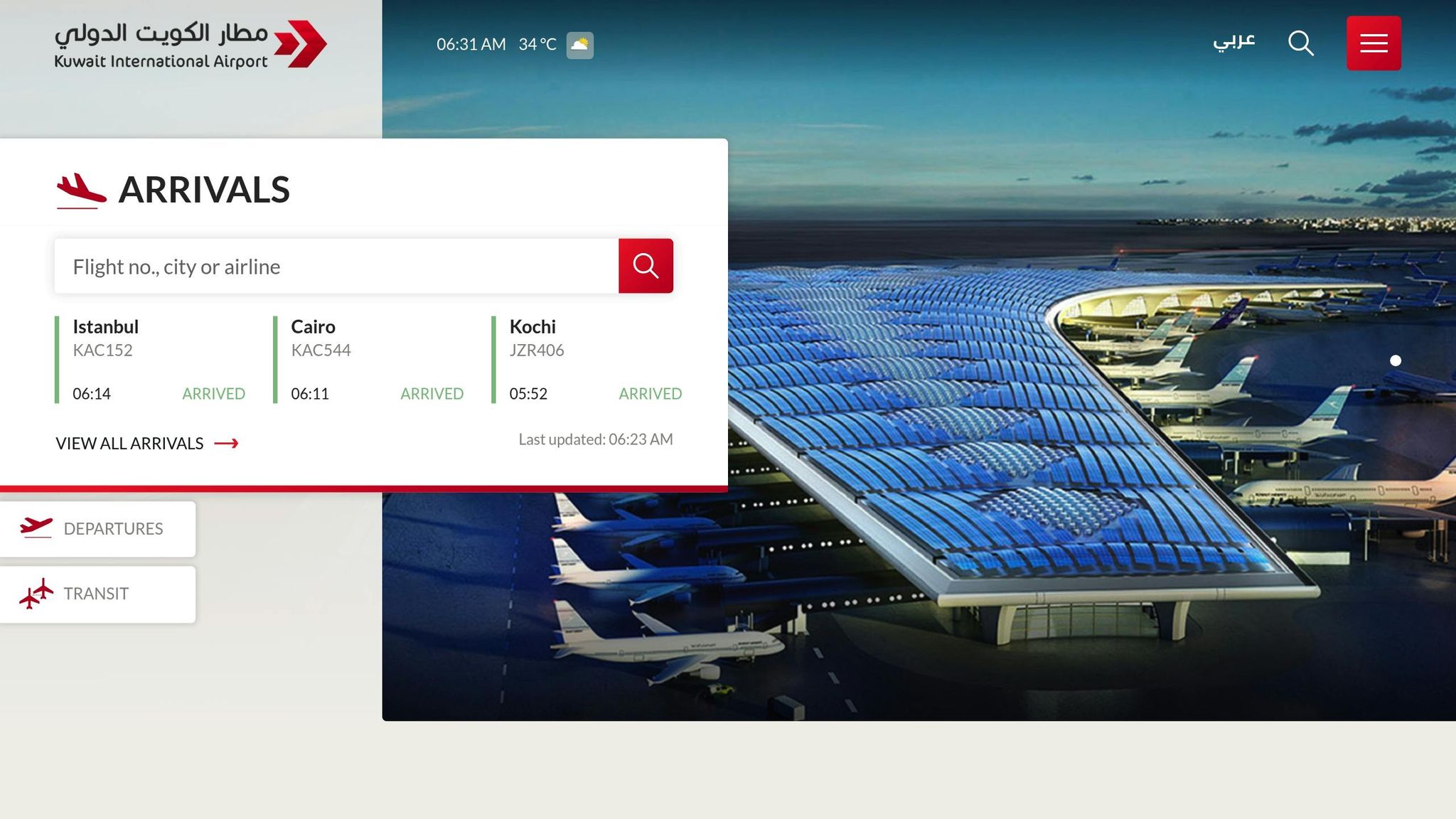
Kuwait International Airport is undergoing a major expansion to keep up with the growing demand for air travel. The new terminal promises to make passenger processing faster, strengthen security measures, and offer better ground transportation links, all aimed at creating a more seamless journey for travelers.
4. Sharjah International Airport (UAE)
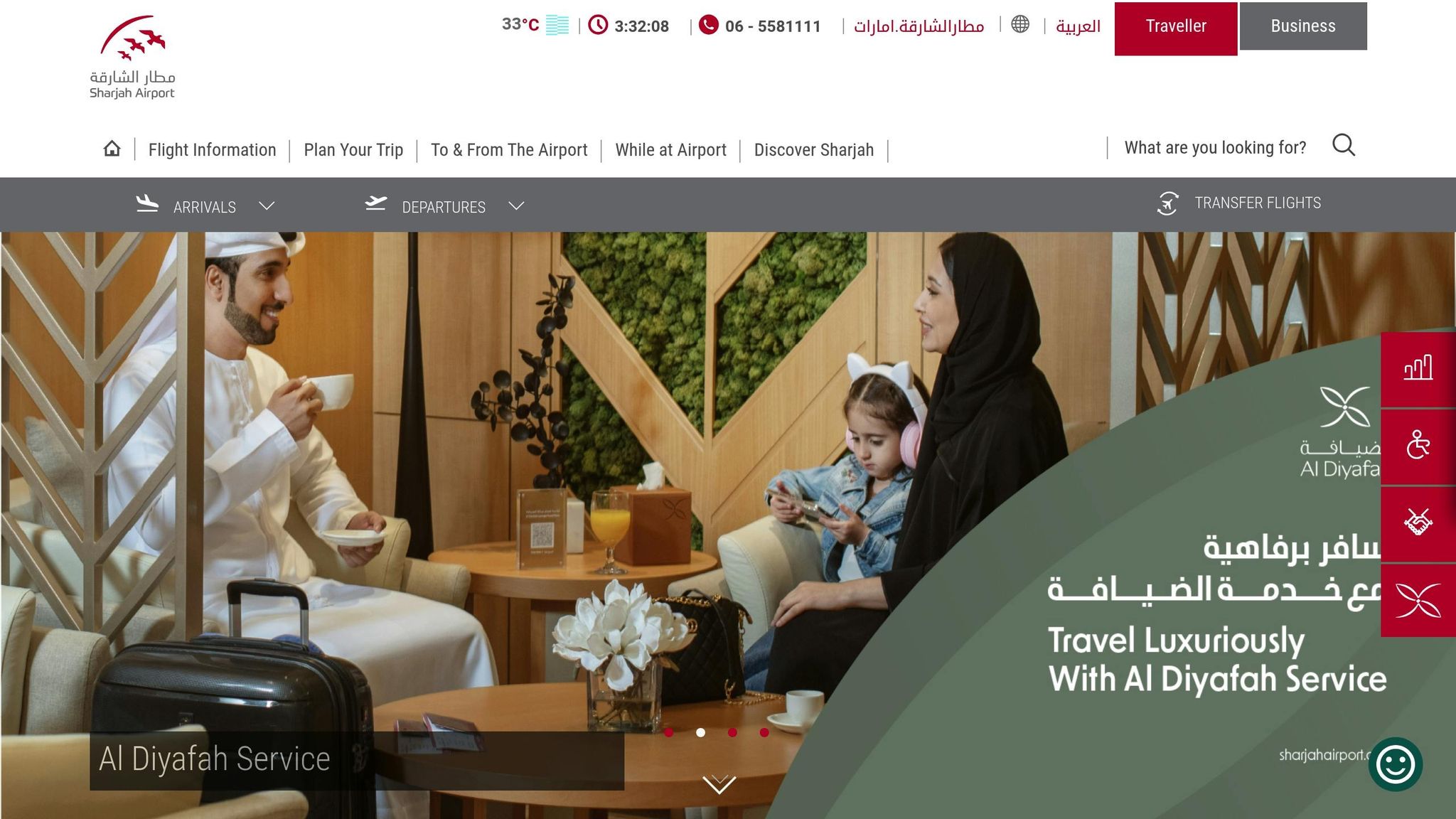
Sharjah International Airport is undergoing a massive transformation, with a $653 million investment aimed at boosting its annual passenger capacity from 8 million to 20 million – and potentially up to 25 million in the future. This ambitious expansion will nearly triple the terminal’s size, adding 1.3 million square feet to the existing 753,000 square feet, resulting in a total of about 2 million square feet by the end of 2027.
The project officially kicked off in January 2024 when Sheikh Sultan bin Muhammed bin Sultan Al Qasimi laid the foundation stone, signaling the start of the largest phase of development. The airport’s record-breaking performance in 2023 – serving over 15 million passengers, nearly double its current capacity – highlights the urgency of these upgrades.
A key goal of the expansion is to streamline passenger movement, targeting a “20 minutes in, 20 minutes out” transit time. Plans include redesigned passenger flows, a modernized baggage handling system, and expanded dining options.
Project Oversight and Partnerships
Parsons has been tasked with overseeing the project as the Project Management Consultancy, handling everything from initial planning to final handover. One Works, in collaboration with IBG, is managing design reviews, system upgrades, and construction supervision.
Enhanced Passenger Facilities
The expansion will significantly improve passenger amenities:
- Check-in desks: Increasing from 48 to 105
- Self-service kiosks: Growing from 4 to 22, with space for 24 more
- Aircraft gates: Expanding from 25 to 40
- Baggage belts: Doubling from 6 to 12 for arrivals
Additionally, a new landside road network will nearly double parking capacity to just under 2,000 spaces. A central utilities plant will also be added to support essential operations.
Progress and Sustainability
By February 2025, several key components have been completed, including the project and public services building, new aircraft parking stands, road network design, and expanded parking areas. The development also prioritizes environmental goals, focusing on reducing carbon emissions and adhering to modern environmental standards.
This expansion positions Sharjah International Airport as a key hub in the region, prepared to handle future passenger growth while improving overall efficiency and sustainability.
5. New Abha Airport (Abha, Saudi Arabia)
New Abha Airport is undergoing an ambitious overhaul, turning what was once a regional hub into a bustling international gateway. Announced in October 2023, the project was unveiled by His Royal Highness Prince Mohammed bin Salman bin Abdulaziz Al Saud as part of a master plan to increase the airport’s capacity tenfold.
By the time the first phase wraps up in 2028, the airport’s annual passenger capacity is expected to jump from 1.5 million to over 13 million. Flight operations will also see a significant boost, tripling from 30,000 to more than 90,000 flights per year.
Major Terminal Expansion
The terminal is set to grow from 113,000 to an impressive 700,000 square feet – a sixfold increase. This revamped space will include 20 gates, 41 check-in counters, and 7 self-service kiosks, all designed to streamline the passenger experience. The expansion reflects the region’s push toward creating modern, traveler-friendly facilities.
The design, crafted by Foster + Partners, draws inspiration from the Rijal Almaa village. It elegantly combines the architectural heritage of the Asir region with elements that celebrate Saudi culture.
Public-Private Partnership Approach
The project is being developed through a public-private partnership, ensuring steady investment and a long-term operational framework spanning 30 years.
Strengthening Regional Connectivity
Aligned with Saudi Vision 2030, this expansion aims to position the region as a world-class tourist destination. The upgraded airport will connect to 250 destinations and handle the transit of 330 million people annually, further cementing Saudi Arabia’s role as a key aviation hub in the Middle East.
Airport Expansion Comparison
Airports across the Middle East are taking diverse approaches to expand their terminals and handle the surge in passenger numbers. While all aim to address growing demand, the scale, priorities, and timelines of these projects vary significantly.
Dubai is enhancing its status as a global hub by steadily increasing capacity and upgrading facilities in phases. In Riyadh, the focus is on boosting capacity alongside improvements to runways and logistical operations.
Meanwhile, Kuwait and Sharjah are concentrating on more immediate upgrades to tackle current capacity challenges and improve connectivity. Abha, on the other hand, is combining operational upgrades with designs that reflect local heritage. Together, these upgrades are positioning the region for a stronger, interconnected aviation network.
With timelines stretching from the mid-2020s into the 2030s, these initiatives highlight a comprehensive effort to expand infrastructure and strengthen links across Asia, Europe, and Africa.
Conclusion
The ongoing terminal expansions across the Middle East are reshaping the aviation landscape, increasing capacity, and improving the overall passenger journey.
With advancements like automated check-ins, biometric screening, and smart baggage systems, air travel is becoming more efficient and less stressful. These upgrades are also bridging continents more effectively, cutting down layover times and opening up a wider range of travel routes. As airlines adapt to these changes, passengers can expect better amenities and more competitive international flight options, creating a smoother and more connected travel experience.
To help you navigate this evolving network, Flight Booking 247 provides round-the-clock support for booking, modifying, or canceling flights. With real-time access to flight deals and personalized assistance, you can make the most of the region’s upgraded air travel infrastructure.
These developments mark a significant step forward, offering exciting opportunities for both business and leisure travelers alike.
FAQs
How will the expansion of airports in the Middle East affect global travel and connectivity?
The rapid growth of airports across the Middle East is poised to transform global travel and connectivity. By 2040, these airports are projected to accommodate over 1.1 billion passengers annually – more than double the number recorded in 2019. This expansion will pave the way for more nonstop flights to destinations around the globe, making international travel quicker and easier.
As the region cements its position as a major global hub, these advancements are expected to drive international trade, boost tourism, and encourage economic collaboration. The upgraded infrastructure promises not only to enhance passenger experiences but also to meet the increasing demand for smoother global connections.
How are Middle Eastern airports addressing environmental concerns during their terminal expansions?
Middle Eastern airports are taking steps to incorporate eco-friendly practices into their expansion plans. A big part of this effort involves investing in renewable energy sources like solar power to reduce carbon emissions. A standout example is Dubai Airports, which recently installed one of the largest rooftop solar panel systems globally, with the goal of reaching net-zero emissions in the near future.
Beyond renewable energy, these airports are stepping up their decarbonization efforts by upgrading infrastructure to boost energy efficiency and protect local ecosystems. Many have gained recognition for their green initiatives, showcasing their dedication to environmental responsibility while handling the increasing number of travelers.
How will terminal expansions at Middle Eastern airports improve passenger experience and efficiency?
The ongoing expansions at major airports in the Middle East are transforming how passengers travel, focusing on smoother operations and better experiences. Take Hamad International Airport, for example – its new concourse has boosted capacity by 20%, which means quicker boarding and less crowding. Over at King Abdulaziz International Airport, the addition of 70 automated e-gates has significantly reduced wait times, making check-ins and departures far more efficient.
These improvements are part of a larger effort to handle the region’s rapidly increasing passenger numbers, expected to hit 1.1 billion by 2040. By upgrading facilities and incorporating advanced technology, these airports are setting the stage for a faster, more convenient travel experience for everyone.