

Hunting for affordable flights is easier with fare comparison tools. These platforms scan multiple airlines, travel agencies, and booking sites to display the best options in one place. They save you time, provide price transparency, and help you discover cheaper routes or alternative airports. Many tools also offer price alerts and historical trends to guide your booking decisions. Here’s how you can maximize their potential:
- Set your search details carefully: Include departure/arrival cities, dates, and passenger info. Consider nearby airports and flexible travel dates for more options.
- Use filters and advanced features: Refine your search by stops, airlines, baggage fees, and flight duration. Tools like fare calendars and price graphs can help you identify the cheapest dates to fly.
- Track prices: Set up alerts to monitor fare changes and book when prices drop.
- Check for hidden costs: Look out for baggage fees, seat selection charges, and other extras that impact the total price.
For added support, services like Flight Booking 247 offer personalized assistance for complex bookings or last-minute changes. By combining these strategies, you can save money and reduce the hassle of finding the best flight deals.
How to Use Google Flights Like a Pro! (STOP OVERPAYING)
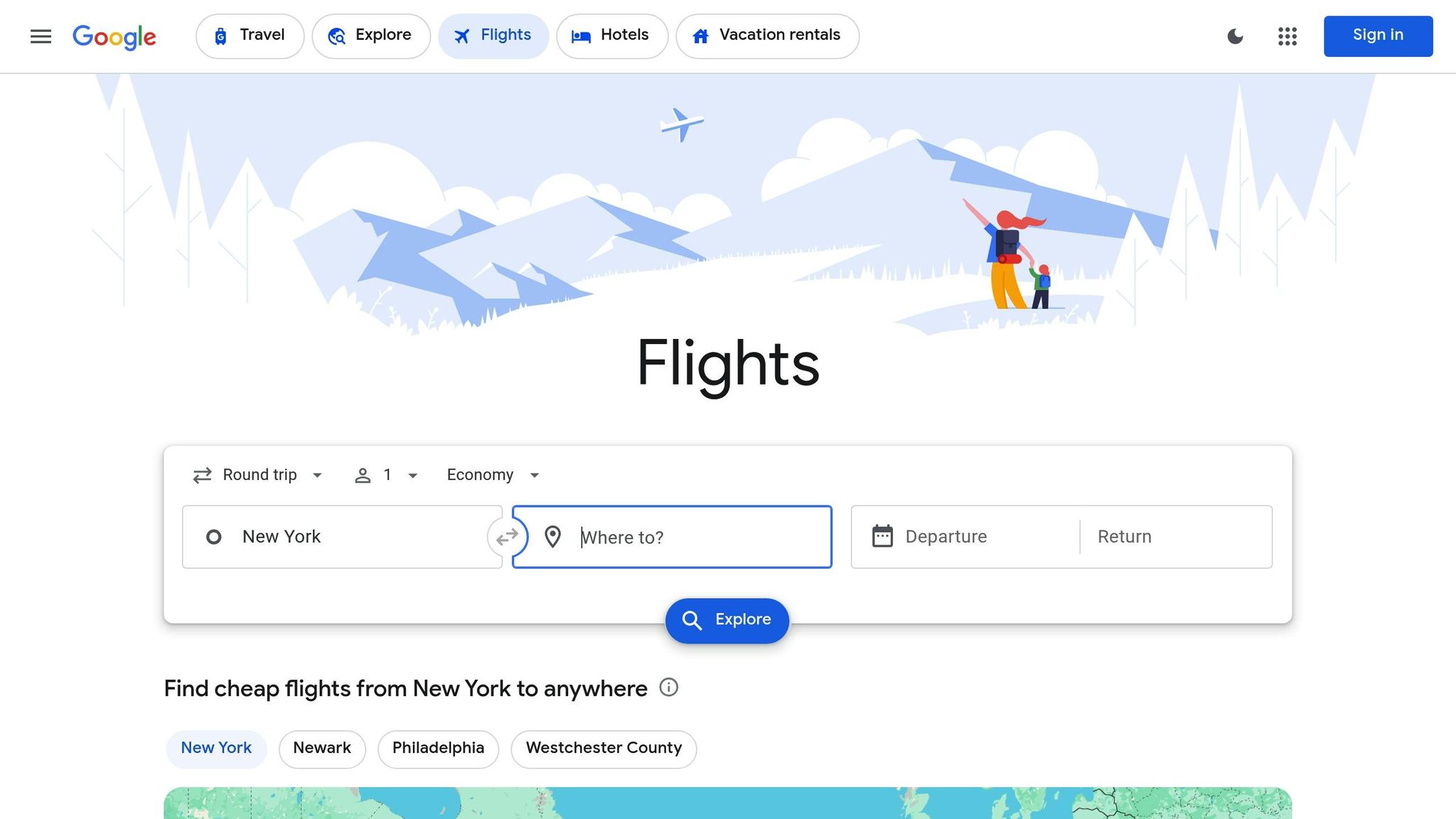
How to Set Up a Flight Search
The way you approach your flight search can make a massive difference in how much you spend. A well-organized search can help you find the best deals and avoid unnecessary costs. Let’s break it down step by step.
Enter Your Search Details
Start by entering your travel details carefully – departure city, destination, travel dates, and passenger information. Double-check your selections to avoid booking errors. For cities served by multiple airports, confirm the correct one to match your travel plans. If you’re traveling with children, make sure to input their ages accurately, as airlines have strict pricing categories. For instance, infants under 2 years often fly for much less, while child fares (ages 2–11) tend to cost less than adult tickets.
Don’t overlook your cabin class selection. While economy is the go-to for most travelers, sometimes upgrading to premium economy or business class can be surprisingly affordable, especially for international flights. Some comparison tools even highlight when an upgrade costs only slightly more, helping you make an informed decision.
Use Flexible Date Searches
Once your travel details are set, take advantage of flexible date searches to uncover better prices. Instead of sticking to fixed dates, use tools that show price variations over a range of days or weeks. Many platforms offer calendar views or price charts that make it easy to spot trends.
Mid-week flights – especially on Tuesdays and Wednesdays – are typically cheaper than weekend departures. For international trips, this can mean saving hundreds of dollars. If your schedule allows, explore the “whole month” view to see how shifting your travel dates by just a few days could significantly reduce your airfare. Some tools even offer a “+/- 3 days” feature, showing prices for dates around your preferred travel window.
These features not only help you find the best deals but also allow you to act strategically. If prices are climbing, book right away. If they’re dropping, set an alert to monitor further changes. Adjusting your dates alongside these insights can also help you find deals at nearby airports.
Search Nearby Airports
Including nearby airports in your search is another smart way to save. Smaller regional airports often have lower operating costs, which translates to cheaper tickets for travelers. These airports are also popular with low-cost carriers thanks to lower fees, faster turnaround times, and less congestion.
Flying from or to a regional airport can cut your airfare by as much as 30%, and it may also save you money on parking or reduce transit times. However, don’t forget to factor in any additional ground transportation costs when comparing options. In many cases, the airfare savings will more than make up for these extra expenses.
Many search tools automatically include nearby airports in their results, but you can also manually compare options by entering different airport codes. Be sure to consider alternatives for both departure and arrival. For example, flying out of a regional airport and landing at a major hub – or vice versa – might offer the best balance of savings and convenience. The key is to take a big-picture approach and calculate the total cost of your journey, not just the ticket price.
How to Use Filters and Features
Once you’ve set up your search, it’s time to refine your results using filters and features to zero in on the best flight for your needs.
Apply Search Filters
Start by setting your stop preferences. Direct flights are the quickest option, but flights with layovers can often be more budget-friendly, even if they extend your travel time.
Airline filters are especially useful if you have a preferred carrier or are part of a loyalty program. For example, if you’re collecting miles with a specific airline, filtering for those flights ensures your trip contributes to your rewards balance. On the other hand, you might want to exclude airlines with restrictive baggage rules or cramped seating.
If you’re short on time, use flight duration filters to avoid itineraries with excessively long layovers or extended travel times. This ensures you’re only comparing flights that fit your schedule.
Don’t forget to filter by baggage fees to get a clear picture of the total cost. A seemingly cheap ticket could end up costing more once you factor in fees for checked bags, especially when compared to fares that already include them.
Now that you’ve narrowed your options, take advantage of advanced tools to uncover even better deals.
Use Advanced Features
Fare calendars are a fantastic tool to see how prices fluctuate over a range of dates. This makes it easier to identify the cheapest days to travel.
Price trend graphs can guide your decision on when to book. If prices are steadily climbing, it might be wise to lock in your ticket now. But if fares are dropping or fluctuating, waiting a few days could save you money.
Deal insights and recommendations often highlight special promotions or rare error fares that you might miss in a standard search. These tools can also suggest alternative destinations with similar vibes, giving you the chance to save while discovering new places.
For more flexibility, explore multi-city and open-jaw search options. Instead of a standard round-trip, you could fly into one city and out of another. This approach can sometimes cut costs and add variety to your travel plans.
Once you’ve used these tools to find the best deal, make sure to review the full cost breakdown before booking.
Check for Hidden Costs
The initial fare you see is just part of the story. Be aware of additional fees that can significantly affect the total price.
For example, seat selection fees can vary widely. Basic economy tickets might not include the option to choose your seat in advance, and premium seats with extra legroom often come with an added charge.
Baggage policies also differ between airlines. While traditional carriers often include a carry-on bag in the base fare, some budget airlines only allow a small personal item, charging extra for anything larger. Checked bag fees can also add up quickly, so factor these into your overall cost.
Change and cancellation policies are another key consideration, especially in today’s unpredictable travel environment. Some airlines offer flexible fare options at a slightly higher price, which can save you money if your plans shift unexpectedly.
Finally, keep an eye on airport and government fees. While these are typically included in the displayed price, some budget airlines may separate them out. International flights, in particular, often come with additional taxes and fees that can significantly increase the total cost. Always compare the final, all-inclusive price before making your decision.
sbb-itb-e205081
How to Track Prices and Set Alerts
Once you’ve narrowed down your search, the next step is keeping an eye on fares. Flight prices are constantly shifting due to factors like seat availability, seasonal demand, oil prices, and the number of flights on a specific route. By setting up price alerts, you can get notified whenever fares drop, giving you the chance to snag the best deal.
Set Up Price Alerts
After refining your search, it’s time to monitor fare changes. Most flight comparison tools offer free price alert features that send notifications via email or push alerts when prices change for your chosen routes and dates.
Before activating alerts, double-check that your search details and filters are correct. Look for a “Track Prices” button (or something similar) to enable notifications. You’ll need to log in to your account to receive these updates.
If your travel dates are flexible, consider setting up alerts that cover a range of dates. These broader alerts can help you find the cheapest days to travel within your preferred timeframe, which could lead to significant savings.
It’s also smart to set up alerts for nearby airports. For example, if you’re heading to New York City, create separate alerts for JFK, LaGuardia, and Newark airports. Prices can vary widely between airports, and this approach increases your chances of finding a better deal.
Track Fare Trends Over Time
Getting familiar with how flight prices change over time can give you an edge. Many fare comparison tools provide historical data and price trend predictions, which can guide you on whether to book now or hold off for a better deal.
Price trend graphs illustrate how fares have shifted over the past weeks or months for your specific route. Some tools even offer booking recommendations, letting you know if the current price is high, average, or low compared to typical fares. If prices are steadily increasing, it might be wise to book right away. On the other hand, if prices are dropping or fluctuating, waiting a few days could help you save more.
Combining price alerts with trend analysis can help you book at just the right time. Keep in mind that popular vacation destinations often see price hikes as peak season approaches. And with many major U.S. airlines waiving change fees during the pandemic, you might have the flexibility to rebook if prices drop after your purchase.
Stay on top of fare trends and book when the price is right for your budget.
Using Flight Booking 247 for Expert Help

Fare comparison tools are great for showing you what’s out there, but when it comes to navigating the tricky parts of booking, Flight Booking 247 steps in with expert guidance. Their team helps you cut through the noise, making complex bookings easier and finding deals that meet your specific needs.
How Flight Booking 247 Can Help
Flight Booking 247 connects you with a 24/7 travel concierge who handles everything from real-time flight searches to managing exchanges and cancellations on the spot. With fares constantly changing, having immediate access to updated options means you can act quickly and confidently. Their personalized assistance ensures your travel plans are tailored to your needs, taking the stress out of the booking process and making your journey smoother from the start.
Save More Money with Expert Support
Expert help is especially useful when dealing with tricky situations like schedule changes or cancellations. Instead of spending hours on hold with airlines, you can rely on Flight Booking 247 to provide fast, competitive alternatives. This not only saves you time but also helps you avoid the common headaches of booking.
Key Tips for Finding Cheap Flights
Scoring cheap flights doesn’t have to be complicated. With a few smart strategies and the right tools, you can save big without the stress.
Summary of Best Strategies
Here’s a quick rundown of the most effective tips to help you snag the best deals:
- Be flexible with dates and airports. Adjusting your travel dates or considering nearby airports can lead to significant savings – sometimes cutting hundreds off your ticket price.
- Use filters to fine-tune your search. Set your budget, pick preferred airlines, and narrow down departure times that fit your schedule. Don’t forget to check the total cost, including baggage and seat selection fees, to avoid surprises later.
- Set up price alerts. Keep an eye on fare drops for your desired routes, especially if your trip is months away. Airfare prices fluctuate frequently, and catching a dip at the right time can make a huge difference.
- Call in the experts when needed. While online tools are great for browsing, complex bookings or last-minute changes may require a human touch. Services like Flight Booking 247’s concierge team can handle everything from real-time searches to unexpected changes, so you can focus on your trip instead of stressing over logistics.
The key is to combine these strategies rather than relying on just one. Use comparison tools to do your homework, set alerts to monitor prices, and lean on expert support when things get tricky. This multi-pronged approach ensures you’ll get the best deal without the hassle.
FAQs
How can I use flexible date searches to find the cheapest flights?
Using flexible date searches can be a smart way to cut down on flight costs. Look for tools that let you compare fares over a range of dates – whether that’s a month or even a full year. Many fare comparison websites include this feature, making it easier to spot the cheapest travel days. Sometimes, shifting your trip by just a day or two can make a big difference in price.
Since flight prices tend to fluctuate with demand, it’s worth checking fares often and setting up price alerts if the option is available. These alerts will notify you when ticket prices drop, giving you the chance to snag a deal. By keeping your schedule open and paying attention to price trends, you’ll increase your chances of landing the best possible fare.
How can I avoid hidden fees when booking flights through fare comparison tools?
When using fare comparison tools, it’s easy to miss hidden fees if you’re not careful. Always take a close look at the fare breakdown. Keep an eye out for extra charges like baggage fees, seat selection costs, or service fees, as these often aren’t included in the initial price displayed.
To keep things simple, use filters to weed out airlines notorious for tacking on extra fees. And don’t skip reading the fine print before locking in your booking. It’s also smart to get familiar with the airline’s rules and set up price alerts to snag deals without any unpleasant surprises. Paying attention to these small details can help you dodge unexpected costs and stretch your travel budget further.
How can price alerts and fare trends help you find the best flight deals?
Price alerts are a handy way to stay informed when ticket prices drop, giving you the opportunity to snag flights at the lowest available rates. Meanwhile, fare trend analysis keeps an eye on pricing patterns over time, helping you figure out the ideal moment to book your tickets.
Using these tools together gives you a better shot at making informed choices and locking in great deals. If you need extra help, Flight Booking 247 provides round-the-clock support to assist you in finding and booking budget-friendly domestic and international flights without hassle.