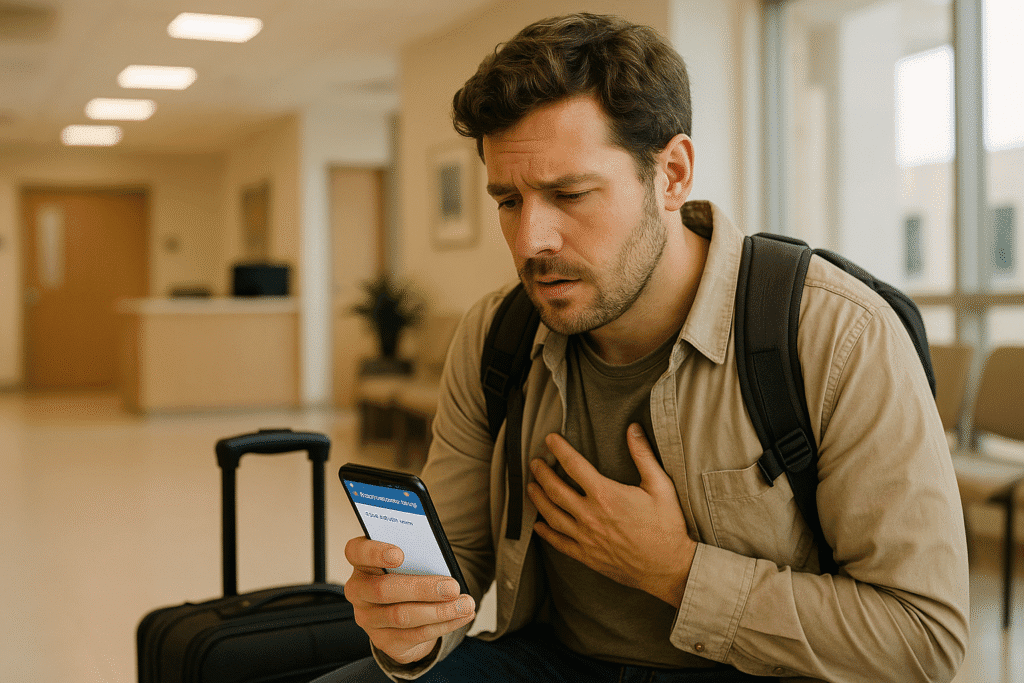
When you’re traveling abroad, a medical emergency can quickly become overwhelming if you can’t communicate effectively due to language barriers. Misunderstandings about symptoms, allergies, or medical history can lead to delays, incorrect treatments, or even life-threatening mistakes. Here’s how to prepare and handle these situations:
- Use Translation Tools: Apps like Google Translate and iTranslate can help bridge the gap. Download language packs in advance to ensure offline access.
- Learn Key Phrases: Memorize or write down critical words like “doctor”, “pain”, “allergy”, and “emergency” in the local language.
- Visual Aids: Use symptom charts or diagrams to point out issues when words fail.
- Contact Interpreters: Many hospitals offer interpreter services, or your travel insurance might connect you with one remotely.
- Know Emergency Numbers: Research local emergency hotlines and save them in your phone.
- Prepare Documentation: Carry a translated medical card listing your conditions, medications, and allergies.
- Understand Local Systems: Be aware of differences in healthcare practices, measurement systems, and patient rights.
Preparation is your best defense. By combining these strategies, you can improve your chances of receiving timely and accurate care, even in the most stressful situations.
How Can Survivors Communicate In Travel Emergencies With Language Barriers?
How to Communicate During Medical Emergencies
When you’re facing a medical emergency abroad, effective communication can mean the difference between receiving timely care and experiencing delays that could worsen the situation. Here are some practical strategies to help you navigate these challenges.
Visual Aids and Translation Tools
Medical translation apps like Google Translate can be a lifesaver. These apps often come with pre-translated emergency phrases – some offering as many as 600 fixed phrases in 18 languages. Paramedics using these tools report clearer communication and more accurate history-taking, even in stressful situations. Many of these apps also work offline, which is invaluable if you’re in an area with unreliable internet access.
Beyond text, these apps often include visual aids such as pain scales, symptom charts, and body diagrams. These tools let you point to symptoms or indicate pain levels without needing to speak the local language. For example, in a pilot study, paramedics using multilingual apps with pictograms noted significant improvements in understanding patients’ needs and medical histories. To be prepared, download and familiarize yourself with these tools before your trip.
Finding Interpreters and Language Support
Hospital interpreters can be a great resource, but their availability varies widely. Larger hospitals, especially in tourist-heavy areas, are more likely to have interpreters on-site. Smaller facilities, however, might rely on remote interpretation services.
If you have travel insurance, check whether it includes access to professional interpreters. Many insurance plans offer remote interpretation services that can connect you with a professional in real time, especially in complex situations. Before traveling, confirm these details with your insurance provider and save the interpreter service contact numbers in both your phone and a written backup.
Learning Key Medical Words
Sometimes, technology isn’t an option, and knowing a few critical medical terms in the local language can be a lifesaver. Focus on words like “pain”, “emergency”, “help”, “doctor”, “hospital”, “allergy”, and “medicine”. It’s also helpful to learn phrases for common symptoms such as “fever”, “chest pain”, and “shortness of breath.”
Practice essential sentences like “I need a doctor”, “I am allergic to…”, and “I have [condition].” Writing these phrases phonetically can help you pronounce them correctly, even under stress. Make sure you know how to describe your allergies, chronic conditions, and medications. These basics can be a crucial backup when other methods fail.
Emergency Hotlines and International SOS Services
Local emergency numbers are your first point of contact, but keep in mind that language support may vary depending on the country. For instance, 911 works in the United States, while 112 is the emergency number for most European countries. However, these services may not always provide multilingual assistance. As soon as you arrive at your destination, make sure to note the local emergency number.
Global assistance organizations like International SOS and Allianz Global Assistance can offer multilingual support, coordinate medical care, arrange transportation, and help with insurance logistics. These services often include interpretation as part of their offerings. Save their contact details on your phone and in your travel documents.
For travel disruptions caused by medical emergencies, services like Flight Booking 247’s 24/7 concierge support can step in. They specialize in helping you quickly adjust flights or make new travel arrangements, especially when language barriers make direct communication with airlines or local providers challenging.
Tools and Services for Language Problems
When dealing with medical emergencies abroad, navigating language barriers can be daunting. Thankfully, several tools and services are designed to make communication easier in these high-stress situations.
Translation Apps and Offline Phrasebooks
Apps like Google Translate and iTranslate are lifesavers for translating text and audio into various languages. To ensure you’re prepared, download language packs ahead of your trip so you can use them without an internet connection. For emergency responders, studies have shown that fixed-phrase apps can improve communication. These apps offer pre-translated phrases, audio clips, and visual aids tailored specifically for emergencies.
Offline phrasebooks are another handy option. Unlike digital tools, they don’t require power or internet access, making them a reliable backup. Whether you’re in a remote area or facing technical issues, these phrasebooks provide crucial communication support when you need it most.
Remote Interpretation Services
Services like LanguageLine connect you to professional interpreters via phone or video, offering real-time language support 24/7. While phone interpretation is effective, video interpretation adds an extra layer of understanding by including visual cues – provided you have internet connectivity. Many hospitals now include these services in their protocols, so don’t hesitate to ask if they can connect you to an interpreter during your visit.
International Patient Services
Hospitals accredited by the Joint Commission International (JCI) often provide robust language support for foreign patients. These facilities typically employ multilingual patient coordinators who assist with everything from interpretation to paperwork and insurance claims. They help ensure you fully understand your diagnosis, treatment options, and follow-up care. Before traveling, reach out to your embassy or travel insurance provider for recommendations on JCI-accredited hospitals. These services can be a vital resource for U.S. travelers dealing with medical emergencies abroad.
Flight Booking 247‘s Help

Travel concierge services, like Flight Booking 247, can also be a crucial lifeline in emergencies. Their 24/7 support team can connect you to local medical resources, emergency hotlines, and language assistance. This service is especially valuable for arranging transportation to hospitals with multilingual staff or international patient services. If your medical situation affects your travel plans, they can quickly modify your flights or book new ones. Having access to English-speaking support around the clock can significantly reduce the stress of navigating an emergency in an unfamiliar place.
sbb-itb-e205081
Comparing Different Communication Methods
When facing a medical emergency abroad, picking the right way to communicate can make all the difference. Each method has its strengths and weaknesses, so it’s important for travelers to understand their options ahead of time. Here’s a breakdown of the most common methods and how they stack up.
Visual aids are a quick, non-verbal tool, perfect for pointing out symptoms or basic needs. However, they fall short when it comes to explaining more complicated issues like the onset of symptoms or detailed medical histories.
Translation apps, such as Google Translate or MediBabble, strike a balance between speed and detail. But they’re not foolproof – medical terms can be tricky, and mistranslations can lead to serious misunderstandings. A pilot study even found that while fixed-phrase translation apps improved communication for paramedics, they sometimes led to longer on-scene times.
Live interpreters are the gold standard for accuracy and context, especially when cultural nuances are involved. However, they’re not always available, and the cost can range from $1.50–$3.00 per minute for remote services to $50–$150 per hour for in-person help. In emergencies, even a short wait for an interpreter can feel like an eternity.
Patient coordinators at international hospitals offer fast, culturally aware communication, often at no extra cost. The catch? They’re only available at certain facilities, so they’re not a universal solution.
Method Comparison Chart
| Method | Speed | Accuracy | Availability | Cost |
|---|---|---|---|---|
| Visual Aids | Immediate | Low–Moderate | Widely Available | Free/Minimal |
| Translation Apps | Fast | Moderate | High (with device) | Free/Low |
| Live Interpreters | Variable | High | Limited (esp. urgent) | High |
| Patient Coordinators | Fast | High | Clinic-dependent | Usually included |
The best strategy often involves mixing methods. Studies show that when emergency medical services lack proper language interpretation, it can lead to resource mismanagement and delays in care. Savvy travelers should arm themselves with a combination of tools – offline translation apps, visual aids, and knowledge of local facilities with multilingual staff – to bridge communication gaps, even in remote areas.
For added reliability, phone-based services with live operators are a solid choice. Unlike app-based solutions, they don’t rely on internet access, making them a dependable option when traveling to places with limited connectivity.
What US Travelers Need to Know
Dealing with medical emergencies while traveling abroad can be tricky. You’ll encounter different customs, legal systems, and measurement standards that can all impact the care you receive. Here’s what you should know to navigate these challenges.
Understanding Local Customs
Cultural differences in medical settings can catch you off guard, especially when you’re already stressed. For instance, gestures that are harmless in the US might offend abroad. A thumbs-up, which is positive in America, is considered rude in some parts of the Middle East. Similarly, pointing or using certain hand signals might mean something entirely different, making communication even harder during emergencies.
Privacy expectations also vary worldwide. In the US, medical privacy is a given, but in some countries, family members might be present during exams or discussions about your care. In fact, major medical decisions may involve family input, which could feel unfamiliar if you’re used to making those calls on your own.
Even eye contact norms can differ. In the US, direct eye contact with doctors is seen as respectful and engaged. But in some cultures, it might come across as disrespectful or inappropriate. Being aware of these differences can help you avoid unnecessary misunderstandings and ensure smoother interactions.
On top of cultural nuances, legal differences can also play a big role in your experience.
Legal Rules and Patient Rights
Patient rights abroad aren’t the same as in the US. Some countries may not allow you to refuse treatment or access your medical records the way you’re used to. This can be a shock if you’re accustomed to having more control over your care.
Informed consent works differently, too. While US healthcare often involves detailed explanations and ensuring patient understanding, other countries might approach it more formally. You could encounter extra paperwork, witnesses, or procedures that feel unfamiliar. Knowing this ahead of time can help you navigate these situations more effectively.
Keeping detailed documentation is critical. Not only does it help with your care, but it can also protect you legally and simplify insurance claims. Misunderstandings about discharge instructions or medication can lead to serious complications, especially if there’s a language barrier. Always record your treatments, interactions, and any written instructions you receive.
If language becomes a barrier, don’t hesitate to act. Ask for a professional interpreter, keep thorough notes, and reach out to your embassy or consulate if needed. Many countries also have patient advocacy groups or international services that can step in to help.
Everyday differences in systems and formats also require some preparation.
Tips for US Travelers
Measurement systems can cause confusion. Most countries use the metric system, so you’ll need to convert things like weight (pounds to kilograms), height (inches to centimeters), and temperature (Fahrenheit to Celsius). For example, a fever of 102°F is about 39°C – this difference could impact how your condition is assessed.
Date formats and currencies can also trip you up. Many countries use DD/MM/YYYY for dates, so 03/05/2025 might mean March 5th or May 3rd depending on where you are. To avoid mix-ups with appointments or medications, spell out dates fully (e.g., “October 18, 2025”). And remember, local currencies and metric measurements will apply to prescriptions, so double-check all details.
Medication dosages need special attention. Prescriptions written in grains or fluid ounces in the US will likely need conversion to grams or milliliters abroad. It’s a good idea to carry a list of your medications, including both brand and generic names, as names can vary between countries.
If an emergency disrupts your travel plans, services like Flight Booking 247’s 24/7 concierge can help rearrange flights and provide support in English. This can be a lifesaver when you’re under stress and dealing with language barriers.
Preparation is key. Learn some basic medical phrases in the local language, know the emergency numbers for your destination, and research hospitals with English-speaking staff or international patient services before your trip. These small steps can make a big difference if an emergency arises.
Key Points for Handling Language Barriers
In medical emergencies abroad, clear communication can make all the difference. Successfully navigating language barriers boils down to three main principles: preparation, diverse communication methods, and resourcefulness.
Preparation is your best ally. Before traveling, take steps to minimize communication hurdles. Download offline translation apps, memorize or write down key medical phrases, and carry a translated medical card listing your conditions, medications, and allergies. Research emergency numbers and locate hospitals with English-speaking staff at your destination. These small efforts can be lifesaving when time is critical and stress levels are high.
Leverage technology and professional interpreters. Translation apps can help you communicate essential phrases or use visual aids to get your message across. When available, professional interpreters provide accuracy, reducing the risk of misunderstandings and medical errors. These tools build on earlier suggestions to use visual aids and translation resources effectively.
When standard tools fall short, think creatively. In high-pressure situations, simple gestures, written notes, or even drawings can help convey critical information like pain levels, medication dosages, or the timeline of symptoms. Staying calm and trying different approaches increases your chances of being understood.
Clear communication directly affects your care. Language barriers can lead to medical errors, unnecessary procedures, delays in treatment, and even higher healthcare costs – all of which can worsen outcomes. By using these strategies, you reduce such risks and improve your chances of receiving timely and appropriate care.
As an added layer of support, services like Flight Booking 247 provide 24/7 English-speaking assistance during medical emergencies, offering a helpful resource when language challenges arise.
The key is combining preparation with flexibility. No single method works in every scenario, but having multiple strategies ready ensures you’re better equipped to get the help you need, wherever you are in the world.
FAQs
What information should I include on a translated medical card to help during a medical emergency abroad?
During a medical emergency in a foreign country, clear communication can make all the difference. That’s why carrying a translated medical card is so important. This card should include:
- Your full name and an emergency contact number.
- Details about allergies, such as to medications, foods, or other substances.
- Information on chronic conditions or ongoing medical treatments you’re receiving.
- A list of current medications, along with their dosages.
- Your blood type and any relevant medical history, like past surgeries or implants.
- Instructions in the local language for reaching your travel insurance provider or an interpreter.
Translating this information into the language spoken in your destination ensures healthcare providers can quickly understand your needs. To stay even more prepared, save a digital copy of the card on your phone for easy access.
How can I make sure translation apps work well during medical emergencies, and what should I do if they don’t?
Translation apps can be a lifesaver in medical emergencies, but they aren’t foolproof. For the best results, choose apps that work offline and include medical-specific language packs. Spend some time before your trip getting comfortable with the app’s features so you’re not scrambling to figure it out during a crisis.
If the app doesn’t deliver clear communication, there are other ways to convey your needs. Visual aids can be incredibly useful – pointing to body parts or symptoms on a medical chart can help get your message across. Writing down key phrases is another option. Additionally, reaching out to a live interpreter through an emergency hotline or asking local medical staff for help can close the communication gap. Preparing these tools ahead of time ensures you’re better equipped to handle unexpected situations.
How can I handle cultural and legal differences in healthcare while traveling abroad?
When traveling internationally, it’s important to be aware that healthcare systems, legal requirements, and cultural expectations around medical care can vary significantly from what you’re accustomed to in the United States. Being prepared can make all the difference in ensuring a smooth experience if health issues arise.
- Research healthcare norms and regulations in your destination ahead of time. This includes understanding how to access emergency services and learning about any specific cultural customs related to medical care.
- Familiarize yourself with key medical phrases in the local language. If that’s challenging, consider using a reliable translation app to bridge communication gaps.
- Rely on visual aids or gestures to express urgent medical concerns if language becomes a barrier.
For added peace of mind, having access to 24/7 travel support can be a game-changer during emergencies. Services like Flight Booking 247 can handle last-minute travel adjustments, allowing you to focus on your health and well-being when the unexpected happens.