Flying with budget airlines can save you money, but their baggage policies can lead to unexpected costs if you’re not prepared. Here’s what you need to know:
- Free Personal Items: Most budget airlines only allow a small personal item for free (e.g., a backpack or purse). It must fit under the seat and adhere to strict size limits.
- Carry-On Bags: Larger carry-ons often come with fees ranging from $30 to $75. Size and weight limits vary by airline but are generally smaller than U.S. domestic standards.
- Checked Bags: Checked baggage is rarely included in base fares. Fees typically range from $30 to $75 for the first bag, with higher costs for overweight or additional bags.
- Pre-Book to Save: Paying for baggage online ahead of time is cheaper than paying at the airport. Last-minute fees can be significantly higher.
- Airline-Specific Rules: Each airline has unique size, weight, and fee structures. For example, Ryanair charges for anything beyond a small personal item, while JetBlue offers more lenient baggage allowances.
Key Takeaway: Research your airline’s baggage rules before booking and pack strategically to avoid surprise fees. Pre-book your baggage for the best rates and weigh your luggage at home to stay within limits.
| Airline | Carry-On Size (inches) | Carry-On Weight (lbs) | Checked Bag Weight (lbs) | Typical Fee Range (USD) |
|---|---|---|---|---|
| Ryanair (Standard) | 15.7 x 7.9 x 9.8 | Not specified | 25 or 50 | $10–$81 |
| EasyJet | 17.7 x 13.8 x 7.9 | 15 | 50 | $40–$80 |
| AirAsia | 21.5 x 15.5 x 9 | 15 | 33 | $35–$90 |
| Jetstar | 22 x 14.2 x 9.1 | 15.4 (combined) | 44+ | Varies by route |
Plan ahead to save money and reduce stress when flying with budget airlines.
How I Pack To Beat Budget Airline Baggage Fees Every Time
Baggage Size and Weight Limits by Airline
Budget airlines often have specific rules for baggage dimensions and weight. Knowing these requirements can save you from unexpected fees at the airport.
Carry-On Baggage Rules
For international budget airlines, carry-on size limits are generally smaller than U.S. domestic standards. Most stick to dimensions around 21.5 x 15.5 x 9 inches, compared to the U.S. standard of 22 x 14 x 9 inches. Weight limits for carry-ons usually fall between 15 and 22 pounds.
- Ryanair: Standard passengers can only bring a small personal item measuring 15.7 x 7.9 x 9.8 inches that fits under the seat. To bring a larger carry-on (up to 21.7 x 15.7 x 7.9 inches and 22 pounds), you’ll need to purchase Priority boarding.
- EasyJet: Allows carry-ons up to 17.7 x 13.8 x 7.9 inches with a weight limit of 15 pounds. Larger bags require additional fees.
- Jetstar: Matches the international standard of 22 x 14.2 x 9.1 inches, but imposes a combined weight limit of 15.4 pounds for your carry-on and personal item.
- AirAsia: Sticks to the common size of 21.5 x 15.5 x 9 inches and a 15-pound weight limit. Unlike many airlines, AirAsia weighs carry-ons at both check-in and the gate. Personal items are free, typically up to 15.7 x 11.8 x 5.9 inches.
Understanding these rules is key to avoiding extra fees. Next, let’s look at checked baggage policies.
Checked Baggage Rules
Checked baggage policies vary widely, with differences in weight limits, dimensions, and fees. Most airlines allow checked bags up to 62 linear inches (length + width + height), but weight limits and costs can differ significantly.
- Ryanair: Offers two weight options for checked bags – 25 pounds or 50 pounds – with maximum dimensions of 31 x 47 x 47 inches. Booking a 25-pound bag starts at $10, while a 50-pound bag starts at $20. Fees increase if added later, with last-minute gate checks costing up to $81.
- AirAsia: Restricts economy class checked bags to 33 pounds, which might catch travelers off guard if they’re used to the more common 50-pound limit.
- Jetstar: Economy fares don’t include checked baggage, but you can pre-purchase a bag starting at 44 pounds. Business class passengers are allowed up to 66 pounds.
- JetBlue: Offers more generous limits, with economy passengers allowed 50.7 pounds and Mint (business) class travelers permitted 70.5 pounds.
Adding bags after booking usually results in higher fees, with airport purchases being the most expensive. Overweight or oversized bags can cost anywhere from $30 to $150 per bag, with international routes often charging more.
| Airline | Carry-On Size (inches) | Carry-On Weight (lbs) | Checked Bag Weight (lbs) | Checked Bag Size (inches) | Typical Fee Range (USD) |
|---|---|---|---|---|---|
| Ryanair (Standard) | 15.7 x 7.9 x 9.8 | Not specified | 25 or 50 | 31 x 47 x 47 | $10–$81 |
| Ryanair (Priority) | 21.7 x 15.7 x 7.9 | 22 | 25 or 50 | 31 x 47 x 47 | $10–$81 |
| EasyJet | 17.7 x 13.8 x 7.9 | 15 | 50 | 62 linear | $40–$80 |
| AirAsia | 21.5 x 15.5 x 9 | 15 | 33 | 62 linear | $35–$90 |
| Jetstar | 22 x 14.2 x 9.1 | 15.4 (combined) | 44+ (pre-purchase) | Not specified | Varies by route |
Looking ahead, the European Union is considering new rules to standardize free personal item sizes and potentially eliminate extra charges for small cabin bags under specific dimensions. While these changes are set for 2025 and still await final approval, some airlines are already adjusting their policies in preparation.
Baggage Fees and Extra Charges
Planning your travel budget? Don’t overlook baggage fees – they’re a big part of flying with budget airlines. Unlike traditional carriers that often include baggage in the ticket price, budget airlines break services into separate charges. That means you’ll need to account for baggage costs when booking your trip.
What Influences Baggage Fees
Several factors can impact how much you’ll spend on baggage with international budget airlines:
- Weight and Size: Airlines enforce strict limits on both. A standard 50-lb checked bag usually costs $30–$60, but if your bag is overweight, expect to pay an extra $50–$100 per bag.
- Number of Bags: Fees increase with each additional bag. For example, JetBlue charges around $35 for the first checked bag and $45 for the second.
- Route and Destination: International flights often come with higher fees than domestic ones, and prices can fluctuate based on season and demand.
- Pre-Booking vs. Airport Purchase: Booking baggage online is almost always cheaper. For instance, Frontier Airlines charges $30–$45 for a bag purchased online but over $60 if paid for at the airport.
- Fare Class: Some tickets include a baggage allowance, while basic fares typically charge for every bag.
To avoid surprises, it’s smart to pre-book baggage and double-check airline policies before you travel.
Fee Comparison Between Airlines
Here’s a quick look at baggage fees across popular budget airlines:
| Airline | Carry-On Fee | First Checked Bag | Overweight Fee | Key Notes |
|---|---|---|---|---|
| Ryanair | $10–$25 | $25–$50 | $15+ per kg | Only a small personal item is free |
| Frontier | $30–$45 | $30–$45 | $50+ per bag | Airport fees are much higher |
| EasyJet | $0–$25 | $25–$55 | $15+ per kg | Small underseat bag is free |
| JetBlue | $0 | $35 | Around $150 | Some fares include baggage allowance |
| AirAsia | $0–$20 | Starting at $20 | Varies by route | Pre-booking baggage is essential |
| Spirit | $35–$65 | $35–$65 | $25+ per bag | Fees fluctuate based on demand |
Ryanair, for example, only allows a small personal item for free. Larger carry-ons require Priority boarding, while checked bags cost $25–$50. Spirit Airlines uses dynamic pricing, with carry-on and checked bag fees ranging from $35 to $65 – and paying at the airport typically costs more. AirAsia offers competitive rates, starting at $20 for a 44-lb checked bag, and their carry-on policies are relatively generous.
Other Charges to Keep in Mind
Beyond standard baggage fees, airlines often impose extra charges for things like sports equipment, musical instruments, oversized luggage, printing boarding passes, or selecting a seat. Exceeding the 50-lb weight limit can result in overweight fees of $50–$100 per bag, and oversized bag fees are similar. These costs are usually non-negotiable and must be paid at the airport, so careful packing is crucial.
Airlines are also getting stricter about enforcing baggage rules. Many now weigh and measure bags at both check-in and the gate. For instance, AirAsia checks carry-ons at multiple points to ensure compliance with weight and size limits. If you want to avoid unexpected fees, it’s worth double-checking your airline’s baggage policies and packing accordingly.
How to Avoid Extra Baggage Fees
Dodging extra baggage fees doesn’t have to be stressful. With a little preparation and some smart strategies, you can pack everything you need and steer clear of those unexpected charges at the airport. The secret lies in planning ahead and knowing the tricks seasoned travelers swear by.
Smart Packing Tips
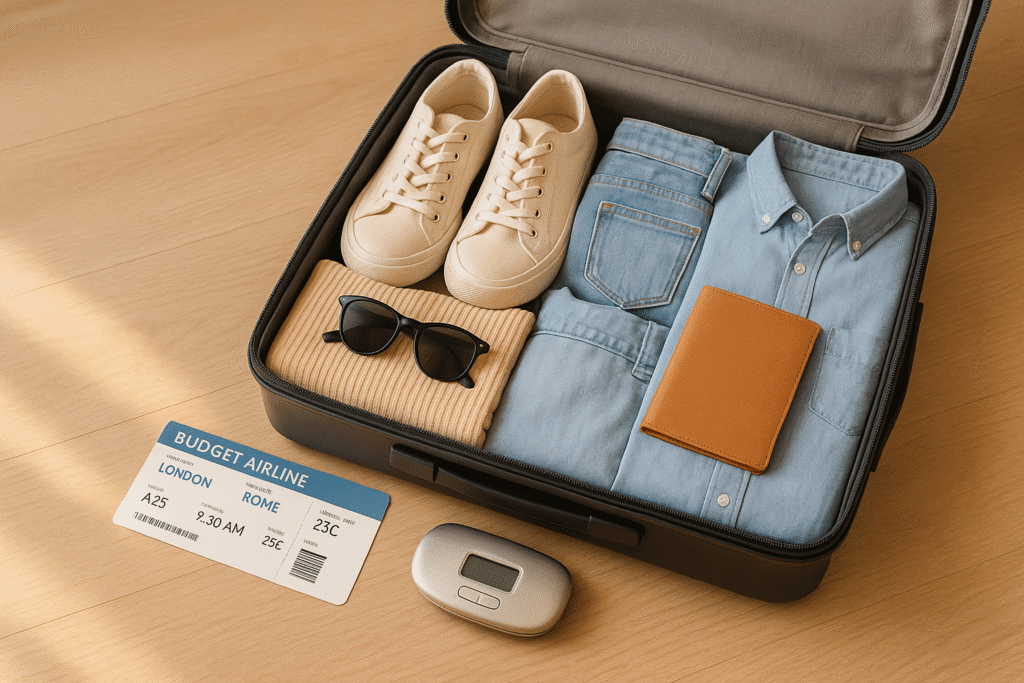
Start with lightweight luggage – materials like polycarbonate or nylon can shave off 2–3 pounds compared to heavier hardshell suitcases. This makes a big difference, especially with budget airlines that often impose strict carry-on weight limits of 15–22 pounds.
Another easy solution? Wear your heaviest items. Boots, thick jackets, and jeans can stay with you during travel, freeing up space and weight in your luggage. Plus, you’ll stay cozy on the plane.
Make the most of your personal item allowance. Many airlines let you bring a structured backpack or laptop bag that fits under the seat (usually around 16–18 x 12–14 x 8–10 inches). Pack your heaviest items in this bag since most airlines don’t weigh personal items.
To save space, roll your clothes and use compression packing cubes – they can reduce the volume by up to 30%. Stick to two pairs of shoes max, and wear the heavier pair while traveling.
Avoid surprises at the airport by weighing your bags at home. A handheld luggage scale, which costs about $10–$15, can save you from paying $50–$100 in overweight fees.
For airlines with combined weight limits (like Jetstar or some AirAsia routes), distribute the weight strategically between your carry-on and personal item to stay within the rules for both size and weight.
Lastly, pre-purchase your baggage allowance. Airlines often charge less when you book baggage in advance, and fees can climb significantly as your departure date approaches.
While smart packing is key, don’t overlook security regulations – they’re just as important to keep your trip running smoothly.
Security and Travel Rules
Understanding security rules can save you time and hassle. The 100 ml (3.4 oz) liquid rule is still enforced at U.S. TSA checkpoints and international airports as of 2025. This means all liquids, gels, aerosols, creams, and pastes must be in containers of 100 ml or less and fit into a single quart-sized, clear, resealable plastic bag.
Surprisingly, many everyday items fall under the liquid restriction. Peanut butter, jam, honey, yogurt, and even liquid-filled snow globes count as liquids. Stick to travel-sized toiletries under 100 ml or transfer products into refillable travel bottles to stay compliant.
Switching to solid alternatives can also help. Bar soap instead of liquid body wash, solid deodorant instead of spray, and powder makeup instead of liquid foundation free up space in your liquids bag.
Be mindful of items that commonly trip up travelers at security checkpoints. Sharp objects like scissors over 4 inches, safety razors with removable blades, and tools longer than 7 inches must go in checked baggage. On the other hand, power banks and spare lithium batteries must stay in your carry-on and cannot exceed 100 watt-hours without airline approval.
If you’re traveling with e-cigarettes or vaping devices, remember they’re only allowed in carry-on bags, not checked luggage. Similarly, sporting equipment like baseball bats, golf clubs, and hockey sticks must be checked. Lighters are usually limited to one disposable or Zippo-style lighter in your carry-on or on your person, but torch lighters are banned entirely.
To avoid last-minute repacking at the airport, plan your packing around these security rules. When in doubt, check your airline’s prohibited items list – budget carriers often have additional restrictions beyond TSA guidelines.
Need help navigating baggage policies or finding flights with the best luggage allowances? Flight Booking 247 offers 24/7 support to guide you through airline-specific rules and help you factor baggage costs into your travel budget.
How Flight Booking 247 Can Help

Navigating international budget airline baggage policies can be tricky, but Flight Booking 247’s 24/7 travel concierge service makes it much easier. This service connects you with experts who know the ins and outs of airline baggage rules, helping you dodge unexpected fees before you even step foot in the airport.
The concierge provides real-time guidance tailored to your travel plans. Whether you’re flying with Ryanair, known for its strict personal item limits, or JetBlue, which offers more lenient baggage policies, their advice ensures you’re prepared. This personalized support builds on the earlier discussion about handling strict baggage rules, helping you avoid those hidden costs that can quickly add up.
Need to compare baggage fees across airlines? The concierge has you covered. They’ll break down costs for carriers like Ryanair, EasyJet, Wizz Air, Frontier, and JetBlue, showing how these fees impact your overall travel expenses. This insight can be a game-changer when planning your trip.
If you find yourself in a sticky situation at the airport – like being denied boarding due to oversized luggage or facing surprise fees – you can rely on the concierge for immediate help. They can assist with negotiating with the airline, finding alternatives, or even arranging additional baggage allowances on the spot.
Special items like sports gear or musical instruments often come with their own set of challenges. Flight Booking 247 can guide you through transporting these items, providing clarity on airline-specific rules, fees, and documentation requirements. This ensures you’re not scrambling at the last minute to figure things out.
Their service also keeps you informed about constantly changing airline policies. Instead of tracking every update yourself, the concierge stays on top of the latest rules for international budget carriers. They can even advise you on the best time to purchase baggage allowances, helping you lock in lower online rates instead of paying steep fees at the airport.
For personalized advice on baggage policies and to avoid common travel headaches, simply call Flight Booking 247 with your flight details. Their expert guidance can save you time, money, and stress.
Conclusion
Knowing the ins and outs of international budget airline baggage policies can make all the difference between a smooth journey and a stressful one. A little preparation can go a long way in avoiding surprise fees and last-minute headaches at the airport.
For instance, consider this: booking a 25-pound checked bag with Ryanair during your reservation might cost around $10. But if you wait until you’re at the airport, that same bag could set you back as much as $81. These unexpected costs can quickly pile up, turning what seemed like an affordable trip into a much pricier endeavor.
To avoid this, factor baggage fees into your travel budget from the start. When comparing flights, don’t just look at the ticket price – add in any extra fees for the bags you know you’ll need. That low-cost fare might not be such a bargain once everything is tallied up.
Being prepared isn’t just about saving money; it’s also about saving time and reducing stress. Knowing the baggage rules for your airline can streamline your check-in process and help you avoid the dreaded gate-side repack. With most budget airlines sticking to strict carry-on size limits (21.5 x 15.5 x 9 inches) and a 50-pound weight cap for checked bags, measuring and weighing your luggage at home is a simple but essential step.
As we’ve discussed in our packing tips and fee breakdowns, staying on top of changing baggage policies is key. Whether you’re flying with a strict airline like Ryanair or a more lenient one like JetBlue, understanding the rules ensures you’re ready for anything.
Finally, because airline policies can change, always double-check the latest guidelines before your trip. With a little planning and attention to detail, you can turn what might feel like a travel minefield into a straightforward experience – leaving you free to focus on your adventure, not hidden fees.
FAQs
Should I pre-book baggage for my trip with a budget airline?
Pre-booking your baggage when flying with a budget airline is a savvy way to save money and steer clear of last-minute surprises. Start by checking the airline’s baggage policies – these will detail the fees, size limits, and weight restrictions. Many budget carriers charge significantly more for baggage added at the airport, so planning ahead can help keep your travel expenses in check.
If you’re unsure about baggage rules or need assistance with booking your flight, Flight Booking 247 is available around the clock to help. Their team can guide you through the process and make sure your travel plans go off without a hitch.
How can I pack smartly to avoid overweight baggage fees on international budget airlines?
To avoid those pesky overweight baggage fees on international budget airlines, start by reviewing the airline’s baggage policies. Pay attention to their size and weight limits before you even start packing. A smart move? Use a digital luggage scale at home to double-check that your bags stay within the allowed weight.
Pack smart by rolling your clothes instead of folding them – it saves space and helps keep things organized. Stick to lightweight, multifunctional items, and if you’re bringing heavier clothing like jackets or boots, consider wearing them on the flight to free up room in your luggage.
When booking your flight, look into pre-purchasing additional baggage. Many airlines offer this option at a lower price compared to paying extra fees at the airport. And if you need help with booking, changes, or cancellations, Flight Booking 247 provides round-the-clock support to make your travel experience hassle-free.
What are the key differences in baggage policies between Ryanair and EasyJet, and how might they affect your travel plans?
When it comes to baggage policies, Ryanair and EasyJet have their own rules that can shape your travel plans, especially if you’re trying to travel light or dodge extra fees. Ryanair allows passengers to bring a small personal bag – think backpack or handbag – for free, but they’re strict about its size. If you need a larger carry-on or checked bag, you’ll have to pay an additional fee.
EasyJet, however, includes a larger carry-on bag with its standard ticket, giving you a bit more room. That said, if you need checked baggage or want to bring an extra carry-on, you’ll still face additional charges.
The takeaway? Flying Ryanair means packing smarter or being ready to pay for extra baggage. With EasyJet, you get a little more leeway for your carry-on, but you still need to double-check their size and weight limits to sidestep extra fees. Always go over the airline’s baggage rules before heading to the airport to avoid unexpected hassles.