Weather plays a huge role in how airlines price flights. From heatwaves to hurricanes, changing conditions impact travel demand and operational costs, which directly influence ticket prices. Here’s what you need to know:
- Summer: High demand makes it the most expensive season. Heatwaves can shift travelers toward cooler destinations, increasing prices for those routes.
- Winter: January–February offers savings of up to 30% as cold weather lowers demand, except for warm locations like Florida.
- Fall & Spring: Shoulder seasons (April–May, September–October) provide moderate savings (up to 32%) with fewer travelers and pleasant weather.
- Severe Weather: Events like hurricanes or extreme heat can cause last-minute price hikes (up to 50%) or unexpected discounts for less popular routes.
- Dynamic Pricing: Airlines use real-time weather data to adjust fares instantly, reflecting demand surges or cancellations.
Tip: Flexibility with dates and destinations helps you avoid price spikes. Services like Flight Booking 247 offer real-time assistance to navigate disruptions and secure the best deals during weather-related changes.
Ask the Experts: How the Weather Impacts Air Travel
Seasonal Flight Pricing Patterns
In the U.S., flight prices tend to follow predictable seasonal trends, giving savvy travelers a chance to time their bookings more effectively. By understanding how these seasonal periods work – and how weather plays a role – you can better navigate the fluctuations in airfare.
Peak, Off-Peak, and Shoulder Seasons in the U.S.
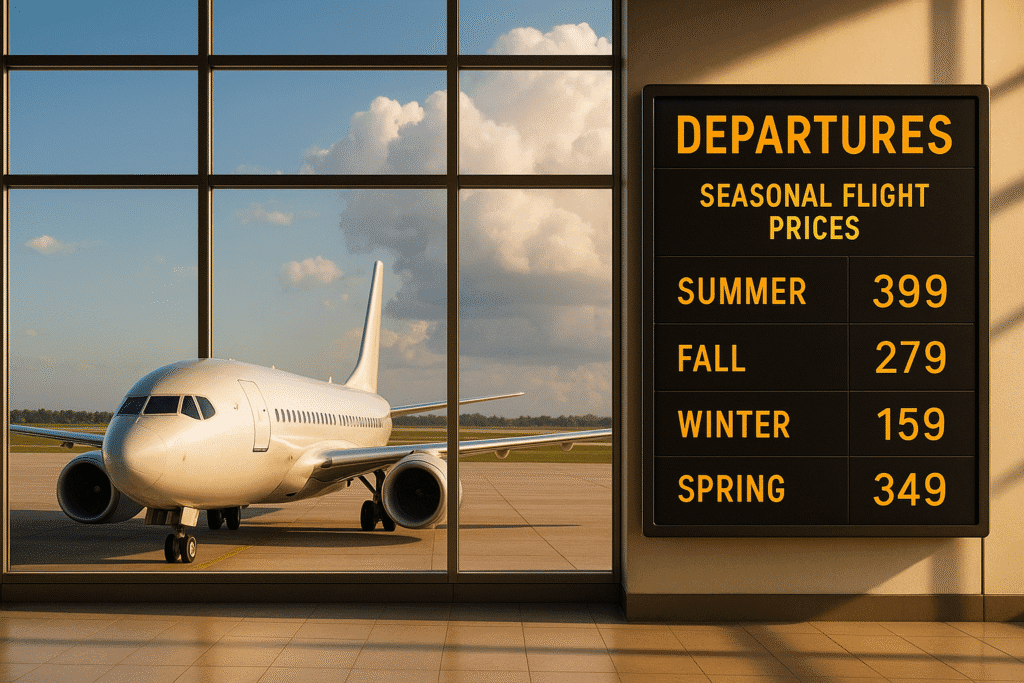
The travel year can be divided into three main pricing periods, each influenced by demand. Peak seasons – summer (June through August), winter holidays (mid-December to early January), and spring break (March to early April) – are when fares hit their highest. Summer tops the list for expensive travel due to school vacations and ideal weather, while winter holiday prices surge as families travel for Christmas and New Year’s celebrations.
Off-peak seasons (January–February and September–October) are the best time for budget-conscious travelers, with savings of up to 30%. These months see reduced demand after the holidays and during colder weather. Meanwhile, shoulder seasons (April–May and early fall) offer a middle ground, with moderate savings ranging from 15% to 32%. These periods often feature pleasant weather without the steep costs of peak travel.
Airlines rely on historical booking data to set their base fares, charging higher rates during periods of high demand and offering discounts when demand slows.
How Weather Changes Seasonal Pricing
While seasonal trends are generally consistent, unexpected weather events – like storms, hurricanes, or extreme temperatures – can disrupt these patterns.
Regional weather differences also play a big role. For instance, harsh winters in northern states often increase demand for warmer destinations like Florida or California. On the flip side, scorching summer heat in the South can push travelers to cooler northern locations, temporarily driving up prices.
Hurricane season adds another layer of complexity. When storms threaten popular areas like Florida or the Gulf Coast, airlines often see mass cancellations, which can lower demand and lead to reduced fares for those routes. At the same time, travelers avoiding storm-prone areas may increase demand – and prices – for alternative destinations.
Unusual weather patterns can even shift travel seasons. For example, an unexpectedly warm fall might extend summer travel demand, while an early, severe winter could encourage earlier trips to warmer spots.
| Season | Typical Period | Expected Savings | Weather Impact |
|---|---|---|---|
| Winter Low | January–February | Up to 30% | Cold weather increases demand for warm spots |
| Spring Shoulder | April–May | 15–25% | Mild weather keeps travel demand steady |
| Summer Peak | June–August | Premium pricing | Heatwaves may shift destination preferences |
| Fall Shoulder | September–October | Up to 32% | Pleasant weather can extend high demand |
Airlines also monitor real-time weather forecasts to adjust prices. If extreme weather is expected to boost demand for certain destinations, fares for those routes often increase. This makes it essential to stay flexible and consider weather-driven pricing shifts when planning your travel.
Heatwaves and Air Travel Demand
Extreme heat has a noticeable effect on the aviation industry, shaping both where people choose to travel and how airlines manage operations. High temperatures can make certain destinations less appealing while also causing logistical headaches like flight cancellations and delays. These shifts in demand and operational challenges often lead to real-time adjustments in airfare.
Travel Choices During Heatwaves
When temperatures soar, travelers tend to avoid the hottest destinations. For instance, during the summer heatwave of 2023, airfare trends reflected this shift. Average ticket prices for cooler destinations like San Francisco and Seattle rose by 12–15% compared to the previous month. Meanwhile, fares to hotter cities such as Dallas and Las Vegas dropped by 8–10% as demand dwindled. Similarly, during the July 2022 U.S. heatwave, searches for cooler destinations surged by 15–20%, while bookings to traditionally hot cities fell by as much as 18%. Destinations with coastal or milder climates become particularly appealing during these extreme conditions.
Flight Operations Problems from Extreme Heat
Extreme heat poses significant challenges for flight operations, primarily due to its impact on air density, which affects aircraft lift and engine efficiency. This can lead to delays or even cancellations when temperatures exceed the safe operating limits of certain aircraft. A notable example occurred in June 2017, when flights at Phoenix Sky Harbor Airport were canceled because temperatures exceeded the maximum threshold for specific aircraft models. A similar event in July 2017, when temperatures climbed above 120°F, resulted in over 50 flight cancellations due to performance limitations.
Airlines often respond to such conditions by reducing passenger or cargo loads, delaying departures, or canceling flights altogether. Airports have reported up to a 20% increase in disruptions during extreme heat events. These operational issues frequently lead to a rise in airfare, with alternative flight prices spiking by as much as 15% due to reduced seat availability and last-minute bookings.
| Heat Impact | Operational Challenge | Price Effect |
|---|---|---|
| Aircraft performance limits | Flight cancellations and delays | Up to 15% increase for alternative flights |
| Reduced takeoff capacity | Lower passenger/cargo loads | Fewer available seats drive up costs |
| Ground operation safety | Longer turnaround times | Higher operational costs passed to travelers |
These operational complications directly influence how airlines adjust their pricing strategies. In such scenarios, services like Flight Booking 247 can be a lifeline, offering round-the-clock support to help travelers rebook flights and manage last-minute disruptions caused by extreme heat.
How Airlines Set Prices Based on Weather
Airlines have taken their pricing strategies to a new level by incorporating real-time weather data. Using information from sources like the National Weather Service, carriers feed this data into their revenue management systems. By blending historical trends, live forecasts, and predictive analytics, they can quickly adjust ticket prices to reflect changes in travel demand. These dynamic pricing shifts show just how much weather can impact what travelers pay.
Weather Data in Airline Pricing Systems
Weather isn’t just a factor in flight operations – it’s now a key player in pricing. For instance, if a major snowstorm is expected in the Northeast, airlines might predict a surge in demand for flights leaving before the storm hits and raise fares accordingly. On the flip side, if bad weather is forecast for a destination, bookings might drop, prompting airlines to lower prices or roll out promotions to fill seats.
This quick adaptability allows airlines to make the most of short-term demand spikes.
Demand Changes Drive Price Adjustments
Severe weather events often lead to dramatic shifts in demand – and in ticket prices. Storms, hurricanes, and heatwaves can all trigger rapid fare changes. Take the 2021 Texas winter storm as an example: airlines saw a rush of travelers trying to leave affected cities, resulting in last-minute ticket prices jumping by over 50% in just 24 hours.
The extent of these price changes depends on the type of weather event and its timing. For instance, hurricanes in the Southeast frequently cause last-minute fare increases as people scramble to evacuate. Meanwhile, forecasts for poor weather can lead airlines to lower prices to attract hesitant travelers. Here’s a quick look at some common scenarios:
| Weather Event Type | Typical Price Impact | Response Time | Example Scenario |
|---|---|---|---|
| Hurricane approach | 20–50% fare increase | Within hours | Evacuation flights from the Southeast |
| Winter storm forecast | 50%+ increase for pre-storm departures | 24–48 hours | 2021 Texas winter storm |
| Poor weather forecast | Promotional pricing | 2–7 days | Rainy weekend destinations |
In addition to demand shifts, airlines also face increased costs from delays, cancellations, and reroutes, which can either push fares higher or lead to discounts when demand softens.
For savvy travelers, understanding these weather-driven pricing patterns can lead to savings. By keeping an eye on weather forecasts and knowing how airlines typically react, they can time their bookings to snag lower fares. Tools like Flight Booking 247, which offers real-time fare monitoring, can be especially helpful during these unpredictable periods, ensuring travelers get the best deals.
Booking Strategies for Weather-Related Price Changes
Weather has a surprising influence on airfare, and savvy travelers can use this to their advantage. By understanding how airlines adjust prices during weather events, you can save money and avoid unnecessary stress. The key is keeping an eye on trends, staying adaptable, and acting fast when conditions shift. Here’s how you can make the most of these pricing changes.
Tracking Prices During Weather Events
When severe weather strikes, airfare prices can change in an instant, often following predictable patterns. For example, when the National Weather Service announces storms, hurricanes, or heatwaves, airlines begin adjusting fares dynamically based on demand. Setting up fare alerts is one of the best ways to stay ahead of these rapid changes.
It’s also smart to monitor weather conditions at both your departure and arrival locations. Take hurricanes in Florida, for instance – flights leaving affected areas may see sharp price hikes as demand spikes, while fares to less impacted destinations might drop as travelers cancel their plans. Timing is everything, especially during shoulder seasons when weather is generally calmer and prices tend to be lower.
Real-Time Assistance with Flight Booking 247

During volatile periods, having quick access to help can make all the difference. When prices are fluctuating rapidly, real-time support can streamline your decision-making. That’s where Flight Booking 247’s concierge service comes in handy. Their team provides live assistance, searching across multiple airlines to find the best options for you in real time. It’s like having your own personal travel assistant during chaotic weather situations.
“We do all of the real time flight searches for you and present you the best options. It’s like having a personal assistant, we connect you to our award winning customer service and find you the best priced airline tickets.”
This service is especially useful when dealing with flight cancellations or scrambling for alternative routes during weather disruptions.
Staying Flexible with Travel Plans
Flexibility is your greatest asset when it comes to avoiding weather-related fare spikes. Travelers who can adjust their plans – whether it’s dates, destinations, or departure airports – are more likely to find better deals and experience fewer disruptions. Keeping an eye on weather forecasts well in advance gives you the chance to adapt and avoid sudden price surges.
For example, if a major hub like Chicago O’Hare is facing severe weather, you might save by flying out of a smaller nearby airport. Similarly, shifting your travel dates by even a single day can lead to noticeable savings. Midweek flights, in particular, are often cheaper and less affected by weather-related demand compared to weekend departures.
Additionally, loyalty programs and redeeming miles can help offset fare increases during these times. The most successful travelers use a mix of flexibility strategies while keeping realistic expectations about their travel needs. Combining these approaches ensures a smoother, more cost-effective journey.
Key Points About Weather and Flight Pricing
Understanding how weather influences flight prices can be a game-changer for cutting travel costs. Weather patterns create seasonal cycles that directly impact airline pricing, and savvy travelers who spot these trends often land better deals.
Timing and flexibility are crucial when booking flights. Seasonal demand shifts play a big role in pricing. For instance, winter months generally offer lower fares compared to peak travel seasons, making them a smart choice for budget-conscious travelers. The spring shoulder season tends to provide moderate savings for popular destinations like Europe, while fall months often deliver the best overall value with significant discounts.
Weather forecasts can also drive immediate price changes as airlines anticipate shifts in demand. Being flexible with your travel dates – even by just a few days – can result in much lower fares, especially when transitioning from peak to shoulder seasons.
Extreme weather presents both challenges and opportunities. While it can cause price spikes and operational disruptions, it can also lead to unexpected bargains when demand for certain routes drops. The key is staying informed and prepared. Combining weather awareness with real-time booking tools can give you an edge.
Having access to real-time support, like the services offered by Flight Booking 247, allows travelers to act quickly on these insights. Their team monitors pricing shifts in real time and helps you adjust plans when weather impacts your original itinerary. This immediate assistance saves time and ensures you find the best options without the hassle of endless online searches.
“We do all of the real-time flight searches for you and present you the best options. It’s like having a personal assistant. We connect you to our award-winning customer service and find you the best-priced airline tickets.”
FAQs
What’s the best way to plan your trip and avoid high airfare during peak seasons affected by weather?
Booking flights during peak travel seasons can get pricey, especially when weather impacts demand. To keep costs down, it’s smart to book as early as possible – ticket prices tend to climb as your travel date approaches. Another tip? Be flexible with your schedule. Flights on midweek days like Tuesday, Wednesday, or Thursday are often cheaper compared to weekend travel.
For those who want extra help snagging affordable flights, Flight Booking 247 provides 24/7 support to find great deals and simplify your travel planning.
How do airlines adjust flight prices based on changing weather conditions?
Airlines rely on sophisticated algorithms and real-time data to tweak flight prices based on weather conditions. For instance, extreme weather events like snowstorms, hurricanes, or heatwaves can disrupt travel plans and shift demand, which often leads to price adjustments. Even during peak travel seasons, changing weather patterns can affect customer behavior, prompting airlines to adapt their pricing strategies to match.
If unpredictable weather has you worried about booking or managing your flights, Flight Booking 247 is here to help. They offer round-the-clock support to help you snag the best deals and make any necessary changes, ensuring your travel plans stay on track regardless of the conditions.
How do extreme weather events like heatwaves and hurricanes affect flight prices and schedules?
Extreme weather events like heatwaves and hurricanes can seriously disrupt flight schedules and affect ticket prices. These conditions often result in delays, cancellations, or rerouted flights, which shrink the number of available options. With fewer flights and a surge in demand as travelers scramble to adjust their plans, ticket prices often climb.
For assistance with flight changes or cancellations caused by weather-related disruptions, Flight Booking 247 offers 24/7 support to help manage your travel plans.