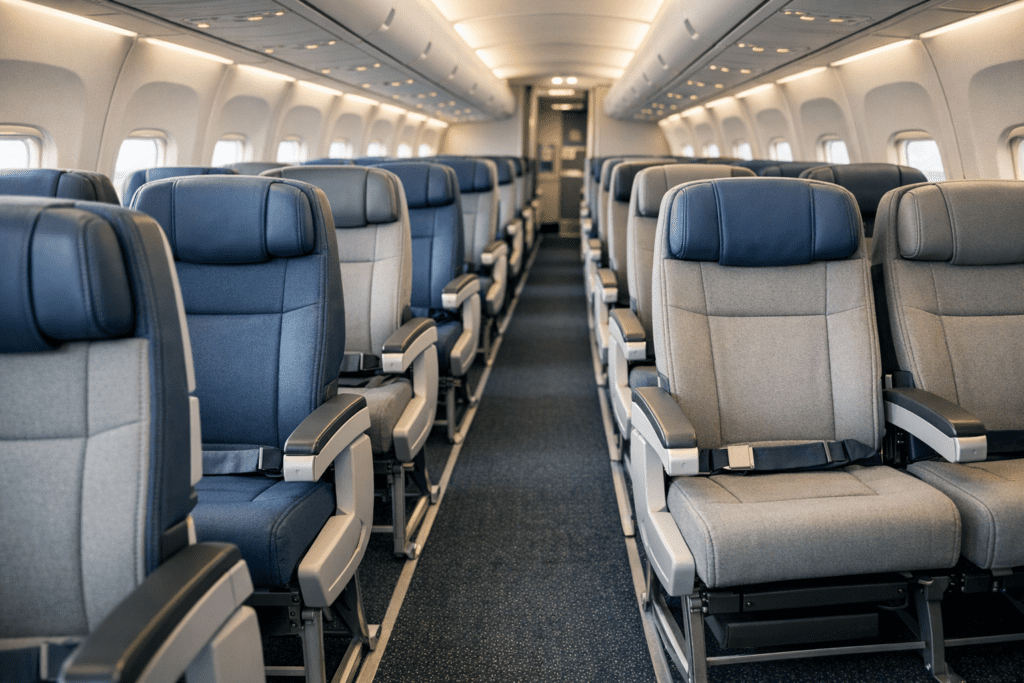
Flying on a budget doesn’t have to mean sacrificing comfort. Some budget airlines offer seats that are surprisingly spacious, with better legroom, wider seats, and recline options that can make a big difference on long flights. Here’s a quick look at the top budget airlines with the most comfortable seating options:
- JetBlue Airways: Best overall for comfort, with 32–33 inches of seat pitch and 18.1-inch-wide seats. Their “Even More Space” upgrade offers up to 38 inches of legroom.
- Southwest Airlines: Reliable comfort with 31–32 inches of seat pitch and a generous open seating policy. Exit rows provide extra legroom.
- Breeze Airways: Flexible seating, including Standard (30-inch pitch), Extra Legroom (33-inch pitch), and premium recliner-style seats in the “Breeze Ascent” section.
- Sun Country Airlines: Offers a tiered seating system, including Standard (29–30 inches), Better (32 inches), and Best (34 inches), with exit rows reaching up to 39 inches.
- Frontier Airlines: Compact Standard seats (28–29 inches) but great upgrades like “Stretch” seating with up to 38 inches of pitch.
- Spirit Airlines: Known for tight Standard seats (28–30 inches), but the “Big Front Seat” offers 34–36 inches of pitch and extra width.
- Avelo Airlines: Affordable with 29-inch Standard pitch, but “Stretch” and “Stretch+” seats provide up to 38 inches of legroom.
Quick Comparison
| Airline | Standard Pitch | Standard Width | Recline | Upgrade Option | Upgraded Pitch |
|---|---|---|---|---|---|
| JetBlue | 32–33 in | 18.1 in | Yes | Even More Space | Up to 38 in |
| Southwest | 31–32 in | 17.4–17.5 in | Yes | Business Select | N/A |
| Breeze | 30 in | Varies | Yes | Extra Legroom/Ascent | Up to 33 in |
| Sun Country | 29–30 in | 17–17.5 in | Yes | Better/Best Seats | Up to 39 in |
| Frontier | 28–29 in | 18–19.3 in | Pre-reclined | Stretch Seating | Up to 38 in |
| Spirit | 28–30 in | 16–18.5 in | Pre-reclined | Big Front Seat | Up to 36 in |
| Avelo | 29 in | 17 in | Pre-reclined | Stretch/Stretch+ | Up to 38 in |
If comfort matters to you, JetBlue and Southwest deliver the best economy seating among budget airlines. For affordable upgrades, Frontier and Spirit offer premium options that rival traditional carriers. Choose wisely based on your priorities – whether it’s legroom, seat width, or price.
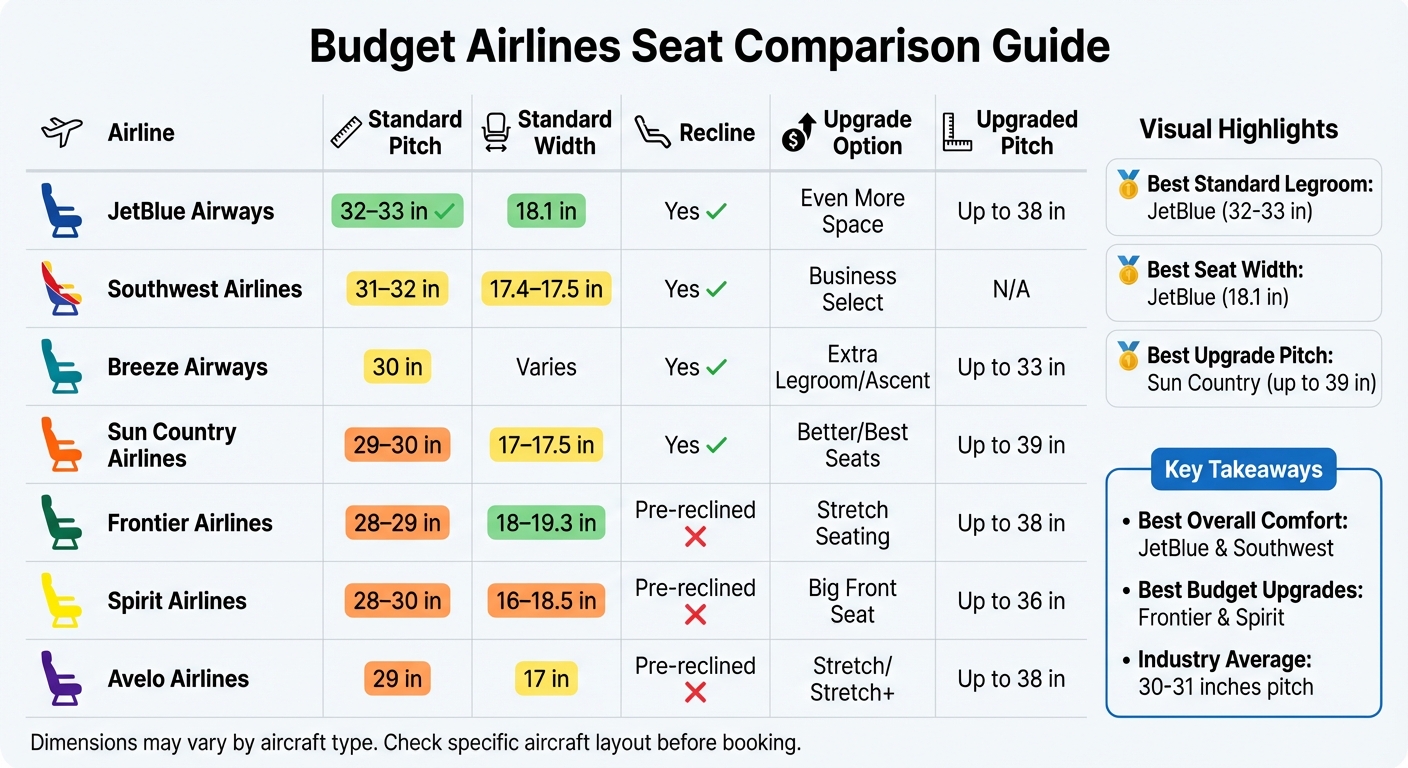
Budget Airlines Seat Comparison: Pitch, Width, and Upgrade Options
Flying Basic Economy? Here’s the Best (and Worst) Airline!
sbb-itb-e205081
1. Southwest Airlines
Southwest Airlines has built a strong reputation for offering some of the best legroom among budget carriers. With a seat pitch ranging from 31 to 32 inches, depending on the aircraft, Southwest prioritizes passenger comfort without breaking the bank. In a 2025 ranking of major U.S. airlines, Southwest secured second place for economy legroom, just behind JetBlue. Here’s a closer look at the airline’s seating details, including pitch, width, recline, and upgrade options.
Seat Pitch
Southwest’s seat pitch varies slightly across its fleet. On the Boeing 737-700 aircraft, seats offer about 31 inches of pitch. Meanwhile, the newer Boeing 737-800 and 737 MAX models provide a bit more room, with 32 inches of pitch. This extra inch might not sound like much, but it can make a noticeable difference on longer flights.
Seat Width
The standard seat width across most of Southwest’s planes measures around 17.4 to 17.5 inches. However, the Boeing 737 MAX stands out with slightly wider seats at 17.8 inches. Bob Jordan, Southwest Airlines’ Chief Commercial Officer, highlighted this improvement:
“Southwest would have the widest economy seats available in the single-aisle 737 market, at 17.8 inches”.
Southwest also offers a thoughtful “Customer of Size” policy. Passengers who need additional space can request a refund for a second seat or, in some cases, receive an extra seat at no extra cost when checking in at the gate.
Recline Options
Unlike Spirit Airlines’ fixed “pre-reclined” seats, Southwest provides standard recline on most of its seats. For those seated in exit rows, there’s an additional perk – up to five extra inches of legroom, though recline is limited for safety reasons. Passengers flying on newer aircraft will also find adjustable headrests, adding another layer of comfort.
Upgrade Costs
Southwest offers a few ways to enhance your travel experience. Opting for a Business Select fare or purchasing Upgraded Boarding (positions A1–15) lets you board earlier, giving you first dibs on premium seating, such as exit rows or seats closer to the front of the plane. Since Southwest operates on an open seating model – no assigned seats – your boarding position plays a key role in where you’ll end up sitting.
2. JetBlue Airways
JetBlue Airways stands out among major U.S. airlines by offering an average seat pitch of 32.3 inches in economy class. That’s over four inches more than what you’d find on ultra-low-cost carriers like Spirit and Frontier, which typically provide just 28 inches. JetBlue also surpasses other budget airlines in terms of space and comfort. Let’s dive into the details of JetBlue’s seating, covering pitch, width, recline, and upgrade options.
Seat Pitch
JetBlue’s standard “Core” cabin delivers a consistent seat pitch of 32–33 inches across most of its fleet, ensuring passengers have more legroom than many competitors. For those who crave even more space, the “EvenMore” seats offer up to 38 inches of pitch, along with added perks.
Seat Width
JetBlue doesn’t just excel in legroom – it also leads the pack in seat width among major U.S. airlines. The average seat width is 18.1 inches. On the Airbus A220, passengers sitting in the “DEF” column are treated to a seat width of 19 inches, while “AC” seats measure 18.5 inches. Travel writer Bailey Berg notes that these extra inches can make a big difference in comfort, especially during long flights.
Recline Options
Recline options vary depending on the aircraft. While some models offer limited recline, passengers flying Mint class on transcontinental routes can enjoy fully lie-flat seats, making long-haul travel far more comfortable.
Upgrade Costs
JetBlue’s pricing structure is flexible. Basic fares come with an additional fee for seat selection, while premium fares include complimentary seat choices. Upgrades are often more affordable when using points, giving passengers a cost-effective way to enhance their experience.
3. Breeze Airways
Breeze Airways stands out by tailoring its seating options to meet different comfort preferences. With three choices – Standard (30-inch pitch), Extra Legroom (33-inch pitch), and Breeze Ascent featuring recliner-style seats – Breeze ensures passengers can select a level of comfort that suits their needs. This flexible approach appeals to travelers looking for a customized in-flight experience.
Seat Pitch
The Extra Legroom option offers a pitch of 33 inches, providing three extra inches compared to standard seating. This additional space is competitive with, and at times better than, offerings from major airlines like Southwest and JetBlue. For those seeking maximum comfort, the Breeze Ascent recliner-style seats provide even more spaciousness, though exact measurements aren’t disclosed.
Seat Width
Comfort isn’t just about legroom – seat width also plays a role. Breeze’s layouts include a 2-3 configuration for Standard and Extra Legroom options and a 2-2 setup for Breeze Ascent. This arrangement suggests wider seats in the Ascent section, adding to its premium feel.
Recline Options
Recline functionality is available across all seating classes, including the economy options. However, the Breeze Ascent section takes it a step further with recliner-style seats, offering a near-business-class experience. As NerdWallet describes:
“The Breeze Ascent zone… is as close to business class as you’ll find on Breeze flights, with recliner-style seats, more legroom, power outlets and free snacks and drinks”.
This premium design holds its own when compared to similar offerings from larger carriers.
Upgrade Costs
Seat upgrade fees depend on the route. Standard seats cost between $10 and $59, Extra Legroom seats range from $30 to $99, and Breeze Ascent seats are priced from $50 to $399. Travelers can also bundle baggage with seat upgrades, often reducing the overall cost. Families with children aged 2–12 can take advantage of free standard seat selection in the family seating zone, adding value for those traveling with kids.
4. Sun Country Airlines
Sun Country Airlines stands out among ultra-low-cost carriers with its flexible seating options and affordable fares. The airline operates a three-tier seating system – Standard, Better, and Best – allowing passengers to customize their in-flight experience. Sun Country primarily uses Boeing 737-700 and 737-800 aircraft, offering a thoughtful touch with full-size tray tables (16 x 9 inches) even in the Standard seating tier.
Seat Pitch
The seat pitch varies depending on the tier you choose:
- Standard seats: 29–30 inches of pitch
- Better seats: 32 inches of pitch
- Best seats: 34 inches of pitch
- Exit rows: Up to 39 inches of pitch
This range provides options for passengers seeking more legroom.
Seat Width
Window seats measure about 17 inches in width, while middle seats are slightly wider at approximately 17.5 inches. Bulkhead seats, such as those in Row 4, are narrower because the tray tables are built into fixed armrests. On some Boeing 737-800 planes, certain seats (like 10A and 11F) lack windows entirely. Checking the seat map before choosing your seat is a smart move to avoid surprises.
Recline Options
Unlike many budget airlines that use fixed “pre-reclined” seating, Sun Country offers functional recline across its fleet:
- Standard and Better seats: About 2.5 inches of recline
- Best seats: Enhanced recline for added comfort
However, seats directly in front of exit rows – and the exit rows themselves – do not recline due to safety regulations. One downside to the slimline seat design is that passengers may feel movements from those seated behind them, especially when items are taken out of the seatback pocket.
Upgrade Costs
The cost of selecting a seat varies depending on the route and seating tier:
- Standard seats: $12–$19
- Better seats: $16–$25
- Best seats: $30–$39 when booked in advance
Best seats come with added perks like preferred boarding, extra recline, a complimentary alcoholic drink, and access to AC power outlets. In contrast, Standard and Better seats only offer USB ports. If you decide to upgrade to a Best seat at the airport counter, expect to pay around $45.
5. Frontier Airlines

Frontier Airlines takes a no-frills approach with its seating, offering a compact configuration aimed at keeping fares low. However, this comes at the expense of legroom. With a standard seat pitch of 28 to 29 inches, Frontier’s legroom is noticeably less than the industry average of 30 to 31 inches. While this design allows the airline to fit more passengers onboard and keep ticket prices down, it can feel tight, especially on longer flights.
Seat Pitch
Frontier provides two main seating options: Standard and Stretch. Standard seats come with 28 to 29 inches of pitch, while Stretch seats – available in the first few rows and exit rows – offer an additional 5 to 7 inches, bringing the pitch to a much roomier 33 to 38 inches. For those seeking a touch more comfort, Premium and UpFront Plus seats also feature a 33-inch pitch.
Seat Width
To help offset the limited legroom, Frontier has made its middle seats wider at 19.3 inches, which is about an inch more than the aisle and window seats. Seat dimensions can vary depending on the aircraft. Additionally, the airline is rolling out a new “First” seating option, featuring a 2×2 layout in the front of the cabin for a more spacious experience.
Recline Options
Frontier’s Standard seats are pre-reclined and don’t allow for manual adjustment. While this design helps maximize space in the cabin, it may not be ideal for longer journeys. Stretch seating, however, does include manual recline along with larger tray tables, which are more practical compared to the smaller ones found in Standard seats.
Upgrade Costs
Stretch seating upgrades range from $16 to over $56 per segment, depending on the route. If you want to select a Standard seat, fees range from $17 to $55 per way. Frontier also offers bundled fare options that include seat selection: Economy bundles start at $30, Premium bundles at $50, and Business bundles at $100. For frequent flyers, Elite status perks include complimentary seat selection. Elite 20K members can choose Stretch seats for free at check-in, while Elite 50K and 100K members can select them at booking.
6. Spirit Airlines
Spirit Airlines is well-known for its ultra-low-cost approach, and that philosophy is evident in its seating arrangements. With a standard seat pitch of 28 to 30 inches, depending on the aircraft, Spirit offers some of the most compact legroom in the industry. This tight configuration can feel especially restrictive on longer flights. Let’s dive into the specifics of Spirit’s seating.
Seat Pitch
Spirit’s seating is divided into two categories: Standard and Big Front Seat. Standard seats feature a pitch of 28 to 30 inches, giving them a reputation for being snug. On the other hand, the Big Front Seat – found in the first few rows – offers a more spacious pitch of 34 to 36 inches. For those seeking extra legroom, select Airbus A321 exit rows provide an impressive 67 inches of pitch.
Seat Width
Seat width varies depending on the aircraft model. On older Airbus A320 planes, standard seats can be as narrow as 16 inches. Newer Airbus A321 NEO models, however, offer slightly more room, with widths ranging between 16.5 and 18.5 inches. The Big Front Seat is significantly wider, with dimensions between 20.9 and 22.8 inches. These seats also do away with the middle seat, leaving passengers with only window or aisle options for added comfort.
Recline Options
Spirit’s seats are pre-reclined, meaning they are fixed at a slight angle and cannot be adjusted manually. While this design ensures the person in front won’t recline into your space, it also means you’ll remain in the same position throughout the flight, which can be less comfortable on longer trips.
Upgrade Costs
Upgrading to a Big Front Seat can cost anywhere from $12 to $250, depending on your route and how far in advance you book. Standard seat selection fees range between $5 and $200 per flight. Spirit also offers the Boost It Package, priced around $69 to $75, which includes perks like a checked bag, early boarding, and seat selection (including exit rows when available). However, Spirit does not allow you to use points for seat upgrades – these must be paid for with cash.
7. Avelo Airlines
Avelo Airlines operates an all-Boeing 737 fleet, offering a straightforward, no-frills flying experience. The seating features a standard 29-inch pitch and Acro Series 6 slimline seats, which provide an extra 2 inches of knee space for added comfort. Seats are approximately 17 inches wide on average. Unlike airlines such as Southwest and JetBlue that focus on broader options, Avelo sticks to simplicity and reliable service.
Seat Pitch
About one-third of Avelo’s seats are designed with extra legroom, branded as “Stretch” and “Stretch+.” These seats range from 32 inches to over 36 inches in pitch. Rows 1 and exit rows 20–21 offer the most spacious options, with up to 38 inches of pitch. While bulkhead seats also provide additional legroom, the fixed armrests can slightly reduce the seat width.
Seat Width
The average seat width across Avelo’s fleet is around 17 inches.
Recline Options
Avelo has opted for fixed, pre-reclined seats to avoid the inconvenience of seatbacks encroaching on personal space. As CEO Andrew Levy explained:
“The current plan is to lock the seats in a pre-reclined position to avoid making it an extra-tight squeeze for those trying to get up during the flight.”
For passengers seeking more comfort, extra-legroom seats come with adjustable recline options.
Upgrade Costs
Upgrading to extra-legroom seats starts at just $15 when booking. Avelo also offers “Stretch+” seating, which includes a blocked middle seat for extra personal space. Chief Commercial Officer Brian Davis highlighted the value of these options:
“Stretch and Stretch+ offer enhanced comfort while preserving Avelo’s commitment to convenience and affordability.”
Given the standard seats’ minimal padding and tighter pitch, upgrading is a smart choice for flights lasting more than two hours.
Advantages and Drawbacks
Here’s a snapshot of seating metrics and passenger experiences based on the comparisons above.
When it comes to seating comfort, budget airlines vary widely. JetBlue stands out with its generous legroom and seat width, offering a more spacious experience compared to many ultra-low-cost carriers. Similarly, Southwest Airlines maintains a consistent seat pitch of about 31–32 inches across its all-Boeing 737 fleet, providing a reasonably comfortable ride.
On the other hand, carriers like Frontier and Spirit prioritize fitting more rows into their aircraft. Their standard seat pitch is around 28 inches, which can feel cramped for many passengers. This trade-off allows these airlines to maximize ticket sales, though it often comes at the expense of comfort.
Here’s a quick-reference table highlighting seating metrics for select budget airlines:
| Airline | Standard Pitch | Standard Width | Recline | Upgrade Option | Upgraded Pitch |
|---|---|---|---|---|---|
| JetBlue | 32–34 in | 17.8–18.25 in | Yes | Even More Space | Up to 38 in |
| Southwest | 31–32 in | 17.4–17.5 in | Yes | Business Select | N/A |
| Frontier | 28 in | 18.1–19.3 in | Pre-reclined | Stretch Seating | 33 in |
| Spirit | 28 in | 18 in | Pre-reclined | Big Front Seat | 36 in |
Note: Seating dimensions for other budget airlines like Breeze Airways, Sun Country Airlines, and Avelo Airlines can vary depending on the aircraft and route.
These differences highlight how even small variations in seat design can significantly affect travel comfort. For instance, Frontier and Spirit use fixed, pre-reclined seats that don’t allow adjustments, leaving passengers with little control over their seating position. Similarly, Southwest’s open seating policy can frustrate travelers who prefer the certainty of assigned seats. While exit row or bulkhead seats offer extra legroom, they often come with the drawback of reduced under-seat storage space.
For those looking to improve their travel experience, tools like SeatGuru can help identify the best seats on a specific aircraft. Additionally, storing personal items in overhead bins and using loyalty miles to secure upgrades can make a noticeable difference.
Conclusion
When picking the right airline, it all boils down to what matters most to you. If comfort is your top priority, JetBlue Airways stands out with its spacious economy seating. With a seat pitch ranging from approximately 32.3 to 32.7 inches and seats about 18.1 inches wide, JetBlue offers some of the roomiest options in the industry. For longer flights, where extra legroom makes all the difference, JetBlue is a solid choice.
Looking for a balance between comfort and affordability? Southwest Airlines might be your best bet. With a seat pitch of around 31.7 to 32 inches, Southwest provides consistent comfort without breaking the bank, making it a great runner-up.
If low fares are your main focus, Spirit Airlines and Frontier Airlines offer budget-friendly options, especially for shorter flights. Their standard seat pitch is about 28 inches, but both carriers provide premium seating upgrades. These upgrades not only add significant legroom but can even rival the comfort offered by traditional airlines – perfect if you’re willing to pay a bit more for extra space.
For those exploring newer airlines, Breeze Airways and Avelo Airlines operate modern fleets with competitive seating arrangements. However, seating dimensions can vary depending on the aircraft and route, so it’s always a good idea to double-check the layout before booking.
Ultimately, finding the right balance between comfort and cost is key. Whether you’re prioritizing legroom, price, or a mix of both, there’s an airline to match your needs. And if you need help securing the perfect seat, Flight Booking 247 is available around the clock to assist.
FAQs
Which budget airline has the most legroom for tall passengers?
JetBlue Airways has carved a niche for itself among U.S. budget airlines by providing the most legroom in economy class, boasting an average seat pitch of 32.3 inches. If you’re a tall traveler, this extra space can make all the difference, offering more comfort and room to stretch during your flight.
When you’re ready to book your next JetBlue flight, consider using Flight Booking 247. They offer round-the-clock support to help you snag the best seats and manage your travel plans effortlessly, ensuring a hassle-free booking experience.
Are seat upgrades on budget airlines worth the cost?
Upgrading your seat on a budget airline can bring small but noticeable perks like extra legroom, a wider seat, and more recline – comforts that are often absent in standard economy seating. On carriers like Frontier and Spirit, where seat pitch can be as tight as 28 inches, these upgrades can make a world of difference, especially on longer flights. Typically, premium upgrades add 2–4 extra inches of legroom and sometimes a slightly wider seat, offering a bit more breathing room.
Whether an upgrade is worth the cost depends on a few factors, including the price and how often you fly. For occasional travelers, upgrade fees on budget airlines usually fall between $20 and $60 per flight, varying by route. On the other hand, frequent flyers might find better value in annual subscriptions or bulk upgrade packages offered by major airlines.
If you’re on the fence, Flight Booking 247 can help you compare upgrade prices across different airlines. Their 24/7 concierge service is designed to guide you in finding flights where a modest investment in comfort delivers the best value, ensuring you only pay for upgrades that genuinely improve your travel experience.
How does Southwest’s open seating policy impact your flight experience?
Southwest Airlines’ open seating policy lets passengers choose any available seat once they’re on the plane, based on their boarding group – A, B, or C. Your boarding position depends on how early you check in, with services like EarlyBird Check-In offering an opportunity to snag a better spot. This system gives you the chance to pick a seat that suits your preferences, whether you’re after extra legroom, a window view, or a spot closer to the exit.
One of the standout perks of open seating is the ability to select your seat without paying extra for a specific assignment. That said, it does require a bit of strategy – checking in late usually means fewer choices, like middle seats or those at the back of the plane. To boost your chances of getting a prime spot, it’s a good idea to set a reminder and check in as soon as the 24-hour window opens. Open seating rewards quick thinking and planning, turning seat selection into a more interactive part of your trip.