
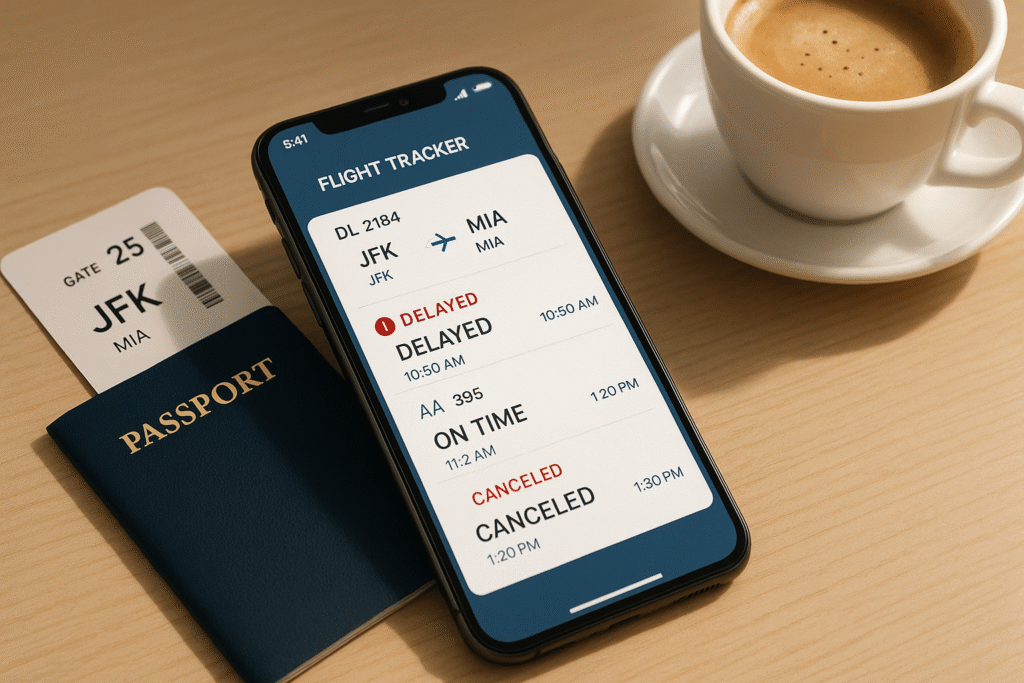
Flight change tracking tools help you stay informed about delays, cancellations, gate changes, and more – making travel less stressful and more efficient. These tools use real-time data, predictive algorithms, and APIs to provide instant updates and even forecast disruptions. Here’s why they matter:
- Real-Time Alerts: Get instant notifications for delays, gate changes, or cancellations.
- Predictive Technology: Some tools predict delays hours in advance using machine learning.
- Multi-Airline Support: Track flights across different airlines in one place.
- User-Friendly: Designed for easy navigation, even during hectic travel.
- Financial Benefits: Early alerts help you rebook without paying extra.
Want to make better travel decisions? These tools ensure you’re always a step ahead, whether you’re flying for work or leisure.
5 Best Website for Live Flight Tracking in 2025
How Flight Change Tools Work
Flight change tracking tools are designed to keep you updated on your travel plans by constantly pulling and processing information from various sources. These tools connect directly to airline systems and aviation databases, using advanced technology to provide real-time updates right to your device, 24/7.
They rely on multiple methods to collect data, such as ADS-B transponders, radar systems, and direct airline feeds, ensuring the information is both comprehensive and accurate through cross-verification [1]. This multi-source approach provides a solid foundation for reliable updates.
What sets these tools apart is their ability to handle enormous amounts of data in record time. For instance, OAG processed nearly 2 billion flight status updates in 2022 alone – averaging 40 updates every second [4]. The data is then filtered, organized, and presented in a way that’s easy to digest, keeping travelers informed without overwhelming them.
Main Functions of Flight Tracking Tools
Flight tracking tools do far more than just tell you if your flight is on time. Their core function is to monitor schedule changes in real-time, covering everything from minor gate shifts to significant delays or cancellations. They track “OOOI” data – Out Gate, Off Ground, On Ground, In Gate – as well as cancellations, diversions, and irregular operations [4].
Some tools also offer predictive features. By analyzing historical trends, weather conditions, and air traffic data, they can anticipate potential delays before airlines officially announce them. These tools can even monitor your entire journey, including connections across different carriers, and alert you when one delay might disrupt your travel plans. Such capabilities are made possible through robust APIs that deliver seamless, real-time flight data.
How APIs Enable Flight Monitoring
APIs, or Application Programming Interfaces, are the backbone of flight tracking. They act as intermediaries, fetching the latest flight data from airline databases and presenting it in a structured format that tracking tools can interpret and display [1].
These APIs pull data from multiple sources simultaneously. Global Distribution Systems (GDSs) like Amadeus, Sabre, and Travelport play a key role by aggregating information from numerous airlines and making it accessible [6]. Each GDS has unique features – for example, Amadeus offers lightweight REST/JSON APIs for startups alongside more robust SOAP/XML Enterprise APIs, while Travelport provides Universal API and RESTful JSON options optimized for mobile platforms [7].
Pricing for API access depends on the provider and the features offered.
“We vetted OAG’s analytical tools and APIs, and with more than one million flight status updates daily, including 97% of worldwide flight coverage, we’re confident that OAG is the right partner to power Reserve.”
– Rob Mitchell, Head of Business Development for Airports, Events and Travel, Uber [5]
For example, FlightAware’s data updates are typically delayed by just 30 seconds, with new updates occurring one to four times per minute [8]. This near-instant flow of information allows for responsive notifications, helping travelers make timely decisions.
The most advanced APIs also incorporate multiple layers of data verification. They cross-check airline schedules, radar tracking, and direct carrier feeds to ensure accuracy [4]. This redundancy minimizes false alerts, giving travelers the confidence to rely on the information for their travel plans.
Important Features in Flight Change Tracking Tools
When selecting flight tracking tools, it’s essential to focus on features like real-time updates, broad airline coverage, and user-friendly interfaces. These elements ensure you’re always informed and can manage your travel plans with ease.
Real-Time Alerts and Notifications
The standout feature of any reliable flight tracking tool is its ability to deliver instant alerts for flight changes. By tapping into real-time data feeds, these tools provide updates on gate changes, cancellations, aircraft swaps, and boarding schedules as they happen.
Advanced tools take it a step further with predictive algorithms. These systems can anticipate delays before they’re officially announced, giving you extra time to adjust plans, rebook connections, or inform someone waiting for you at your destination. Think of it as a travel assistant that stays one step ahead.
Research highlights that timely and accurate updates can significantly reduce travel-related stress [2]. Instead of anxiously wondering about your flight status, you’ll receive updates that allow you to make quick, informed decisions.
Most modern apps also integrate seamlessly with mobile devices, pushing real-time updates like gate changes or boarding times directly to your phone [9]. This ensures you’re always in the loop, even if you’re not actively checking the app.
“Real-time notifications are a core element of a comprehensive security and communication solution. These systems are essential in enhancing security by ensuring real-time alerts, improving incident response times, reducing human error and facilitating communication among security personnel and stakeholders.” – Michael Peveler, VP of Sales, AtlasIED [11]
The ability to customize notifications is another game-changer. Whether you prefer alerts only for major delays or want updates for every small gate adjustment, the best tools allow you to tailor notifications to suit your preferences. This way, you avoid unnecessary distractions while staying informed about the updates that matter most.
Multi-Airline Support
Air travel often involves multiple carriers, especially for international or complex itineraries. Whether you’re booking with partner airlines or piecing together separate tickets for cost savings, a tracking tool that works across all airline networks is essential.
The global aviation landscape revolves around major alliances like oneworld, SkyTeam, and Star Alliance. However, many airlines operate independently or have bilateral agreements, making it crucial for tracking tools to provide comprehensive coverage. This ensures reliable updates no matter how complicated your journey is.
Multi-airline support simplifies tracking by consolidating your entire itinerary into one seamless experience. For example, tools like the AI-powered system developed by Elemental Cognition and Oneworld Alliance make planning and managing “Round the World” (RTW) tickets much more manageable [12].
Another benefit of multi-airline support is improved data reliability. By sourcing information from multiple airline systems, these tools can cross-check updates to ensure accuracy. If one airline’s system is slow to report a change, the tool may pick up the update from another source, keeping you informed faster.
Easy-to-Use Interfaces
Even the most advanced features lose their value if the tool is difficult to navigate. The best flight tracking apps prioritize simplicity, presenting crucial information – like gate numbers and departure times – clearly and concisely.
Visual design plays a big role here. Tools that use color coding (e.g., green for on-time, red for delays) and straightforward layouts make it easy to grasp your flight status at a glance. When you’re rushing through a crowded airport, you don’t want to waste time searching through menus for basic details.
With global air passenger traffic projected to hit 9.4 billion in 2024, surpassing pre-pandemic levels [10], there’s a growing demand for tools that perform efficiently under pressure. A good interface ensures that even when millions of users are online simultaneously, the app remains responsive and easy to use.
Mobile optimization is crucial. Since most travelers rely on their phones for updates, the best tools are designed to work seamlessly on small screens. They should load quickly, even on spotty airport WiFi, and display essential information without requiring endless taps or swipes. These design principles transform complex flight data into actionable insights, setting you up for a smoother travel experience.
Flight Booking 247: 24/7 Flight Change Support

Flight Booking 247 takes the convenience of automated tracking and pairs it with the expertise of real human assistance, making it a go-to solution for unexpected travel challenges. While automated tools are great for keeping you updated on schedules, they often fall short when it comes to handling the curveballs that can disrupt even the best-laid travel plans. Whether it’s a rescheduled meeting, an emergency, or bad weather, these last-minute changes can throw a wrench into your business trip [13].
This service combines advanced technology with hands-on travel expertise, so you’re not left untangling airline policies or struggling to rebook flights on your own. Instead, you’re connected to professionals who can handle the tough stuff, giving you peace of mind when plans take an unexpected turn.
24/7 Live Support
What sets Flight Booking 247 apart is its always-available support. Unlike traditional agencies that close after business hours, this service ensures you can connect with a live operator anytime, day or night. Whether it’s a canceled red-eye flight at 3:00 AM or a last-minute itinerary change during a weekend trip, help is just a phone call away.
When you call in, you’re connected to a travel concierge with real-time access to airline inventories. They quickly assess your options without you having to sift through multiple airline websites or apps. Even better, they can search across different airlines to find the best alternatives, which is especially helpful if your original carrier has limited rebooking options.
This human touch is invaluable for navigating tricky situations that automated systems just can’t handle. For example, coordinating connecting flights or arranging special accommodations is something these professionals excel at.
Real-Time Flight Rebooking Help
In addition to live support, Flight Booking 247 offers real-time rebooking services to keep your trip on track. This isn’t just about finding an available seat – it’s about thoughtful planning that takes your schedule, destination, and budget into account. This level of service is particularly critical during widespread disruptions, like severe weather or technical issues, when airline websites are overwhelmed, and customer service lines have hours-long wait times. Thanks to their direct access to airline systems, the concierge team can secure rebooking options quickly and efficiently.
For international travel, things can get even more complicated with visa requirements, connection times, and airline partnerships to consider. Whether it’s a short domestic flight or a complex international itinerary with multiple connections, Flight Booking 247 ensures you have the support you need to navigate any situation with ease.
How to Use Flight Change Tools Effectively
Making the most of flight change tools means setting up alerts, understanding airline policies, and staying proactive, especially for international travel. These steps build on the features of these tools to help you adjust travel plans smoothly and efficiently.
Setting Up Useful Alerts
Set up alerts as soon as you book your flights. If you’re traveling through a major hub like New York, monitoring multiple airports – such as JFK, LaGuardia, and Newark – can give you more options when changes occur [3]. The frequency of updates should match your needs: for tight same-day connections, you might need real-time alerts, while a more flexible leisure trip might only require daily updates.
Choose the right communication channel for your alerts. SMS is often the most reliable for work travel, but apps like WhatsApp or Slack can be more practical for coordinating with family or groups [14]. Once alerts are in place, check their performance and adjust the settings as needed to ensure you’re getting timely updates.
Alerts are just one part of the equation; knowing airline policies is equally important when you need to act quickly.
Learning Airline Policies
When a flight change alert comes through, understanding your airline’s policies can save you both time and stress. Before you travel, review the specific policies for your airline. For example, Delta Airlines often waives rebooking fees if the airline itself causes a disruption [17]. However, policies differ widely depending on the carrier and the type of ticket you’ve purchased.
Some airlines consider a two-hour schedule change significant enough to qualify for a refund, while others set the bar at four hours [16]. Keep in mind that most U.S. airlines no longer charge change fees for standard economy or higher fares, but basic economy tickets often come with stricter restrictions [15].
If you’re flying within the European Union, you’ll benefit from robust passenger protections. EU regulations allow you to rebook on the next available flight or claim a full refund, and if no suitable flights are available, the airline may cover the cost of rebooking with another carrier [19]. In the U.S., however, federal laws don’t provide similar protections for cancellations, leaving policies up to individual airlines [19].
Managing International Flight Changes
International travel introduces additional challenges, from time zone differences to local regulations. Always double-check time zone conversions when reviewing flight schedules to avoid confusion. If you spot discrepancies in automated notifications, contact the airline directly or visit the airport information desk for clarification.
Weather can also play a bigger role in international routes. Use reliable weather tracking tools to stay ahead of potential disruptions. If your flight is delayed or changed, consider how this might affect connecting flights, visas, or accommodations. For example, a two-hour delay on an international route could mean missing a connecting flight or even needing an unexpected overnight stay.
Explore alternatives if your plans are disrupted. Options like nearby airports, rental cars, or trains can sometimes be quicker than waiting for the next available flight [18]. While international travel offers more rerouting possibilities, managing these effectively takes careful planning and flexibility.
Conclusion: Make Travel Easier with Flight Change Tracking
Flight change tracking tools turn travel disruptions into manageable situations. Globally, the travel industry loses about $35 billion annually due to disruptions, with U.S. airlines and airports alone accounting for nearly $8 billion in losses in 2016 – roughly 6% of their revenue [20]. These numbers highlight just how critical reliable tracking has become.
The balance of power in the travel industry has shifted. As Nawal K. Taneja, an Airline Business Strategist at Ohio State University, explains:
“Customers became a disruptive force for the industry because the power has shifted from airlines to customers, from providers to receivers.” [20]
This shift gives you access to real-time tools and information that put control in your hands. Whether dealing with bird strikes – which impact over 47 flights daily in the U.S. and lead to approximately $1.2 billion in damages each year [21] – or weather-related delays, these tools ensure you’re notified early enough to act. Real-time alerts and quick rebooking options have become essential for navigating such challenges.
Services like Flight Booking 247 combine automated tracking with personalized support. With features like 24/7 live assistance and immediate rebooking tools, you get the best of both worlds: cutting-edge technology and the comfort of speaking to a professional when disruptions arise. These services help reduce the uncertainty and stress that often come with air travel by delivering timely, actionable updates [1].
FAQs
How do flight tracking tools predict delays before airlines announce them?
Flight tracking tools rely on cutting-edge technology like artificial intelligence (AI), machine learning, and big data to predict flight delays – sometimes even before airlines issue an official update. These systems work by analyzing a mix of critical factors, including historical flight records, live weather conditions, and air traffic patterns, to detect potential disruptions.
For instance, some platforms track flights well ahead of schedule, combining data from earlier flights with current operational insights to anticipate delays. By taking a proactive approach, these tools alert travelers early, allowing them to adjust their plans and minimize the hassle of unexpected changes. This forward-thinking method helps make air travel smoother and more predictable for passengers.
What are the advantages of using a flight change tracking tool that supports multiple airlines for international travel?
Using a flight change tracking tool that supports multiple airlines can be a game-changer for international travelers. These tools deliver real-time updates on flight changes, delays, or cancellations, keeping you informed so you can adjust your plans quickly and avoid unnecessary headaches. For international trips, where missed connections or last-minute changes can throw your entire itinerary off course, this kind of tool becomes especially useful.
Another major perk is the ability to monitor multiple flights from different airlines all in one place. Whether you’re juggling layovers or keeping an eye on connecting flights, having everything centralized makes managing complex travel plans far easier. With the convenience and reassurance these tools provide, they can make international travel feel a lot less stressful and a lot more manageable.
How can I set up flight tracking notifications to stay updated without being overwhelmed?
To keep up with important updates without being overwhelmed, most flight tracking tools offer customizable notifications. You can tailor these alerts to focus on what matters most – like flight delays, gate changes, or cancellations – so you’re not bombarded with unnecessary updates.
For instance, many apps let you set alerts for specific flights or travel dates. This way, you’ll only get notified about crucial changes, helping you stay in the loop without feeling disrupted by constant pings. Adjusting these settings ensures you get the information you need while keeping distractions to a minimum.