

The Middle East’s low-cost airline market has grown significantly, with budget carriers now making up 29% of the region’s total seat capacity, compared to just 13% in 2014. This shift is driven by younger, price-conscious travelers and increased regional connectivity. Here’s a quick look at the top 5 airlines reshaping affordable travel in the region:
- Flynas: Operating 2,000+ weekly flights to 70+ destinations, Flynas offers fares starting at $18 and focuses on tech-driven services like a feature-packed mobile app.
- Air Arabia: The region’s first low-cost carrier, serving 170 routes across 38 countries with dynamic pricing and loyalty programs like Airewards.
- flydubai: Connecting 138 destinations in 58 countries, it provides flexible pricing options with four fare categories and seasonal routes to popular locations.
- flyadeal: A digital-first airline with an all-economy fleet, it serves 34 destinations and offers unique features like “Hold Fare” to lock prices.
- Jazeera Airways: Based in Kuwait, it flies to 60+ destinations with affordable fares, frequent promotions, and AI-driven customer feedback systems.
These airlines combine affordability with extensive route networks, making air travel more accessible across the Middle East.
Flynas | I flew on Saudi Arabia’s BEST Budget Airline and Ioved it. (2024)
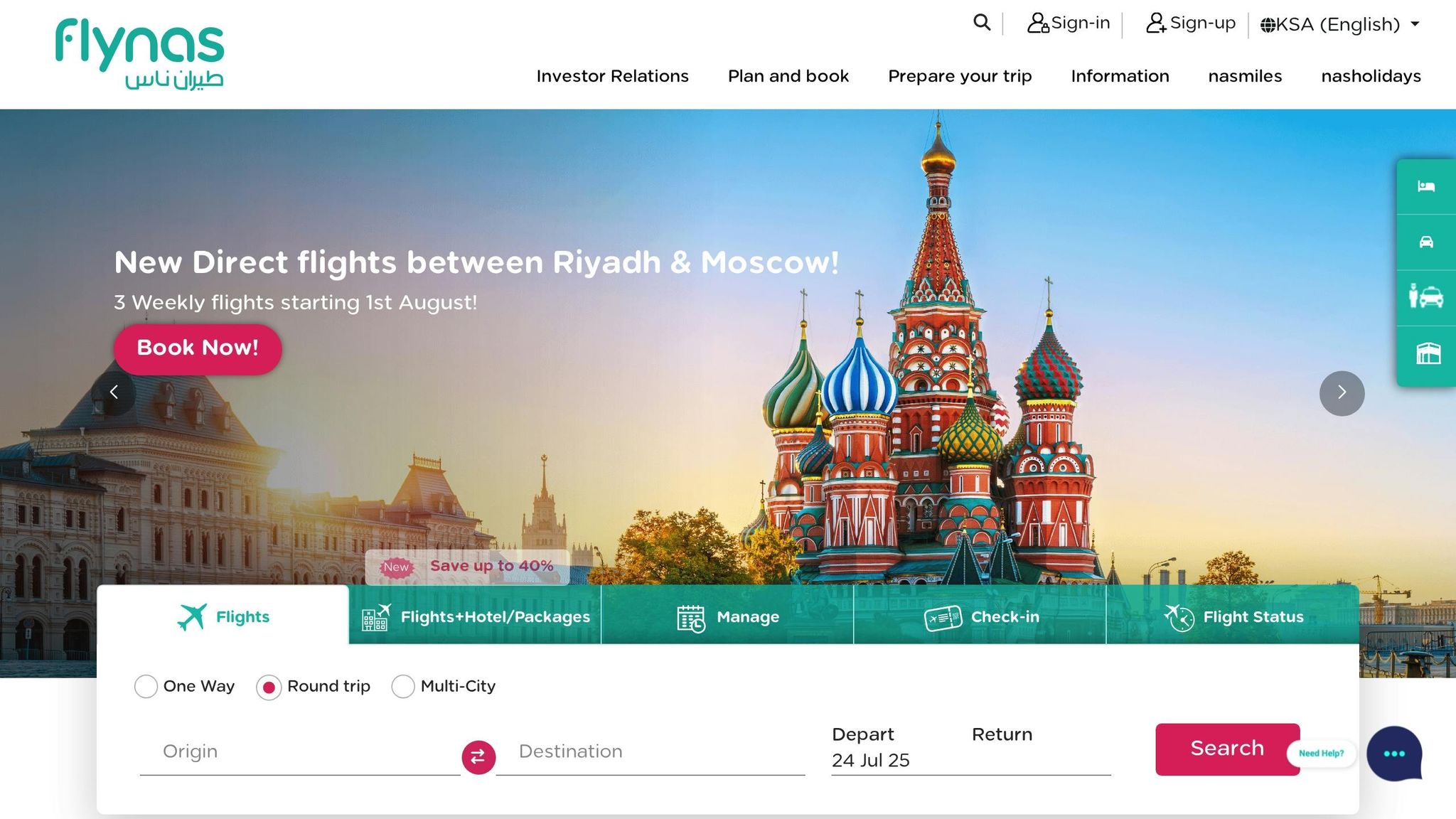
1. Flynas
Established in 2007, Flynas has grown into one of Saudi Arabia’s top low-cost airlines, known for its extensive route network and budget-friendly fares. The airline plays a key role in connecting travelers both within the Kingdom and internationally.
Route Network and Destinations
Flynas operates an impressive schedule of over 2,000 weekly flights, linking passengers to more than 70 destinations. These include 15 domestic and 60 international locations spread across 35 countries. Its main hubs are King Abdulaziz International Airport (JED) in Jeddah, King Khalid International Airport (RUH) in Riyadh, and King Fahd International Airport (DMM).
On May 30, 2025, Flynas announced the launch of direct flights between Riyadh and Damascus, with service starting on June 5, 2025. This move aligns with Saudi Arabia’s Vision 2030 aviation goals, which aim to boost regional connectivity, accommodate 330 million passengers annually, and improve access to the Kingdom’s key cultural and religious sites.
“We are glad to resume our flights to Syria. Flynas has always been a pioneer in providing air routes between the Kingdom and various Syrian cities… Now we are returning to resume our operations in the Syrian capital.” – Bander Almohanna, CEO and Managing Director of Flynas
Affordable Fares and Pricing Approach
Flynas is widely recognized for its budget-friendly fares, offering essential services at competitive prices. Round-trip tickets start at just 69 SAR ($18), making air travel accessible to a wide range of passengers. On popular international routes, prices are equally appealing, with one-way fares like Dubai–Riyadh starting at 239 AED (around $65) and Jeddah–Abu Dhabi at 365 AED (around $99).
The airline’s cost-efficient operations are supported by its modern fleet of 64 aircraft, including Airbus A320neo jets, which are known for their fuel efficiency. This helps Flynas maintain low operational costs and pass the savings on to its customers.
“We pride ourselves being the first airline in the Kingdom to offer our customers the lowest daily fares, making us the biggest airline in Saudi Arabia providing everyday low prices on all our tickets to everyone of our destinations.” – Flynas
Flynas also offers optional add-ons like pre-ordered meals and additional baggage, allowing passengers to tailor their travel experience without inflating the base ticket price. This approach ensures affordability while providing flexibility for travelers.
Enhancing the Passenger Experience
Flynas leverages technology to simplify travel for its customers. On August 13, 2024, the airline introduced a new mobile app packed with features like flight tracking, document management, and streamlined check-in options. It also expanded payment methods, making it easier for passengers to book and manage their trips. Through its “Manage your Booking” feature, travelers can choose seats, add baggage, or even purchase travel insurance with ease.
Having served over 80 million passengers to date, Flynas is celebrated for its reliability and customer-focused services. In the first half of 2024 alone, the airline transported 7 million passengers – a 47% increase fueled by its growing network and fleet upgrades. This commitment to convenience and efficiency highlights its role in reshaping the regional low-cost carrier landscape.
2. Air Arabia
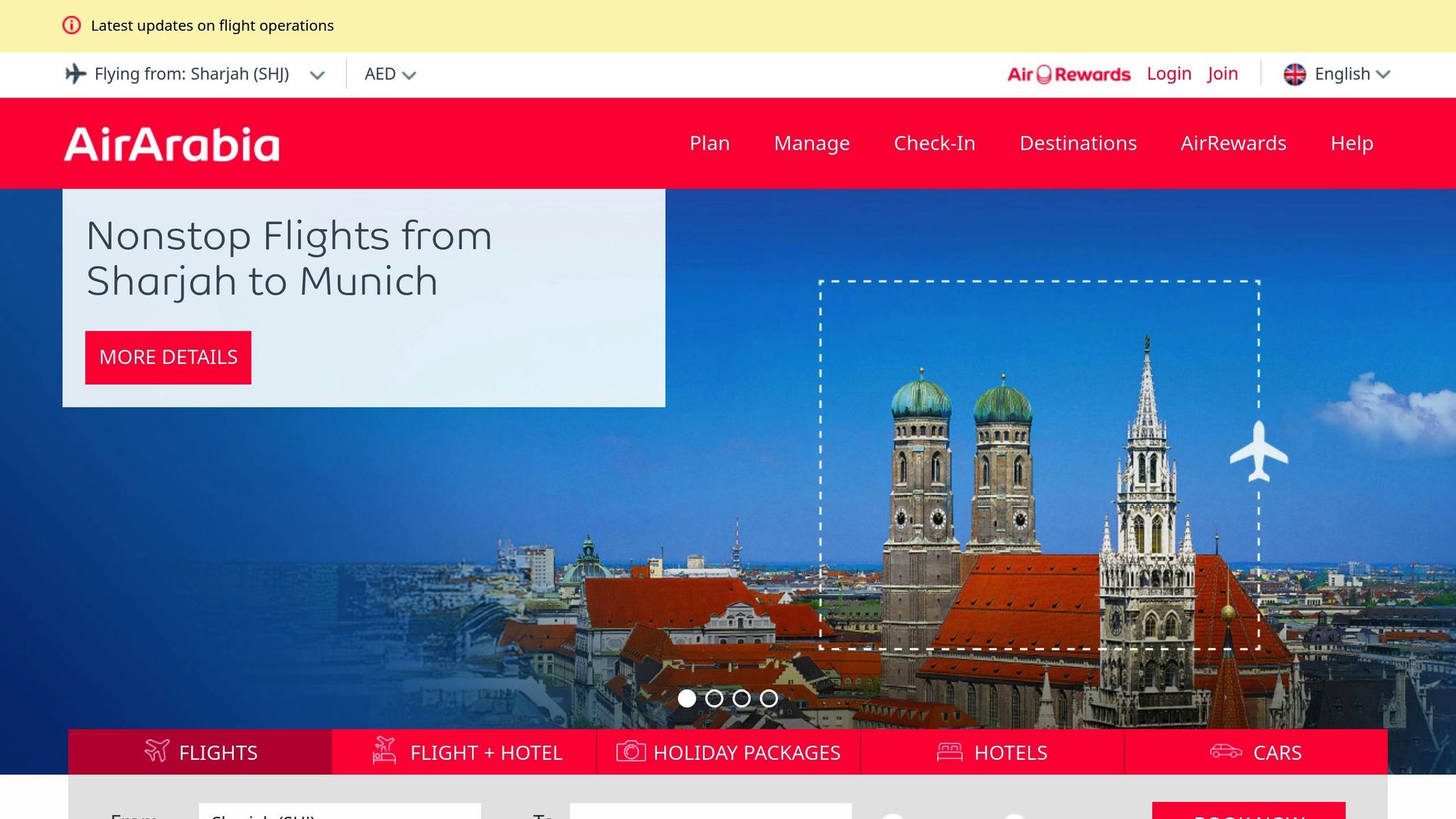
As the first low-cost airline in the Middle East, Air Arabia has reshaped air travel in the region by making it more affordable. Over the years, the airline has expanded its network across continents while staying true to its budget-friendly approach. Let’s take a closer look at its growing network and pricing strategies.
Route Network and Destinations
Air Arabia operates an impressive 170 routes, including 2 domestic and 90 international destinations across 38 countries. These routes are managed through six hubs located in Sharjah, Ras Al Khaimah, Casablanca, Alexandria, Abu Dhabi, and Karachi.
In July 2025, the airline resumed direct flights between Sharjah and Damascus, offering double-daily non-stop services. Additionally, Air Arabia is establishing a new low-cost subsidiary in Dammam, Saudi Arabia, which will operate 81 routes – 24 domestic and 57 international. Air Arabia Abu Dhabi also introduced a seasonal route from Abu Dhabi to Giza, Egypt, with three weekly flights running from June 26 to September 11.
Pricing Strategy and Affordability
Air Arabia’s low-cost model thrives on strategies like early booking discounts, dynamic pricing, and the Airewards loyalty program. Travelers who plan ahead can benefit from reduced fares, while flexible flyers can take advantage of the variable pricing structure. The Airewards program allows frequent travelers to earn points that can be redeemed for future discounts, adding more value to their journeys. For budget-conscious passengers, connecting flights often provide a cheaper alternative to direct routes.
Service Highlights and Customer Experience
Air Arabia’s focus on affordability and efficiency has earned it recognition, including the title of “Low-cost Airline of the Year” in 2023. Passengers frequently praise the airline for its competitive pricing, punctuality, and courteous service. This success reflects the broader growth of low-cost carriers in the Middle East. Low-cost carriers now account for 29% of the region’s total capacity – up from just 13% in 2014 – with an annual growth rate of 11.5% over the last decade.
3. flydubai
Headquartered in Dubai and established in June 2009, flydubai has become a major player in the low-cost airline market. It has reshaped travel in the region by introducing direct connections to destinations that previously lacked links to Dubai.
Route Network and Destinations
flydubai operates flights to 138 destinations across 58 countries, spanning Africa, Central Asia, the Caucasus, Europe, the GCC, and South Asia. Since its inception, the airline has transported more than 120 million passengers and launched over 100 new direct routes.
In April 2025, the airline expanded its seasonal offerings, adding flights to 11 cities. This includes new routes to Antalya and Al Alamein, which began in June 2025, alongside other destinations offered on limited schedules.
| Destination | Country | Operating Period | Frequency | Economy Fare | Business Fare |
|---|---|---|---|---|---|
| Trabzon | Turkey | June 4 – August 31 | Daily | $386 | $3,294 |
| Batumi | Georgia | June 5 – August 31 | 5 weekly | $384 | $1,335 |
| Antalya | Turkey | June 5 – September 30 | Daily | $440 | $2,180 |
| Al Alamein | Egypt | June 21 – September 7 | Daily | $515 | $1,255 |
| Corfu | Greece | June 4 – August 30 | 2 weekly | $832 | $2,813 |
This expansion aligns with flydubai’s strategy of using dynamic pricing to remain competitive and cater to a diverse range of travelers.
Pricing Strategy and Affordability
flydubai focuses on offering flexible and budget-friendly options. Its dynamic pricing model ensures competitive fares by charging a lower base price and allowing passengers to pay separately for extras like meals, drinks, and additional baggage.
The airline offers four fare categories to suit different needs:
- Lite: Includes only hand baggage.
- Value: Adds 20 kg of checked baggage and meals.
- Flex: Offers 30 kg of baggage and free seat selection.
- Business: Provides premium service, 40 kg of baggage, and full flexibility.
For added savings, travelers can purchase excess baggage online at up to 70% less than airport rates. Pre-booking meals also allows passengers to enjoy better options at lower prices. These options reflect flydubai’s commitment to combining affordability with convenience.
Service Highlights and Customer Experience
flydubai operates a fleet of 89 Boeing 737 aircraft, equipped with the Boeing Sky Interior to improve cabin comfort and minimize jet lag. Passengers can enjoy a range of in-flight entertainment, comfortable seating, and complimentary meals on select fares.
Business Class passengers receive additional perks, including priority check-in, lounge access, and personalized service. The airline also offers flydubai Holidays, a one-stop solution for booking flights, hotels, and activities in a single transaction. Through its partnership with Emirates, flydubai extends its connectivity beyond its own network, offering travelers even more options.
For those seeking assistance with bookings, Flight Booking 247 provides around-the-clock personalized support to help secure the best fares and travel arrangements.
4. flyadeal
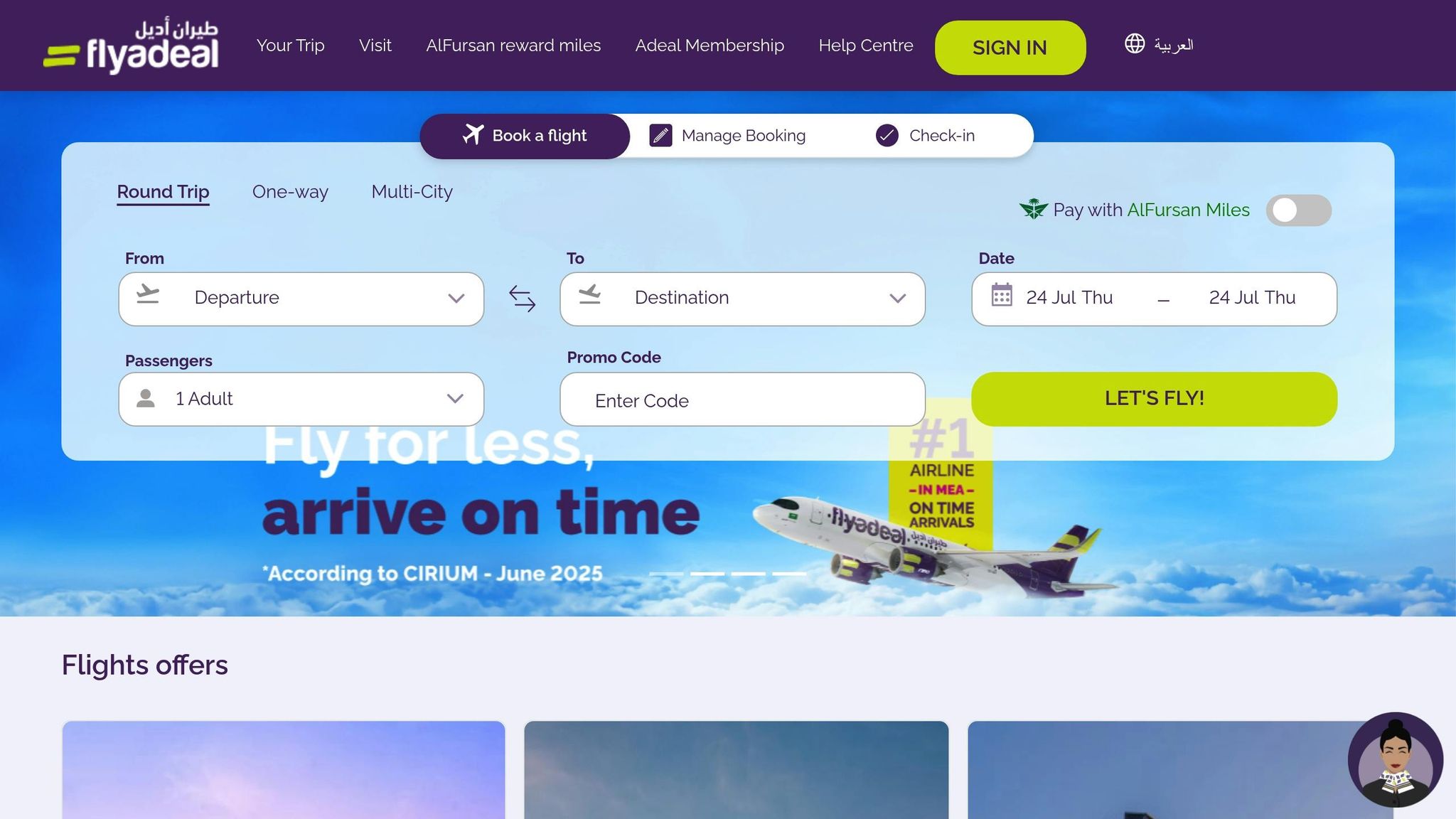
flyadeal, Saudi Arabia’s first airline built with a digital-first mindset, focuses on offering budget-friendly travel options across the Middle East. Since its launch, the airline has flown over 30 million passengers and sold an impressive 10,000 tickets on its very first day of operations.
Route Network and Destinations
The airline operates from three main hubs – Dammam, Jeddah, and Riyadh – serving 18 domestic destinations and 16 international destinations across 11 countries as of July 2025. Its fleet of 37 Airbus A320 aircraft connects passengers to locations throughout the Middle East, Europe, and South Asia.
In January 2025, flyadeal introduced new domestic and international routes, signaling its ambitious plans to grow. By 2030, the airline aims to triple its reach, targeting over 100 destinations and expanding its fleet to 100 aircraft. CEO Steven Greenway highlighted these goals, saying:
“As more aircraft join flyadeal’s fleet during 2025, we will continue to inject additional capacity into our three bases with new routes and extra frequencies, part of a system wide expansion plan over the next 12 months.”
Domestically, flyadeal is enhancing connectivity within Saudi Arabia, adding new destinations like Al Jouf, Gurayat, and Arar in the northern provinces starting March 30, 2025. This expansion aligns with the airline’s efficient cost management strategy.
Pricing Strategy and Affordability
flyadeal’s low-cost model is built on simplicity. The airline operates an all-Economy Class cabin across its fleet, eliminating the complications of multiple service classes. This approach allows it to focus on keeping fares affordable for leisure, religious, family, and business travelers.
With a young, tech-savvy population in Saudi Arabia – where 80% of residents are under 40 – flyadeal has embraced a digital-first booking experience.
One standout feature is the “Hold Fare” service, which lets customers lock in ticket prices for up to 24 hours. The service costs $6.67 (SAR 25) for departures more than 30 days away, or $10.67 (SAR 40) for travel within five to 30 days. Explaining the feature, Abdullah Adel Alahmadi, Ancillary Product Manager, noted:
“Customers seek flexible options for informed decisions. By having a reserve fare option for a selected trip provides peace of mind that the price remains intact and flights won’t sell out giving customers more time to decide on a purchase.”
Service Highlights and Customer Experience
flyadeal has made significant investments in improving its digital customer service, including expanding its contact center for faster, more dependable support. Self-service options through its Help Centre enable passengers to manage bookings, add services, and access details like baggage allowances.
The airline also caters to passengers with special needs, offering services for wheelchair users and those with visual or hearing impairments. Another convenience is the “flyAhead” service, which provides greater flexibility for travelers adjusting their plans.
Religious travel is a key focus for flyadeal, with plans to increase the frequency of Umrah flights year-round. The airline has also strengthened its routes to Egypt, now operating 69 weekly flights between the two countries, including new services to Alexandria.
During peak travel seasons, flyadeal adapts by offering 13 routes to six summer destinations, catering to increased demand over a 10-week holiday period. CEO Steven Greenway emphasized the airline’s strategic approach:
“Expanding our domestic and international networks has been the focus of our planning team in recent months to provide leisure and business travellers with more choice, options and, more importantly, greater air connectivity.”
For those needing personalized assistance, Flight Booking 247 offers round-the-clock support to help passengers secure the best fares and manage their travel plans with flyadeal and other regional carriers. By embracing digital-first solutions and flexible travel options, flyadeal is setting a benchmark for affordable air travel in the region.
5. Jazeera Airways
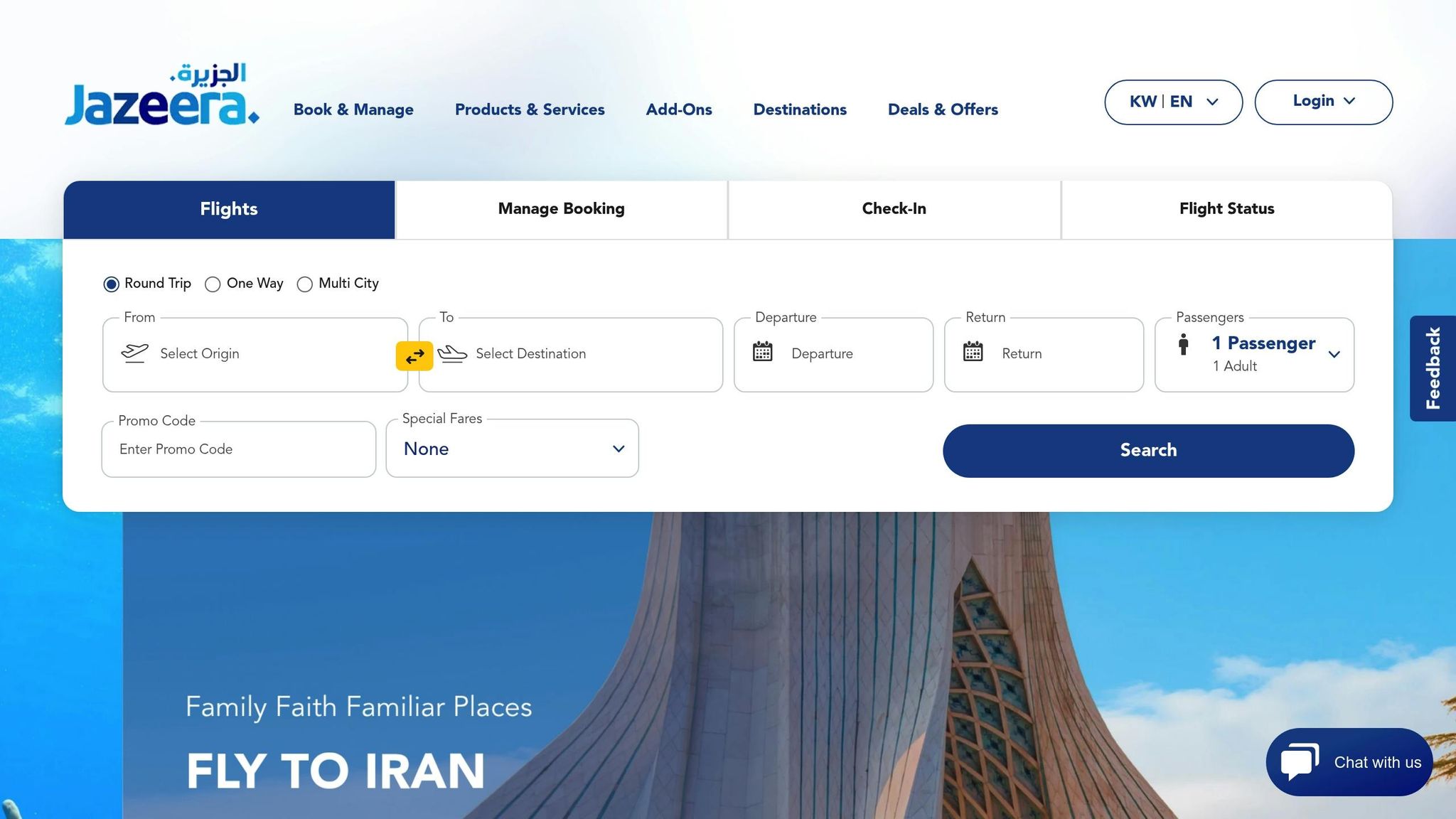
Jazeera Airways, based in Kuwait, is a top player among low-cost airlines, flying over 5 million passengers each year. With a modern fleet of 24 Airbus A320ceo/neo aircraft, the airline plans to expand its fleet by adding 26 more planes starting in 2027.
Route Network and Destinations
Operating out of Terminal T5 at Kuwait International Airport, Jazeera Airways connects passengers to more than 60 destinations across the Middle East, Central and South Asia, Africa, and Europe. Among its offerings is a seasonal direct route to Abha, Saudi Arabia, which operates three times a week from July 15 to September 2025. This route also facilitates smooth connections into Saudi Arabia via Kuwait.
CEO Barathan Pasupathi shared his enthusiasm about this service:
“We are excited to bring back our seasonal service to the beautiful city of Abha – a destination that offers refreshing mountain breezes, breathtaking natural landscapes, and a rich cultural heritage, making it an ideal getaway for summer travelers across the region.”
The airline is also gearing up to resume flights to Damascus in August 2025 while adding new destinations like Yerevan, Sochi, and Hurghada to its expanding network.
Pricing Strategy and Affordability
Jazeera Airways sticks to a low-cost model but ensures quality remains intact. It caters to a wide variety of travelers, including those on business, leisure, religious journeys, or weekend trips. Thanks to its fuel-efficient fleet, the airline keeps operational costs low and passes the savings on to its customers. Chief Commercial Officer Paul Carroll emphasized:
“We’re pleased to offer a wide range of travel options that are both affordable and convenient, helping bring people closer to the moments that matter most.”
The airline frequently rolls out special promotions. For example, in July 2025, it offered a 25% discount on fares for several routes, valid for travel between September 15 and December 31, 2025. Carroll highlighted the initiative:
“The 25% discount reflects Jazeera Airways’ ongoing commitment to making travel more accessible, while opening up a world of opportunities for adventure, culture and connection.”
Travelers can take advantage of these offers by subscribing to newsletters, following the airline’s social media channels, or booking trips well in advance. These strategies align with the company’s focus on improving customer service through technology.
Service Highlights and Customer Experience
Jazeera Airways is heavily investing in technology to elevate the passenger experience. In July 2025, the airline introduced an AI-driven Customer Experience Platform developed by LitmusWorld. This system collects real-time feedback through SMS, WhatsApp, email, social media, and call centers, focusing on key touchpoints like booking and online check-in. The platform also features a dynamic Net Promoter Score (NPS) system, allowing Jazeera Airways to address service issues promptly.
CEO Barathan Pasupathi highlighted the initiative:
“Customer feedback is no longer just a metric – it’s the compass guiding our commitment to delivering exceptional travel experiences.”
The LitmusWorld platform, which reaches over a billion customers globally, has already provided valuable insights for the airline. Pasupathi further explained:
“We selected LitmusWorld for their globally trusted NPS platform, which reaches over a billion customers. The successful rollout has already yielded valuable insights, and with additional modules launching later this year, we are shaping a customer experience program that is both dynamic and deeply responsive to our passengers’ needs.”
For those needing assistance with bookings or travel arrangements, Flight Booking 247 offers round-the-clock support to help secure the best deals and simplify the planning process.
Airline Comparison Table
Below is a quick overview of key metrics and sample fares for the top five Middle Eastern low-cost carriers:
| Airline | Main Hub | Destinations | Fleet Size | Domestic Fare (USD) | International Fare (USD) | Key Service Features |
|---|---|---|---|---|---|---|
| Flynas | Riyadh (RUH) | 70+ destinations in 30 countries | – | $117 (Riyadh–Jeddah) | $295 (Delhi–Dubai route) | Operates 139 routes with over 2,000 weekly flights |
| Air Arabia | – | – | – | – | – | One of the top 5 low-cost airlines in the region |
| flydubai | Dubai (DXB) | – | – | – | – | Handles 13% of DXB’s passenger traffic and 25% of aircraft movements |
| flyadeal | – | – | – | – | – | – |
| Jazeera Airways | – | – | – | – | – | – |
This table highlights the operational strengths and fare strategies of these carriers, offering a snapshot of the competitive dynamics in the Middle Eastern low-cost airline market.
Flynas emerges as a standout player, boasting the most extensive network in the region. With 139 routes connecting over 70 destinations across 30 countries, Flynas operates more than 2,000 weekly flights. Its consistent performance has earned it recognition as the region’s leading low-cost carrier.
At Dubai International Airport, which served over 92 million passengers in 2024, flydubai played a significant role, accounting for 13% of the airport’s passenger traffic and 25% of its aircraft movements. This underscores flydubai’s pivotal role in the region’s aviation ecosystem.
Seasonal pricing trends are also worth noting. Fare prices typically spike by 40–50% during peak summer months like June and July compared to the quieter travel periods in January and September. This pattern provides valuable insights for budget-conscious travelers planning their trips.
For those looking to book flights or compare live fares, Flight Booking 247 offers round-the-clock assistance to help travelers find the best deals and navigate booking options with ease.
Conclusion
Over the past decade, the Middle Eastern low-cost airline market has seen remarkable growth, doubling its share from 13% to an impressive 29%. These five carriers have become the cornerstone of affordable air travel in the region, offering budget-friendly options while maintaining extensive route networks that link travelers to a variety of destinations.
Among them, Flynas has emerged as a standout leader. CEO Bander Almohanna highlighted their achievements, stating:
“We take great pride in being ranked the top low-cost airline in the Middle East for the eighth consecutive year and among the top 10 low-cost airlines worldwide. This achievement reflects the Kingdom’s leadership in the aviation industry and our dedication to delivering a high-quality travel experience to our valued guests.”
This recognition underscores the growing appeal and success of the low-cost carrier (LCC) model in the region. By focusing on affordability and efficiency, these airlines continue to attract a broad customer base. Air Arabia’s CEO, Adel Ali, explained the key to their success:
“Once you prove to people it’s a sustainable business, with good aircraft and good prices, it tends to work. People like it. You stimulate a new market.”
The region’s compact geography plays a significant role in enhancing the efficiency of these carriers, allowing for multiple daily flights on high-demand routes. This combination of affordability, reliability, and convenience has firmly established low-cost airlines as a vital part of the Middle Eastern aviation landscape.
FAQs
How do low-cost airlines in the Middle East keep fares affordable while growing their networks?
Low-cost airlines in the Middle East manage to keep ticket prices affordable by employing smart strategies. They optimize flight routes, operate in less crowded airspaces, and focus on popular regional destinations. These measures help them cut down on operational expenses while staying competitive in the market.
On top of that, these airlines simplify their services by offering optional extras like checked baggage and in-flight meals. This “pay-for-what-you-need” model appeals to budget-conscious travelers while giving airlines the flexibility to grow and reach new destinations.
What unique features do Middle Eastern low-cost airlines offer to improve the travel experience?
Middle Eastern low-cost airlines have carved a niche by blending comfort with affordability. Many of these carriers offer spacious seating, featuring ample seat pitch, and provide wallet-friendly options for upgrading to extra legroom. This focus on passenger comfort sets them apart in the budget airline market.
On top of that, the service quality is often a standout feature. Airlines like flynas have earned recognition across the region for their consistent dedication to excellence. These carriers also make travel more accessible by offering connections to a broad range of destinations at competitive prices – all without cutting corners on comfort or service.
How have low-cost airlines changed travel and accessibility in the Middle East?
Low-cost airlines have transformed the travel landscape in the Middle East, making air travel more accessible and budget-friendly. By lowering ticket prices, these airlines have opened the door to both domestic and international travel for a wider audience. This affordability has spurred tourism and contributed to economic growth throughout the region. For many budget-conscious travelers, frequent trips to destinations that once felt out of reach are now within their grasp.
These airlines have also expanded connectivity, reaching smaller cities and developing markets that were often overlooked. This increased access is reshaping air travel, breaking down barriers and offering more people the chance to explore, regardless of their background or income level.