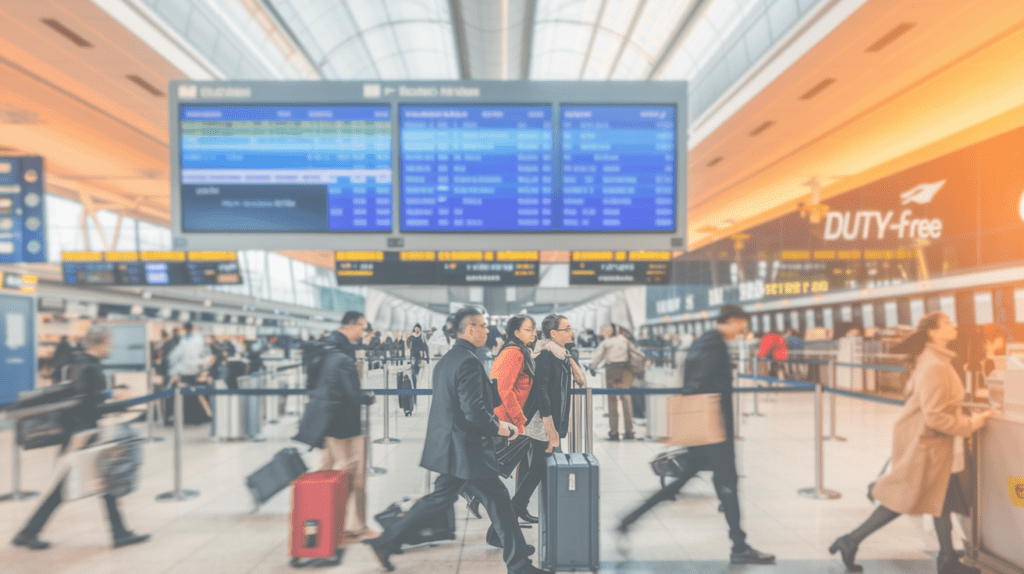
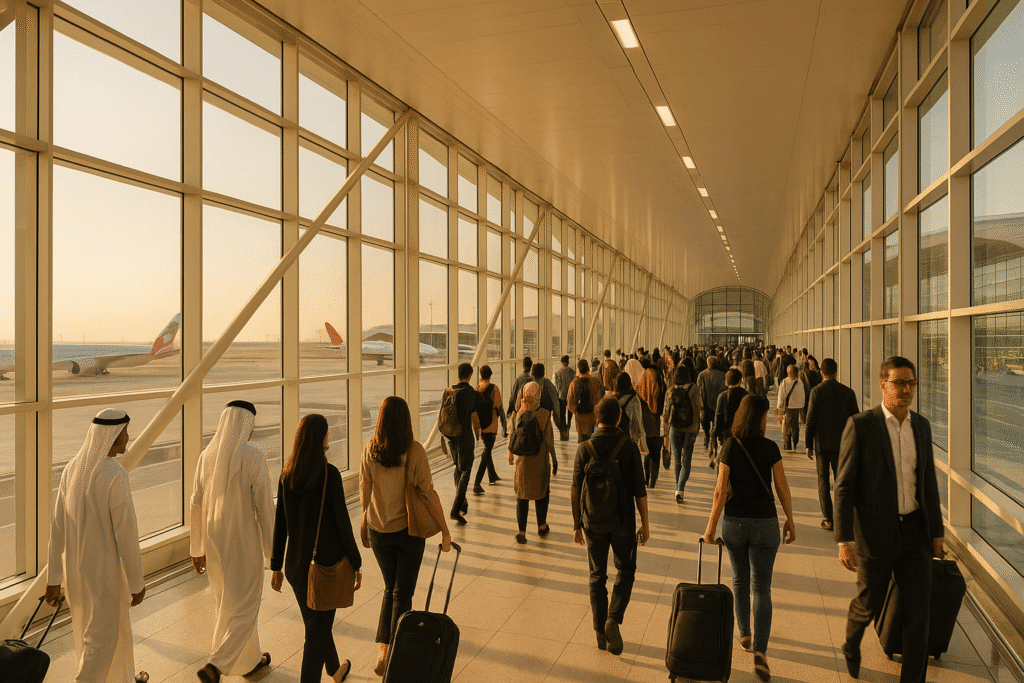
Middle Eastern airports are set to become global leaders in passenger traffic by 2040. Here’s why:
- Passenger numbers are expected to grow faster than the global average over the next 15 years.
- Key drivers include billions in infrastructure investments, a prime geographic location connecting Europe, Asia, and Africa, and increased demand for air travel.
- Major airports like Dubai International (DXB), Hamad International (Doha), and King Khalid International (Riyadh) are expanding capacity and modernizing facilities.
Dubai’s $35BN Airport Expansion Is Mind Blowing
Current Middle East Airport Passenger Traffic (2024 Data)
The Middle East’s aviation sector has made a strong comeback in 2024, shaking off pandemic-related setbacks and even surpassing pre-pandemic passenger levels at many major airports. Transit passengers remain a cornerstone of this growth, highlighting the region’s role as a global hub where continents connect effortlessly. This resurgence is evident not only in passenger numbers but also in the strategic upgrades and developments taking place across key airports.
Major Airports and Current Capacities
Dubai International (DXB) has led the charge in 2024, exceeding its pre-pandemic performance and initiating new capacity expansion projects. Hamad International Airport in Doha also saw an impressive surge, with passenger traffic well above 2019 levels. In Riyadh, King Khalid International Airport experienced significant growth, driven by initiatives to position the city as a major global aviation hub. Meanwhile, Abu Dhabi International Airport has nearly returned to pre-pandemic levels, aided by terminal upgrades that have boosted efficiency. Kuwait International Airport continues its steady recovery, supported by a new terminal that enhances both capacity and traveler experience.
Across the board, these major hubs are investing in expansions and advanced technology to sustain their momentum and prepare for future growth.
Regional Recovery and Growth Patterns
Airports across the Middle East have bounced back faster than many other regions worldwide. This rapid recovery has been fueled by several factors: the quick revival of domestic travel within Gulf Cooperation Council countries, a strong rebound in international transit traffic, and steady growth in cargo operations. The Middle East’s emerging role as a global logistics hub has further reinforced this trend.
Governments in the region have played a key role by continuing to invest in aviation infrastructure, restoring traveler confidence, and ensuring long-term capacity improvements. Airlines have matched this demand by expanding their route networks and introducing new services, solidifying the Middle East’s position as a vital hub for global air travel. These efforts are laying the groundwork for sustained growth in the years ahead.
Passenger Growth Projections: 2025–2040
As the Middle East’s aviation sector builds on its strong recovery in 2024, the region is poised for a surge in passenger numbers that could redefine global travel trends. Thanks to its strategic location and ongoing efforts to diversify economies, this growth is expected to make the Middle East a key player in international aviation. Here’s a closer look at the projected annual growth and passenger volume increases.
Growth Rate and Passenger Volume Forecasts
Passenger numbers in Middle Eastern airports are set to grow faster than the global average. This upward trend is fueled by a mix of factors, including increasing demand from both business and leisure travelers, large-scale economic diversification plans, and the region’s prime position as a transit hub connecting continents.
Major Airport Growth Comparisons
The growth outlook highlights varying trajectories for the region’s key airports, each shaped by local strategies and infrastructure upgrades. Major hubs are scaling up operations to handle the expected traffic boom, while others focus on boosting connectivity and improving service standards. These efforts reflect a shared goal: to keep the Middle East’s aviation network competitive on the global stage.
These projections are not just numbers – they’re driving significant investments in infrastructure and guiding government policies that will define the future of aviation in the region through 2040.
Government Investments and Infrastructure Projects
Governments across the Middle East are stepping up to meet the region’s growing air travel needs by pouring resources into airport upgrades and expansions. These projects aim to turn regional airports into modern, efficient, and traveler-friendly hubs that can handle the rising demand for years to come. This approach aligns with previously outlined strategies, ensuring that airport capacity keeps pace with future traffic forecasts. It’s a clear signal of the region’s dedication to staying at the forefront of global aviation.
Expanding Capacity and Modernizing Facilities
Efforts to expand airport capacity and modernize existing infrastructure are well underway. These initiatives include building new terminals, extending runways, and integrating cutting-edge digital tools to make airport operations smoother and more efficient. The ultimate goal? To streamline processes and offer passengers a better travel experience from start to finish.
Timelines and What’s Ahead
These infrastructure upgrades are being rolled out in phases over the next decade, carefully timed to align with peak passenger growth. Once completed, these improvements will reduce processing times, enhance punctuality, and increase service reliability. On top of that, upgrades in cargo handling, maintenance, and ground support will strengthen the region’s position as a key global transit hub.
Impact on Flight Booking and Travel Services
With Middle Eastern airports undergoing significant upgrades, travel service providers are racing to adapt their systems to handle the surge in passenger traffic. These modernized hubs are transforming how people book and manage flights, pushing the travel industry to evolve rapidly. Over the next 15 years, millions more passengers are expected to pass through these airports, driving the need for real-time support and personalized service. The new, tech-forward terminals not only streamline airport operations but also enable travel services to deliver faster and more tailored assistance.
Growing Demand for Real-Time Travel Solutions
As airports like Dubai International and Hamad International accommodate record-breaking passenger numbers, travelers are encountering increasingly complex booking situations. Frequent changes in flight schedules and pricing make quick adjustments a necessity.
Take, for instance, a traveler whose connecting flight through Dubai is delayed. In such cases, having access to a concierge service that can instantly explore options across multiple airlines is invaluable. Companies like Flight Booking 247 provide 24/7 live support, ensuring passengers can secure alternative arrangements without the frustration of long hold times. This kind of immediate assistance is becoming a lifeline for navigating disruptions and maintaining travel plans.
Improving Passenger Convenience and Connectivity
Modernized terminals across the Middle East are also boosting passenger convenience by enhancing digital integration and connectivity. These improvements allow travel services to provide real-time updates and personalized support, making the overall journey smoother.
For example, navigating sprawling hubs like Dubai International can be daunting, especially for passengers with tight connections. Personalized concierge services that offer step-by-step guidance, updated gate information, and alternative travel options can significantly reduce stress. These services are particularly valuable for business travelers and frequent flyers who rely on efficiency.
Enhanced connectivity also strengthens coordination between travel services and airport operations. Real-time data sharing ensures that travel concierges have up-to-the-minute information on delays, gate changes, and flight alternatives. This proactive approach allows them to resolve issues before they escalate, saving time and reducing hassles for passengers.
For those navigating these bustling airport hubs, features like no hold time – offered by services such as Flight Booking 247 – are a game-changer. By addressing disruptions quickly and efficiently, these services enhance the travel experience and ensure passengers can stay on schedule with minimal inconvenience.
Conclusion: Middle East Passenger Growth Summary
The Middle East is gearing up for a remarkable transformation in aviation over the next 15 years. This growth is fueled by strategic government investments, large-scale infrastructure upgrades, and the region’s strategic position as a key link between Asia, Europe, and Africa.
Leading the charge are major hubs like Dubai International, Hamad International in Doha, and King Abdulaziz International in Jeddah. These airports are undergoing significant expansions, focusing on terminal upgrades and boosting capacity. Beyond just accommodating more passengers, these upgrades are integrating advanced technology to create smarter, more efficient travel environments.
However, with rising passenger numbers comes increased complexity – more frequent travel disruptions and intricate schedules. This creates both hurdles and opportunities. To meet these demands, advanced travel solutions are stepping up to enhance the passenger experience. Services like Flight Booking 247’s round-the-clock concierge support are setting the standard, offering travelers immediate, tailored assistance to navigate the challenges of these busy hubs.
As the Middle East’s airports continue their rapid growth through 2040, the travel industry must adapt to keep pace. The next 15 years hold the potential to redefine travel in the region, building systems that not only handle the surge in passenger volumes but also elevate the overall journey.
FAQs
What is driving the rapid increase in passenger numbers at Middle Eastern airports by 2040?
Middle Eastern airports are gearing up for a major transformation, with passenger numbers projected to soar by 2040. Backed by $151 billion in government investments, these airports are expanding their capacity and modernizing infrastructure to meet future demands. Among these upgrades are improved terminals designed to handle an estimated 1.1 billion travelers each year.
This surge in air travel is being driven by the region’s economic growth and a growing demand for connectivity. Strategic enhancements to aviation infrastructure are also playing a key role, ensuring these airports are ready to manage the rising passenger traffic smoothly and efficiently.
How are Middle Eastern airports gearing up for the anticipated surge in passenger traffic by 2040?
Middle Eastern Airports Gear Up for Massive Passenger Growth
Middle Eastern airports are gearing up to handle a staggering 300% increase in passenger traffic by 2040, pouring $151 billion into infrastructure upgrades and expansion projects. This includes building cutting-edge terminals, upgrading existing facilities, and improving operational systems to keep pace with the surge in demand. One standout example is Kuwait’s upcoming triangular terminal, slated to open by 2025, which is designed to accommodate up to 50 million passengers annually.
To make these ambitious plans a reality, the region is actively inviting private sector involvement and promoting public-private partnerships. These initiatives aim to create world-class travel hubs that can efficiently manage the anticipated rise in travelers over the next two decades.
How are government investments and infrastructure upgrades shaping the future of Middle Eastern airports?
Government funding and infrastructure improvements are playing a major role in shaping the future of aviation across the Middle East. With passenger traffic expected to surge by 300%, reaching an astounding 1.1 billion travelers annually by 2040, the region will require around $151 billion for airport expansions and modernization efforts.
These investments aim to boost capacity, integrate advanced technologies, and streamline operations. Many of these projects are tied to national development strategies and often rely on public-private partnerships. This approach not only attracts private investment but also eases the financial strain on governments. Such initiatives are essential to keep Middle Eastern airports globally competitive and capable of managing the booming demand for air travel in the region.