
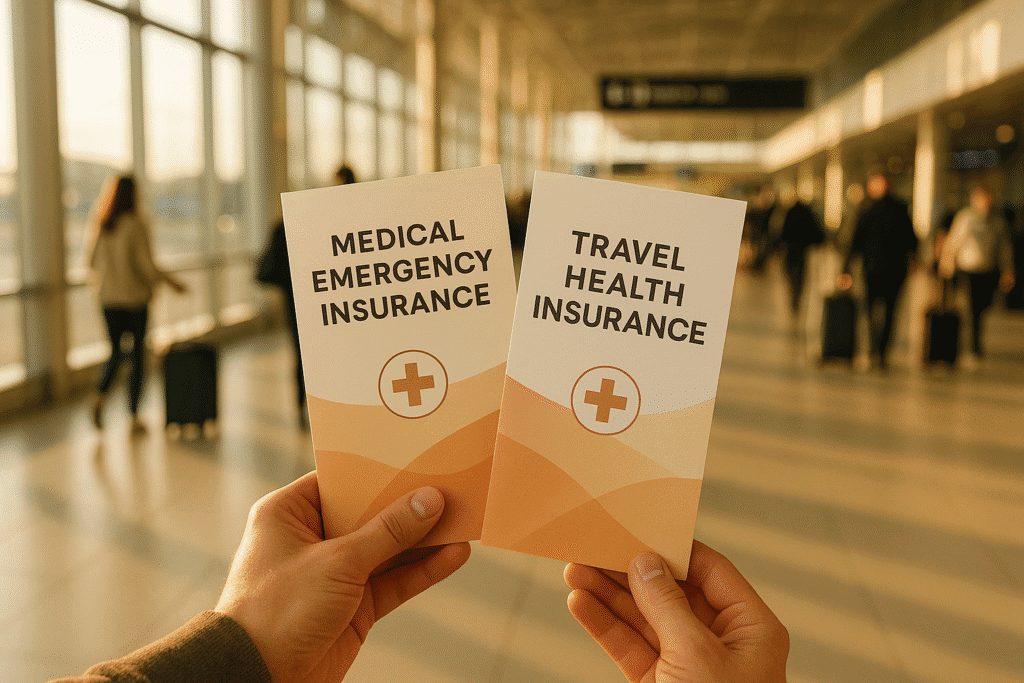
Medical emergencies abroad can cost thousands, and most U.S. health insurance plans, including Medicare, don’t cover care outside the country. That’s why travelers often choose between medical emergency insurance and travel health insurance. Here’s the difference:
- Medical Emergency Insurance: Focuses on urgent, unexpected medical issues during short trips. Covers hospital stays, surgeries, and medical evacuations but usually excludes pre-existing conditions and routine care.
- Travel Health Insurance: Offers broader coverage, including emergency and routine care, for longer stays. It may cover pre-existing conditions, ongoing treatments, and even dental or maternity care.
Quick Comparison
| Feature | Medical Emergency Insurance | Travel Health Insurance |
|---|---|---|
| Duration | Short-term (up to 6 months) | Long-term (up to 12+ months) |
| Coverage Focus | Emergencies only | Emergencies + routine care |
| Pre-existing Conditions | Rarely covered | Often included |
| Cost | ~5.3% of trip cost | ~6% of trip cost |
| Best For | Short vacations, business trips | Long stays, expats, digital nomads |
Key takeaway: Choose based on your trip length and medical needs. Short trips? Medical emergency insurance. Longer stays? Travel health insurance.
Do you need Expat International Medical Insurance or Travel Insurance?
What Is Medical Emergency Insurance?
Medical emergency insurance is a type of coverage specifically designed to handle unexpected medical emergencies that arise while you’re traveling abroad. Unlike broader travel insurance policies, this coverage zeroes in on urgent medical expenses during international trips.
If you suddenly fall ill or get injured, this insurance steps in to cover immediate medical costs – even in cases where local healthcare providers demand payment upfront. As the U.S. Department of State explains, this is crucial because “many foreign medical facilities and providers require cash payment up front and do not accept U.S. insurance plans. Medicare does not provide coverage outside of the United States”.
Beyond financial protection, medical emergency insurance offers emergency assistance services to help travelers navigate challenges like language barriers and unfamiliar healthcare systems. These features make it distinct from more comprehensive travel insurance plans, serving as a focused solution for urgent medical needs.
Coverage and Benefits
Medical emergency insurance reimburses costs for unplanned, urgent medical care during your trip. It activates when a sudden, unexpected condition arises that requires immediate treatment to prevent serious harm.
What’s Covered:
- Emergency medical treatment: Includes hospital stays, surgeries, doctor visits, and prescription medications. Coverage limits typically range from $50,000 to $2,000,000, depending on the policy.
- Emergency dental care: Covers urgent dental issues, though limits are usually lower, ranging from $100 to $500.
- Medical evacuation: This is one of the most critical benefits, covering the cost of being transported to a medical facility, which can be extraordinarily expensive – sometimes exceeding $250,000 in remote areas. Coverage amounts often range from $500,000 to unlimited.
- Repatriation of remains: In the event of death while traveling, this benefit covers up to $50,000 for the return of remains or accidental death and dismemberment.
- 24/7 emergency assistance: Includes services like language interpretation and help with scheduling medical appointments. If you need a doctor in a foreign country, the assistance line connects you with professionals who can guide you to the appropriate care.
What’s Not Covered
While the coverage is extensive, there are certain exclusions to keep in mind:
- Pre-existing conditions: Unless explicitly included in the policy, these are generally not covered. For example, if a known health issue flares up during your trip, it may not qualify for reimbursement.
- Routine care: Regular check-ups, preventive services, and scheduled appointments are excluded since this insurance is geared toward emergencies only.
- Non-emergency pregnancy-related services: Typically not included.
- Mental health and risky activities: Coverage usually excludes mental health treatment, injuries from extreme sports, or those caused by drug or alcohol use.
- Travel against government advisories: Policies may not cover you if you travel to a country with a U.S. Department of State level 3 “reconsider travel” advisory issued within 60 days before your arrival. For instance, WorldTrips’ Atlas Travel policy excludes terrorism or political evacuation benefits under such circumstances.
Best For These Travelers
Medical emergency insurance is ideal for travelers who need focused health coverage without the extra costs of comprehensive travel insurance. It’s particularly suitable for:
- Short-term international travelers: Those on business trips or vacations who want essential medical protection.
- Adventure travelers: Especially those visiting remote areas where healthcare infrastructure is limited.
- Seniors: Travelers who prioritize robust medical coverage but don’t need additional trip-related benefits.
- Budget-conscious travelers: Those looking for essential health protection without paying for extras they won’t use.
- Travelers with existing trip protection: If your credit card or another source already provides some trip coverage, this insurance can fill the gap in medical protection that domestic health insurance may not cover abroad.
This targeted coverage ensures peace of mind for those who want to be prepared for the unexpected while traveling internationally.
What Is Travel Health Insurance?
Travel health insurance is a temporary policy designed to cover healthcare costs while you’re abroad. Unlike medical emergency insurance, which focuses solely on urgent situations, travel health insurance offers wider coverage, addressing both emergency and routine medical needs.
Dr. Margaret Wilson, chief medical officer of UnitedHealthcare Global, puts it simply: “Most domestic health plans provide limited coverage overseas and won’t cover prescriptions abroad”. Travel health insurance bridges this gap, ensuring you have access to medical care wherever you go. It can cover everything from routine doctor visits and prescriptions to ongoing treatments and, in some cases, pre-existing conditions. However, keep in mind that this type of insurance may involve medical underwriting and deductibles.
Coverage and Benefits
Travel health insurance is designed to handle both emergency and routine care. Standard coverage includes emergency medical expenses, hospital stays, doctor visits, prescription medications, and even emergency medical evacuations.
What makes travel health insurance stand out is its inclusion of routine healthcare services. For instance, you can schedule regular checkups, access mental health care, and fill prescriptions for ongoing treatments while abroad. This is especially useful for travelers who require consistent medical attention during their trips.
Coverage amounts are often more extensive compared to basic emergency-only policies. Medical expense coverage typically ranges between $50,000 and $500,000, while evacuation coverage can go from $500,000 to $1 million. Some plans even extend benefits to family members or provide support for a loved one to visit you if you’re hospitalized. This family-oriented feature is particularly helpful for longer-term travelers needing emotional or logistical support during medical situations.
On average, travel health insurance costs about 6% of your trip’s total cost, though seniors may face higher premiums.
Best For These Travelers
Travel health insurance is ideal for people spending months abroad, whether for work, adventure, or studying. It’s especially useful for travelers planning extended trips shorter than a year, individuals with pre-existing conditions, pregnant travelers, and those over 65.
Digital nomads and expats often consider this coverage essential. For example, Squaremouth recommends Seven Corners – Travel Medical USA for digital nomads in March 2025. This plan offers customizable coverage for travelers outside their home country, with flexible policy durations ranging from five to 364 days.
International students also benefit greatly. Unlike short-term tourists, students need continuous access to healthcare during their academic programs. Travel health insurance ensures they can manage both emergency and routine healthcare needs without financial strain.
Long-term business travelers are another group that relies on this coverage. For professionals spending months abroad on work assignments, having comprehensive healthcare coverage eliminates the stress of potential coverage gaps.
For many U.S. citizens, the reality can be a shock: most domestic health insurance plans don’t cover international medical expenses. A medical emergency overseas can lead to staggering bills, often in the thousands, and without travel health insurance, you’ll be footing those costs yourself. Evacuation or repatriation flights alone can exceed $50,000.
Long-term travel insurance differs from standard travel policies by offering coverage for trips lasting several weeks or more. These policies are designed to save travelers from the hassle of purchasing multiple short-term plans for extended international stays. Understanding these differences can help you choose the right policy for your needs.
Medical Emergency vs Travel Health Insurance: Side-by-Side Comparison
To better understand the differences between these two types of insurance, let’s break them down side by side. This approach highlights their distinct purposes and how they cater to different international travel needs.
Medical emergency insurance is designed for short-term trips (up to six months), focusing on urgent care to stabilize you and ensure a safe return home. On the other hand, travel health insurance is tailored for longer stays (12 months or more) and covers both emergencies and routine care.
The primary distinction lies in their focus: medical emergency insurance emphasizes repatriation, while travel health insurance offers more comprehensive local care. Additionally, medical emergency insurance often includes travel-related benefits like trip cancellations or lost luggage protection. Travel health insurance, however, is primarily centered on medical needs but may also include extras like dental or maternity coverage in some plans.
Coverage and Cost Comparison Table
Here’s a quick breakdown of the main differences between these two types of insurance:
| Feature | Medical Emergency Insurance | Travel Health Insurance |
|---|---|---|
| Coverage Duration | Short-term (usually under 6 months) | Long-term (often 12 months or more) |
| Medical Focus | Emergency treatment to stabilize for return home | Comprehensive healthcare, including emergency and routine care |
| Average Cost | About 5.3% of total trip cost | About 6% of total trip cost |
| Pre-existing Conditions | Rarely covers pre-existing conditions | May cover pre-existing conditions |
| Routine Check-ups | Not covered | Included |
| Trip-Related Benefits | May include lost luggage and flight cancellations | Primarily medical; additional benefits like dental and maternity may be available |
| Medical Facility Access | Nearest medical facility | Choice of treatment location within a network |
| Long-term Care | Mandates repatriation for prolonged care | Covers long-term care needs locally |
| Best For | Vacations or business trips under 3 months | Relocating for work, education, or retirement (1+ years) |
Costs can vary significantly based on factors like age and destination. For example, travelers in their 80s might pay around $163, while those in their 20s or 30s could pay closer to $41. Additionally, premiums can rise in destinations with higher healthcare costs.
Lisa Gardner, Ph.D., a visiting assistant professor of actuarial science at Drake University, emphasizes the risks involved with international travel:
“International travel presents several risks, ranging from having passports and other valuables stolen to experiencing health-related problems that require immediate medical attention or having your travel plans disrupted.”
Statistics further underline the importance of choosing the right insurance. For instance, one in 30 trips results in a medical emergency, and 30-50% of international travelers aged 60 and above seek medical care while abroad. While medical-only policies tend to be cheaper, they lack benefits like trip delay or interruption coverage. For those who travel frequently, an annual travel medical plan can be a cost-effective alternative to purchasing multiple single-trip policies.
How to Choose the Right Insurance for International Travel
Choosing the right insurance for your international trip means considering several key factors. Your choice should reflect your travel plans, destination, and personal comfort level with risk.
What to Consider Before Buying
Trip Duration is a major factor. For short trips, emergency medical insurance may be enough. But if you’re planning an extended stay (over a year), travel health insurance provides the broader coverage you’ll likely need.
Destination healthcare costs can significantly impact your coverage needs. Medical expenses vary greatly depending on where you’re traveling. For instance, a medical evacuation from the Caribbean can cost between $15,000 and $25,000, while international medical bills can exceed $250,000 if you’re not insured. If you’re visiting a region with limited healthcare access, the chances of needing a costly evacuation increase. To prepare, consider a policy with at least $50,000 in emergency medical coverage and $100,000 for medical evacuation and repatriation.
Your existing domestic health insurance limitations are another critical consideration. Most U.S. health insurance plans, including Medicare, won’t cover you abroad. If your current plan leaves gaps in international coverage, a short-term travel insurance policy can fill those gaps.
Planned activities during your trip also matter. If you’ll be engaging in adventure sports or visiting remote areas, you might need additional coverage tailored to those risks.
Personal risk tolerance plays a role in determining your insurance needs. Travel expert Rick Steves highlights the importance of insurance in managing travel risks:
“Travel insurance can minimize the considerable financial risks of traveling: accidents, illness, missed flights, canceled tours, lost baggage, theft, terrorism, travel-company bankruptcies, emergency evacuation, and getting your body home if you die.”
Your comfort level with potential risks should guide your coverage choices.
Budget considerations are equally important. In 2023, the average cost for medical-only travel insurance was $96, while comprehensive plans averaged over $400. Travel medical insurance typically costs around $4.50 per day. For example, in August 2024, WorldTrips’ Atlas Travel medical insurance offered rates as low as $0.50 per day for travelers aged 14-29 with a $5,000 deductible and $50,000 maximum coverage.
Timing your purchase is another key factor. It’s best to buy travel insurance as soon as you make any non-refundable payments for your trip. This ensures you’re covered for unexpected issues from the start.
Once you’ve secured the right insurance, pairing it with reliable flight support can further safeguard your travel plans.
How Flight Booking 247 Supports Your Travel Plans

After addressing your insurance needs, it’s wise to complement your coverage with dependable flight support to handle unexpected travel disruptions. Flight Booking 247 offers a 24/7 travel concierge service that steps in when plans go awry.
If a medical emergency occurs while you’re abroad, you may need to adjust your return flight, book last-minute tickets for family members, or arrange emergency travel back to the United States. Flight Booking 247 provides around-the-clock assistance, managing urgent booking changes so you can focus on your health and recovery without worrying about complex airline policies.
This service becomes especially valuable during medical evacuations or extended hospital stays. If your insurance includes medical evacuation, Flight Booking 247 can coordinate with your provider to arrange necessary flight changes. Their real-time access to flight options ensures you get the best travel arrangements during stressful moments.
For those with trip interruption coverage, Flight Booking 247 seamlessly works with your insurance benefits to manage flight changes and cancellations. They also help document any changes to streamline the claims process, ensuring you have alternative travel plans ready.
Beth Godlin, President of Aon Affinity Travel Practice, underscores the importance of preparation:
“Travel insurance is often an overlooked investment until the unforeseen happens. It’s designed to give travelers peace of mind and financial protection against travel risks.”
Flight Booking 247 takes this peace of mind a step further by offering expert support for flight-related challenges, creating a robust safety net alongside your travel insurance.
Conclusion
Understanding the differences between medical emergency insurance and travel health insurance is crucial for choosing the right coverage when traveling internationally. Medical emergency insurance is ideal for short trips, focusing on immediate medical needs and ensuring you’re stabilized for a safe return home. On the other hand, travel health insurance offers broader coverage for extended stays, addressing both emergency and routine healthcare needs.
The main difference comes down to duration and scope of coverage. As Allianz explains:
“Travel insurance is designed to cover you for trips of limited duration… International health insurance is designed for those living or working overseas for a prolonged period of time. It covers treatment for both emergency and routine healthcare”.
These distinctions impact both the cost and the extent of your coverage. For shorter trips, medical emergency insurance is generally sufficient, while longer stays call for the comprehensive protection of travel health insurance. Keep in mind that costs can vary widely – from 4–10% of your trip cost for basic insurance to over $200,000 for emergency evacuations.
Another critical factor is your destination. Healthcare costs differ significantly by location, and emergency medical evacuations can range from $15,000 to over $200,000. Choosing the right coverage limit based on where you’re traveling and the associated risks ensures you’re prepared for any situation.
Travel insurance provides more than just medical coverage – it offers peace of mind and financial security against a variety of travel-related risks. Whether you’re planning a week-long vacation or a year-long assignment overseas, having the right insurance can prevent unexpected medical issues from disrupting your plans or straining your finances.
To complement your insurance, Flight Booking 247’s 24/7 travel concierge service is there to assist with urgent flight changes, rebookings, and cancellations during medical emergencies. This combination of reliable insurance and dependable flight support creates a safety net, allowing you to focus on your health while professionals handle your travel logistics.
FAQs
What’s the difference between medical emergency insurance and travel health insurance, and how do I choose the right one for my trip?
The decision between medical emergency insurance and travel health insurance comes down to the kind of protection you need for your trip.
Medical emergency insurance is designed to cover unexpected medical costs, like emergency treatments or evacuations, while you’re traveling. It’s a solid choice if your main concern is avoiding hefty bills from unforeseen medical situations during your trip.
Meanwhile, travel health insurance provides broader coverage. It often includes routine checkups, preventive care, and sometimes extras like trip cancellation, lost luggage, or delays. This type of policy is better suited for longer trips or travelers looking for more comprehensive protection.
If you’re heading to a country where healthcare costs are high, medical emergency insurance can be crucial. On the other hand, for extended stays or if you want a more all-encompassing plan, travel health insurance might be the smarter option. Think about your destination, how long you’ll be away, and what kind of coverage makes you feel most secure.
What factors should I consider when assessing the value of medical evacuation insurance?
Medical evacuation insurance can be a real game-changer during emergencies, especially when you’re traveling abroad or venturing into remote areas. Why? Because the cost of a medical evacuation can be staggering – anywhere from $100,000 to over $250,000, depending on the distance and complexity involved. These costs can spiral quickly, making proper coverage a critical safety net.
Fortunately, the price of medical evacuation insurance is relatively modest compared to the potential financial blow of an actual evacuation. For most travelers, it’s wise to aim for coverage in the range of $100,000 to $250,000. This level of protection ensures you’re ready for unexpected situations, particularly when traveling internationally, where access to reliable medical care might be harder to come by. It’s a practical way to safeguard both your health and your wallet.
Does travel health insurance cover ongoing treatments or regular prescriptions while traveling abroad?
Travel health insurance generally includes coverage for emergency medical treatments and prescriptions you might need while traveling abroad. However, it often excludes coverage for ongoing treatments or routine prescriptions related to pre-existing conditions. If you rely on regular care or specific medications during your trip, make sure to plan in advance and discuss your needs with your insurance provider to explore available options.