Hidden fees in flight bookings can quickly inflate your travel costs. Airlines often advertise low base fares but add charges for baggage, seat selection, booking methods, and more. These fees can account for over 20% of airline revenue, with some carriers charging $30–$450 for baggage and up to $319 for premium seats. Here’s how you can avoid surprises:
- Baggage Fees: Prepay online to avoid higher airport charges. Watch out for overweight or oversized baggage fees, which can be steep.
- Seat Selection: Opt for random seat assignments to skip fees ranging from $25 to $100 per segment.
- Booking Fees: Some airlines charge extra for how you book. Compare costs on multiple platforms and check for hidden charges before checkout.
- Pre-Selected Add-Ons: Carefully review and uncheck optional extras like travel insurance or priority boarding.
- Credit Card Perks: Use airline credit cards to waive baggage fees and earn rewards.
Stay alert during the booking process, compare total costs (not just base fares), and review the final price carefully. Services like Flight Booking 247 can help break down costs and offer expert guidance. By being proactive, you can avoid hidden fees and save money on your next trip.
2025 Airline Traps: 9 Hidden Fees That Could Cost You Big (And How to Beat Them)
Common Hidden Fees in Flight Bookings
When booking a flight, the advertised base fare might seem like a great deal – but airlines often tack on extra charges that can quickly increase the total cost. Let’s break down the most common fee categories.
Baggage Fees
Checked baggage fees have become a standard part of air travel. Most airlines charge between $30 and $89 for the first checked bag, with higher costs for additional bags. For example:
- Delta charges $35 for the first checked bag and $45 for the second on domestic flights.
- United charges $40 for the first bag and $50 for the second.
If your bag exceeds the weight limit, the fees can skyrocket. Overweight baggage charges can range from $100 to $450, depending on the airline. Carriers like Spirit and Frontier enforce stricter weight limits – 40 pounds instead of the usual 50 – leading to even higher fees.
Carry-on bags aren’t always free either. Spirit Airlines may charge up to $99 if you purchase your carry-on at the gate. Additionally, United does not allow a free carry-on for basic economy fares, making it the only major U.S. airline with this restriction.
Timing also plays a role. For instance, Frontier Airlines charges $34 for the first checked bag if purchased during booking. However, that fee jumps to $79 at an airport kiosk and can reach $99 at the boarding gate.
Seat Selection Fees
Choosing your seat often comes with an extra charge. Standard seat selection fees range from $25 to $100 per flight segment. Specific seats, like exit rows, can cost around $48, while seats in the back of the plane might be priced at $18.
These fees add up. Between 2018 and 2023, the five largest U.S. airlines collected $12.4 billion from seat selection fees. Premium options, such as extra legroom seats, can be even pricier – up to $160 on international flights. Airlines like Delta and American may charge $15 or more per segment for preferred seating, while Frontier and Spirit often impose higher fees.
Booking and Payment Method Fees
Some airlines charge fees based on how you book your ticket. Examples include:
- Spirit Airlines: Up to $22.99 each way as a “Passenger Usage Charge”.
- Frontier Airlines: A “Carrier Interface Charge” of $4–$21 each way.
- Allegiant Air: An “Electronic Carrier Usage Charge” of $18 each way.
Taxes and Surcharges
Government-imposed fees, such as federal excise taxes, passenger facility charges, and security fees, typically add $50–$100 or more to the cost of a domestic flight. Additionally, fuel surcharges – now itemized separately – can further increase the total price.
Pre-Selected Add-Ons
Airlines often pre-select optional services during the booking process, which can catch travelers off guard. These add-ons include:
- Travel insurance: $20 to $50 per trip.
- Priority boarding: $15 to $25 per segment.
- In-flight meals: $15 to $30.
- Lounge access: $25 to $50 per visit.
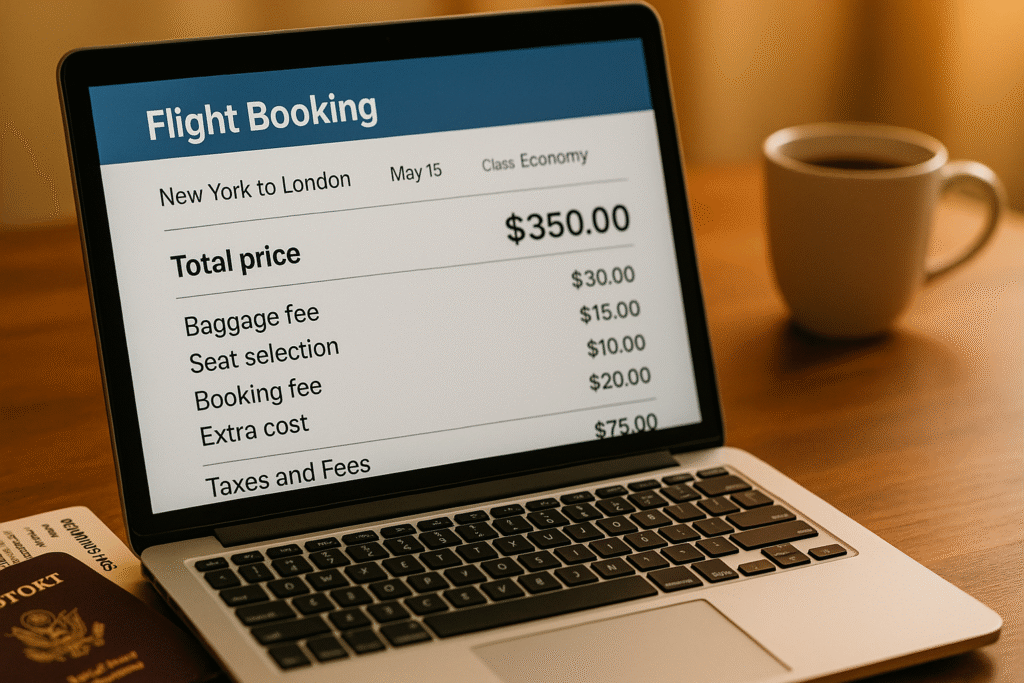
These extras can quickly inflate the cost of your ticket. For instance, a $200 base fare can easily climb to $350 or more once baggage fees, seat selection, and other charges are factored in. Knowing which services are essential – and which ones to skip – can help you keep costs under control.
How to Spot Hidden Fees During Booking
Knowing how to identify hidden fees during the booking process can make a big difference in managing your travel budget. Airlines often reveal extra charges gradually, so staying alert at every step can help you avoid surprises. Let’s break down some key strategies to spot these fees and make informed decisions.
Check the Fare Breakdown
The fare breakdown is like a cheat sheet for understanding exactly what you’re paying for. Always take a moment to click on the detailed cost breakdown before finalizing your purchase. This section will highlight charges beyond the advertised base fare – charges that can significantly increase your total cost.
Look for mandatory taxes, security fees, and government-imposed charges, which can add $15–$30 to your ticket. Additionally, pay close attention to carrier-imposed fees, which vary by airline and are usually detailed in this section.
You’ll also find optional charges here, like baggage fees or seat selection costs. Keep an eye out for vague terms like “service fees” or “processing charges”, and investigate them before proceeding. Once you’ve reviewed everything, disable any pre-selected options that don’t serve your needs.
Uncheck Pre-Selected Options
Booking platforms often sneak in optional services by pre-selecting them during the reservation process. These might include travel insurance, extra baggage, or other add-ons. Carefully review these options and uncheck anything you don’t need to avoid unnecessary charges. For instance, travel insurance is frequently auto-selected and can add about $15 to your total.
Compare Initial and Final Prices
Pay attention to the difference between the initial fare displayed during your search and the final price at checkout. Airlines often add fees incrementally, and these can pile up as you move through the booking process. In fact, these hidden costs contribute to approximately $1.6 billion in airline revenue each year.
Start by noting the advertised fare and track any price increases as you proceed. Big jumps in price often occur when you select seats, add baggage, or choose other services. As Faith Katunga from Travel Noire puts it:
“Airlines often lure us in with low base fares that look almost too good to be true – and sometimes they are.”
Before completing your purchase, carefully review the final checkout page. It should only include services you’ve intentionally selected. If unexpected fees pop up, take the time to review and decide whether they’re necessary. With hidden fees accounting for over 20% of airline revenue, staying vigilant can help you avoid extra costs and keep your travel budget intact.
How to Reduce or Avoid Hidden Fees
Once you’ve spotted hidden fees, here are some effective ways to cut them down – or avoid them entirely.
Compare Total Costs, Not Just Base Fares
That low base fare you see advertised? It’s often just the beginning. Budget airlines might lure you in with cheap base fares but then pile on extra fees for things like baggage, seat selection, and even payment processing. To get the full picture, add up the base fare, taxes, and all mandatory fees. This way, you’ll know the real cost of your trip. Tools like Google Flights can make it easier to spot these hidden charges.
“Carefully review the airline’s fee structure before booking so you’re not caught off guard by unexpected charges.” – Dollar Flight Club
Take Southwest Airlines, for example. They include two free checked bags with their base fare, while many other airlines charge $35 to $45 for just one checked bag on domestic flights. A seemingly higher base fare can actually save you money when you factor in these extras.
Now let’s look at some smart booking practices to keep costs down.
Prepay for Baggage and Skip Paid Seat Selection
Pay for your baggage online in advance. Airport fees for baggage can be shockingly high – sometimes up to $200. For instance, Frontier Airlines charges as much as $25 per passenger for airport agent assistance, which includes simple tasks like printing boarding passes and tagging bags.
As for seat selection, don’t be fooled into thinking it’s always mandatory. You can often skip the fee entirely by opting for a random seat assignment at check-in or the gate. Not only will this save you money, but you might even snag an upgrade if the flight isn’t full. For example, Spirit Airlines charges anywhere from $5 to $200 per flight for seat selection, with an average cost of $20 per seat, while Avelo Airlines offers a more budget-friendly starting price of $14.
Use Airline Loyalty Programs and Credit Cards
Airline credit cards are a game-changer for frequent travelers, especially when it comes to avoiding baggage fees. Most major U.S. airlines charge $35 to $45 for the first checked bag, so these cards can quickly pay for themselves if you often check luggage.
For instance, a family of four flying round-trip on Delta could save up to $280 in baggage fees with the Delta SkyMiles® Gold American Express Card, which waives the first checked bag fee for the cardholder and up to eight companions. Similarly, the Alaska Airlines Visa Signature® credit card offers free checked bags for the cardholder and up to six companions when you use the card to book your flights.
Here’s a quick comparison of some popular airline credit cards and their baggage benefits:
| Credit Card | Free Checked Bag Benefit | CNBC Select Rating |
|---|---|---|
| Delta SkyMiles® Gold American Express Card | Cardholder + up to 8 companions | 4.8 |
| The New United℠ Explorer Card | Cardholder + 1 companion | 5.0 |
| Citi® / AAdvantage® Platinum Select® | Cardholder + up to 4 companions | 4.5 |
| Alaska Airlines Visa Signature® | Cardholder + up to 6 companions | 5.0 |
If you’re not loyal to one airline, general travel credit cards like the Chase Sapphire Reserve® can still help. This card offers up to $300 in annual travel credits, which can offset baggage fees and other travel expenses. Additionally, some cards provide perks like credits for TSA PreCheck® or Global Entry applications. For example, the Delta SkyMiles® Platinum American Express Card offers up to $85 in statement credits every 4.5 years to cover TSA PreCheck® application fees.
When choosing a credit card, weigh the rewards and perks against the annual fee to find one that matches your travel habits. The right card can help you cut down on fees while giving you extra benefits along the way.
How Flight Booking 247 Helps You Avoid Hidden Fees

Flight Booking 247 makes it easier to sidestep hidden fees, offering expert advice to help you safeguard your travel budget. With airline pricing often feeling like a maze, their travel concierges break down costs so you know exactly what you’re paying for before hitting “book.”
24/7 Access to Travel Experts
Hidden fees can creep up and inflate your travel expenses, but Flight Booking 247 ensures you’re never caught off guard. Their team is available around the clock to provide clear, upfront explanations of all charges. Whether it’s baggage fees, seat selection costs, or other add-ons, their concierges guide you through every detail, so there are no surprises at checkout or the airport.
The U.S. Department of Transportation (DOT) has been pushing for more transparency in airline pricing. Bill McGee, Senior Fellow for Aviation at the American Economic Liberties Project, emphasizes the importance of this:
“Before you book, you should know your bottom line total price. And the airlines fight tooth and nail against that”.
Flight Booking 247 helps bridge this gap by ensuring you’re fully informed about all potential costs upfront. According to the DOT, consumers were spending an extra $543 million annually on surprise fees, with baggage charges being a significant culprit. Their experts identify fees you can prepay online at lower rates, helping you avoid those inflated costs at the airport.
Real-Time Flight Deal Support
Flight Booking 247 goes beyond just finding you a ticket – they calculate the real cost of your trip. They compare total expenses across airlines and booking options, factoring in fees that matter to your travel needs. For example, if you’re checking two bags, they’ll help you decide whether a budget airline with low fares but high baggage fees is actually cheaper than a full-service carrier that includes checked luggage.
Their team stays informed on the latest airline fee structures, helping you avoid unexpected costs. They know which airlines charge for carry-ons, which include seat selection, and how to structure your booking to keep additional fees to a minimum.
Simple Booking Process
Flight Booking 247 simplifies the entire booking experience. They handle fee disclosures and help you avoid unnecessary add-ons, ensuring you only pay for what you actually need. Their concierges explain optional services in straightforward terms, so you can make confident, informed decisions. They’ll even advise you on strategies like prepaying for baggage, which often costs less when done in advance.
As the U.S. Department of Transportation explains:
“The rule requires airlines and ticket agents to tell consumers upfront what fees they charge for a first or second checked bag, a carry-on bag, and for canceling or changing a reservation. This will help consumers avoid unneeded or unexpected fees that can increase quickly and add significant cost to what may, at first, look like a less expensive ticket.”
While regulations continue to evolve, Flight Booking 247’s personalized approach ensures you’re equipped to navigate today’s fee-heavy landscape and make smarter booking choices.
Conclusion: Stay Informed to Save Money
Hidden fees are a reality for most travelers, with a survey revealing that 86% have encountered unexpected charges just before completing their booking. These fees often appear through incremental additions during the checkout process, catching many off guard.
This highlights the need to stay alert and manage fees proactively. Make it a habit to review your fare details at every step of the booking process. Understanding how these fees are introduced can also help you avoid falling into the trap of sticking with a booking simply because you’ve already invested time in it.
As Professor Vicki Morwitz points out:
“Customers are more likely to select an option that looks cheaper upfront. Even when they later realize it’s more expensive than they anticipated, they’re more likely to stick with it”.
To avoid these pitfalls, compare total costs across airlines and always check the latest policies directly on the airline’s official website before finalizing your booking.
If navigating these complexities feels overwhelming, services like Flight Booking 247 can make the process easier. Their travel concierges provide a clear breakdown of all potential costs upfront, helping you steer clear of surprise charges. With 24/7 support, you can access real-time assistance to better understand fee structures and find the most budget-friendly options tailored to your needs.
FAQs
How can I compare flight prices and avoid hidden fees?
When you’re comparing flight prices, it’s crucial to focus on the total cost of your booking – not just the base fare. Airlines often tack on extra charges for things like baggage, seat selection, or other services. To avoid surprises, take the time to examine the detailed price breakdown.
Using fare comparison websites can be a great way to check prices across multiple airlines quickly. However, it’s a good idea to double-check the final price directly on the airline’s website to ensure accuracy. For even more savings, try booking your flights midweek, set up price alerts, and keep your travel dates flexible. These small steps can help you catch hidden fees and lock in a better deal.
How can I avoid unnecessary add-ons during the flight booking process?
When booking a flight, it’s easy to end up paying for extras you don’t need if you’re not careful. Keep an eye out for pre-selected options like seat upgrades, travel insurance, or baggage fees. These add-ons can usually be unchecked or skipped altogether.
If you’re not particular about where you sit, avoid paying for seat selection during booking. Instead, check in online 24 hours before your flight to get a seat assignment for free. Traveling light? Stick to a carry-on bag to dodge those pesky checked baggage fees. Some airlines even offer bundled fares that include perks like seat selection – take a moment to compare these options and decide if they make sense for you.
By carefully reviewing each step of the booking process and opting out of unnecessary extras, you can keep your travel costs in check.
Are some airlines better at avoiding hidden fees, or does it depend on how I book my flight?
Certain airlines, like Southwest Airlines, stand out for their straightforward pricing – offering perks like free checked bags and no change fees. But steering clear of hidden costs often depends on how you navigate the booking process.
Take the time to review baggage policies, seat selection fees, and other potential charges before finalizing your purchase. Focusing on the total price, not just the base fare, can save you from unexpected expenses. While opting for airlines with clear pricing is a great start, being diligent and informed during booking is equally important for keeping costs in check.