

Flying from a different airport could save you money and time. Many cities have multiple airports, and ticket prices, schedules, and routes can vary significantly between them. Comparing options from nearby airports can help you find cheaper fares, better flight times, and more travel choices. For example, flying from Newark (EWR) instead of JFK could save you up to $100 or more per ticket.
Key Takeaways:
- Lower Costs: Smaller or alternative airports often have cheaper fares due to lower competition or budget airlines.
- More Options: Searching multiple airports increases the chance of finding direct flights, shorter layovers, or better schedules.
- Hidden Costs: Factor in parking, transportation, and travel time to determine the total cost of your trip.
Quick Tips:
- Use tools like Google Flights or KAYAK to search multiple airport codes at once.
- Check all airports within 50–100 miles of your departure and destination.
- Compare parking fees, taxi fares, and travel times for a full cost analysis.
- Use flexible dates to find the cheapest days to fly.
By expanding your search and considering all costs, you can make smarter travel decisions and save up to 20% on airfare.
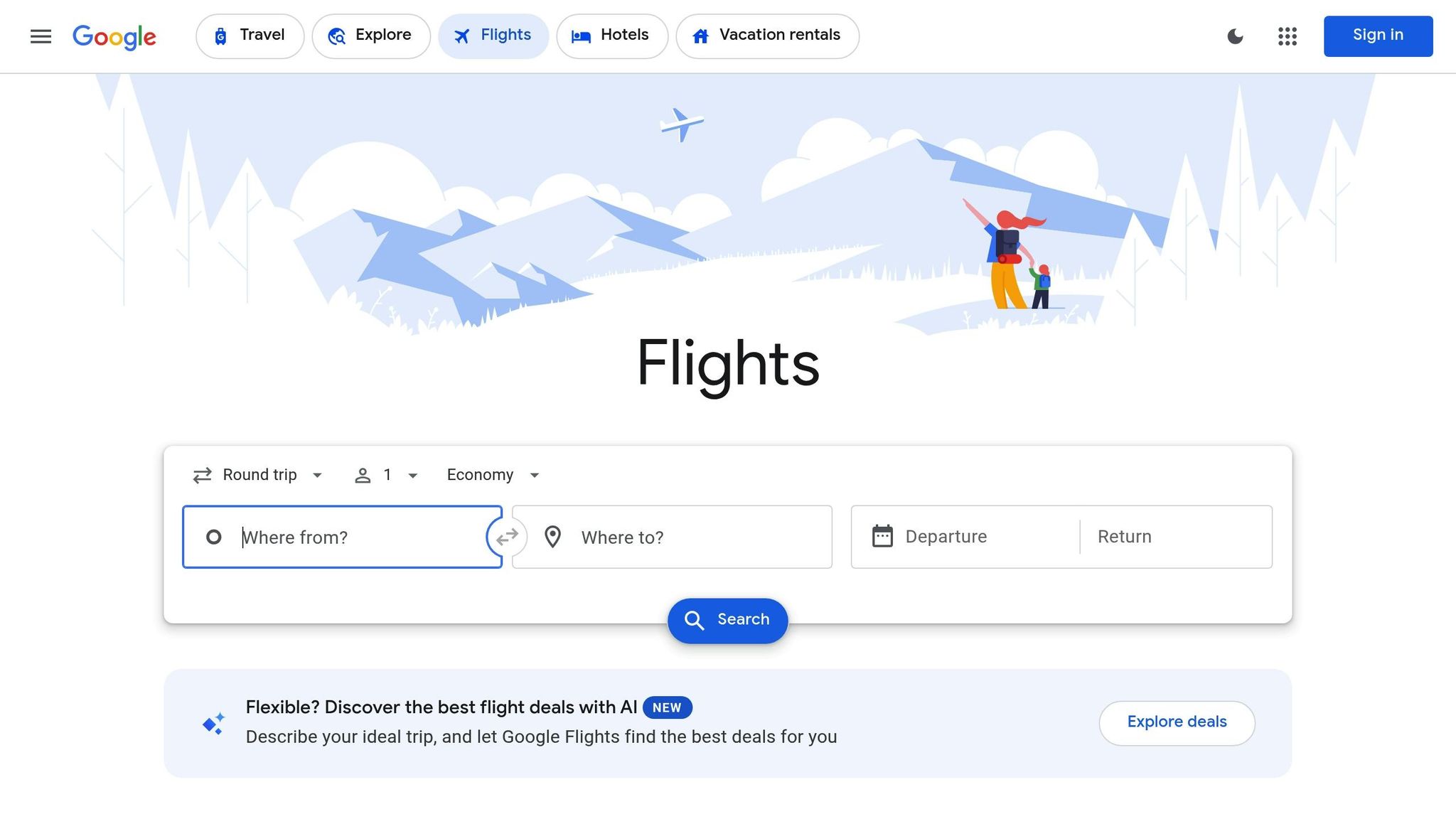
How to Search Multiple Nearby Airports on Google Flights (Easy Guide!)
Benefits of Searching Multiple Airports
Looking at flights from multiple airports can open up a world of travel possibilities. It can mean finding lower fares, more convenient schedules, and a wider range of options. Here’s how casting a wider net can make a big difference.
Lower Prices and More Flight Options
Airfares can vary dramatically between airports in the same region, often due to differences in airline competition and demand. For example, a flight from Los Angeles to Las Vegas might start at $53 or more from LAX, but nearby airports like Burbank (BUR), Long Beach (LGB), Ontario (ONT), or John Wayne Airport (SNA) may offer very different rates for the same route.
Why does this happen? Larger airports like LAX serve as major international hubs, hosting premium airlines with higher operational costs. On the other hand, smaller regional airports often cater to budget carriers with lower overhead, which can translate into significant savings. For international flights especially, choosing a different departure airport could save you hundreds of dollars.
Beyond price, searching multiple airports gives you access to a larger pool of flights. For example, travelers in the San Francisco Bay Area can compare options from SFO, Oakland (OAK), and San Jose (SJC). This approach might uncover direct flights, alternative layovers, or low-cost carriers that only operate out of secondary airports.
Better Flight Times and Schedules
Flexibility with airport options can also mean better flight schedules. A business traveler needing an early morning departure might find the perfect flight at a smaller, less crowded airport, while someone looking for evening options might have better luck at a major hub. This flexibility is especially helpful during busy travel seasons or when booking last minute.
Different airports often have varying flight frequencies. One airport might only offer afternoon departures, while another provides flights throughout the day – morning, afternoon, and evening. Having more options makes it easier to find flights that fit your schedule without requiring long layovers or overnight stays.
Additionally, expanding your search can reveal direct flights that might not be available from your primary airport. Even when connections are unavoidable, other airports might offer shorter or more convenient layover options.
U.S. Cities with Multiple Airports
Many major U.S. cities have multiple airports, each offering a unique mix of airlines, prices, and conveniences. For example, Dallas travelers can choose between DFW, a major hub, and Love Field (DAL), which primarily serves Southwest Airlines.
In the San Francisco Bay Area, SFO handles most international and major domestic routes, Oakland (OAK) often caters to budget-conscious travelers, and San Jose (SJC) serves the South Bay. These differences in airlines and markets can create opportunities for savvy travelers to find better deals or schedules.
When comparing airports, remember to factor in ground transportation costs like parking fees, fuel, and drive time. An airport with strong public transit links might even justify a slightly higher ticket price because of the savings on transportation and convenience it offers.
How to Set Up Your Flight Search
Setting up a multi-airport flight search takes some planning, but it’s worth the effort to find the best deals and options for your trip. The trick is to be thorough in your research while keeping an eye on what matters most – whether that’s cost, convenience, or travel time.
Finding All Nearby Airports
Start by identifying every airport within 50–100 miles of both your home and your destination. For instance, if you’re based in Philadelphia, you might consider PHL, Newark (EWR), LaGuardia (LGA), or even Washington D.C.’s airports (IAD or DCA), all of which are accessible with a short train or car ride.
A quick Google Maps search for “airports near [your city]” can give you a clear picture of your options. This step might even reveal smaller airports you hadn’t thought about. Including these in your research is crucial for spotting hidden deals. Many major cities have multiple airport options, and mapping them out visually helps you see which ones might work best for your plans.
Don’t ignore smaller regional airports. While they might not offer as many flights, they often feature budget carriers with lower fares. This can be a great trade-off if saving money is a priority. Balancing convenience and cost is a personal decision, so it’s worth giving these airports a look.
“Consider alternative airports: Look into flights to nearby airports, as they may be cheaper than flights to the main airport in your destination city.”
What to Compare Between Airports
Price is important, but it’s only one piece of the puzzle. Each airport comes with its own set of costs and potential inconveniences, so it’s smart to weigh all the factors before booking. Start by making a checklist of what matters most for your trip.
Transportation costs are a big one. For driving, calculate gas expenses at about $0.67 per mile, and don’t forget to include tolls along the way. If you’re using public transit, check fares and travel times for each airport option.
Parking fees can add up fast, especially for longer trips. Multiply the daily parking rate by the number of days you’ll be gone to get a clear picture of this cost.
Travel time is another key factor, especially for flights scheduled early in the morning or late at night. An extra hour of driving could mean less sleep or a later return home. Also, think about amenities like lounges, dining options, and Wi-Fi – these can make a difference in your overall travel experience.
Using U.S. Measurement Standards
Stick to U.S. measurement standards to keep your comparisons consistent and easy to follow. Use miles for distances and format costs in standard U.S. currency (e.g., $1,097.50). When entering travel dates into flight search tools, follow the MM/DD/YYYY format to avoid any errors.
For example, if you’re comparing airports 25, 45, and 60 miles from your home, calculate round-trip gas costs using $0.67 per mile. This will give you a clear idea of how distance impacts your total travel expenses.
“Travel agents can save you time by doing the research and legwork for you. They can compare prices and options from multiple airlines and travel providers to find the best deal for you.”
Once you’ve gathered all this information, head to flight search tools, input multiple airport codes, and start narrowing down your options.
Using Flight Search Tools
Flight search tools make it easy to compare multiple options and find the best deals by leveraging their features effectively.
Entering Multiple Airport Codes
One smart way to expand your options is by entering multiple airport codes in your search. Tools like Google Flights and KAYAK allow you to type multiple codes separated by commas in the departure or arrival fields. For instance, if you’re flying from the New York area, you can input “JFK, EWR, LGA” to include all three major airports in your search.
Planning a trip from New York to Los Angeles? You could search from “JFK, EWR, LGA” to “LAX, BUR, SNA, ONT” to see all possible combinations. This approach gives you a full picture of flights connecting various departure and arrival airports, helping you spot the best options.
Some platforms, like Skyscanner, even offer an “Everywhere” search feature, which shows the cheapest destinations from your chosen airport. Once you’ve explored airport combinations, take advantage of flexible date searches to refine your travel plans further.
Searching Flexible Dates
The flexible date feature is a game-changer for saving money. After entering your departure and arrival airports, look for options like “flexible dates” or a calendar view. Most search engines, including Google Flights and KAYAK, display a grid or calendar showing prices across different days.
A quick glance at the calendar often reveals that midweek flights are cheaper than weekend ones. If your schedule allows, flying on a Tuesday or Wednesday might save you a significant amount.
Combining multiple airports with flexible dates creates a powerful strategy. For example, one airport might have a great deal on a specific day, while another nearby airport offers an even better price on a different day. This combination helps you zero in on the most cost-effective travel options.
Using Search Filters
Once you’ve explored flexible dates, refine your search with filters to narrow down the results. Filters let you customize your search based on stops, flight duration, departure times, and even specific airlines.
Stops are often the first filter travelers use. If you prefer direct flights, selecting “nonstop only” will remove connecting flights from your results. On the other hand, if you’re open to a layover to save money, you can filter for “1 stop maximum”.
Flight duration and layover preferences are also useful for avoiding inconvenient connections. You can set minimum layover times to avoid rushing between gates or exclude layover airports that have caused issues in the past.
Airline filters allow you to stick with carriers you trust or avoid ones you’ve had negative experiences with. For example, some travelers choose airlines where they have elite status, while others might steer clear of budget carriers that charge extra for carry-on luggage.
Time-based filters are especially helpful when comparing flights from multiple airports. For instance, you might filter for departures after 10:00 AM if you want to skip early morning drives, or for arrivals before 10:00 PM to ensure you get home at a reasonable hour.
Start with your most important criteria and add filters gradually to avoid accidentally eliminating great deals. It’s also a good idea to compare results across platforms. A flight priced at $258 on one site might show up as $245 on another, and those small differences can add up quickly when booking multiple tickets.
sbb-itb-e205081
Comparing Flight Options and Extra Costs
Once you’ve gathered flight results from different airports, the real challenge begins: comparing your options. It’s not just about the ticket price. A cheaper base fare might not actually save you money when you factor in all the extra costs. Taking a closer look at these details is essential to finding the best overall value for your trip.
Breaking It Down with a Comparison Chart
One of the easiest ways to make sense of your options is by creating a comparison chart. This helps you organize key details like airport, ticket price, travel time, layovers, and those sneaky extra costs.
For example, include columns for parking fees (which can range from $10 to $40 per day at major U.S. airports), ground transportation costs, and baggage fees. Parking at Los Angeles International Airport (LAX), for instance, typically costs between $12 and $40 per day, while taking a taxi from Manhattan to JFK Airport is about $70, not including tip and tolls.
Here’s how airports can affect your total cost:
| Airport | Ticket Price (USD) | Travel Time | Layovers | Parking (per day) | Taxi Fare | Baggage Fee | Total Cost (USD) |
|---|---|---|---|---|---|---|---|
| JFK | $320 | 6h 30m | 0 | $18 | $70 | $30 | $438 |
| LGA | $350 | 7h 10m | 1 | $39 | $45 | $30 | $464 |
| EWR | $300 | 8h 00m | 2 | $20 | $60 | $30 | $410 |
This table shows that while Newark’s ticket price is lower than JFK’s, the total cost – including parking, taxi fares, and baggage fees – reveals where the real savings are.
To get accurate numbers, check parking rates on airport websites and use rideshare apps to estimate transportation costs. Don’t forget to account for round-trip expenses if you’re parking or using ground transport both ways. With everything laid out, it’s much easier to see which option is the best fit for your budget.
Considering Extra Costs and What Matters to You
Your personal preferences play a big role in determining the best value. A flight that looks expensive at first glance might actually be the smarter choice when you factor in your priorities and circumstances.
For instance, loyalty program perks can make a difference. If you have elite status with Delta, flying from Atlanta (ATL) on Delta might include free checked bags, priority boarding, and lounge access. These benefits can save $50–$100, making a slightly higher ticket price worth it.
Time and comfort are also important. A direct flight might cost a bit more than a connecting one, but it can save you hours – especially if you’re traveling for business or on a tight schedule. On the flip side, if you don’t mind a layover and have a flexible itinerary, connecting flights through smaller airports could help you save.
Transportation to and from the airport is another factor that can swing the total cost. A smaller, more distant airport might have cheaper flights but require a longer and more expensive rideshare trip, negating the ticket savings. Always weigh both the monetary and convenience costs.
Don’t overlook time-related expenses, either. Long layovers might mean paying for an overnight hotel stay, adding both cost and inconvenience. Similarly, very early morning departures could require staying near the airport the night before or paying premium rates for early transportation.
To simplify the process, Flight Booking 247’s travel concierges can help you balance ticket prices, extra costs, and personal preferences. Their 24/7 support connects you with experts who can guide you through these complex comparisons, ensuring you find the best overall deal for your journey.
Getting Help with Flight Booking 247

Comparing flights across multiple airports can feel like navigating a maze – different search engines, surprise fees, and fluctuating schedules can quickly become overwhelming. That’s where Flight Booking 247’s expert support steps in to simplify the process.
24/7 Flight Deal Support
With Flight Booking 247, you’ve got someone watching for deals around the clock. Imagine you’re eyeing flights from Los Angeles-area airports like LAX, Burbank, Santa Ana, Ontario, or Long Beach to Japan. If a major price drop happens at 2:00 AM, the support team can notify you right away and help lock in the best fare. This kind of real-time assistance can save you both money and stress.
Instead of staying up late refreshing search engines or juggling multiple price alerts, you’ll have a travel concierge doing the heavy lifting for you. They monitor deals nonstop, ensuring you don’t miss out on savings while you sleep.
Personal Travel Help
Flight Booking 247 doesn’t just help you find flights – it offers hands-on support for booking, changing, or even canceling them. Let’s say you score a great deal flying out of Newark, but later realize the cost of getting to the airport eats into your savings. No problem – the concierge can quickly help you switch to a more convenient departure airport.
The service goes beyond just airfare. The concierge considers factors like ground transportation, baggage fees, and seat selection costs to give you a full picture of your trip’s total expenses. This way, you’re not blindsided by extra charges and can make smarter decisions based on your actual out-of-pocket costs.
Easy Multi-Airport Searches
Manually searching flights across multiple airports can be a tedious and time-consuming task. Flight Booking 247 simplifies this by handling the entire process for you. For example, if you’re looking for flights in a major metro area, the concierge can efficiently check all possible airport combinations, ensuring you don’t overlook hidden deals.
This service is especially helpful for complex itineraries like multi-city trips or open-jaw flights. These options, often more budget-friendly for international travel, require precise coordination. Whether you’re planning to fly from New York to London, hop from Paris to Barcelona, and then return to New York, the concierge can organize everything in one seamless booking. This approach often saves you money compared to booking separate one-way flights.
Flight Booking 247 taps into an extensive network of airlines to find competitive rates. This broad access ensures you get the best options across all carriers serving your chosen airports.
To make the most of the service, have your travel dates, preferred airports, and flexibility details ready when you call. If you’ve done any initial research, sharing it with the concierge can help them tailor their search and find the best routes and prices for your trip.
Conclusion: Get the Best Flight Deals and Options
Looking at flights from multiple airports can be a game-changer for your travel budget and plans. Flexibility and a thorough comparison are key to unlocking better deals. For example, if you’re flying out of the New York area, a quick comparison might show a round-trip fare of $338 from JFK, while Newark offers the same trip for $258 – saving you $80.
But don’t stop at just the ticket price. Be sure to weigh the full cost of your trip, including ground transportation, parking fees, and travel time. These factors can significantly impact the overall value of your travel plans.
The right tools can make this process much easier. Flight search engines that allow for multiple airport codes, flexible dates, and detailed filters can help you find the best options quickly. And if you need extra support, services like Flight Booking 247 can simplify the process and ensure you don’t miss out on cost-saving opportunities.
As discussed earlier, comparing all available options can lead to savings of up to 20%. Whether you’re planning a quick domestic getaway or a complex international trip, this approach not only saves money but also opens up more travel possibilities.
So, before booking your next flight, take the time to explore all airports within a reasonable distance, use flexible tools, and don’t hesitate to seek expert help. You’ll enjoy better deals and a schedule that works for you.
FAQs
How can I find the best flight options from nearby airports?
When searching for the ideal flight, it’s important to weigh a few key factors: ticket prices, travel times, and any extra expenses, such as parking fees or transportation to and from the airport. Also, make sure to review flight schedules to see if they align with your travel plans.
For tailored help, Flight Booking 247 provides round-the-clock support. Their travel concierge service can assist you in real-time, helping you uncover deals and choose flights that are both convenient and budget-friendly.
What’s the best way to search for flights from multiple airports?
To snag the best flight deals and schedules from various airports, try services that offer real-time help and tailored support. Flight Booking 247 stands out with its round-the-clock travel concierge service. They assist in comparing flight options, helping you secure the most convenient and budget-friendly itinerary. This way, you save time and skip the headache of sifting through flights on your own.
How do I account for transportation and parking costs when comparing flight options?
When comparing flights, it’s important to factor in the transportation costs to and from each airport, along with parking fees if you’ll be leaving your car. These extra expenses can vary widely based on the airport’s location and how you plan to get there.
For instance, look into the cost of rideshares, shuttles, or public transportation, and don’t forget to check the daily parking rates at each airport. By adding these costs to your ticket price, you’ll get a clearer picture of the total trip expense, making it easier to pick the most budget-friendly option.