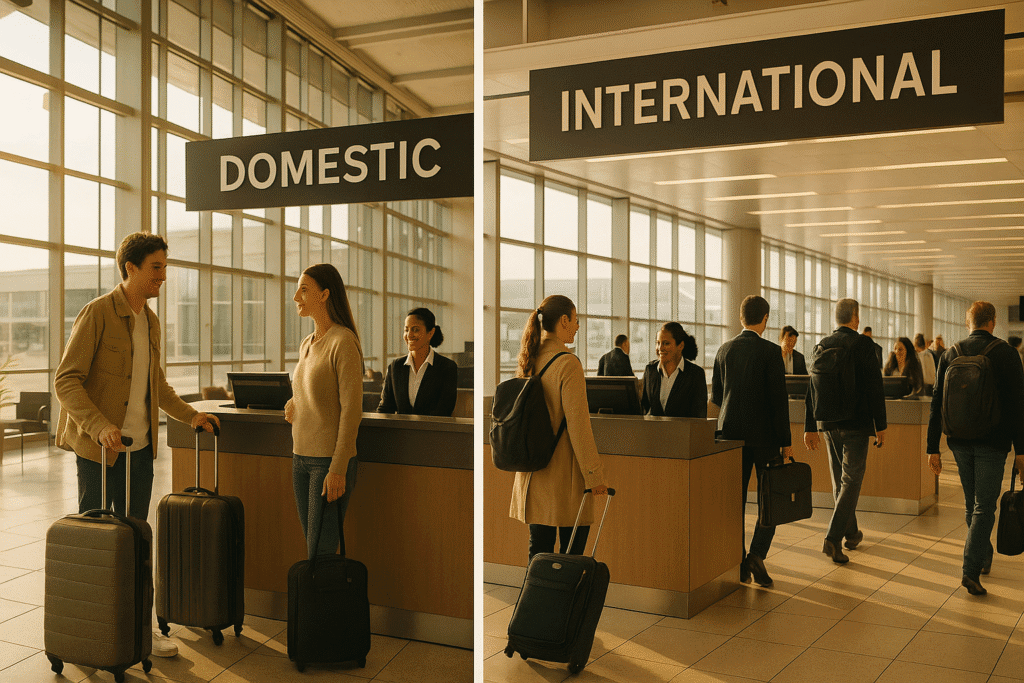
Flight flexibility rules vary significantly between domestic and international travel. Understanding these differences can save you money and help you avoid unnecessary stress when plans change. Domestic flights generally offer simpler policies, while international travel often involves stricter rules and higher fees. Here’s a quick breakdown:
- Domestic Flights: Most U.S. airlines have removed change fees for standard tickets (excluding Basic Economy). Refunds are available for delays over 3 hours. Adjustments are easier and often cost less.
- International Flights: Flexibility depends on the airline, fare class, and departure country. Change fees often apply, especially for flights departing outside the U.S. Refunds are typically granted for delays over 6 hours.
Key Takeaways:
- Domestic tickets are more forgiving and affordable, with fewer restrictions.
- International tickets require careful planning due to stricter policies and added costs.
- Flexible tickets cost about 15% more but can be worth it if your plans are uncertain.
For smooth travel, book domestic flights 1–3 months in advance and international flights 3–5 months ahead. Use the 24-hour cancellation window to avoid fees, and consider concierge services for managing last-minute changes.
1. Domestic Flight Flexibility
Domestic air travel has become more adaptable, with many major airlines removing change fees for standard economy and higher fare classes. This shift allows travelers to adjust their plans without worrying about steep penalties.
Change and Cancellation Policies
The rules around changing domestic flights have shifted significantly. Most U.S. airlines now waive change fees for economy and higher fare classes, requiring passengers to pay only the fare difference if upgrading.
Here’s a breakdown of change fees by carrier:
| Carrier | Change Fee (when applicable) |
|---|---|
| Alaska Airlines | $0 (except Saver fares) |
| Allegiant | $25 |
| American Airlines | $0 (Fully Flexible fares only) |
| Delta Air Lines | $0 |
| Frontier Airlines | $0 to $99 |
| Hawaiian Airlines | $0 (excluding Main Cabin Basic fares) |
| JetBlue | $0 (excluding Blue Basic fares) |
| Southwest Airlines | $0 |
| Spirit Airlines | $0 |
| United Airlines | $0 (excluding Basic Economy) |
Southwest Airlines is unique in that it doesn’t charge any change or cancellation fees for any fare type, making it a go-to option for travelers seeking maximum flexibility.
Additionally, all airlines are required to offer a 24-hour grace period after booking, during which you can cancel your ticket for a full refund, regardless of the fare type.
Fare Class Restrictions
Your fare class plays a big role in determining how flexible your ticket is. Basic Economy tickets are the most restrictive, often barring changes entirely unless upgraded to a higher fare class.
For example, United Airlines waives change fees for Economy, Economy Plus, and premium cabin tickets on domestic flights, including routes to Puerto Rico and the U.S. Virgin Islands. However, Basic Economy tickets remain non-changeable unless upgraded.
JetBlue offers another example: while standard fares allow free changes online, Blue Basic fares come with change fees ranging from $100 to $200, depending on the route. On top of that, JetBlue charges an additional $25 per person for changes made via phone or chat, even for flexible fares.
Advance Booking Considerations
Domestic flights tend to be more accommodating for last-minute changes compared to international travel. Adjustments can usually be made up until departure, and the simpler booking process helps avoid unnecessary complications.
Booking changes online can also save you from extra fees. Some airlines even allow you to rebook at a lower fare if prices drop after your purchase, offering the fare difference as credit for future travel.
The beauty of domestic travel lies in its simplicity. Unlike international itineraries, domestic flights don’t involve visa requirements, global regulations, or complex multi-airline partnerships. This makes them an excellent choice for travelers who value flexibility and ease when planning their trips.
2. International Flight Flexibility
When it comes to international flights, flexibility often takes a backseat due to stricter policies and fare class limitations. This rigidity largely depends on the airline and the departure country’s regulations.
Change and Cancellation Policies
Policies for changing international flights can vary significantly. For example, airlines like United waive change fees for international flights departing from the U.S., including routes to destinations like Mexico and the Caribbean. However, flights departing from other countries might come with extra fees.
One helpful safeguard is the 24-hour booking policy. As United Airlines highlights:
“With our 24-hour booking policy you can cancel your reservation within 24-hours of buying your ticket for a full refund without paying a fee.”
This policy applies to tickets purchased at least a week before departure, giving travelers a short window to adjust their plans without losing money. Additionally, the U.S. Department of Transportation requires airlines to process refunds within 7 business days for credit card payments and within 20 days for cash or check payments.
Fare Class Restrictions
The type of ticket you choose plays a huge role in how flexible your travel plans can be. Basic Economy tickets, for instance, usually don’t allow changes unless you upgrade. On the other hand, premium options like fully refundable or cancel-for-any-reason tickets come with more flexibility but at a higher price . Here’s a quick breakdown of common fare types:
- Changeable tickets: Let you adjust travel dates or times, usually requiring only the fare difference.
- Fully refundable tickets: Provide full refunds but are more expensive upfront.
- Cancel-For-Any-Reason tickets: Offer the most freedom, with refund percentages varying by airline.
Advance Booking Considerations
Planning ahead is especially crucial for international flights. Flexible tickets often come with a price premium – around 15% more than standard fares. Travelers need to weigh this cost against the potential loss of a non-refundable ticket and any rebooking fees that might arise.
For those who need extra support, services like Flight Booking 247 offer 24/7 concierge assistance to handle international changes and find the best travel solutions. Understanding these nuances can help travelers pick the right ticket for their needs and avoid unnecessary stress during their journey.
Pros and Cons
When comparing domestic and international flight options, several key differences emerge, especially when it comes to flexibility, fees, and regulations. Let’s break it down.
Domestic flights usually come with simpler fee structures. Most major airlines have removed change fees for standard tickets, though Basic Economy fares still come with more restrictions.
International flights, on the other hand, often have stricter policies and higher fees. While some international tickets allow changes, flights departing from outside the U.S. often still carry change fees.
The rules around refunds and compensation also differ significantly. For example:
- Refunds for delays: Domestic flights qualify for automatic refunds after delays of 3 hours or more, while international flights require delays of over 6 hours.
- Baggage delay compensation: Domestic passengers can claim refunds after a 12-hour delay. International travelers, however, may have to wait anywhere from 15 to 30 hours, depending on the flight length.
Here’s a quick comparison of these differences:
| Aspect | Domestic Flights | International Flights |
|---|---|---|
| Change Fees | Removed by most airlines (except Basic Economy) | Often apply for flights departing outside the U.S. |
| Refund Timeline | Refunds after 3+ hour delays | Refunds after 6+ hour delays |
| Baggage Delay Refunds | Available after 12 hours | Available after 15–30 hours |
| Fare Restrictions | Basic Economy fares are more restrictive | Varies by fare class and departure country |
Cost is another major factor to consider. Flexible international tickets often come with a higher upfront cost, while domestic options tend to be more affordable and forgiving.
For those navigating these complexities, Flight Booking 247 offers round-the-clock concierge services to assist with changes to both domestic and international flights. Ultimately, the choice between domestic and international travel depends on how much flexibility you need. Domestic flights generally offer more traveler-friendly policies, while international trips may require more careful planning. These considerations are essential for making informed decisions about your travel plans.
Conclusion
Knowing the differences in flexibility between domestic and international flights can help you avoid unnecessary stress and save money when plans change. Domestic flights tend to have more accommodating policies, with many airlines waiving change fees for standard tickets. On the other hand, international flights often come with stricter rules, higher fees, and additional documentation requirements.
To navigate these differences effectively, consider a few smart booking strategies. For domestic flights, aim to book 1–3 months in advance, while international flights are best booked 3–5 months ahead. Take advantage of the 24-hour cancellation window many airlines offer for a full refund. If your plans are uncertain, paying a bit more for flexible tickets can be well worth it – but always check the fine print to know what changes are allowed and what fees might apply.
For help managing booking changes or understanding airline policies, services like Flight Booking 247 can be a lifesaver. Their round-the-clock assistance is especially handy for last-minute adjustments or navigating the complexities of different airlines’ rules.
FAQs
Is it worth paying extra for a flexible ticket when booking an international flight?
Choosing a flexible ticket can be a wise move if your travel plans are uncertain or might change. These tickets give you the option to adjust or cancel your booking with fewer fees, helping you avoid unnecessary costs and stress. This can be especially helpful for international trips, where unexpected changes or emergencies are more likely to pop up.
Although flexible tickets usually come with a higher price tag, they offer the convenience and ease of making changes without major headaches. They’re particularly useful for trips with multiple stops, long layovers, or unpredictable schedules. If having the freedom to adapt your plans is important, the extra expense is often well worth it.
How can I avoid high change fees when booking international flights outside the U.S.?
To sidestep hefty change fees for international flights booked outside the U.S., aim for flexible or refundable tickets whenever you can. Many airlines now provide tickets without change fees, so keep an eye out for these options when booking. Another smart move is to invest in travel insurance or check out waiver policies to safeguard against unexpected changes.
Stay on top of your flight schedule – if the airline makes adjustments to your itinerary, they may let you make changes for free. Don’t forget about the 24-hour rule, which lets you cancel or modify your booking within 24 hours of purchase without any penalties. For a more tailored approach and booking options that fit your needs, services like Flight Booking 247 can help you find the best solutions.
How can I take advantage of the 24-hour cancellation policy to avoid fees?
If you want to take advantage of the 24-hour cancellation policy and skip any fees, make sure to cancel your flight within 24 hours of booking. For flights booked directly with airlines, your departure date must be at least seven days away to qualify for a full refund. Timing is everything – act promptly to secure your refund and dodge any penalties.