Want to avoid change fees when adjusting your flight? Here’s what you need to know:
Most major U.S. airlines no longer charge change fees for standard Economy and premium tickets on domestic flights and international flights originating in the U.S. However, Basic Economy fares still often come with fees or restrictions. Low-cost carriers like Frontier and Spirit use tiered fee systems, while Southwest stands out with no change fees across most fares.
Key Points:
- Fee-Free Changes: Delta, United, and American Airlines waive change fees for standard tickets but not Basic Economy.
- Basic Economy Restrictions: Basic Economy changes often cost $99–$400 or are prohibited.
- Low-Cost Carriers: Frontier and Spirit charge fees based on how far in advance changes are made.
- Southwest Flexibility: No change fees, even for budget fares, as long as fare differences are paid.
- Same-Day Changes: Delta, United, and Alaska Airlines offer low-cost or free options for same-day changes, with exceptions for Basic Economy.
- 24-Hour Rule: Federal law allows free cancellations or changes within 24 hours of booking if the flight is at least seven days away.
Quick Comparison:
| Airline | Standard Tickets (Domestic) | Basic Economy Changes | Same-Day Changes | Notes |
|---|---|---|---|---|
| Delta | $0 | $99–$400 | $75 for confirmed | Free standby for all passengers |
| United | $0 | Prohibited | Free standby | No changes for Basic Economy |
| American | $0 | Prohibited | Free standby | Similar to Delta and United |
| Southwest | $0 | $0 | $0 | Most flexible carrier overall |
| Frontier | $0 (60+ days) | $49–$99 | Not available | Fees increase closer to flight |
| Spirit | $0 (60+ days) | $39–$79 | Not available | Timing-based fee structure |
| Alaska | $0 | Prohibited | $25–$50 | Saver fares excluded |
To avoid fees, book flexible fares, plan changes early, or choose airlines like Southwest with customer-friendly policies.
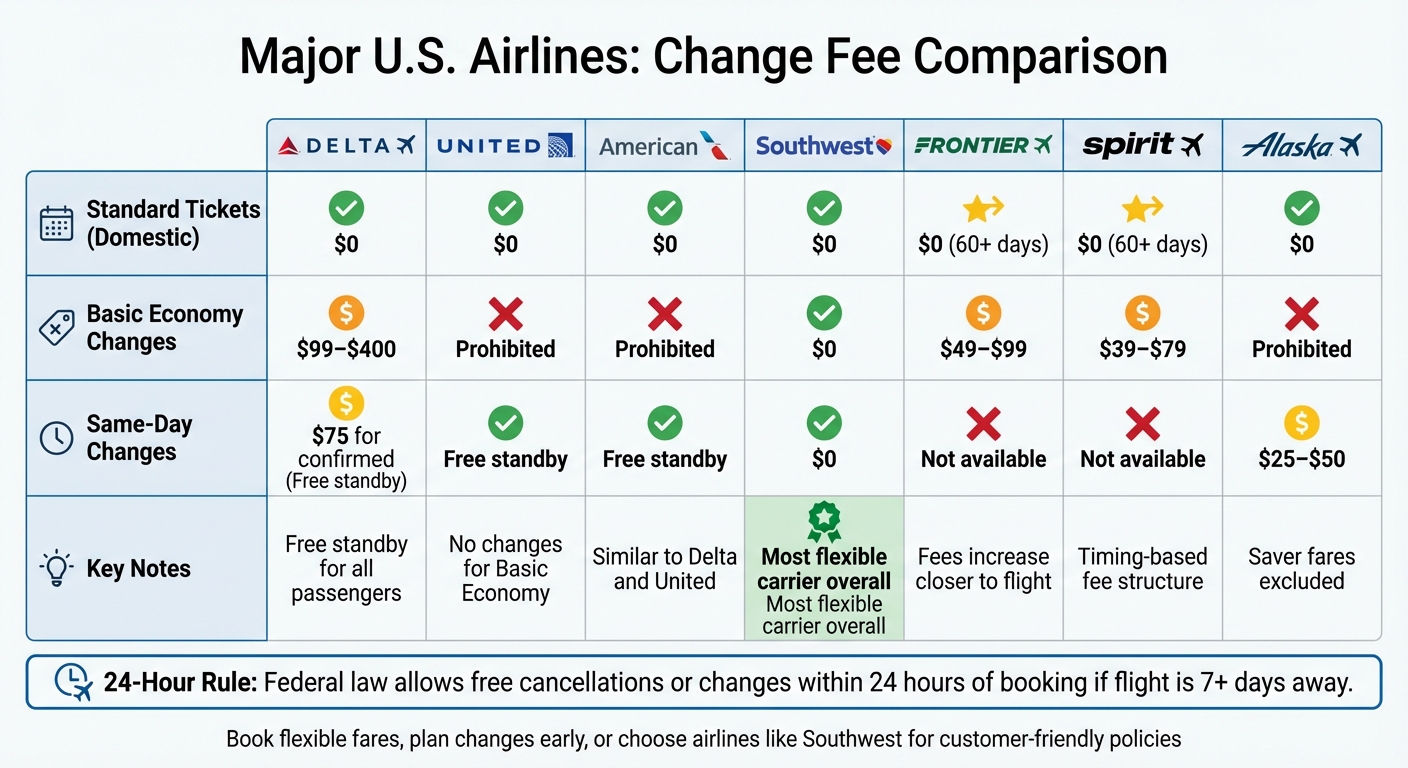
Major U.S. Airlines Change Fee Comparison Chart
The TRUTH about BASIC ECONOMY (AA vs Delta vs United)
Major U.S. Airlines: Change Fee Comparison
This section outlines how the change fee policies of major U.S. airlines impact both standard and budget-conscious travelers.
Delta Air Lines vs. United Airlines vs. American Airlines
The three largest U.S. carriers – Delta, United, and American – now allow fee-free changes for standard tickets. On domestic routes, they charge $0 for changes to Economy (or Main Cabin), Premium Economy, and First/Business class tickets.
For Basic Economy fares, the rules differ. United prohibits any changes for travel after February 1, 2022. Delta, on the other hand, permits changes for a fee ranging from $99 to $400, issuing eCredits for any unused ticket value. If passengers switch to a more expensive flight, they must pay the fare difference; if the new flight is cheaper, the leftover amount is provided as a future credit.
When it comes to same-day changes, Delta charges $75 for confirmed rebooking for General SkyMiles and Silver Medallion members, while same-day standby remains free. United also offers complimentary same-day standby options. Both airlines have removed change and redeposit fees on domestic award tickets.
Let’s now explore how other major carriers handle same-day change fees.
Southwest Airlines vs. JetBlue vs. Alaska Airlines
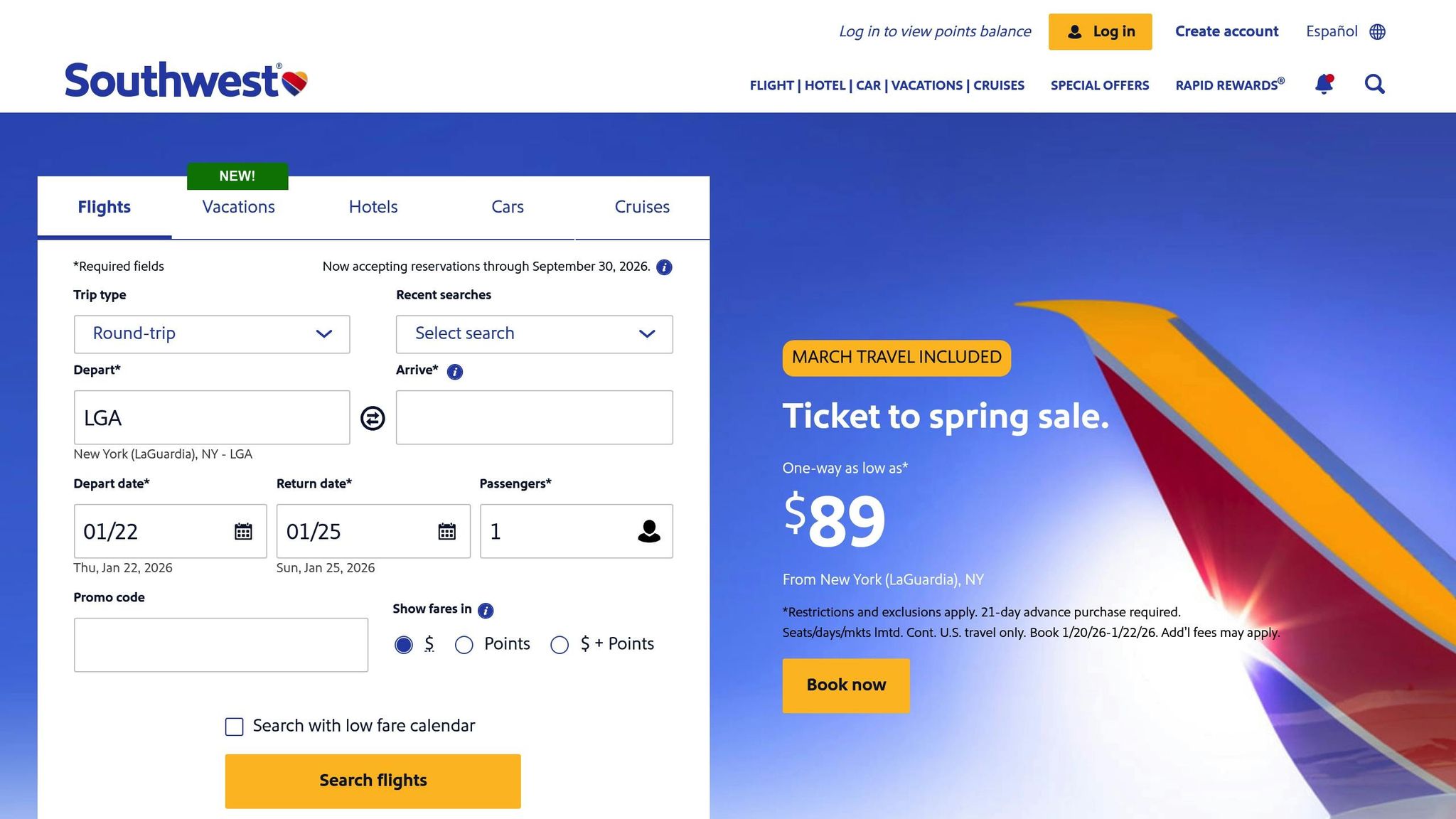
Southwest Airlines stands out for its flexibility. It charges $0 for same-day changes across most fare classes, as long as the change is made at least 10 minutes before departure. Even for “Wanna Get Away” fares, passengers only pay the fare difference if applicable.
Alaska Airlines uses a tiered system for same-day changes. It charges $25 for shorter routes, such as trips between Seattle and Portland or within California, and $50 for other routes. Additionally, Alaska allows free standby during check-in for all fare types except Saver tickets.
JetBlue applies a flat $75 fee for same-day confirmed changes for most passengers. However, travelers with Blue Basic fares are not eligible for same-day changes or standby. For all three airlines, loyalty program members with higher-tier status enjoy waived same-day fees.
“Alaska Airlines continues to price same-day confirmed flight changes at $25 on certain routes, such as the busy Seattle to Portland corridor. Passengers also have the option to try for free standby on a different flight if space is available.” – Mighty Travels Premium
Now, let’s look at how low-cost carriers approach change fees, often with stricter timing rules.
Frontier Airlines vs. Spirit Airlines vs. Hawaiian Airlines

Low-cost carriers tend to base their fees on how far in advance changes are made. For instance, Frontier charges $0 for changes made 60 or more days before departure, $49 for changes made 7–59 days prior, and $99 for changes within six days of the flight. Spirit follows a similar structure, with fees of $0 for changes 60+ days ahead, $39–$59 for changes 7–59 days out, and $79 for changes made within six days. Both airlines waive change fees for passengers who purchase premium bundles.
Hawaiian Airlines takes a simpler approach. Standard Main Cabin fares have $0 change fees, regardless of when the change is made. However, changes are not allowed for Main Cabin Basic fares. Unlike Frontier, Hawaiian issues a travel credit for any fare difference when a passenger switches to a cheaper flight.
| Airline | 60+ Days Prior | 7–59 Days Prior | Less Than 7 Days |
|---|---|---|---|
| Frontier | $0 | $49 | $99 |
| Spirit | $0 | $39–$59 | $79 |
| Hawaiian | $0 | $0 | $0 |
When Change Fees Apply and Exceptions
Knowing when airlines charge change fees can save you from unexpected costs. Timing is especially critical when dealing with low-cost carriers, as they often follow structured fee schedules.
Low-Cost Carrier Timing Rules
Low-cost airlines typically use tiered fee systems based on how far in advance you make changes. For instance, Sun Country allows free flight changes if made 60 or more days before departure. If you adjust your booking between 14 and 59 days prior, there’s a $50 fee, while changes made within 13 days of departure cost $100 per segment. Allegiant Air, on the other hand, has temporarily reduced its change fee to $25 per segment. However, you can’t make changes within seven days of departure unless you’ve purchased their “Trip Flex” add-on.
Federal regulations also allow you to cancel or change bookings for free within 24 hours of purchase, provided the ticket was bought at least seven days before departure. Meanwhile, some airlines, like Southwest, let you make changes up to 10 minutes before departure without a fee. Similarly, Avelo and Breeze Airways allow changes until 15 minutes before takeoff. These timing-related policies work alongside fare-specific rules and loyalty perks, which are covered next.
Fare Class and Loyalty Exceptions
Change fees aren’t just about timing; fare type and loyalty status play a big role too. Basic Economy fares on major airlines like Delta, United, American, Alaska, and JetBlue don’t allow changes. If flexibility is important, you’ll need to upgrade to a standard fare. However, JetBlue’s Blue Basic fare is an exception – it allows changes for a fee: $100 on flights within the U.S., Mexico, and the Caribbean, and $200 for other destinations.
Loyalty program members often get better treatment. For example, elite status holders like Alaska MVP Gold, JetBlue Mosaic, United MileagePlus Premier, and Spirit Elite enjoy waived or reduced same-day change fees. Airlines may also issue travel waivers during emergencies or severe weather, letting passengers modify even Basic Economy tickets without a fee.
“When we hear from customers about where we can improve, getting rid of this fee is often the top request.” – Scott Kirby, CEO, United Airlines
sbb-itb-e205081
International Flight Change Fees
Changing international flights comes with its own set of rules, often differing based on where your journey begins. Many major U.S. airlines have removed change fees for international tickets, but this typically applies to flights departing from the U.S., and in some cases, from Canada or the Caribbean. Let’s break down how these fees differ between U.S. and international airlines.
U.S. Airlines: International Change Fees
Delta, United, and American Airlines have done away with change fees for standard Economy and premium cabin tickets on international flights originating in the U.S. Delta also extends this policy to flights starting in Canada and the Caribbean, while United and American limit it to U.S. departures. However, for flights originating outside North America, such as London to New York, change fees can climb as high as $400.
For Basic Economy tickets, the policies are less flexible. Delta allows changes for a fee, while United requires passengers to upgrade to standard Economy to make changes. JetBlue charges $200 for changes to its Blue Basic fares on routes outside the U.S., Caribbean, and Mexico. On the brighter side, award tickets are more flexible – both United and American Airlines have removed change and redeposit fees for loyalty program members.
International Carriers: Change Fees
International airlines tend to base their fees on the type of fare rather than the flight’s origin. For example, Air New Zealand charges between NZ$50 and NZ$100 for changes to “Global Saver” fares, but no fees for “Global Flexi” fares. Korean Air follows a similar approach, offering free changes for “Flex” and “Plus” tickets while charging fees for “Saver” and “Standard” fares.
British Airways allows passengers to make changes online for free, but if you opt to make changes by phone or at the airport, you’ll face a $25 service fee. Cathay Pacific charges between $50 and $60 for international changes, while ANA’s fees can reach up to $500 depending on the ticket type. Most international airlines either heavily restrict or outright prohibit changes to their cheapest “Saver” or Basic Economy tickets.
There’s one exception to keep in mind: if an airline reschedules your international flight by 90 minutes to 4 hours, you’re eligible for a full refund or a free change, regardless of your ticket type. Additionally, handling changes online instead of over the phone can save you from extra administrative fees.
Conclusion: Choosing the Right Airline for Flexibility
Airlines differ significantly when it comes to flexibility, so knowing what each one offers can make a big difference in your travel experience. Southwest Airlines is a top choice for those who prioritize flexibility. They don’t charge change or cancellation fees – even on their budget-friendly “Wanna Get Away” fares – and their travel credits never expire. That’s hard to beat if your plans are likely to shift.
For travelers flying with legacy carriers like Delta, United, or American Airlines, booking a standard Economy or Main Cabin fare is a smart move. These fares typically allow fee-free changes on most domestic and international flights originating in the U.S. If there’s even a small chance your plans might change, spending a little extra on these fares can save you from hefty fees later.
On the other hand, ultra-low-cost carriers like Frontier and Spirit operate on a timing-based fee system. The earlier you make changes, the less you’ll pay. If you’re going with one of these budget airlines, planning ahead or adding flexibility options during booking is key to avoiding steep fees.
To make the most of these varying policies, consider a few savvy booking tips: book directly with the airline, keep an eye on price drops for potential rebooking savings, and take advantage of the federal 24-hour cancellation rule. If you’re handling a complex itinerary or group travel, services like Flight Booking 247 can provide around-the-clock support to help you navigate these options.
FAQs
What are the key differences in flight change fee policies for major U.S. airlines?
Major U.S. airlines have made adjustments to their flight change fee policies, with many now offering more flexibility. United, American, and Delta no longer charge change fees for most domestic and short-haul international flights, although this doesn’t apply to Basic Economy fares, which remain non-changeable. Southwest takes a different approach, never charging change fees for any fare type. Meanwhile, Alaska Airlines waives change fees only in specific situations, such as when a schedule change exceeds one hour.
Regardless of the airline, all carriers must adhere to the Department of Transportation’s 24-hour rule. This rule ensures you can cancel a booking within 24 hours of purchase and receive a full refund. For assistance with rebooking or cancellations, Flight Booking 247 provides round-the-clock support to handle changes quickly and easily.
What are the change fee policies for low-cost airlines like Frontier and Spirit?
Low-cost airlines like Frontier and Spirit have tailored their change fee policies to the type of fare you book and how far in advance you make changes. Frontier Airlines offers a tiered system:
- 60 days or more before departure: No change fee
- 7–59 days before departure: $49 per passenger, per direction
- 6 days or less before departure: $99 per passenger, per direction
However, if you’ve opted for one of Frontier’s Economy, Premium, or Business bundles, you can make changes without paying any fees.
Spirit Airlines, on the other hand, has taken steps to eliminate change fees for most of its fares, giving travelers more flexibility when plans shift. While these policies make adjusting your travel plans easier, it’s always smart to review the specific terms tied to your booking.
Why is Southwest Airlines known for its flexible change policy?
Southwest Airlines sets itself apart by offering a flexible booking policy that doesn’t include change fees. If you need to modify your reservation, you’ll only pay the fare difference, if there is one. Unlike many other airlines that tack on extra fees for changes, Southwest keeps it simple and hassle-free.
This traveler-first policy has made Southwest a favorite for those who value flexibility in their travel plans.