
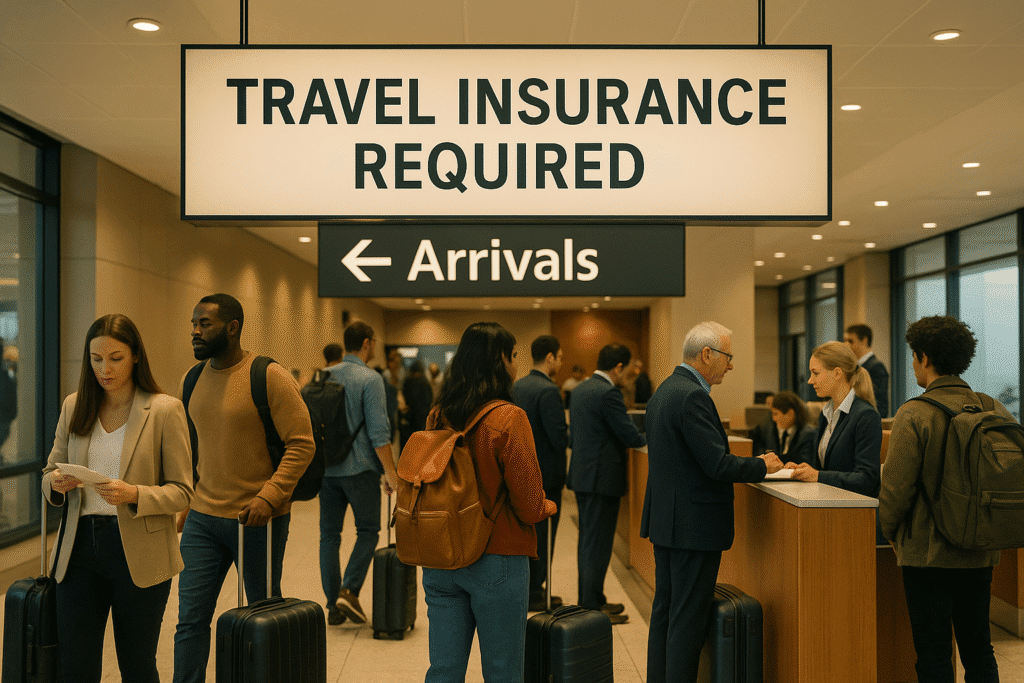
In 2025, over 20 countries require travel insurance for entry, ensuring visitors can handle medical emergencies, accidents, or repatriation costs without burdening local healthcare systems. Not having the required insurance can mean visa rejections, border denials, or costly last-minute purchases. Key destinations with mandatory travel insurance include:
- Schengen Area: $32,000 minimum medical coverage for visa applicants.
- Cuba: Proof of medical and repatriation coverage, with $50,000 recommended.
- Israel: Emergency medical treatment required.
- Qatar & Saudi Arabia: Insurance covering medical care and COVID-19 treatment.
- Argentina & Tanzania: Starting July 1, 2025, all visitors must have medical insurance.
- Nepal: High-altitude trekking requires evacuation and medical coverage.
- Russia: Insurance required for travelers from certain countries.
- Bhutan: Insurance for emergency medical care and evacuation.
Always confirm requirements with official sources before traveling to avoid disruptions. Carry both digital and printed proof of insurance for smooth entry.
Travel Insurance Top Picks: Best Medical & Comprehensive Plans for All Countries
1. Schengen Area
Traveling to the Schengen Area comes with a key requirement: having valid travel insurance. This rule not only protects travelers but also ensures that local healthcare systems in host countries aren’t overwhelmed. The Schengen Area includes 27 European countries, such as France, Germany, Italy, Spain, and the Netherlands. With its unified visa policies, travel insurance is mandatory for those applying for a Schengen visa to enter these nations.
Minimum Coverage Amount (in USD)
To meet Schengen visa requirements, your travel insurance must offer at least €30,000 in medical coverage, which is about $32,000 USD. This amount reflects the high cost of medical services in Europe and ensures that visitors can cover major medical emergencies without relying on local resources.
If you’re a US traveler, your insurance policy should clearly state coverage in USD or provide a conversion that meets the €30,000 minimum. Many insurance companies simplify this by automatically converting and displaying the equivalent amount in USD for American customers.
Types of Coverage Required
Schengen travel insurance must cover emergency medical treatment, hospitalization, and medical repatriation. This includes care for illnesses, accidents, and transportation back to your home country if necessary.
Although COVID-19 coverage isn’t a universal requirement across all Schengen countries, adding it to your policy is a smart choice. It provides added peace of mind and helps avoid potential complications at border crossings.
Proof of Insurance Verification Process
The insurance verification process starts when you apply for a Schengen visa. You’ll need to submit an insurance certificate or a complete policy document showing the required coverage amounts and types. Visa centers and consulates carefully check these details before approving your application.
If your documents are incomplete or missing, your visa application will be denied, regardless of other qualifications.
Even after your visa is approved, border officials may ask to see proof of insurance. To avoid delays, carry both digital and printed copies of your insurance documents during your trip.
Local Requirements
While the Schengen Area offers flexibility in choosing an insurance provider, there are specific conditions to keep in mind. You don’t need to buy insurance from a European or Schengen-based company – most major international insurers are accepted.
However, your insurance provider must be recognized and authorized to operate within the Schengen Area. Most well-known US providers meet these criteria, but it’s always a good idea to confirm this beforehand to avoid any issues with your visa application.
Even if you’re a US citizen or a traveler who doesn’t need a Schengen visa, carrying travel insurance is highly recommended. Many European hospitals may not admit patients without proof of insurance, and emergency medical bills can quickly add up to thousands of dollars.
The European Commission advises all visitors, regardless of visa requirements, to have travel insurance to avoid unexpected medical expenses.
2. Cuba
Since May 2010, Cuba has made travel insurance a must-have for anyone visiting the country. Whether you’re traveling for leisure or business, you’ll need valid travel medical insurance to enter, regardless of your nationality or visa type.
Types of Coverage Required
Cuba’s rules specify that your insurance must cover medical expenses for sudden illnesses as well as repatriation. Although COVID-19 coverage was mandatory during the pandemic, it’s no longer strictly enforced. That said, many travelers still choose to include it for extra peace of mind.
Minimum Coverage Amount (in USD)
While Cuba hasn’t set an official minimum coverage amount, experts recommend securing at least $50,000 in medical coverage. This is especially important because U.S. health insurance plans, including Medicare, typically don’t provide coverage in Cuba. Without adequate insurance, unexpected medical or repatriation costs could become a significant burden.
Proof of Insurance Verification Process
When you arrive in Cuba, immigration officials will check your proof of insurance. You’ll need to show an official insurance certificate or policy document, either in English or Spanish, that includes your name, the coverage period, and details about emergency and repatriation coverage. If you can’t provide acceptable proof, you’ll have to buy insurance on the spot before being allowed entry.
Local Requirements
Cuba accepts international travel insurance from recognized providers. However, if you arrive without valid insurance, you’ll need to purchase a policy from Asistur, the Cuban state insurance provider, at the airport. These policies generally cost $2–$3 per day but may offer less comprehensive coverage compared to plans arranged in advance. To avoid complications, always carry both digital and printed copies of your insurance documents.
This requirement highlights the importance of having clear and accessible proof of insurance throughout your trip.
For multi-destination travelers, Flight Booking 247 provides 24/7 support to ensure your insurance meets entry requirements.
3. Israel
Travelers heading to Israel must have valid travel insurance, whether visiting for tourism, business, or short-term stays. This aligns with a growing global trend of requiring travel insurance for entry.
Types of Coverage Required
Your insurance should include coverage for emergency medical treatment throughout your stay. While COVID-19-specific coverage was mandatory during the pandemic, current requirements focus on general emergency care. Adding repatriation coverage is a smart choice for more comprehensive protection.
Proof of Insurance Verification Process
Authorities may check your insurance during the visa application process or at border control. To avoid delays or issues, have both printed and digital copies of your insurance certificate readily available.
Local Requirements
International travel insurance policies are accepted, but make sure your documents are in English or Hebrew. They must clearly detail the policy’s duration and emergency benefits. While there’s no official minimum coverage amount, many providers suggest coverage between $50,000 and $100,000. This requirement remains in place as of 2025, but it’s always wise to check the latest updates on the Israeli Ministry of Foreign Affairs website before traveling.
4. Qatar
If you’re planning a trip to Qatar, having valid travel insurance is a must. This requirement applies to all international visitors, no matter your nationality or visa type. Qatar puts a strong emphasis on ensuring visitors have adequate coverage, both to protect travelers and to support the country’s healthcare system.
Local Requirements
Qatar’s regulations specify that your travel insurance must include coverage for emergency medical care, hospitalization, and COVID-19 treatment. The policy needs to be issued by a recognized insurer, remain valid throughout your stay, and meet the country’s entry requirements.
For a 30-day travel insurance policy that complies with these rules, prices generally start at $13–$15 USD. However, costs can vary depending on the insurer and the level of coverage you select.
Types of Coverage Required
Your insurance policy must include emergency medical care, hospitalization, and mandatory coverage for COVID-19 treatment. While repatriation isn’t explicitly required, it’s wise to ensure your policy offers at least $50,000 in coverage to avoid potential issues.
Proof of Insurance Verification Process
You’ll need to present proof of valid insurance during your visa application or when registering for Qatar’s Hayya system. Be prepared for officials to verify your insurance upon arrival, so carry a certificate in English or Arabic that clearly states the coverage period, policy number, and insurer details. While digital copies are acceptable, it’s a good idea to have a printed backup on hand to avoid any unnecessary delays.
5. Saudi Arabia
If you’re planning a trip to Saudi Arabia, having travel insurance is non-negotiable. This requirement applies to all foreign visitors, whether you’re traveling for leisure or business. The policy ensures that visitors can access healthcare services without adding strain to the country’s healthcare system.
What Your Coverage Should Include
Your travel insurance must cover emergency medical care and COVID-19 treatment, including any necessary hospital stays. While repatriation coverage isn’t explicitly required, it’s worth checking with your insurer for any additional benefits that might come in handy.
How Insurance Verification Works
The insurance verification process is seamlessly integrated into the visa application. In most cases, proof of insurance is bundled with your visa application, especially if you’re applying for a tourist or business visa. For e-visas or visas on arrival, the required insurance is often included, so you may not need to purchase a separate policy.
However, immigration officials may request to see your insurance certificate when you arrive. To avoid any issues, carry both digital and printed copies. Make sure your certificate clearly outlines the coverage period, policy details, and confirmation of emergency medical and COVID-19 treatment coverage.
Additional Notes for Travelers
Saudi Arabia accepts international travel insurance, and many providers offer packages specifically designed for Middle Eastern travel. If you’re booking with Flight Booking 247, their 24/7 concierge service can assist you in meeting these insurance requirements.
To ensure a smooth entry, keep both digital and physical copies of your insurance certificate handy for border checks. Having all the necessary details readily available can save you time and stress at immigration.
6. UAE (United Arab Emirates)
In the UAE, travel insurance is a requirement for certain travelers, such as those applying for multiple-entry visas. However, this rule doesn’t extend to all visitors, as it applies only to specific visa types. Below is a breakdown of the coverage you’ll need, how to verify your insurance, and the local standards to follow.
Types of Coverage Required
Your travel insurance should cover emergency medical care, hospitalization, and repatriation. During the height of the pandemic, COVID-19 coverage was mandatory, but now it’s strongly recommended, even though enforcement has eased. While UAE authorities don’t specify an official minimum coverage amount, experts suggest having at least $30,000 in emergency medical coverage, aligning with global norms.
Proof of Insurance Verification Process
If you’re applying for a multiple-entry visa, you’ll need to include your insurance certificate with your visa application. This certificate must clearly show your policy number, coverage details, and dates that match your travel itinerary. Immigration officials or airline staff may ask to see this documentation during check-in or at border control, so it’s wise to have both digital and printed copies in English. Without proper proof, you risk visa rejection or being denied entry. Buying insurance upon arrival is an option, but it could lead to delays and extra costs.
Local Requirements
The UAE provides flexibility in insurance options, as long as your policy meets the required standards. International travel insurance policies are accepted, so you can choose any globally recognized provider. Services like Flight Booking 247 offer 24/7 concierge support to help ensure your travel insurance complies with UAE entry rules. To avoid any hiccups, double-check your insurance details before your trip for a smooth entry experience.
sbb-itb-e205081
7. Argentina
Starting July 1, 2025, Argentina requires all foreign visitors to have travel insurance. This rule applies to travelers from every country, no matter their visa status or how long they plan to stay. It’s part of Argentina’s strategy to better manage healthcare resources. Here’s what you need to know to meet the entry requirements.
Minimum Coverage Amount (in USD)
Your travel insurance must provide at least $50,000 USD in coverage. This includes expenses for medical care, hospitalization, and repatriation. These provisions ensure you’re covered in case of emergencies, whether it’s a hospital stay or arrangements to return home.
Types of Coverage Required
The policy must include coverage for medical care, hospitalization, and repatriation. While not mandatory, it’s highly recommended to have coverage for COVID-19-related expenses as well.
Proof of Insurance Verification Process
Immigration officials will check your insurance coverage when you arrive in Argentina. Be ready to show printed or digital proof that clearly states the coverage amount and the policy’s validity dates. Keep this documentation handy throughout your trip, as airline staff might also ask for it during check-in. Without proper proof, you could be denied entry.
Local Requirements
Argentina allows international travel insurance policies, so you’re not required to purchase one from a local provider. Well-known insurers like Allianz, Generali, and United Healthcare Global typically offer plans that meet these requirements. If you’re booking your trip, services like Flight Booking 247 are available around the clock to help ensure your insurance documentation aligns with Argentina’s entry rules.
8. Tanzania (including Zanzibar)
Starting July 1, 2025, all visitors to Tanzania, including Zanzibar, must have travel insurance. This requirement is part of the Tanzania Finance Act of 2025 and applies to everyone entering the country, regardless of the purpose of their visit.
Types of Coverage Required
Your travel insurance must cover emergency medical care, hospitalization, and repatriation. Although coverage for COVID‑19 is not specifically required by law, it’s a smart addition due to ongoing health concerns. Many travelers now include COVID‑19 protection in their policies, given the lessons learned during the pandemic.
Minimum Coverage Amount (in USD)
As of November 2025, Tanzania has not set an official minimum coverage amount. However, most reputable international insurers recommend policies offering between $50,000 and $100,000 USD in coverage for emergency medical care, evacuation, and repatriation for trips to Tanzania. Be sure to check for updates from Tanzanian government advisories as your travel date approaches.
Having the right coverage is only part of the process; you’ll also need to have proof of your insurance ready upon arrival.
Proof of Insurance Verification Process
Immigration officials will check your insurance certificate or policy at airports and border crossings. The document must clearly show the coverage details and validity dates. Without this proof, you could face delays or be denied entry altogether.
Local Requirements
Tanzania accepts internationally issued travel insurance policies. To avoid complications, choose a globally recognized insurer and ensure your policy is valid for your entire stay. Additionally, many local tour operators and safari companies require travel insurance that includes medical emergencies and evacuation, especially for activities like safaris, trekking, and diving.
When organizing your trip, consider using services like Flight Booking 247, which provides 24/7 support to help coordinate your travel plans and ensure your insurance documentation meets Tanzania’s entry requirements.
9. Nepal
If you’re heading to Nepal for trekking or mountaineering, travel insurance is a must. Specifically, you’ll need it for adventures like exploring the Himalayas, trekking iconic routes such as Everest Base Camp or the Annapurna Circuit, or climbing peaks. Proof of insurance is required when applying for permits necessary for these activities.
This requirement is checked during the permit application process, not at border control. For example, you’ll need to show a valid insurance certificate when applying for permits like the TIMS (Trekkers’ Information Management System) card or climbing permits for peaks like Everest. Nepal’s focus on trekking-related insurance ensures that adventurers are prepared for the risks of high-altitude travel.
Types of Coverage Required
To meet Nepal’s requirements, your travel insurance must include:
- Emergency medical expenses
- Helicopter evacuation
- Repatriation
Additionally, some trekking agencies may also require coverage for COVID-19–related medical expenses.
Minimum Coverage Amount (in USD)
While the government doesn’t set a specific minimum, trekking agencies generally recommend:
- $5,000–$10,000 USD for emergency evacuation
- $20,000–$50,000 USD for medical treatment
Having sufficient coverage is critical to avoid hefty out-of-pocket costs in case of emergencies.
Proof of Insurance Verification Process
The insurance verification happens when you apply for trekking permits. You’ll need to present a valid insurance certificate along with your application. Some trekking agencies might even contact your insurer to confirm the policy’s validity. Without valid insurance, your permit application will be denied.
Local Requirements
Nepal doesn’t require travelers to buy insurance from a local provider. International policies are usually accepted as long as they explicitly cover high-altitude trekking and helicopter evacuation. Make sure your policy includes coverage for trekking at altitudes around 4,000 meters, as some policies exclude high-altitude activities.
Comprehensive travel insurance for Nepal, which includes trekking and evacuation coverage, typically costs between $100 and $300 USD for a 2- to 4-week trip. Costs depend on factors like your age, coverage limits, and planned activities.
For assistance with travel arrangements and insurance verification, check out Flight Booking 247, which offers support around the clock.
10. Russia
When it comes to travel insurance requirements, Russia operates on a reciprocity principle. This means that travel insurance is mandatory only for visitors from countries that require Russian citizens to have insurance for entry. So, if your home country doesn’t impose such requirements on Russian travelers, chances are you won’t need to provide proof of insurance when applying for a Russian visa.
This rule mainly applies to travelers using Russia’s unified e-visa system, which is available to citizens of over 50 countries. Keep in mind, without valid insurance documentation, your visa application will be rejected.
Types of Coverage Required
Your travel insurance policy must include coverage for emergency medical expenses and repatriation. While COVID-19 coverage is not mandatory, it’s a good idea to include it due to changing health protocols.
Proof of Insurance Verification Process
You’ll need to submit a valid insurance certificate with your visa application. The certificate should clearly show the coverage period, insured amounts in US dollars, and full policy details. Consular officials may contact your insurer to verify the policy.
Local Requirements
Russia does not require you to purchase insurance from a local provider. International travel insurance policies are generally accepted, provided they meet the necessary coverage standards and are recognized by Russian authorities. This flexibility allows you to either use your current insurance provider or explore other options for better rates or coverage.
There’s no universal minimum coverage amount specified by Russia. However, your policy must adequately cover medical emergencies and repatriation costs. Most standard travel insurance plans that include these elements should suffice. It’s always a good idea to confirm specific requirements with the Russian consulate before submitting your application.
11. Bhutan
Bhutan has a unique approach to tourism, guided by its high-value, low-impact policy. As part of this, all visitors are required to secure travel insurance before applying for a visa. This rule is in place to safeguard both travelers and Bhutan’s limited healthcare resources from unexpected costs and emergencies. Below, you’ll find details about the insurance requirements for visiting Bhutan.
Types of Coverage Required
Your travel insurance must include coverage for emergency medical care and evacuation for the full duration of your stay. While some countries emphasize COVID-19-specific coverage, Bhutan prioritizes comprehensive medical emergency protection. If you plan to trek or engage in adventure activities, ensure your policy includes coverage for those additional risks.
Proof of Insurance Verification Process
When applying for a visa, you’ll need to provide proof of insurance. Your insurance certificate should clearly indicate the dates of coverage and confirm emergency care and evacuation are included. To avoid any hiccups during the process, carry both digital and printed copies of your policy.
Local Requirements
Bhutan accepts international travel insurance policies as long as they meet the necessary coverage criteria. While there’s no specified minimum coverage amount in USD, it’s wise to choose a policy with higher limits, given Bhutan’s remote location and limited healthcare facilities. This requirement aligns with Bhutan’s commitment to sustainable tourism and visitor safety, ensuring both travelers and the local healthcare system are adequately supported during your visit.
Quick Reference Table
Traveling to multiple countries with different insurance rules? Use this table for a quick overview of essential insurance requirements for various destinations.
| Country/Region | Minimum Coverage | Required Documents | Presentation Point | Special Requirements |
|---|---|---|---|---|
| Schengen Area | €30,000 (~$32,000) | Insurance certificate with coverage dates | Visa application | Must cover all Schengen states and include repatriation coverage |
| Cuba | Not specified | Proof of coverage | Airport arrival | Must include medical emergencies and repatriation |
| Israel | Not specified | Insurance policy document | Visa process or arrival | Must include emergency medical treatment |
| Qatar | Not specified | Certificate of insurance | Visa application or Hayya registration | Must cover emergency care and hospitalization |
| Saudi Arabia | Not specified | Proof of coverage | Visa application | Must include COVID-19 treatment and emergency care |
| UAE | Not specified | Insurance documentation | Visa application | Required for multiple-entry visa holders |
| Argentina | Not specified | Valid insurance certificate | Border entry | Mandatory for all foreign visitors starting July 1, 2025 |
| Tanzania (including Zanzibar) | $44 fixed policy (Zanzibar) | ZIC insurance certificate (Zanzibar) | Airport arrival (Zanzibar); Border entry (Mainland) | Zanzibar: $44 policy from Zanzibar Insurance Corporation; Mainland: valid insurance required from July 1, 2025 |
| Nepal | Varies by activity | Proof showing high-altitude rescue coverage | Trekking permit office | Required only for trekking or mountaineering activities |
| Russia | Not specified | Insurance certificate | E-visa application | Required for unified e-visa applicants |
| Bhutan | Not specified | Comprehensive policy document | Visa application | Must cover the full trip duration and include emergency medical care |
Here are some key points to keep in mind: The Schengen Area has a fixed minimum coverage requirement of approximately $32,000, while most other destinations emphasize the type of coverage needed rather than specific amounts. Zanzibar stands out with its mandatory $44 policy issued by a government-backed insurer.
Notable updates include Argentina’s new insurance mandate and Mainland Tanzania’s upcoming requirements, both effective from July 1, 2025.
Need help organizing your travel and insurance? Visit Flight Booking 247 for assistance.
Conclusion
Travel insurance has become a cornerstone of international travel, with many countries now requiring proof of coverage for entry. Without it, travelers risk being denied boarding, refused entry at borders, or forced to purchase a policy at the last minute – a stressful and often costly situation.
Regulations around travel insurance are constantly evolving. For instance, Argentina will implement new insurance requirements starting July 1, 2025, while Tanzania plans to introduce similar rules the same year. These examples underscore the need to stay updated on the latest requirements rather than relying on outdated information. Always check official advisories before your trip to avoid surprises.
To ensure your coverage meets the specific requirements of your destination, rely on trusted sources like embassy websites, government travel advisories, and reputable insurance providers. For example, travelers heading to the Schengen Area must have a minimum of €30,000 (about $32,000 USD) in medical coverage to avoid complications at border entry. It’s also wise to carry both digital and printed copies of your insurance certificate during your journey.
Taking these steps helps keep your travel plans on track. For additional support with travel planning and up-to-date entry requirements, you can turn to Flight Booking 247, available anytime.
Having the right travel insurance not only ensures compliance with local laws but also protects you from unexpected expenses and emergencies, giving you peace of mind as you explore the world.
FAQs
What happens if I arrive in a country that requires travel insurance but don’t have proof of coverage?
If you travel to a country that requires proof of travel insurance and don’t have it, you could be turned away at the border. Sometimes, officials may let you buy a policy right there, but this option is often pricier and can disrupt your plans. To keep things running smoothly, check your destination’s insurance rules ahead of time and make sure to have valid proof of coverage with you.
Which travel insurance providers are recommended for countries that require it for entry?
While there isn’t detailed information on specific travel insurance providers for destinations with mandatory insurance requirements, what matters most is ensuring your policy aligns with the entry rules of your chosen country. This typically includes coverage for medical expenses, trip cancellations, and even COVID-19-related incidents. Double-checking these details can save you from unexpected hassles.
For help with your travel arrangements, Flight Booking 247 is available around the clock to assist with booking, modifying, or canceling flights. Their support can make your travel planning smoother and less stressful.
How can I check if my travel insurance meets a country’s entry requirements?
When preparing for international travel, it’s crucial to check that your travel insurance aligns with the entry requirements of your destination. Carefully review your policy to confirm it includes adequate coverage amounts, medical benefits, emergency repatriation, and any specific conditions the country may require.
If anything seems unclear, don’t hesitate to reach out to your insurance provider for clarification. Need help with flights? Flight Booking 247 offers round-the-clock support to simplify your travel arrangements.