
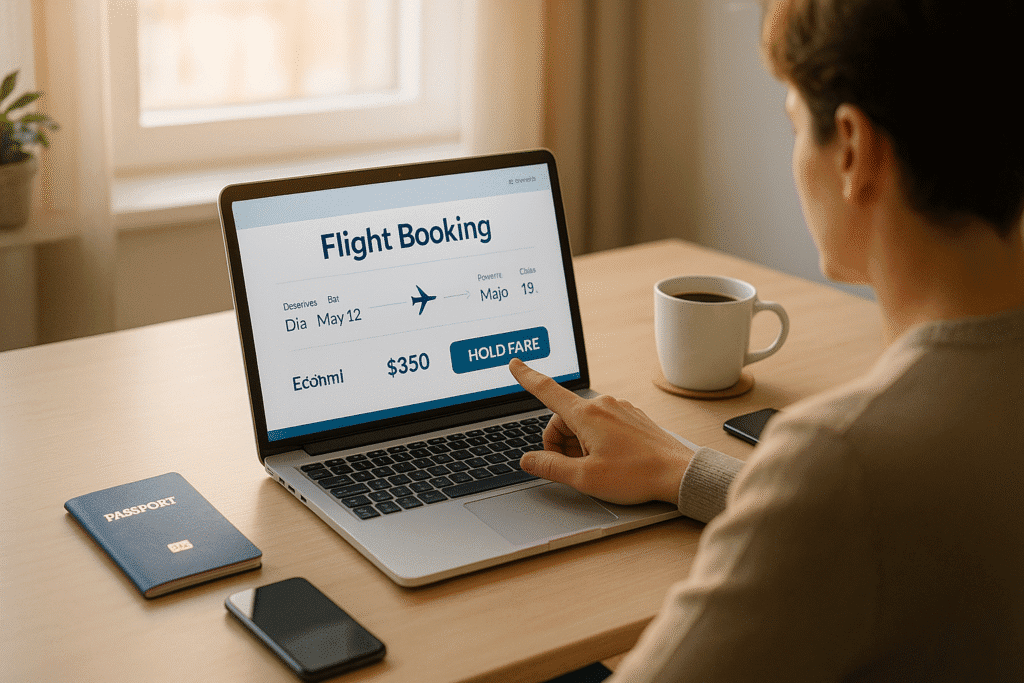
Want to lock in a flight price without paying right away? Fare hold services let you secure your ticket price and seat for a limited time while you finalize travel plans. Here’s how to use it in 5 simple steps:
- Check Availability: Not all flights offer fare holds. Airlines like United, American, and British Airways provide options, but policies vary.
- Activate the Option: Select your flight, enter passenger details, and choose the fare hold option during booking.
- Choose Duration & Pay Fees: Decide how long to hold the fare (e.g., 3, 7, or 14 days) and pay the non-refundable fee. Fees depend on the airline and route.
- Complete Booking Before Expiry: Pay for your ticket before the hold expires to avoid losing your reservation and fee.
- Seek Help if Needed: Services like Flight Booking 247 can guide you through the process and manage deadlines.
Quick Fee Comparison
| Airline | Hold Duration | Fee Structure |
|---|---|---|
| United Airlines | 3/7/14 days | $8+ (domestic), up to $35 (international) |
| American Airlines | 3/5/7 days | $5/$10/$15 per reservation |
| British Airways | 72 hours | $5-$10 per person |
| Lufthansa | 48 hours | $35 per reservation |
| Air New Zealand | 3 days | $10-$45 based on route |
Pro Tip: If your travel is more than a week away, you might save money by booking immediately and using the 24-hour cancellation policy instead of paying hold fees.
Fare hold services are perfect for uncertain plans. Just remember, fees are non-refundable, so plan wisely!
How To Put An American Airlines Flight On Hold (How Do I Put An American Airlines Flight On Hold?)
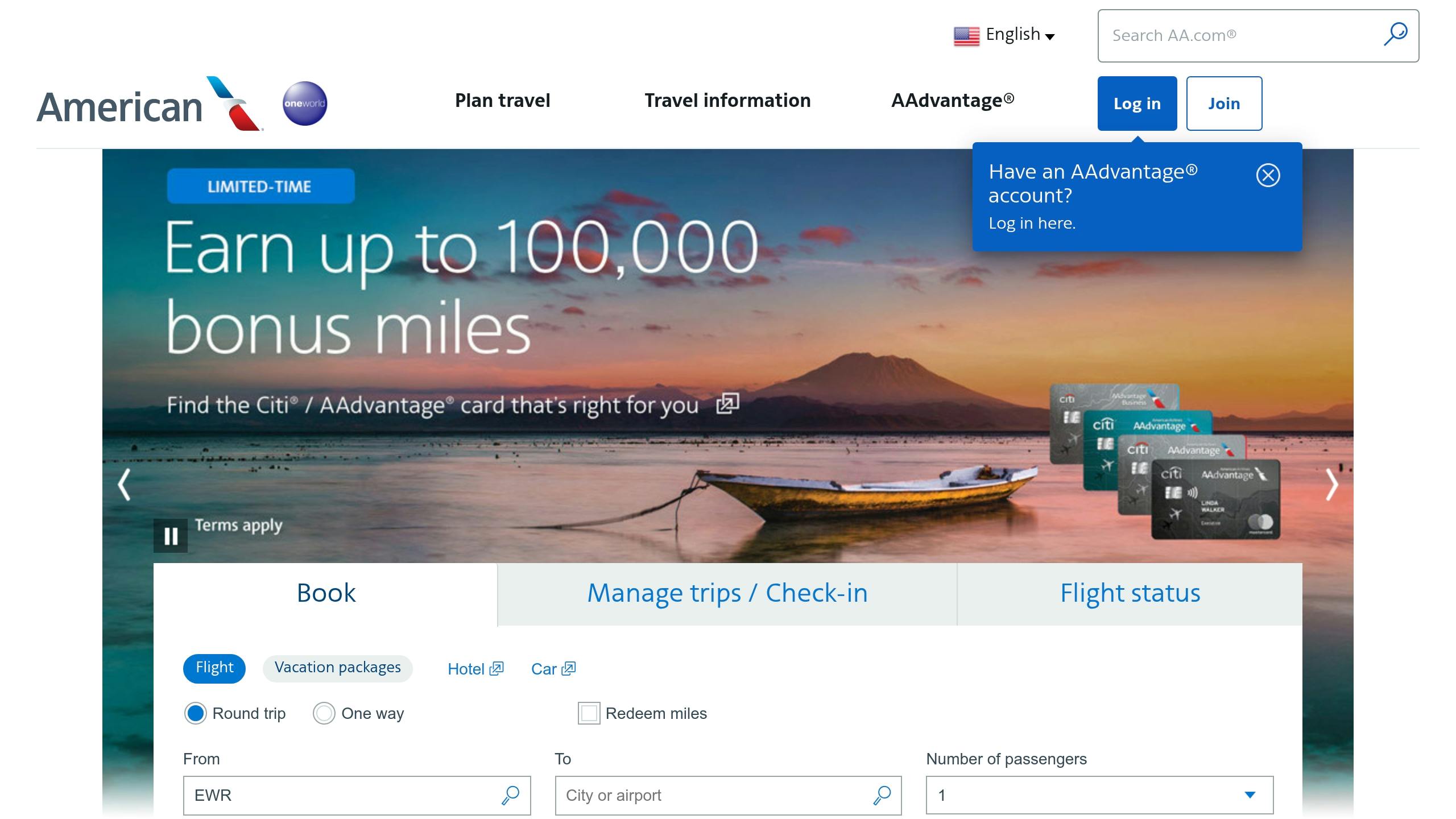
Step 1: Check If Fare Hold is Available for Your Flight
Not every flight offers a fare hold option, and availability can vary widely depending on the airline and route. It’s important to know where to look and what to expect while booking. Take some time to review individual airline policies to understand their fare hold options.
Learn Airline Policies
Airlines handle fare holds in their own way, with varying fees and timeframes. For example, United Airlines provides “FareLock” for extended holds, while others stick to the standard 24-hour minimum. Some major airlines offering fare hold services include American Airlines, British Airways, Air New Zealand, and WestJet, but their policies differ.
- United Airlines: Offers 3, 7, or 14-day holds through FareLock[2].
- American Airlines: Allows up to 7-day holds on select flights[2].
- WestJet: Features “Hold the Fare” for $10 per guest, letting you secure the price for 72 hours[7].
- British Airways: Charges between £5 and £10 (approximately $5-$10) for 72-hour holds[2].
- KLM: Offers up to 14-day holds for €10-€15[2].
“Buy time to pay for your flight with Hold the Fare. For $10 per guest, you can hold a fare at the price you see today and take 3 days to pay.” – WestJet[7]
Some airlines, like Delta, rely on their 24-hour risk-free cancellation policy instead of offering extended fare holds[4].
Navigate Booking Platforms
Once you’ve familiarized yourself with airline policies, the next step is finding fare hold options on booking platforms. Keep in mind, these features don’t always show up right away when searching for flights.
- Air New Zealand: Displays a “Hold this fare” button on the flight selection screen if your itinerary qualifies[5].
- United Airlines: Shows the FareLock option after you’ve entered traveler information[1].
- Turkish Airlines: Lists “Hold the price” under their additional services menu[8].
In many cases, fare hold availability only appears on the payment screen, meaning you’ll need to go through most of the booking process to find it. Watch for terms like “FareLock”, “Hold this fare”, “Price Guarantee”, or “24-hour risk-free guarantee” as you search. Some platforms also highlight policies with special labels next to prices[9].
If you’re unsure whether fare hold is available for your flight, check for chat widgets on the booking page or browse the airline’s FAQ section for detailed information.
Step 2: Activate the Fare Hold Option
After selecting your flights and entering basic traveler details, you’ll be able to activate the fare hold option. This feature becomes available once you’ve chosen your flights and filled in the required passenger information.
Enter Passenger Information
Airlines need certain traveler details before enabling the fare hold option. Typically, you’ll see this feature after completing the traveler information section. For instance, United Airlines requires passengers to “fill out the Traveler Info page and select FareLock” before the option becomes accessible[1].
The information you’ll need to provide usually includes:
- Full name: Make sure it matches the name on the passport, especially for international travel.
- Contact details: An email address and phone number are standard requirements.
- Date of birth: Sometimes requested, depending on the airline.
Cathay Pacific follows a similar process: “Start your new booking on their website as you normally would. After you have selected your flights, you will be given the option to hold your fare”[6]. In some cases, airlines may require you to log in or create an account to access the fare hold feature[10]. Double-check all details for accuracy before continuing. Once confirmed, you can proceed to review the terms of the fare hold.
Review Fare Hold Terms
Before finalizing your fare hold, it’s essential to go through the hold terms carefully. The length of the hold period varies by airline, so be sure to note how much time you have to complete your purchase. For example, Turkish Airlines allows passengers to “select ‘Hold the price’ from the additional services available and specify the holding period”[3], giving you control over how long the fare is held.
Pay close attention to the associated fees and refund policies. Most airlines charge nonrefundable fees for fare holds, and these fees are not applied toward the ticket price. Fees can vary widely, from as little as $3 for domestic flights with some carriers to $45 for international routes[2]. American Airlines, for instance, offers tiered pricing: $5 for a 3-day hold, $10 for a 5-day hold, and $15 for a 7-day hold[2].
“Fare Hold fees are nonrefundable and are not applied toward the price of the ticket.” [11]
Also, check the expiration date of the hold to avoid automatic cancellation. Some airlines have strict rules against multiple holds for the same flight, and you may not be allowed to change passenger details during the hold period[11]. Lastly, verify whether the airline’s policies address schedule changes during the hold, as rebooking or compensation options can differ.
Step 3: Choose Hold Duration and Pay Fees
Once you’ve reviewed the terms, the next step is to decide how long you want to hold the fare and pay the associated fee. Your choice should match your planning needs and budget since longer hold periods often come with higher fees.
Short-Term vs. Extended Holds
Short-term holds, lasting 24 to 72 hours, are great when you need a little extra time to finalize minor details – like confirming with a travel companion or securing quick business approvals. They’re perfect for situations where decisions need to be made quickly.
On the other hand, extended holds, which can last anywhere from 3 to 14 days, are better suited for more complex plans. Think family trips requiring coordination among multiple people or delays related to travel documentation.
For example, United Airlines offers tiered hold options: 3, 7, or 14 days. When they introduced this system in June 2024, 22% of customers opted for their FareLock service within the first month – a clear sign of demand for this added flexibility [2].
If your trip is still more than a week away, you might consider booking immediately and using the Department of Transportation’s 24-hour cancellation policy instead of paying hold fees. This can save you money while still giving you time to finalize your plans.
Know Fee Policies
Hold fees vary widely depending on the airline, and they’re typically non-refundable. These fees are charged separately from your ticket price, so it’s essential to understand how they work.
Here’s an overview of how major airlines structure their hold fees:
| Airline | Duration | Fee Structure |
|---|---|---|
| American Airlines | 3/5/7 days | $5/$10/$15 per reservation |
| United Airlines | 3/7/14 days | Starting at $8 for domestic holds; up to $35 for international holds |
| British Airways | 72 hours | $5 per person for short-haul; $10 per person for long-haul flights |
| Lufthansa | 48 hours | $35 for the entire reservation |
| Air New Zealand | 3 days | $10 (domestic), $25 (Trans-Tasman), $45 (international) |
Some airlines charge fees per passenger, while others charge per reservation. For instance, British Airways calculates fees per person, which means a family of four would pay four times the individual fee. Lufthansa, however, charges a flat fee for the entire reservation, regardless of the number of passengers.
Iberia stands out with a customer-friendly policy: if you complete your purchase within 72 hours, the hold fee is deducted from your ticket price.
Budget airlines often offer shorter hold periods and lower fees. For example, Wizz Air charges $4 to $9 per passenger for 48-hour holds, while Singapore Airlines charges approximately $3.60 per passenger for up to 72 hours.
Understanding these fee structures can help you make an informed decision that works best for your travel plans and budget.
Step 4: Complete Your Booking Before the Hold Expires
Once you’ve chosen your hold duration and paid the fee in Step 3, it’s time to finalize your booking. With your fare secured, the clock is ticking. If you miss the deadline, you’ll lose both your reservation and the hold fee.
Make Payment
Each airline has its own payment process, but the steps are usually simple. Here’s how it works with a few carriers:
- United Airlines: Log into “My Trips” to find your held flight and complete the purchase before the hold expires [1].
- WestJet: Use the “Manage Trips” section and your reservation code to pay the locked-in fare [7].
- Qatar Airways: Pay within your selected timeframe via the “My Trips” feature.
- Emirates: Just provide your name and booking reference to finalize payment [2].
Most airlines send email reminders 24 hours before the hold expires, often including a direct payment link. Online travel agencies like Yatra.com also send confirmation emails with a payment link, allowing you to complete the process through their “My Bookings” section or a “Make a Payment” option [14].
To avoid last-minute stress, keep your payment details ready. Some airlines, like United Airlines, even offer an auto-pay feature that automatically purchases your ticket when the hold period ends [1]. If you don’t complete payment on time, your reservation will be canceled.
Handle Expired Holds
If you miss the deadline, your reservation will be canceled, and the hold fee will not be refunded [3]. You’ll lose the fare and have to start the booking process from scratch [13].
Airlines are strict about deadlines, so consider setting multiple reminders to ensure you complete payment on time. Don’t rely solely on email notifications [4]. If you know you won’t complete the booking, cancel the trip before the hold expires [12]. Keep in mind that during the hold period, the fare is locked, so you won’t benefit from any price drops [12].
If your hold expires, you’ll need to search for flights again, and prices may have changed.
Step 5: Use Flight Booking 247 for Help

Booking your flight in time is crucial, and having expert assistance can make the process much easier. Navigating fare holds can feel overwhelming, but Flight Booking 247 offers personalized support to help you manage your travel planning without the stress.
This service works alongside the steps outlined earlier, ensuring you stay on track and never miss an important deadline.
Get Expert Support
Flight Booking 247 provides 24/7 access to a travel concierge who can guide you through every aspect of activating and managing a fare hold. Their team works with major airlines, both domestic and international, to offer real-time flight deals and fare hold options. Whether you’re unsure about an airline’s fare hold policy or need help securing a hold during the booking process, their experts are ready to assist every step of the way.
If your fare hold is about to expire or prices change, they can also help you explore alternative flights. This service is especially useful for complex travel plans, saving you from the hassle of extensive research and last-minute scrambling.
Beyond just answering questions, Flight Booking 247 simplifies the entire booking process, ensuring a smooth experience from start to finish.
Save Time and Effort
Flight Booking 247 takes care of deadlines, payment processes, and airline-specific requirements, so you don’t have to juggle multiple tasks. Their concierge service goes beyond standard customer support by helping with itinerary planning and other travel arrangements. Whether you’re a frequent business traveler or organizing a complicated family trip, this level of assistance ensures your fare holds are managed properly and payments are completed on time, giving you peace of mind and more time to focus on your journey.
Conclusion: Make the Most of Fare Hold Services
Fare hold services give you the chance to lock in flight prices while keeping your travel plans flexible. Here’s how to make the most of them: check if the service is available, activate the hold, select the duration that works for you, pay the fee, and, if needed, seek expert assistance.
These services are especially useful for travelers juggling multiple plans, waiting on approvals, or arranging finances. By holding a fare, you can secure a price without rushing into a decision, making it a handy tool for managing complex travel arrangements.
Keep in mind that hold fees are non-refundable and differ depending on the airline.
For added convenience, Flight Booking 247 offers around-the-clock concierge support to help you stay on top of deadlines. Whether you’re nearing the end of a hold period or exploring other travel options, their expert assistance can guide you through the process. This way, you can focus on your trip without worrying about the fine print of airline policies.
FAQs
What are the benefits of using a fare hold service instead of booking a flight right away?
Using a fare hold service comes with some great perks for travelers. For starters, it allows you to secure a flight price without paying right away. This gives you the breathing room to sort out your travel plans or coordinate with others. It’s particularly useful if you’re waiting on final schedule details or other arrangements. Plus, during the hold period, you’re protected from any price hikes – what you see is what you’ll pay.
Another advantage is that it reserves your seat on the flight, so you don’t have to worry about it selling out while you’re still deciding. This mix of price security and seat reservation makes fare hold services a great option for those who want more flexibility and less stress when planning their trips.
How can I check if an airline offers a fare hold option for my flight?
To find out if an airline offers a fare hold option for your flight, head to their official website and check their booking policies. This option is usually presented during the booking process, often on the payment or checkout page. If you’re still unsure, reaching out to the airline’s customer service can provide the answers you need.
Several major airlines allow you to hold a fare for a limited period, usually for a small fee. This feature can be handy when you want to lock in a ticket price while sorting out the rest of your travel plans.
What happens if I don’t book my flight before the fare hold expires?
If you let the fare hold expire without completing your booking, your reservation will be canceled automatically, and the held fare will no longer be accessible. At that point, you’ll need to search for flights again, and the prices may have changed.
To keep the fare you held, make sure to finalize your booking and complete the payment before the expiration date and time shown when you chose the fare hold option.